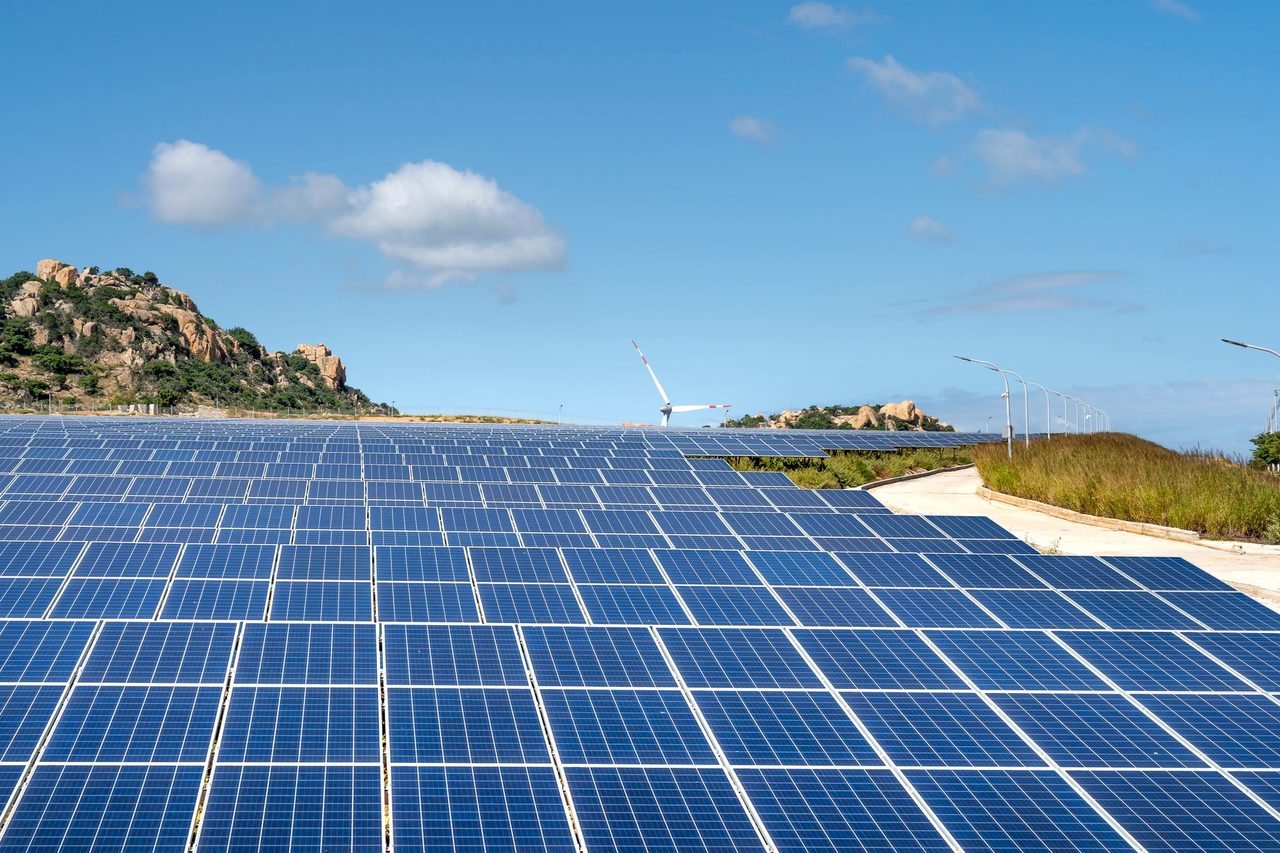
Solar Module Recycling in India 2026: EPR, Economics and Project Strategy
By Sudarshan Karweer · sudarshan@growthifye.com · +91 84510 99371 (Call / WhatsApp) · 2026-08-25
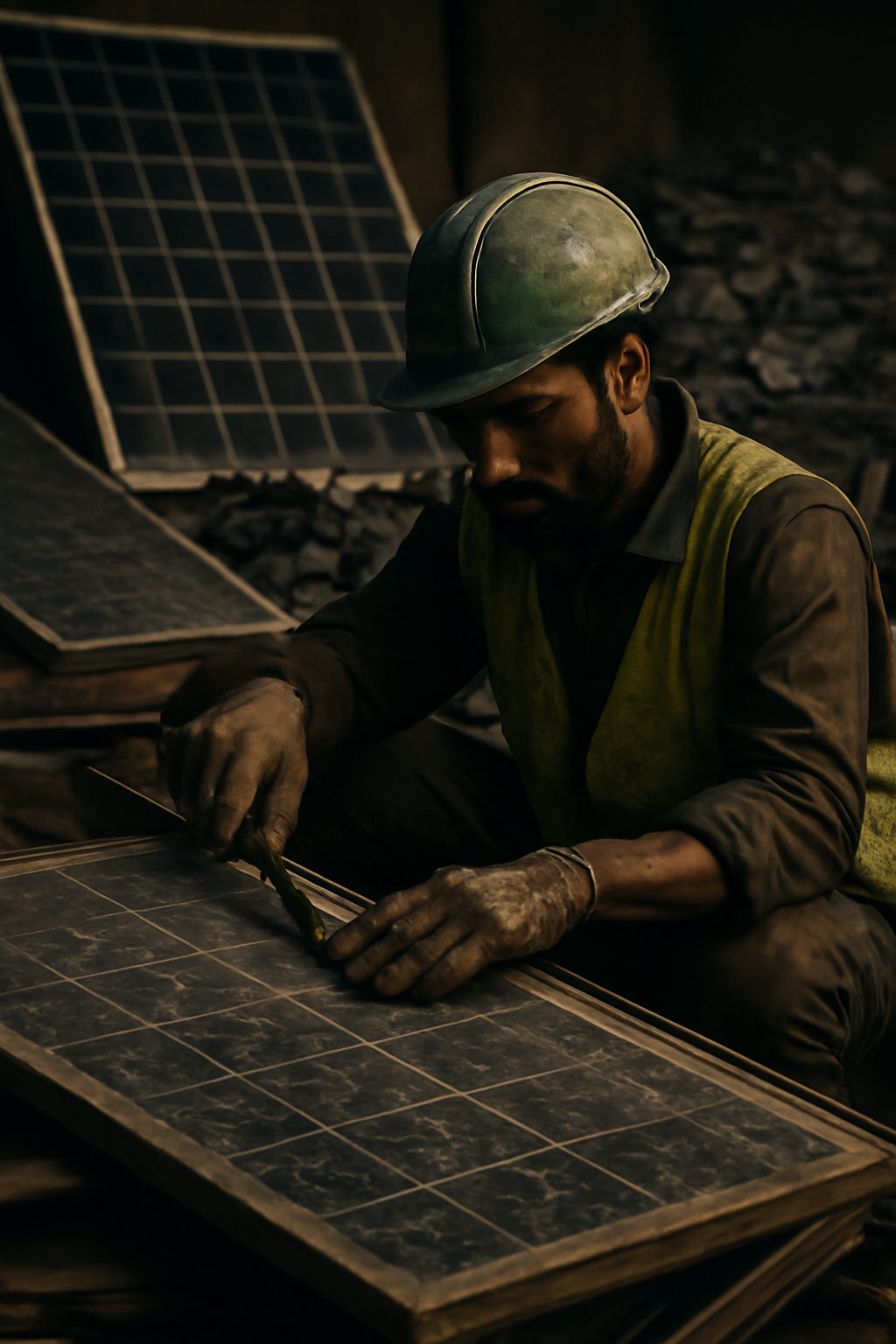
India’s utility-scale and C&I solar fleet is now large enough that solar module waste management can no longer be treated as a future problem. In 2026, developers, DISCOM-facing generators, open-access operators, lenders and industrial power buyers are increasingly asking the same operational question: what is the bankable pathway for end-of-life and damaged module handling in India?
The answer sits at the intersection of policy compliance, logistics, material recovery, insurance claims, O&M practices, lender due diligence and state-level waste enforcement. While battery recycling often takes the spotlight in energy circularity discussions, solar module recycling is becoming the next major compliance and value-chain issue for the Indian renewable sector.
This article focuses on the 2026 Indian context: Extended Producer Responsibility (EPR), module waste volumes, recycling economics, developer obligations, practical contracting structures and the project-finance implications of solar circularity.
Why solar module recycling is now a real 2026 issue in India
India has crossed a scale where even a low failure rate creates meaningful annual waste. The waste stream is not only from old modules. It also comes from:
- Transport breakage during project execution
- Snail trails, hotspot damage and premature degradation
- Storm, hail and fire incidents
- Insurance-related replacements
- Repowering of older assets with low-efficiency modules
- Factory rejects and EPC installation breakage
- Rooftop system dismantling due to building renovation or lease expiry
For many stakeholders, this means solar waste arises years before theoretical module end-of-life. A 25-year design life does not imply a 25-year waste holiday.
In India, the immediate addressable stream in 2026 is dominated by damaged, rejected and early-replacement modules rather than only true end-of-life utility modules. That distinction matters because the logistics, residual value, testing requirements and legal treatment differ materially.
A developer replacing 5 MW of damaged modules at a 100 MWp plant has a very different recycling pathway from a municipal body planning for mixed rooftop solar waste aggregation. Similarly, a lender financing a 300 MWp interstate open-access portfolio needs visibility on decommissioning reserves and compliance risk even if the actual waste event may be years away.
India’s regulatory framework: where EPR and waste rules matter
The most important 2026 trend is that module waste is moving from an informal scrap conversation to a compliance-led operating requirement. The principal policy backbone is India’s e-waste framework, under which solar PV modules, panels and cells have progressively come under formal regulatory treatment. For market participants, the practical implication is clear: manufacturers, producers, importers, brand owners and in many cases downstream asset owners must document collection, channelisation and environmentally sound processing through authorised entities.
In practice, project stakeholders should track five regulatory layers:
- E-Waste (Management) Rules and subsequent amendments relevant to PV modules, cells and panels
- CPCB registration, reporting and traceability requirements for producers and authorised recyclers
- State Pollution Control Board enforcement on storage, transport and handling of waste streams
- Contractual take-back obligations built into module supply or EPC agreements
- ESG and lender compliance covenants that go beyond minimum statutory wording
For Indian solar developers, one recurring mistake is assuming that EPR is only the manufacturer’s problem. Legally, the producer-side obligation is central, but project companies still face operational and reputational exposure if waste sits unsegregated at site yards, is sold through informal scrap channels, or is transferred without proper manifests and recycler documentation.
In 2026, sophisticated offtakers and lenders are asking for evidence on three points during diligence:
- Who owns end-of-life responsibility under the supply chain contracts?
- Is there an authorised recycler or aggregator already empanelled?
- Is there a documented process for damaged-module storage, transport and disposal?
For imported module supply chains, the issue can become more complex. If module OEMs have evolving India compliance structures, developers need to ensure that local representation, EPR registration status and reverse-logistics execution are not left vague in procurement contracts.
The economics of solar module recycling: costs, recovery and who pays
Solar module recycling in India is still an emerging commercial market, so pricing remains project-specific. However, by 2026, enough market activity exists to outline practical ranges.
Typical commercial cost elements include:
- On-site collection, sorting and palletisation
- Safe temporary storage and breakage management
- Reverse logistics to aggregation yard or recycling facility
- Testing and segregation between reusable, refurbishable and scrap modules
- Dismantling and material recovery processing
- Compliance documentation and certificates of recycling/destruction
For damaged crystalline-silicon modules, transport and handling often represent a large share of total cost, especially when assets are in Rajasthan, Gujarat, Ladakh, interior Karnataka or other locations far from processing capacity. Depending on distance, volume and breakage condition, logistics alone can materially alter the recycler gate economics.
As of 2026, all-in recycling and compliant disposal economics in India can vary widely, but many market discussions fall in broad ranges such as:
- Rs 8-20 per module for basic collection support in dense rooftop clusters, excluding long-haul transport
- Rs 300-900 per tonne for local aggregation handling, depending on contamination and packing
- Rs 2-7 per watt equivalent in small-batch damaged module management where logistics are inefficient
- Lower per-unit costs in utility-scale portfolios when large homogeneous volumes are aggregated under annual O&M programs
These are not standard market tariffs; they are indicative planning ranges. Actual commercial outcomes depend on geography, batch size, module type, glass breakage, aluminium frame recovery, packaging, and whether the recycler captures resale value from recoverable fractions.
The revenue side is still modest relative to batteries. Crystalline-silicon modules primarily yield recoverable glass, aluminium, copper, polymers and small fractions of silicon and silver-bearing components. Recovery value improves when modules are cleanly segregated and frames or junction boxes are intact. But for many Indian project owners in 2026, the economics remain compliance-driven rather than arbitrage-driven.
That means the key commercial question is not “How much cash can scrap generate?” but “How low can we make the net cost of compliant waste handling through better contracting, aggregation and traceability?”
Three strategies improve economics materially:
- Portfolio aggregation across multiple sites instead of ad hoc plant-level disposal
- Upfront OEM take-back clauses with defined service levels
- Differentiation between second-use candidates and true recycling waste
A module that fails warranty but still performs at acceptable output for non-critical low-load applications may have a refurbishment pathway, subject to testing, safety and legal suitability. That pathway should not be confused with recycling, but it can reduce net waste-management cost if handled through authorised channels.
Technology and material recovery: what actually gets recycled
Most Indian solar waste in 2026 is still crystalline silicon rather than thin-film. Recycling processes generally begin with manual or semi-mechanical dismantling and then proceed to separation of key fractions.
The principal recoverable materials are:
- Glass, often the largest fraction by weight
- Aluminium from module frames
- Copper from cables and junction-box components
- Silicon-bearing fractions
- Silver-bearing materials in small quantities
- Polymers and backsheets, which remain more challenging
The technical bottleneck is not simply dismantling the panel. The challenge is achieving recovery purity and yields at a cost that works in Indian conditions. Glass cullet from PV modules may require quality management before downstream use. Delamination and recovery of embedded materials remain capital- and process-intensive. This is why not every dismantling operator should be treated as a true recycler.
For developers and lenders, the practical takeaway is to distinguish between:
- Scrap handlers recovering only aluminium frames and selling the rest downstream without traceability
- Partial processors with limited material recovery capability
- Authorised recyclers with documented environmental controls, mass-balance reporting and end-destination records
That distinction matters for both compliance and ESG reporting. In 2026, large C&I buyers and international capital providers increasingly require verifiable circularity records rather than generic “disposed as per norms” declarations.
What C&I consumers, developers and utilities should do now
For C&I consumers with rooftop or captive/open-access solar portfolios, module recycling should be inserted into asset-management planning immediately. The highest-risk segment is often fragmented rooftop assets where damaged modules accumulate in storerooms or are casually sold through local scrap dealers.
A practical 2026 action plan for C&I portfolios includes:
- Create a digital register of module make, serial range, commissioning date and warranty status
- Record breakage, replacement and underperformance events at site level
- Classify removed modules into reusable, test-required and recycle-only categories
- Use only authorised channel partners for collection and processing
- Obtain certificates covering quantity, date, recycler identity and processing outcome
- Align solar O&M vendors with a no-informal-disposal clause
For utility-scale developers and IPPs, the stronger approach is portfolio contracting. Instead of waiting for sporadic waste events, developers can tender annual circularity services across multiple projects. Such contracts may include:
- Emergency damaged-module evacuation after natural events
- Temporary compliant storage solutions
- Batch testing for repowering candidates
- Reverse logistics linked to regional hubs
- Recycling certificates and audit-ready documentation
- Support for insurance and warranty claim evidence
Utilities and public agencies should focus on aggregation and standards. Distributed solar waste streams are too fragmented for efficient project-by-project handling. State nodal agencies, urban local bodies and DISCOM-linked rooftop programs can support market development by enabling:
- Standard storage and transport protocols
- City- or state-level aggregation points
- Empanelled recycler lists
- Public procurement clauses for take-back and recycling
- Awareness among rooftop installers and consumers
Without aggregation, the cost per module remains unnecessarily high. With aggregation, logistics become denser, segregation improves and authorised recyclers can operate with better throughput.
Project finance, insurance and due diligence implications
In 2026, solar recycling is also a finance issue. Lenders may not always price it as a standalone risk, but they increasingly view waste-handling capability as part of asset quality and sponsor governance.
Key diligence questions now include:
- Does the EPC contract define treatment of installation-stage breakage?
- Does the module supply agreement contain take-back, warranty replacement and reverse-logistics clauses?
- Are decommissioning and waste-management costs reflected in lifecycle financial models?
- Does the O&M scope cover storage, segregation and incident reporting for damaged modules?
- Is insurance documentation adequate to support claims on broken or fire-damaged modules?
For large projects, even a small end-of-life reserve can improve financial discipline. The reserve need not be overly conservative in 2026, but lenders and sponsors benefit from explicit provisioning logic rather than assuming future scrap value will solve the problem.
Insurance-linked waste management is another underappreciated area. After extreme weather, fire or transit damage, project companies often focus on replacement timelines and claim settlement while ignoring compliant disposal documentation. That creates leakage risk. A better structure integrates insurer, surveyor, EPC/O&M contractor and recycler so that chain-of-custody is preserved from incident site to final processing.
Sponsors pursuing international capital or sustainability-linked borrowing structures should expect greater scrutiny on end-of-life planning. Module circularity is becoming part of broader asset stewardship, particularly for platforms that claim high ESG standards.
The likely market direction for 2026-2030
Between 2026 and 2030, India’s solar module recycling market is likely to evolve along five lines.
First, volumes will scale faster than many forecasts assume because repowering, defect replacement and extreme-weather incidents will add to pure age-driven waste.
Second, recyclers will move from opportunistic scrap-led models toward formal service-led models with traceability, testing and compliance reporting.
Third, module procurement contracts will increasingly include clearer end-of-life and take-back language, particularly for large utility and C&I portfolios.
Fourth, state-level enforcement and CPCB-linked digital compliance mechanisms are likely to make informal disposal more difficult for organised market participants.
Fifth, banks, DFIs, private credit funds and infrastructure investors will increasingly ask whether circularity costs and processes are already embedded in project governance.
For Indian market participants, this means the best time to build a module recycling strategy is before waste volumes become operationally disruptive. Waiting until a storm event, warranty replacement cycle or lender audit forces action typically leads to higher cost and weaker compliance outcomes.
The winners in this segment will not be those who merely identify a recycler after waste arises. They will be the developers, C&I operators, OEMs and utilities that create an integrated circularity framework covering procurement, O&M, insurance, logistics, compliance and reporting.
India’s solar growth story is now too large for linear asset management. Circularity in PV is becoming a core part of project execution and portfolio stewardship, not an optional ESG add-on.
If your organisation is evaluating solar module recycling strategy, EPR-linked compliance, circularity contracting, waste aggregation or lender-ready end-of-life planning, contact Growthifye’s advisory desk for a practical assessment tailored to your portfolio.
About the author

Chief Executive Officer, Growthifye — With over 23 years in management consulting, Sudarshan has taken businesses from concept to scale — building and scaling new-age digital and energy businesses.
- 23+ years in management consulting
- EY alumnus
- Led large-scale BESS programmes, capital raises and advisory mandates
Want this analysis applied to your project?
Talk to our team