Second-Life EV Batteries for C&I Storage in India 2026: Economics, Safety and Policy
By Sudarshan Karweer · sudarshan@growthifye.com · +91 84510 99371 (Call / WhatsApp) · 2026-08-25

India’s circularity conversation in 2026 is moving beyond compliance into asset optimisation. For commercial and industrial energy users, renewable developers, utilities and lenders, the most under-analysed opportunity is second-life EV batteries for stationary storage. While battery recycling and broader second-life BESS market overviews have already received attention, the practical question now is narrower and more valuable: when does repurposing retired EV batteries make techno-economic sense for Indian behind-the-meter and grid-support applications, and what conditions make such projects financeable?
The answer is not universal. Second-life battery energy storage systems can deliver attractive value in specific duty cycles, especially where daily cycling is moderate, tariff arbitrage spreads are visible, and capex discipline is strong. But the same systems can become poor assets if safety engineering, cell grading, thermal controls, warranty architecture and performance guarantees are weak. In India’s 2026 context, the opportunity is real, but only for projects built around disciplined battery triage, conservative performance assumptions and bankable contracts.
Why second-life EV batteries matter in India now
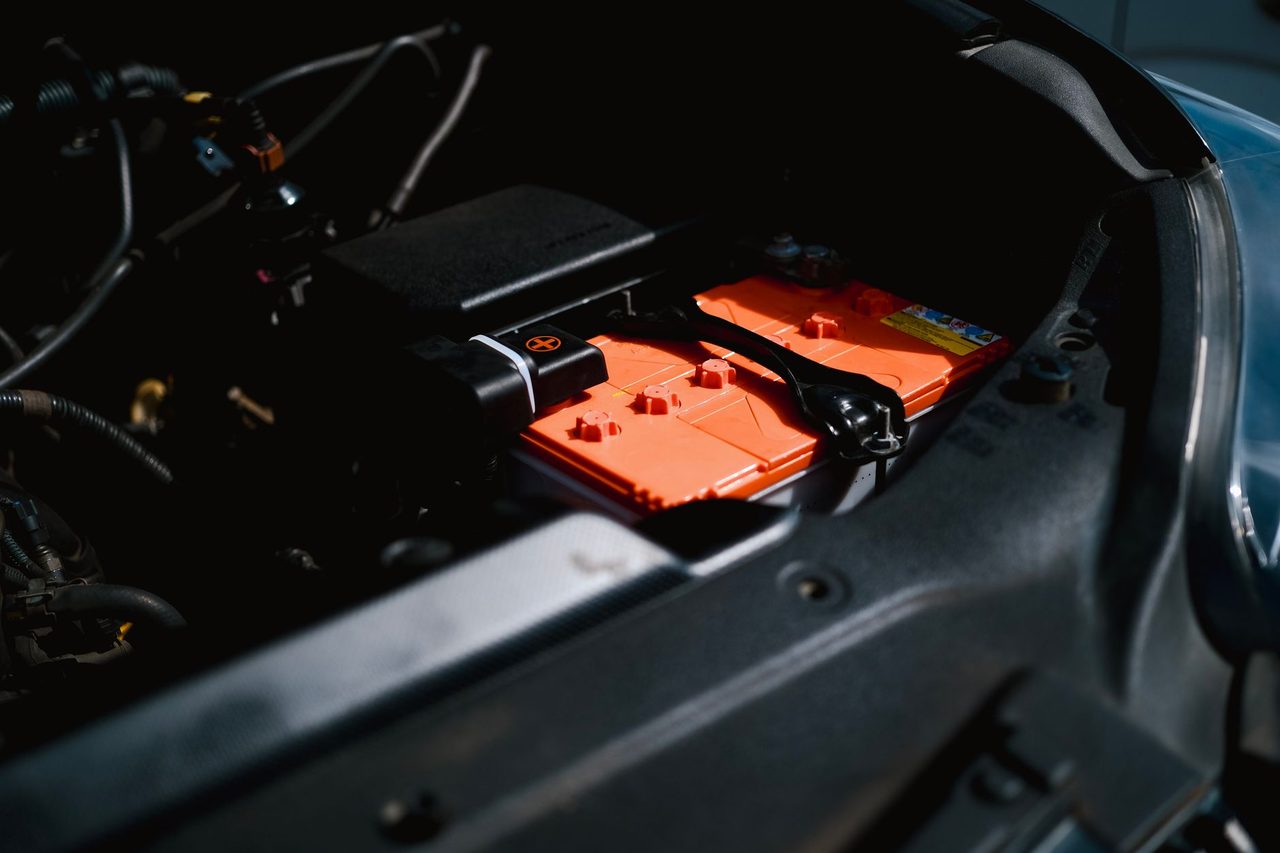
India’s electric mobility fleet is expanding quickly across e-buses, fleet cars, three-wheelers and delivery vehicles. As early EV cohorts age, a growing volume of lithium-ion packs is approaching the end of automotive life while still retaining 70-80% state of health in many cases. For mobility, that residual capacity may be inadequate because range, acceleration and warranty thresholds matter. For stationary storage, however, the same batteries may remain useful for several more years.
This matters because new BESS capex in India remains sensitive to imported cell prices, exchange rates, fire-safety design, PCS costs and balance-of-system expenditure. By reusing viable battery packs or modules, project developers can potentially reduce battery component capex by 25-45% versus new-cell systems, depending on chemistry, source pack format, grading losses and refurbishment depth. That does not mean total project capex falls by the same percentage, because repurposing adds costs for testing, disassembly, remanufacturing, battery management integration, thermal design, DC aggregation and certification. Still, in the right project type, second-life systems can land 10-25% below equivalent new-battery turnkey costs.
In 2026 India, this is especially relevant for:
- C&I consumers with rooftop or open-access solar seeking evening peak shaving
- Industrial sites facing high demand charges and diesel backup costs
- Distribution utilities piloting feeder-level storage for outage management and peak support
- EV fleet depots with predictable charging windows
- Microgrids and institutional campuses where a slightly lower round-trip efficiency is acceptable if capex is lower
The driver is not circularity alone. It is the possibility of lowering delivered storage cost per usable cycle in applications where premium performance is not mandatory.
Where second-life BESS works best, and where it does not
The biggest mistake in second-life storage is trying to use it like new premium BESS. These systems are not ideal for all applications.
Best-fit use cases in India include:
- Solar time-shifting for 1-2 cycles per day at C&I sites
- Demand-charge reduction where discharge windows are short and predictable
- EV depot peak shaving for managed charging loads
- Backup support that reduces diesel runtime rather than replacing all backup needs
- Distribution-level non-wire alternatives with moderate cycling intensity
Less suitable use cases include:
- High-C-rate ancillary services requiring fast response and frequent cycling
- Long-duration storage where degradation uncertainty compounds over time
- Projects with strict lender-driven availability guarantees and liquidated damages
- High-temperature locations without strong HVAC and fire-suppression design
- Utility-scale merchant storage where dispatch volatility is high
As a rule of thumb, second-life assets work better where the duty cycle is shallow to moderate, annual throughput is controlled, and the project owner values capex savings more than top-end energy density or maximum life.
The 2026 economics: capex, LCOS, tariffs and payback
For Indian market participants, the relevant metric is not only upfront savings but the levelised cost of storage delivered under real operating constraints.
Indicative 2026 India ranges for behind-the-meter systems are as follows:
- New LFP BESS turnkey cost for C&I projects: roughly Rs 12-16 million per MWh for small-to-mid scale systems, depending on duration, fire systems, EMS sophistication and import mix
- Second-life EV battery-based systems: roughly Rs 9-13 million per MWh turnkey, assuming successful grading and moderate refurbishment complexity
- Refurbishment and testing cost alone: often Rs 1.5-3.5 million per MWh equivalent, depending on pack diversity and failure rates
- Usable energy derating versus nameplate: typically 15-30%
- Round-trip efficiency: often 80-88% for repurposed systems, versus 88-92% for many new systems
- Economic life after repurposing: commonly 4-7 years in conservative underwriting, though technical life may be longer in benign conditions
For C&I users, savings depend heavily on tariff spread. In states where daytime solar offsets power at Rs 4-6 per kWh but evening grid power is effectively Rs 8-11 per kWh after energy charges, wheeling, banking losses, demand charges and time-of-day effects, second-life BESS can create a useful arbitrage case. The economics improve further where diesel genset displacement is part of the use case, because avoided diesel-based electricity can still exceed Rs 18-25 per kWh depending on load factor and fuel price.
A practical example illustrates the point. Consider a 2 MWh second-life BESS at a manufacturing site paired with solar, operating one effective cycle per day for peak shaving and evening discharge. If usable annual discharge is around 550-600 MWh after derating and losses, and net realised savings are Rs 4.5-6 per kWh discharged, annual gross value may range from about Rs 2.5-3.6 million. If total installed cost is Rs 20-24 million, simple payback may fall in the 6-9 year range before O&M and replacement reserves. That is marginal if performance is uncertain.
But the same project improves if:
- demand-charge savings are material,
- diesel displacement contributes to value,
- the battery source cost is low due to fleet partnerships,
- duty cycle is carefully optimised to reduce degradation,
- and concessional state incentives or pilot support reduce project cost.
In those cases, payback can tighten toward 4-6 years. That is the zone where serious C&I interest begins.
However, developers should avoid overstating economics. If a project relies on two full cycles per day, high residual SOH assumptions, and minimal module rejection rates during repurposing, the model is probably too optimistic for credit approval.
Safety, performance and warranty are the real gatekeepers
In India, the technical challenge is not just assembling used batteries into racks. It is converting heterogeneous assets into a reliable stationary product. Packs coming from buses, cars and commercial fleets may differ in chemistry, thermal history, form factor, BMS architecture and degradation profile. This creates engineering and liability complexity.
A bankable second-life project should include at minimum:
- incoming battery traceability down to VIN or pack serial level
- state-of-health testing with standardised grading protocols
- DC isolation and insulation checks
- thermal runaway risk assessment and containment design
- module matching rules based on voltage, impedance and residual capacity bands
- a repurposed BMS or supervisory control layer validated for stationary operation
- HVAC or passive thermal design matched to local ambient conditions
- fire detection, suppression and emergency response SOPs aligned with insurer requirements
India’s high ambient temperatures make thermal design critical. A battery retired from automotive use may degrade much faster in a poorly ventilated rooftop container in Rajasthan, Telangana or interior Maharashtra. For many projects, spending more on thermal management and fire systems is rational because it protects residual life and insurability.
Warranties are another weak link. New BESS products may come with 6-10 year performance warranties under controlled throughput assumptions. Second-life systems often struggle to offer anything close. In 2026, a more realistic Indian market structure is:
- 2-5 year limited warranty on the repurposed system
- availability guarantees with carve-outs for ambient abuse or off-spec operation
- throughput caps linked to degradation expectations
- reserve account or replacement pool for failed modules
- AMC with remote monitoring and periodic re-grading
For lenders and large C&I customers, this means the counterparty matters more than the hardware headline. Without a credible integrator and transparent warranty waterfall across sourcing, refurbishment and O&M, cost savings alone are insufficient.
Policy and regulatory context in India in 2026
India’s circularity policy architecture is still evolving, but several frameworks influence second-life storage economics and compliance.
First, the Battery Waste Management Rules, 2022 remain foundational, especially producer responsibility, collection, traceability and end-of-life obligations. In 2026, market participants must pay close attention to whether a battery moving into second-life is being treated under a documented chain of custody with clear accountability between the original producer, refurbisher, repurposer and final recycler. Poor documentation can create both compliance and financing risk.
Second, broader quality-control and safety expectations are rising. Even where no single India-specific second-life stationary standard is fully mature across all chemistries and form factors, buyers, insurers and utilities increasingly expect testing and certification aligned with recognised battery safety practices. In procurement, technical due diligence is becoming stricter, not looser.
Third, state electricity regulatory developments on time-of-day tariffs, demand charges, open-access settlement and banking directly affect storage monetisation. A second-life BESS in a state with pronounced evening tariffs and high C&I demand charges has a stronger value stack than an identical asset where tariff structures are flatter.
Fourth, public procurement and utility pilots may shape early scale-up. Distribution utilities and public-sector transport undertakings are logical anchors because they control both retiring EV batteries and stationary demand points. If bus operators, depot operators and DISCOMs coordinate, second-life storage can become a structured public-private circularity model rather than an opportunistic aftermarket activity.
The policy takeaway is straightforward: second-life BESS should be viewed as a regulated circular asset class, not a scrap-to-storage arbitrage.
Bankability: what lenders, investors and EPC buyers should test
For Growthifye’s client base, the central issue is bankability. Projects fail not because second-life batteries are impossible, but because underwriting often ignores operational reality.
Key diligence questions include:
- What is the exact source mix of batteries: e-buses, passenger EVs, three-wheelers or mixed fleet?
- Are chemistry and pack architecture homogeneous enough for standardised refurbishment?
- What is the rejection rate during triage, and who absorbs it?
- Is residual value at final recycling built into the financial model?
- What is the expected degradation curve under local ambient conditions?
- What throughput cap is assumed in the warranty?
- How will failed modules be replaced if the original battery platform is discontinued?
- Is insurance available on commercially acceptable terms?
- Does the EPC wrap include safety system integration, controls and SCADA visibility?
- Are offtake savings based on audited interval load data and actual tariff components?
From a financing perspective, conservative assumptions should include:
- lower usable capacity than lab-tested headline figures
- annual degradation buffers of 4-8%, depending on chemistry and duty cycle
- additional O&M for module balancing and replacement
- salvage value only where recycler contracts are credible
- DSCR calculations based on the lower end of tariff arbitrage expectations
In many cases, the right structure may not be long-tenor project debt at all. Lease-style structures, energy-service contracts, fleet-captive deployments or balance-sheet-funded pilots may be better pathways until operational data becomes more robust.
A practical project strategy for Indian stakeholders
For C&I buyers, RE developers and utilities considering second-life storage in 2026, the most effective strategy is staged execution.
Start with a narrow use case and a measurable value stack. Do not begin with merchant optimisation or highly dynamic dispatch. Begin with a site where interval load data shows repeated evening peaks, diesel backup costs are visible, and solar generation is already established.
Then build procurement around five disciplines:
- source assurance: secure a defined battery stream from a credible fleet or OEM ecosystem
- engineering discipline: design for thermal safety, maintainability and modular replacement
- data visibility: require cell/module-level monitoring and monthly degradation reporting
- commercial realism: accept shorter warranties and price projects accordingly
- end-of-life closure: contract the final recycler at project inception, not at failure stage
For utilities and policymakers, one promising model is the EV-depot-to-grid-support loop. Public bus depots generate retired batteries, have charging infrastructure, and often face local peak issues. Repurposed batteries can first support depot peak shaving and backup, then later flow to recycling under documented EPR pathways. This integrates transport electrification, distribution management and circularity in one value chain.
For lenders, the market is investable selectively, but not yet commoditised. The right response is not blanket scepticism or blanket enthusiasm. It is structured diligence, conservative covenants and preference for counterparties with proven battery diagnostics and field O&M capability.
India’s second-life BESS market in 2026 sits at the intersection of circularity and power economics. The opportunity is genuine where battery sourcing is traceable, engineering is disciplined, tariffs support peak-value capture and warranties are transparent. The risk is equally real where projects treat used batteries as cheap substitutes for new storage without accounting for thermal stress, module mismatch, compliance obligations and shorter residual life. For serious market participants, second-life storage is not a low-cost shortcut. It is a specialised asset class that can work well when designed around the right duty cycle and the right contractual structure.
If your organisation is evaluating second-life battery storage, circularity strategy, EPR-linked project structures or site-specific storage economics, contact Growthifye’s advisory desk for technical, commercial and financing support.
About the author

Chief Executive Officer, Growthifye — With over 23 years in management consulting, Sudarshan has taken businesses from concept to scale — building and scaling new-age digital and energy businesses.
- 23+ years in management consulting
- EY alumnus
- Led large-scale BESS programmes, capital raises and advisory mandates
Want this analysis applied to your project?
Talk to our team