Battery Passport Implementation in India 2026: Data, OEM Contracts and EPR
By Sudarshan Karweer · sudarshan@growthifye.com · +91 84510 99371 (Call / WhatsApp) · 2026-09-15
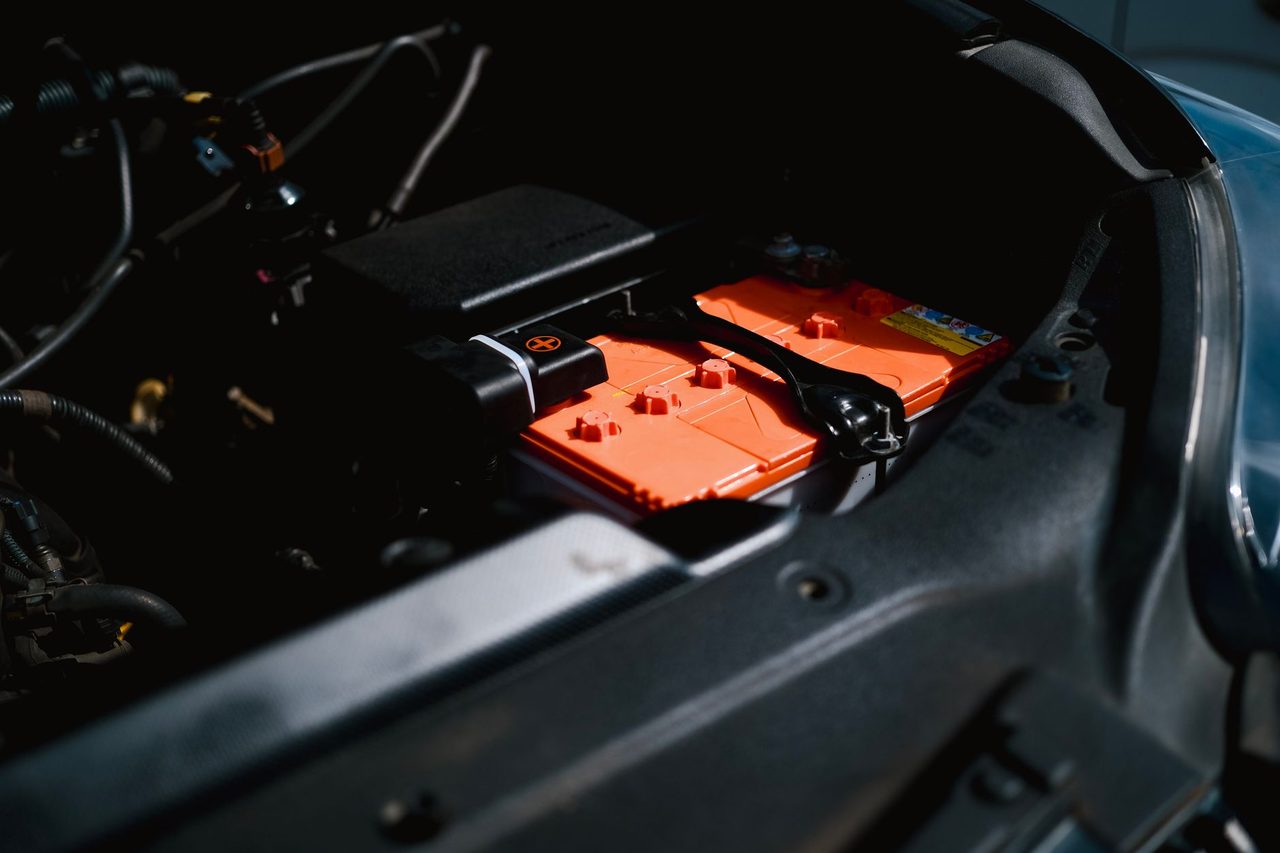
Photo: Ayyeee Ayyeee on Pexels
India’s battery circularity market is entering a new phase in 2026. Until recently, most discussions focused on collection targets, black mass yields, scrap pricing and recycling plant economics. Those remain important, but a new layer is now shaping commercial outcomes: battery passport implementation.
For Indian OEMs, fleet operators, BESS developers, recyclers, financiers and compliance teams, the battery passport is no longer only a future export requirement. It is becoming a practical operating tool for traceability, EPR evidence, residual-value discovery, second-life screening and contract enforcement across the battery value chain.
This matters because battery circularity in India is still losing value at handoff points. Assets change hands with incomplete serial-level data. State-of-health claims are not consistently verifiable. Reverse logistics players often receive batteries with weak chain-of-custody records. Recyclers price in uncertainty. Lenders and insurers apply risk haircuts. In a market where lithium-ion battery scrap prices, refurbishment outcomes and recovered metal values can move quickly, missing data directly translates into lower realisation and higher compliance cost.
A battery passport framework can reduce that value leakage if it is designed for Indian operating conditions rather than copied from Europe without adaptation. The winners in 2026 will be the firms that treat passport readiness as an infrastructure project spanning IT, contracts, field operations, and EPR controls.
Why battery passports matter in India now
The immediate trigger is not only policy convergence with international markets, but also domestic complexity. India’s battery flows now span e-2W, e-3W, buses, commercial fleets, behind-the-meter storage, telecom backup, utility-scale BESS pilots and imported packs for multiple applications. This creates a fragmented asset base with different chemistries, pack designs, usage patterns and end-of-life pathways.
At the same time, the Battery Waste Management Rules, 2022 continue to push producer responsibility, traceability and verifiable fulfilment. By 2026, the market expectation has moved beyond annual declarations. Producers, importers and their ecosystem partners increasingly need transaction-grade evidence on where batteries were sold, deployed, serviced, repurposed and recycled.
Battery passports support that need by linking a battery’s identity to a persistent data record. In practice, this may include:
- Manufacturer and producer details
- Cell chemistry and pack architecture
- Rated energy, voltage and manufacturing date
- Serial number and batch traceability
- Service and repair records
- Charge-discharge history or summarised usage metrics
- Safety incidents and warranty claims
- State-of-health assessment records
- Ownership transfers and deployment history
- End-of-life routing to refurbisher, repurposer or recycler
- Recovery certificates and EPR evidence references
For Indian stakeholders, the business case is straightforward. Better traceability can improve used-battery pricing by narrowing uncertainty on chemistry, contamination risk and remaining useful life. It can also cut EPR leakages where batteries disappear into informal channels or where producer claims cannot be substantiated during audit.
The core commercial use cases beyond compliance
Many market participants still frame battery passports as a compliance burden. That is an incomplete view. In India, the strongest case for implementation is commercial.
First, passports can materially improve residual-value pricing. A battery pack with documented origin, chemistry, cycle history and service records is easier to classify into reuse, second-life or recycle streams. That means less blanket discounting. In fleet-heavy segments such as e-3W and electric buses, even a 5-10% improvement in residual value can reshape total cost of ownership calculations.
Second, passports improve second-life screening efficiency. Not every retired EV battery is suitable for stationary use. Without reliable data, project developers need deeper testing, larger rejection buffers and more conservative warranty assumptions. That raises the delivered cost of second-life BESS. With passport-linked records, developers can pre-filter candidate batteries by age, temperature exposure, incident history and state-of-health bands before physical intake. This directly supports stronger economics for Second-life battery applications.
Third, passports help recyclers plan processing and pricing. Chemistry visibility matters. LFP, NMC and LCO streams have different commercial outcomes, discharge requirements and recovery pathways. If incoming scrap is poorly identified, recyclers bear sorting risk and offer lower prices. With better data capture upstream, recyclers can quote more accurately and reduce turnaround times.
Fourth, lenders and insurers gain comfort from documented asset provenance and operating history. In 2026, many lenders still treat battery residual value conservatively because secondary market data is thin and chain-of-custody quality is inconsistent. Passport-backed datasets can gradually support more credible underwriting assumptions for fleets, swap operators and BESS portfolios.
What a practical Indian battery passport stack looks like
In India, implementation should be pragmatic. The right question is not whether every battery needs a highly complex digital twin on day one. The right question is which minimum dataset creates real operational and financial value while remaining executable across fragmented supply chains.
A practical battery passport stack in 2026 should include five layers.
- Identity layer: unique ID at cell, module or pack level as commercially relevant; QR code or RFID linked to backend system
- Data layer: manufacturing, chemistry, capacity, service and end-of-life fields with standard definitions
- Event layer: sale, installation, swap, service, incident, warranty action, ownership transfer and retirement events
- Compliance layer: EPR mapping, recycler documentation, recovery references and audit trail
- Commercial layer: state-of-health reports, valuation records, refurbishment decisioning and resale or recycle routing
For most Indian operators, the pack-level passport will be the practical starting point. Cell-level traceability is ideal in some cases, but cost and systems burden can be excessive for mass-market segments unless driven by export requirements or high-value stationary applications.
Technology costs are not prohibitive if scoped correctly. For a mid-sized OEM or fleet platform, incremental software and process costs can range from roughly Rs 150 to Rs 600 per battery pack equivalent during initial implementation, depending on integration complexity, field digitisation needs and testing protocols. Larger costs usually arise not from tags or dashboards, but from weak master data, inconsistent dealer processes and poor after-sales record capture.
This is why passport projects often fail when owned only by compliance teams. They need cross-functional ownership spanning product, service, IT, legal, reverse logistics and finance.
Contract design: where most value is won or lost
Battery passport implementation in India will not work if underlying contracts do not require data continuity. This is especially true in channels involving dealerships, swapping operators, lease structures, fleet aggregators, O&M providers and third-party collectors.
Three contract areas deserve immediate attention in 2026.
First, OEM-to-channel partner agreements must define mandatory data capture events. These include sale, installation, service, module replacement, incident reporting, retrieval and end-of-life transfer. If these obligations are vague, passport records will be incomplete precisely when needed for EPR or valuation.
Second, ownership-transfer clauses should preserve data rights. Batteries frequently move across users, financiers, lessors and recovery partners. Contracts should specify who can update records, who can view technical history, and how commercially sensitive fields are protected. Otherwise, asset histories break at resale.
Third, recycler and refurbisher agreements should align data standards with settlement terms. For example, chemistry mismatch, moisture contamination, missing IDs or undocumented damage should map to pre-agreed pricing adjustments. This reduces disputes and makes battery offtake markets more liquid.
For Indian fleet and storage operators, there is also a strong case to include passport-linked return conditions in battery leasing and availability contracts. If the offtaker cannot demonstrate approved service history or chain of custody, warranty and residual-value assumptions may not hold.
This is where advisory support can add measurable value. Companies implementing End-of-life fleet audits and EPR compliance workflows are often able to identify leakage points that are invisible in standard legal reviews, especially where informal recovery channels or dealer-led servicing distort records.
EPR economics and traceability benefits in 2026
The EPR cost impact of battery passports is often underestimated. In India, producer obligations are not just about eventual recycling; they are about proving compliant collection and processing through traceable records. In fragmented channels, this proof is expensive.
Without reliable passport-grade data, producers face several cost penalties:
- Higher collection and verification expense per unit
- Greater dependence on intermediaries for evidence consolidation
- Increased risk of duplicate, weak or disputed recycling documentation
- Lower recovery from batteries diverted into informal markets
- Internal audit and reconciliation burden across sales and service networks
For many producers, these inefficiencies can add the equivalent of 3-8% to effective EPR fulfilment cost compared with a better-controlled traceability model. The exact number varies by channel mix and geography, but the direction is clear: better battery identity and event records reduce compliance friction.
This is especially relevant in high-churn segments like e-rickshaws and swapping-linked batteries, where batteries may be moved, repaired, pooled or resold multiple times before formal retirement. A passport-driven system can improve evidence quality for Reverse logistics and authorised recycling handoff.
The policy environment is also maturing. While India’s battery passport framework is still evolving relative to the most prescriptive global models, market practice is moving ahead of regulation in some segments. Export-facing manufacturers, premium mobility OEMs and organised BESS platforms are beginning to create voluntary data standards because buyers and financiers increasingly ask for them.
Challenges Indian stakeholders should plan for
Battery passport implementation is not simple, and overpromising can backfire. There are four recurring challenges.
The first is data integrity. If field technicians, dealers or swap stations do not consistently capture events, the passport becomes a partial archive rather than a trusted operating record. Process discipline matters more than dashboard aesthetics.
The second is interoperability. India’s value chain includes many software systems that do not naturally talk to each other: ERP platforms, telematics, BMS logs, CRM tools, service apps and recycler systems. Passport architecture should avoid lock-in and enable API-based integration where possible.
The third is commercial confidentiality. OEMs may hesitate to share design and usage data with downstream players. A layered permission model is essential so that recyclers see what they need for safe processing, while sensitive IP remains protected.
The fourth is the informal sector interface. A meaningful share of end-of-life batteries can still leak into untracked channels, especially in low-value or cash-driven transactions. Passport systems will only capture value if commercial incentives push batteries toward formal collection networks.
This is why implementation should be paired with channel design, take-back incentives, partner onboarding and spot audits, not just software deployment.
A 2026 implementation roadmap for OEMs, fleets and BESS developers
For companies starting now, a phased model works best.
Phase 1 is scoping. Identify which battery populations matter most by value, risk and compliance exposure. For many firms, this will be leased EV fleets, swapped batteries, high-throughput service channels or utility and C&I storage assets.
Phase 2 is minimum viable dataset design. Define the mandatory fields and event triggers that support EPR, valuation and end-of-life decisioning. Avoid collecting data with no operational use.
Phase 3 is contract alignment. Update OEM, dealer, fleet, service, refurbisher and recycler agreements so data capture and chain-of-custody obligations are enforceable.
Phase 4 is systems integration. Connect BMS outputs, service records, claims data and retirement workflows into a central traceability layer. This does not require rebuilding all systems from scratch.
Phase 5 is pilot execution. Start with a geography, fleet cohort or product line large enough to test real-world issues such as ID damage, offline workflows and disputed service entries.
Phase 6 is audit and scale-up. Use exception analysis to identify missing events, unauthorised replacements, unexplained battery losses and documentation gaps before national rollout.
In our view, by the end of 2026, battery passport readiness will begin to separate serious circularity platforms from opportunistic compliance programs. The market will increasingly reward traceable batteries with better resale, smoother EPR fulfilment and more financeable second-life and recycling pathways.
For India, the key is to avoid treating the passport as a purely regulatory artifact. It should function as a commercial record that preserves value from first sale to final recovery. Done well, it can improve pricing discipline, strengthen recycling offtake confidence, support second-life deployment and reduce evidence risk across the battery chain.
If your organisation is building a battery circularity strategy in 2026, contact Growthifye’s advisory desk for support on data architecture, EPR operating models, partner contracts and scalable implementation across circular value chains.
Explore Growthifye's related capabilities
This analysis connects directly to our advisory practice: End-of-life fleet audits · Second-life battery applications · Module & battery recycling · EPR compliance.
About the author

Chief Executive Officer, Growthifye — With over 23 years in management consulting, Sudarshan has taken businesses from concept to scale — building and scaling new-age digital and energy businesses.
- 23+ years in management consulting
- EY alumnus
- Led large-scale BESS programmes, capital raises and advisory mandates
Want this analysis applied to your project?
Talk to our team