
Waste-to-Energy in India 2026: Gate Fees, PPA Risk and Project Bankability
By Sudarshan Karweer · sudarshan@growthifye.com · +91 84510 99371 (Call / WhatsApp) · 2026-09-18
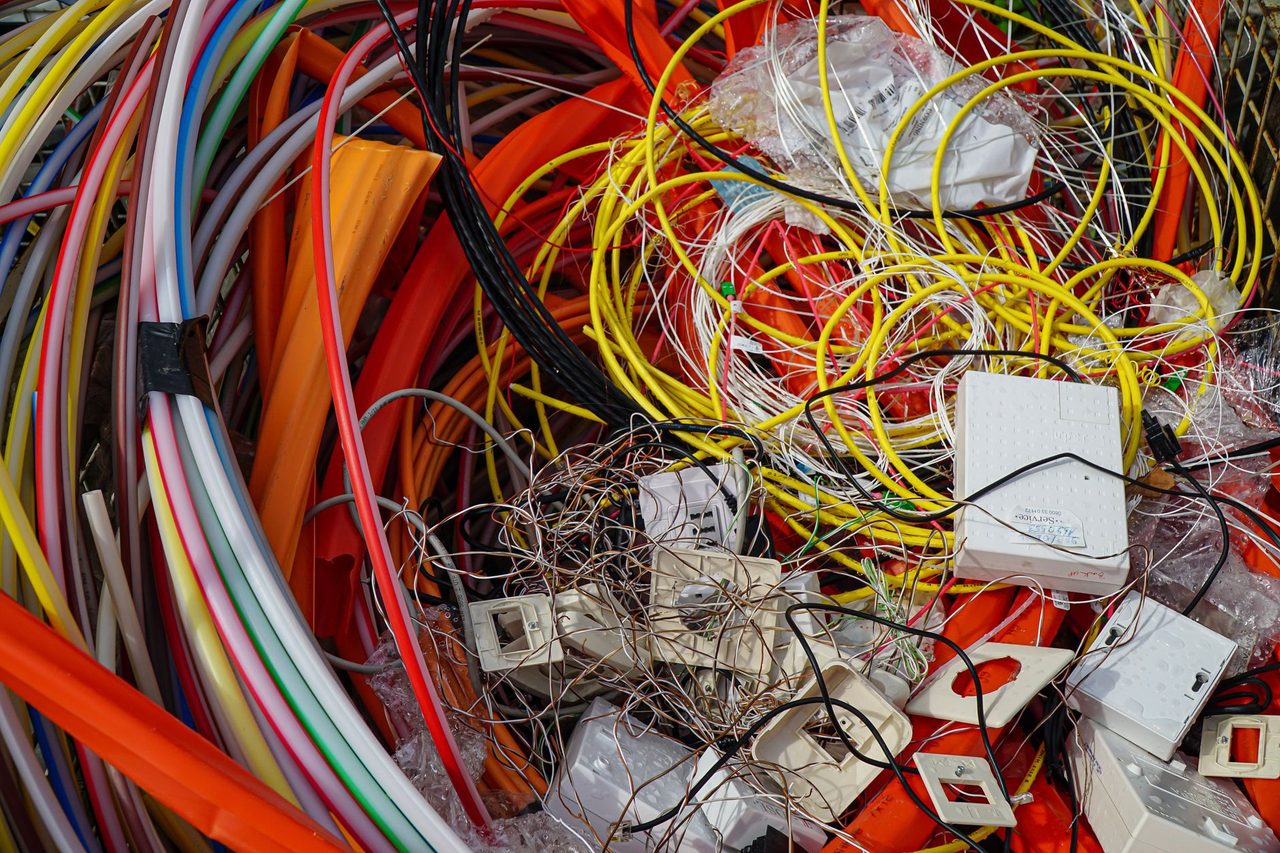
India’s waste-to-energy sector is re-entering serious investor discussion in 2026, but not for the reasons often used in policy presentations. The real questions today are commercial and credit-focused: who guarantees waste quantity, who bears moisture and calorific-value risk, how are tipping fees indexed, what tariff structure can survive DISCOM stress, and how do lenders underwrite emission-control uptime and residue disposal liability?
For Indian C&I energy consumers, utilities, municipal bodies, developers and lenders, waste-to-energy is best understood as a circular infrastructure business with a power plant attached, not the other way around. Project outcomes are determined less by nameplate megawatts and more by collection efficiency, preprocessing discipline, gate-fee enforcement, emissions systems, and the legal architecture linking urban local bodies, concessionaires, EPC contractors, O&M providers, DISCOMs and lenders.
This article focuses on municipal solid waste-based waste-to-energy in India in 2026, with a practical lens on tariffs, tipping fees, policy design, EPC and O&M interfaces, and project-finance bankability.
Why the 2026 market looks different
Three shifts have changed project evaluation in 2026.
First, urban local bodies are under sharper compliance pressure on legacy dump remediation, scientific waste processing and landfill diversion. This has increased interest in integrated concession structures where collection, material recovery, RDF preparation, biomining of old dumps and waste-to-energy are bundled or at least commercially linked.
Second, lenders have become more selective. A generation asset backed by weak waste-supply controls is no longer viewed as a standard independent power project. Credit committees now ask for route-level waste data, seasonal composition studies, audited historical tonnage, moisture distribution, rejection rates after material recovery, and escrow-backed tipping-fee payment mechanisms.
Third, economics are becoming more transparent. Developers now model revenue as a stack of gate fees, power sales, recyclables recovery, processing subsidies where available, and sometimes by-product value. In many projects, the gate fee is the primary revenue stabiliser while electricity revenue is the secondary leg. That distinction matters because many proposals still overemphasise tariff upside and underprice feedstock variability.
The core economics: gate fee first, power tariff second
A practical India 2026 waste-to-energy model begins with daily processed tonnage and net realised gate fee per tonne.
Typical headline numbers seen in the market vary widely by city and project structure, but a broad working range for municipal processing/tipping or gate-fee support can fall between about Rs 800 and Rs 2,500 per tonne of waste handled. The lower end usually reflects weak municipal payment capacity, mixed contract scope, or partial support for only processing stages. The higher end generally appears where the concession includes broader service obligations, stronger enforcement, or more difficult waste conditions. Developers should focus on net collectible fee, not contracted fee.
Power output economics depend heavily on waste quality. Mixed municipal solid waste in Indian cities often has high moisture and significant inert content. Unless segregation and preprocessing are strong, net plant load factor and exported units can fall well below bid assumptions. In practice, developers should test at least three scenarios:
- Base-case lower heating value aligned to audited city-specific sampling, not generic benchmarks
- Monsoon-case deterioration in moisture and collection efficiency
- Stress-case increase in inerts and recyclable extraction by the informal sector or MRF operators
Export tariffs in operating and proposed projects can still range meaningfully by state, technology route and procurement structure. A broad market planning range of around Rs 5.5 to Rs 8.5 per kWh is useful for preliminary screening, but project developers should not assume the upper end unless backed by an actual offtake framework. In many cities, payment security from the power purchaser matters more than nominal tariff.
Auxiliary consumption, residue handling cost, lime/urea/activated carbon use, bag-filter maintenance, and APC system uptime materially influence margins. A plant that looks viable on gross revenue can quickly weaken after accounting for parasitic load, residue transport and disposal, and prolonged outages caused by feedstock inconsistency.
For that reason, lenders increasingly ask for a detailed monthly bridge from incoming waste tonnes to exportable electricity, bottom ash and fly ash generation, recoverable recyclables, rejected inerts, and landfill disposal requirement.
Feedstock contracts: the single biggest determinant of bankability
Most Indian waste-to-energy underperformance can be traced back to feedstock assumptions rather than boiler design alone. The bankable question is not whether a city generates enough waste on paper; it is whether the project company receives processable waste of predictable quality with measurable remedies if not.
A financeable concession or waste-supply arrangement should define:
- Minimum assured tonnage by day and by month
- Delivery point and transfer-station responsibilities
- Waste composition and moisture-testing protocol
- Segregation obligations upstream
- Maximum inerts and C&D contamination thresholds
- Cure rights and compensation if delivered waste falls below specification
- Seasonal adjustment methodology
- Step-in rights if collection contractors fail
- Penalties for diversion of higher-calorific fractions away from the project
In 2026, sophisticated developers are pushing for independent weighbridge integration, GPS-linked route data, CCTV evidence at transfer points and third-party sampling. These are not administrative extras; they are the basis for revenue certainty.
Municipal bodies also need to recognise a commercial reality: if they retain value-rich dry fractions for separate processing but expect the WtE operator to accept only wet, low-calorific residuals at the same tariff assumptions, the project’s power economics degrade sharply. The answer is not optimism in the DPR. The answer is a revised gate-fee formula and clear residual-waste definition.
Where cities are redesigning their waste chain, Growthifye’s work in Reverse logistics and Circularity reporting is relevant because upstream collection quality and downstream reporting integrity directly affect concession performance and lender comfort.
Tariff design, PPAs and payment security
Power sale structures for waste-to-energy in India still face the familiar challenge of DISCOM payment risk. A workable tariff is not only a matter of levelised cost; it must align with purchaser appetite, must-run treatment, scheduling rules where applicable, and curtailment risk.
Developers should negotiate PPAs with clarity on the following points:
- Must-run status or dispatch priority, if available under state policy
- Metering point and treatment of auxiliary consumption
- Deemed generation treatment during grid outages not attributable to the project
- Change-in-law pass-through for emissions or residue-handling mandates
- Payment timeline, delayed-payment surcharge and escrow support
- LC or equivalent security mechanism where feasible
- Curtailment compensation methodology
Some projects may also evaluate captive or private offtake concepts for a portion of output, especially where industrial demand exists nearby. However, municipal solid waste-based projects are usually structured around public offtake because plant siting, concession obligations and social licence are tied to city service delivery. Private sale may improve value in isolated cases, but it does not substitute for robust waste-side contracting.
Lenders generally prefer projects where power revenue is supplemental rather than sole support for debt service. If the financial model requires consistently high PLF and prompt DISCOM payment to meet DSCR, the structure is fragile. A stronger model uses contracted gate-fee cash flows as the base layer and treats energy revenue as upside or at least secondary support.
EPC, technology selection and emissions compliance
Indian waste-to-energy discussions often become polarised between technology marketing and anti-incineration rhetoric. From an advisory perspective, the practical issue is fit-for-feedstock engineering with enforceable performance obligations.
Technology selection should start from actual waste composition, segregation rates and seasonal variability. Mass-burn systems, RDF-linked approaches, and integrated material-recovery-plus-energy configurations each imply different preprocessing intensity, capex profile, parasitic load, and outage risk. There is no universal best option.
What matters in EPC contracting is that performance testing reflects Indian waste reality. Key protections include:
- Guaranteed throughput linked to specified waste envelope
- Heat-rate or net export guarantees adjusted for agreed feedstock bands
- APC system performance guarantees and consumables assumptions
- Availability guarantees separated between process island and balance of plant
- Liquidated damages for underperformance with meaningful caps
- Spares strategy for grate, boiler, refractory and APC equipment
- Long-stop dates tied to municipal dependency milestones
Emissions compliance remains central. Projects must align with prevailing CPCB and state pollution control norms, consent conditions, stack monitoring requirements, ash handling protocols and leachate management obligations. In 2026, developers ignoring continuous monitoring uptime, reagent logistics and residue classification are unlikely to obtain comfortable lender sign-off.
Bottom ash and fly ash management also deserve early structuring. The disposal route, testing regime, transport cost and long-term liability must be budgeted from day one. A project with optimistic ash reuse assumptions but no contracted pathway can face immediate operating stress.
What lenders now test before financing
Credit standards have become more granular. Lenders and infrastructure investors typically review six risk buckets.
First is concession credit quality. Is the municipal counterparty capable of timely tipping-fee payment? Is there state support, escrow, annuity backing or intercept mechanism?
Second is feedstock reliability. Are waste studies recent, independently verified and seasonally representative? Is there evidence from actual route operations rather than desk estimates?
Third is technology-operability fit. Has the selected process handled comparable Indian waste streams at scale, with reference plants and measured emissions compliance?
Fourth is revenue diversification. How much of debt service relies on power sales versus gate fees? Are any carbon or by-product assumptions conservative and non-essential?
Fifth is legal risk allocation. Are concession, EPC, O&M, ash disposal, land rights, utility interfaces and insurance aligned, or are there gaps between documents?
Sixth is social and environmental continuity. Is there a credible plan for odour control, truck movement, informal-sector interface, community grievance handling and emergency response?
Typical lender sensitivities in 2026 include:
- 10% to 20% downside in delivered tonnage
- 100 to 200 kcal/kg reduction in effective calorific value
- 60 to 120 day municipal payment delays
- APC reagent cost escalation
- Lower exported units due to high monsoon moisture
- Higher ash disposal cost and transport distance
Projects that remain above minimum DSCR thresholds after these stress tests are still limited, which is why developers should spend more time on concession design than on headline MW sizing.
A practical roadmap for cities and developers
For municipal bodies, the fastest way to improve bankability is not announcing larger plants. It is fixing the commercial plumbing.
- Commission fresh waste characterisation studies across seasons
- Ring-fence tipping-fee payment security
- Define residual waste after segregation and MRF extraction
- Integrate transfer-station data systems and independent weighment
- Allocate legacy-waste, fresh-waste and recyclables value streams clearly
- Standardise compensation for off-spec waste delivery
For developers, the winning strategy in 2026 is disciplined selectivity.
- Avoid bidding solely on nominal tariff opportunity
- Price monsoon and contamination risk explicitly
- Seek measurable feedstock remedies, not vague best-efforts clauses
- Secure ash and residue pathways before financial close
- Align EPC guarantees to tested Indian waste conditions
- Build O&M capability around APC uptime and preprocessing discipline
For policymakers, the sector needs more than capital subsidy headlines. It needs standard concession clauses, better municipal payment security architecture, clearer residual-waste definitions in integrated systems, and consistent enforcement on landfill diversion and scientific processing. Policy stability around waste supply obligations would lower risk premiums more effectively than symbolic incentives.
Waste-to-energy in India will remain a niche but important piece of the circularity landscape, especially for cities with high landfill pressure and limited land availability. But only a subset of projects will be financeable. The separating line is straightforward: can the project convert messy municipal reality into contracted, measurable and enforceable cash flows?
That is where experienced advisory matters. Growthifye supports circular infrastructure strategy across waste and resource-recovery value chains, including EPR compliance and project structuring for complex stakeholder environments.
If you are evaluating a waste-to-energy concession, refinancing an operating plant, or redesigning a city-level circular processing strategy, contact Growthifye’s advisory desk for a commercial and bankability review.
Explore Growthifye's related capabilities
This analysis connects directly to our advisory practice: End-of-life fleet audits · Second-life battery applications · Module & battery recycling · EPR compliance.
About the author

Chief Executive Officer, Growthifye — With over 23 years in management consulting, Sudarshan has taken businesses from concept to scale — building and scaling new-age digital and energy businesses.
- 23+ years in management consulting
- EY alumnus
- Led large-scale BESS programmes, capital raises and advisory mandates
Want this analysis applied to your project?
Talk to our team

