
Second-Life BESS in India 2026: Economics, Standards and Commercial Contracts
By Sudarshan Karweer · sudarshan@growthifye.com · +91 84510 99371 (Call / WhatsApp) · 2026-09-17
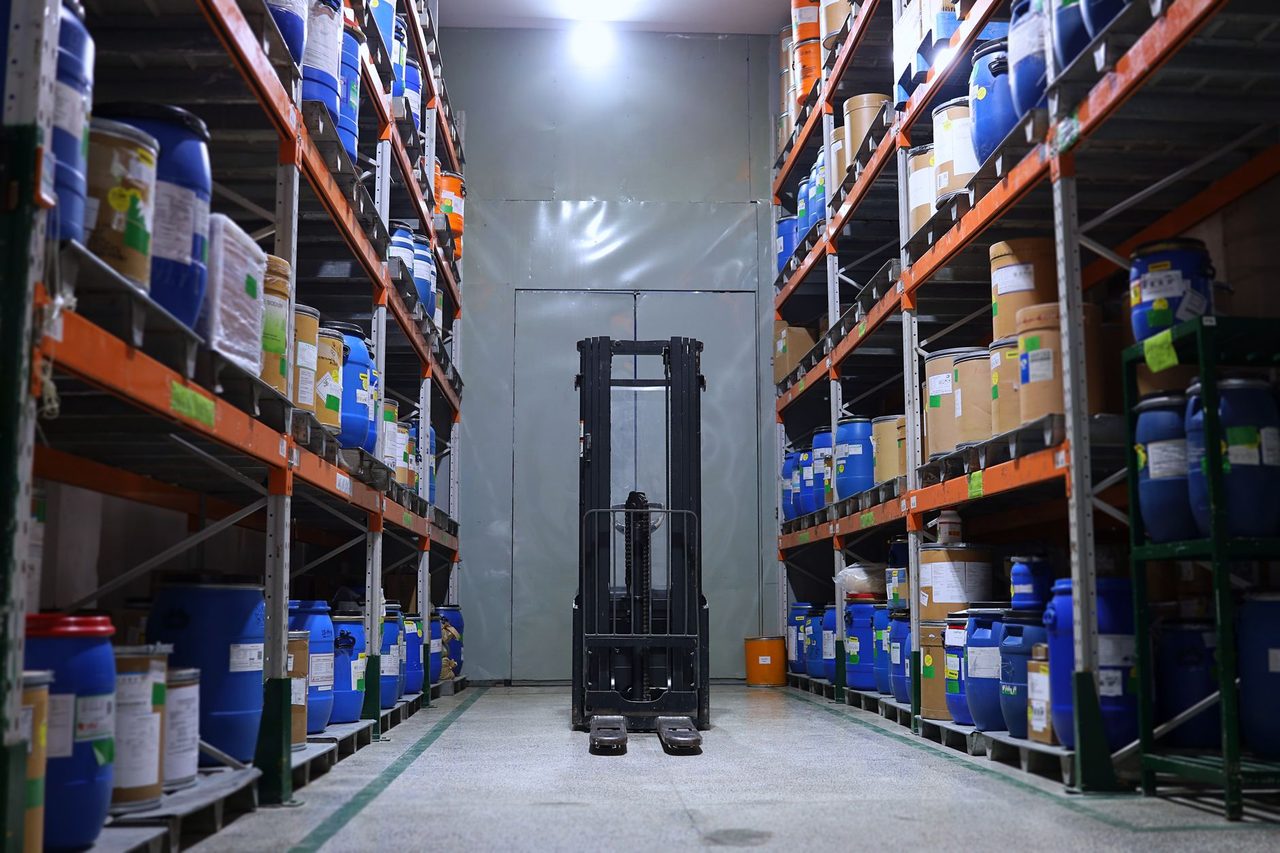
Photo: Elements Interactive on Pexels
India’s battery market is expanding far faster than its circular-use playbooks. By 2026, EV packs from 2W, 3W, buses, LCV fleets and stationary systems are beginning to create a usable pipeline for second-life battery energy storage systems, or second-life BESS. For developers, C&I consumers, DISCOM-facing storage operators and lenders, the commercial question is straightforward: when does a used battery pack become a bankable storage asset rather than a disposal liability?
That answer depends less on headlines around recycling and more on project-level math: state of health thresholds, repurposing cost, round-trip efficiency, thermal management, safety interlocks, augmentation schedules, dispatch profile and warranty structure. In India, second-life BESS is most relevant where cycle intensity is moderate, duration needs are short to medium, replacement economics are disciplined, and uptime requirements are important but not mission-critical in the way frequency regulation assets can be.
This article examines the 2026 Indian market for second-life BESS through a practitioner lens: viable use cases, techno-economic thresholds, policy and standards context, contract design, lender concerns and execution priorities.
Why second-life BESS is now commercially relevant in India
India’s first wave of circularity discussion focused on EPR, recycling capacity and metal recovery. The next layer is asset-value preservation. A lithium-ion battery that no longer meets automotive range or power expectations may still retain 70-85% state of health, depending on chemistry, use profile and thermal history. For stationary applications with lower C-rate requirements, that residual capacity can have value.
Three market shifts make second-life BESS more relevant in 2026:
- EV fleet scale is now large enough in selected segments to create repeatable battery-return volumes rather than one-off pilot stock.
- C&I storage demand is growing around demand-charge management, rooftop solar self-consumption, backup quality and feeder-level reliability support.
- New battery cell prices have moderated versus peak levels, but balance-of-system costs, import dependence, safety engineering and financing spreads still keep fresh BESS capex material for many users.
In practical terms, second-life BESS is not a universal substitute for new systems. It is a fit-for-purpose product. If the application can tolerate lower usable energy density, tighter operational envelopes and more active augmentation planning, then the capex discount can justify the complexity.
For India, the strongest near-term feedstock pool is likely to come from:
- 2W and 3W fleets with standardized pack designs where aggregation is possible
- E-bus and commercial fleet batteries retired from traction use with monitored duty history
- OEM or operator warranty returns not suitable for vehicle redeployment
- Stationary batteries removed during repowering or technology upgrades
The weakest feedstock pool is fragmented consumer scrap with poor data lineage. Second-life projects live or die on traceability.
Which Indian use cases fit second-life batteries best
The best use cases for second-life BESS in India are not necessarily the highest-revenue use cases on paper. They are the ones with manageable degradation risk, tolerable downtime economics and clear dispatch logic.
The most promising 2026 applications include:
- Solar self-consumption behind the meter for C&I sites
- Peak-demand shaving for customers facing demand charges or contracted-demand penalties
- Short-duration backup support for commercial campuses, logistics parks and light industrial users
- EV charging load management, especially where transformer upgrades are deferred
- Telecom, data edge and distributed infrastructure backup where energy throughput is moderate
- Microgrids in industrial estates or remote commercial clusters with high diesel displacement value
These applications typically involve 0.5-2 hour storage duration, a limited number of deep cycles compared with merchant arbitrage models, and measurable savings against retail tariffs or diesel backup costs.
By contrast, second-life batteries are less suitable for:
- High-performance ancillary-service applications with stringent response guarantees
- Heavy cycling energy arbitrage requiring aggressive throughput warranties
- Mission-critical installations where any uncertainty in degradation or outage carries severe penalties
- Utility-scale storage projects that rely on conservative lender assumptions and long operating tenors without strong augmentation support
For a C&I customer in India paying blended power tariffs of around INR 7-11 per kWh, plus demand charges that may range from roughly INR 250-500 per kVA per month depending on state and consumer category, second-life BESS can make sense if it reliably cuts peak draw, raises solar utilization and displaces expensive DG runtime. Where diesel-generated backup energy effectively costs INR 18-28 per kWh, even a modest-performance second-life system can create value if safety and uptime are properly engineered.
The 2026 economics: where second-life BESS can clear the hurdle
Second-life BESS economics are often overstated because repurposed packs are treated as if they are free. In reality, the usable capex advantage depends on feedstock acquisition, testing, disassembly, grading, remanufacturing, battery management system integration, containerization or rack assembly, fire suppression, HVAC and certification.
A practical 2026 Indian cost stack for second-life BESS may include:
- Battery pack acquisition cost based on residual value or buyback formula
- Transport and hazardous handling cost from collection points to repurposing site
- Diagnostic testing and grading cost per pack or per kWh screened
- Refurbishment, module replacement and pack reconfiguration cost
- New BMS, EMS and controls integration
- Thermal management and safety systems
- PCS, transformer, SCADA, enclosure and civil works
- Commissioning, performance testing and warranty reserve
At system level, well-executed second-life BESS may land at a 15-35% discount to comparable new-battery systems for selected applications, but this range is highly sensitive to feedstock quality and standardization. If incoming packs are inconsistent, the savings can disappear quickly in labor, rejects and oversizing.
A useful screening framework is to compare levelized delivered storage cost, not nominal capex. Developers should test:
- Initial usable capacity after repurposing
- Degradation slope under actual dispatch profile
- Auxiliary load from cooling and controls
- Round-trip efficiency, often lower than premium new systems
- Augmentation timing and replacement cost
- Revenue haircut from lower availability assumptions
For India in 2026, many second-life business cases begin to work when:
- The project monetizes both energy and demand-side value rather than only one revenue stream
- Required duration is short enough to limit pack count and thermal complexity
- Feedstock is sourced through structured OEM or fleet channels
- Capacity oversizing is acceptable at commissioning
- The customer values resilience and backup quality in addition to tariff savings
Indicatively, if a C&I site can avoid a combination of demand charges, diesel use and some high-tariff energy consumption worth INR 12-20 lakh per year for a small-to-mid sized system, a second-life project can become investable even with more conservative availability assumptions than a fresh BESS. But the project must be modelled with realistic augmentation reserves.
Standards, safety and compliance cannot be treated as afterthoughts
Second-life storage in India will not scale on economics alone. Safety discipline is the gating factor. By 2026, buyers and lenders are far less tolerant of vague claims around used battery safety, especially after heightened scrutiny on lithium-ion thermal incidents.
Every second-life BESS project needs a documented chain covering:
- Battery origin and chemistry identification
- Usage history, cycle count and thermal-event record where available
- State of health testing methodology
- Cell/module rejection criteria
- Reassembly and balancing protocol
- BMS logic, alarms and isolation strategy
- Thermal design and ventilation assumptions
- Fire detection, suppression and emergency response procedures
- Site operating envelope and maintenance instructions
Indian projects should align with applicable battery, electrical, fire and hazardous-waste requirements, while also referencing global storage safety practice where local standards are still evolving in detail. Buyers increasingly expect FAT, SAT, thermal runaway propagation controls, emergency shutdown design and documented operating restrictions.
This is where capabilities such as End-of-life fleet audits and Second-life battery applications become commercially important. The value is not only technical due diligence; it is risk segmentation. Not all returned batteries should enter second-life channels. Some should be redeployed directly, some repurposed after intervention, and some sent straight to recycling. Blurring these categories creates hidden liability.
Second-life also interacts with India’s battery waste and EPR framework. Once a battery is repurposed, responsibilities around producer obligations, traceability, end-of-second-life collection and eventual recycling need to be contractually allocated. If this is ignored at commissioning, disputes appear later over who funds final recovery and who carries compliance exposure.
Commercial contracts: the clauses that matter most
In second-life BESS, commercial structure matters as much as chemistry. Standard EPC templates designed for new equipment are usually inadequate.
The key contracts typically include:
- Feedstock supply agreement with OEM, fleet operator, leasing platform or collection aggregator
- Repurposing and integration contract with performance specifications
- EPC or supply-and-installation contract for the stationary system
- LTSA or O&M agreement with monitoring, replacement and response obligations
- Customer offtake or energy-services agreement where storage is delivered as a service
- End-of-life recovery and recycling agreement
The clauses that deserve special attention are:
- State of health definition: laboratory SOH, field SOH and usable energy are not interchangeable. The contract must specify test protocol and acceptance threshold.
- Capacity guarantee: should be tied to usable delivered energy at specified temperature, C-rate and SOC window.
- Augmentation obligation: who pays for replacement modules or packs once capacity falls below threshold?
- Throughput warranty: attractive on paper, but risky if battery provenance is mixed.
- Excluded conditions: ambient extremes, irregular cycling, extended high SOC storage and charging anomalies must be clearly carved out.
- Recall and defect allocation: if an original OEM later identifies systemic pack issues, liability pathways must be clear.
- Data access: the owner, O&M contractor and financier may all require telemetry rights.
- Final disposition: batteries rejected during repurposing and batteries retired from second-life service must flow into compliant Module & battery recycling channels.
For lenders and investors, three contract tests are decisive:
- Is the feedstock pipeline reliable enough to support planned scale?
- Is the performance guarantee measurable and enforceable?
- Is there a financially credible plan for augmentation and end-of-life recovery?
If the answer to any one of these is weak, the project should be treated as a higher-risk infrastructure asset and priced accordingly.
What lenders, utilities and policymakers should watch in 2026
Lenders should avoid generic assumptions borrowed from new BESS underwriting. Second-life projects need differentiated diligence on battery provenance, testing records, fleet concentration risk and reserve funding for replacements. Debt sizing should reflect lower certainty on long-tail performance unless strong sponsor support or OEM participation is present.
Utilities and DISCOM-facing storage programs should treat second-life BESS as a targeted resource, not a blanket alternative to fresh assets. It can be useful for non-wires applications, local reliability support and pilot flexibility programs, but operational limits must be transparent.
For policymakers, the priority is not only incentive support. It is market architecture:
- Clear classification of repurposed batteries in compliance systems
- Traceability standards across first life, second life and final recycling
- Testing and labeling norms for repurposed stationary systems
- Safe transport and storage rules for returned batteries
- Data-sharing protocols that protect commercial confidentiality but enable safety and compliance oversight
India’s circularity opportunity is strongest when policy supports hierarchy: extend useful life where safe and economic, then recover materials efficiently. That is better value creation than forcing all retired packs immediately into metallurgical recovery regardless of residual utility.
A practical execution roadmap for Indian market participants
For C&I consumers, developers and OEM-linked platforms evaluating second-life BESS in 2026, the correct entry strategy is selective deployment, not broad rollout.
A workable roadmap is:
- Start with standardized battery cohorts rather than mixed chemistry scrap pools
- Prioritize behind-the-meter use cases with multiple value streams
- Run detailed incoming battery diagnostics before commercial commitment
- Design conservative dispatch windows to preserve life and safety margin
- Build augmentation reserve into the financial model from day one
- Secure documented end-of-life routing under EPR compliance obligations
- Require full telemetry, event logging and maintenance protocols
- Pilot on sites where resilience value is visible and measurable
Developers should also compare three options side by side:
- New BESS with full warranty and higher upfront capex
- Second-life BESS with lower capex but tighter operating envelope
- Hybrid systems where critical load support sits on new batteries and non-critical peak shaving sits on repurposed batteries
In many Indian settings, the hybrid route may prove most bankable. It preserves reliability for essential operations while capturing circularity value from repurposed assets where risk is manageable.
Second-life BESS is not a shortcut around battery economics. It is a discipline in asset grading, safety engineering, contract design and lifecycle accountability. Done well, it can lower storage cost for selected Indian applications, reduce waste, defer raw-material recovery and create a commercially meaningful bridge between mobility growth and stationary power needs. Done poorly, it transfers hidden degradation and compliance risk into projects that were never structured to absorb it.
The winners in 2026 will be those who treat second-life storage as an engineered infrastructure product, not a salvage trade.
If you are evaluating second-life storage, battery circularity strategy or project structuring, contact Growthifye’s advisory desk for practical support on technical due diligence, commercial design and deployment readiness.
Explore Growthifye's related capabilities
This analysis connects directly to our advisory practice: End-of-life fleet audits · Second-life battery applications · Module & battery recycling · EPR compliance.
About the author

Chief Executive Officer, Growthifye — With over 23 years in management consulting, Sudarshan has taken businesses from concept to scale — building and scaling new-age digital and energy businesses.
- 23+ years in management consulting
- EY alumnus
- Led large-scale BESS programmes, capital raises and advisory mandates
Want this analysis applied to your project?
Talk to our team

