MDM for Indian DISCOMs 2026: Smart Meter Data Quality, Revenue and RDSS ROI
By Sudarshan Karweer · sudarshan@growthifye.com · +91 84510 99371 (Call / WhatsApp) · 2026-09-18
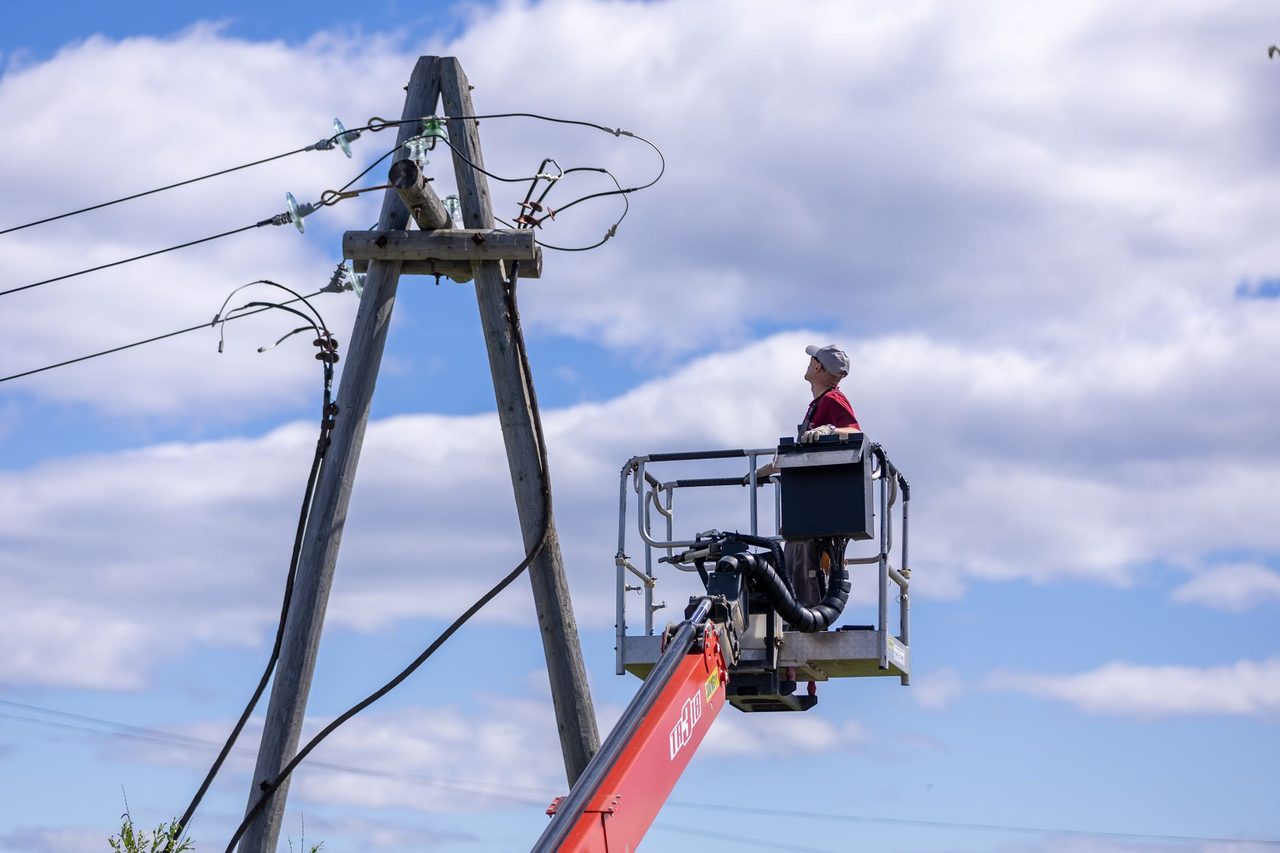
Photo: Sergei Starostin on Pexels
India’s AMI rollout has moved the sector’s attention from meter procurement to data operations. In 2026, the harder question for DISCOMs is no longer how many smart meters were installed, but whether interval data, events, tamper alarms and load profiles are actually improving billing efficiency, collection performance, outage response and AT&C loss analytics. This is where meter data management, or MDM, has become strategically important.
For many Indian utilities, AMI head-end systems are already ingesting meter reads at scale. But head-end systems are not designed to be the utility’s long-term source of truth for billing-grade validation, estimation, editing, aggregation, exception handling, interval analytics and enterprise integration. Without a robust MDM layer, DISCOMs often end up with fragmented data pipelines, manual reconciliations and poor confidence in the very data they want to use for revenue assurance and network planning.
This article looks at MDM as a utility digitalisation priority for Indian DISCOMs in 2026, especially in the context of RDSS, prepaid smart metering, feeder and DT energy accounting, and tighter lender scrutiny on measurable operational outcomes. It also explains why C&I consumers, RE developers and financiers should care about the quality of meter data used by distribution companies.
Why MDM matters now in India’s 2026 utility landscape
India’s smart metering programme has reached a scale where data quality has become an operational and financial issue, not only an IT issue. Under RDSS, utilities are expected to demonstrate improvements in billing efficiency, collection efficiency and AT&C loss reduction. Smart meters can support these goals, but only if data is complete, validated and integrated into billing, outage management and analytics workflows.
An MDM platform sits between the AMI head-end and the enterprise applications that depend on meter data. Its role includes:
- Validating interval reads, billing reads and event data
- Estimating missing values using approved business rules
- Editing suspect reads through controlled workflows
- Creating settlement-quality and billing-quality datasets
- Managing exceptions such as communication failures, clock drift and duplicate reads
- Aggregating feeder, DT and consumer-level data for energy accounting
- Feeding CIS, billing, outage management, analytics and planning systems
For Indian DISCOMs, this matters because meter communication success rates are rarely uniform across circles. In practice, daily read success can vary from above 95% in strong RF or cellular pockets to below 80% in difficult terrains, high-rise clusters or areas with chronic telecom instability. If those gaps are not handled through disciplined validation-estimation-editing workflows, billing accuracy deteriorates, prepaid balances become unreliable and consumer disputes rise.
In urban C&I-heavy license areas, even a 0.5% to 1.0% billing leakage on high-value consumers can translate into material annual revenue loss. If an HT and large LT portfolio worth Rs 1,500 crore to Rs 3,000 crore in annual billed demand sees weak meter-data controls, the leakage potential can run into several crore rupees a year. MDM is therefore not just a backend system; it is a revenue protection layer.
The difference between HES and MDM in an Indian DISCOM stack
A common implementation mistake is to assume the AMI head-end system can perform the role of enterprise-grade meter data management. The head-end’s primary task is device communication: collecting reads, issuing commands, pulling events and maintaining connectivity with meter populations. It is essential, but it is not sufficient.
MDM has a different operating purpose. It standardises and industrialises how data is trusted and used across the utility. In a typical DISCOM architecture in 2026, the stack increasingly includes:
- Smart meters and communication network
- HES for meter communication and command execution
- MDM for VEE, historical storage and enterprise data services
- CIS and billing systems
- Prepaid vending or balance management systems
- Feeder and DT energy accounting applications
- Outage, customer-service and field-force tools
- Analytics layers for theft detection, loss segmentation and load research
This separation is especially important for utilities running multi-vendor AMI estates under RDSS. Different meter OEMs and HES providers may represent events, registers and load-profile structures differently. A strong MDM layer normalises those differences so that billing, analytics and audit functions do not break each time a new vendor cluster is added.
This is one reason Vendor-neutral specifications are increasingly important during procurement. If the MDM data model, VEE rules, API structures and integration responsibilities are weakly defined, utilities can face expensive rework later when scaling from pilot circles to statewide deployments.
Revenue assurance: where MDM creates the clearest ROI
The most immediate business case for MDM in India is revenue assurance. Smart meters generate much more than monthly kWh reads. They produce interval consumption, outage events, reverse current flags, magnetic tamper alarms, neutral disturbance indicators, cover-open events, remote connect-disconnect logs and voltage-quality information. But that raw telemetry only creates commercial value if it is organised into actionable workflows.
An MDM platform improves revenue in at least six ways:
- Higher actual-read billing rate: fewer provisional bills and fewer manual exceptions
- Better handling of missing data: validated estimation reduces bill delays
- Tamper-event correlation: suspect events can be linked with consumption anomalies
- Read-to-bill cycle compression: faster availability of billing-quality data
- Accurate prepaid balance updates: critical for consumer trust and collection integrity
- Stronger audit trails: supports dispute resolution and regulatory scrutiny
Consider a DISCOM with 50 lakh smart meters and average monthly billed revenue of around Rs 700 to Rs 900 per consumer across a mixed portfolio. If MDM-led improvements reduce unbilled or delayed-billed accounts by even 1.5 percentage points, the working-capital impact can be significant. Similarly, if exception-based monitoring identifies 20,000 to 50,000 high-risk meter cases per month for targeted field action, the recovered revenue can justify MDM investment quickly.
In high-value C&I segments, interval data validation also supports better contract-demand enforcement, time-of-day billing integrity and reconciliation of disputed consumption patterns. For open-access and captive-heavy industrial clusters, data confidence matters because billing disputes can spill into power-procurement planning, demand penalties and claims around quality of supply.
MDM’s role in AT&C analytics, DT metering and feeder accounting
Indian utilities often discuss AT&C loss reduction at the feeder or division level, but smart metering has made consumer-level and transformer-level energy accounting more granular. To use that granularity well, data from consumer meters, feeder meters and DT meters must be time-aligned, cleansed and aggregated consistently. This is exactly the type of work an MDM platform is meant to support.
With a mature MDM environment, DISCOMs can:
- Reconcile feeder input versus DT output versus billed consumption
- Identify loss pockets by geography, feeder, transformer and consumer class
- Distinguish technical-loss patterns from probable theft or billing gaps
- Analyse zero-consumption, low-consumption and sudden-drop cases at scale
- Improve transformer overloading visibility using interval demand patterns
- Support loss-reduction drives with evidence rather than anecdotal field reports
This becomes highly relevant under RDSS because capital spending on system strengthening and smart metering is increasingly judged by measurable utility outcomes. A utility that cannot produce reliable baseline and post-implementation loss data may struggle to defend further investment priorities before regulators, state governments or lenders.
C&I consumers also benefit indirectly. Better energy accounting can help utilities target theft-prone pockets more precisely instead of broad-based tariff pressure. Over time, a more data-driven loss-reduction programme can reduce cross-subsidy stress and improve the predictability of supply quality in industrial feeders.
Outage operations, service quality and integration with utility OT
MDM is often discussed only in a billing context, but its value extends into network operations. Smart meters generate last-gasp and first-breath messages, voltage loss events and restoration indicators. When managed properly, these datasets can sharpen outage visibility beyond what feeder SCADA alone can see.
For utilities that are investing in SCADA / ADMS integration, MDM can provide a cleaner historical event repository and a trusted meter-event stream for customer-level outage analysis. This does not replace OT systems; rather, it complements them by improving the reliability of the distributed-edge data entering operational workflows.
Typical use cases include:
- Verifying whether a reported outage is consumer-specific or area-wide
- Pinpointing restoration status at the meter level after switching operations
- Supporting call-centre agents with event-backed outage information
- Prioritising field crews based on clusters of no-voltage events
- Measuring restoration performance with more granular timestamps
In circles where utilities later deploy FLISR & self-healing networks, clean meter event data can add value by confirming downstream restoration and exposing pockets where switching restored only part of the affected load. This is especially useful in dense urban networks with multiple tie points and complex low-voltage topologies.
Implementation pitfalls Indian DISCOMs should avoid
MDM projects can fail to deliver when they are treated as generic IT deployments rather than utility-process transformations. In India, the most common pitfalls are not technical impossibilities; they are governance and design problems.
Key pitfalls include:
- Weak data model design across consumer, feeder and DT hierarchies
- No clear ownership of VEE rules between IT, billing and operations teams
- Underestimating communication gaps and field-device data inconsistencies
- Poor clock synchronisation and time-stamp quality across meter populations
- Inadequate API design between HES, MDM, CIS and prepaid platforms
- Ignoring archival, cybersecurity and data-retention requirements
- Rolling out dashboards before fixing core data-quality workflows
Utilities should define measurable acceptance criteria before go-live. These should include metrics such as:
- Daily billing-read availability by consumer segment
- Interval data completeness percentage
- Exception volumes by type and ageing bucket
- Estimated-versus-actual billing ratio
- Time from read acquisition to bill-ready dataset
- Event-to-ticket conversion rates for key tamper conditions
- Accuracy of feeder-to-DT-to-consumer aggregation
Programme discipline also matters during testing. A serious utility deployment should not stop at software demonstration. FAT to SAT planning must cover realistic meter populations, communication failure scenarios, billing-cycle edge cases, tamper-event mapping and integration with existing enterprise systems. Otherwise, post-go-live data exceptions can overwhelm utility teams and erode confidence in the platform.
What lenders, policymakers and market participants should watch in 2026
For lenders and policymakers, MDM maturity is becoming a proxy for whether smart-meter capex will produce durable cash-flow gains. A DISCOM may report installed meter counts, but investors and public agencies should ask tougher questions:
- What share of smart meters are delivering complete bill-ready data daily?
- How much has estimated billing reduced since deployment?
- What is the trend in billing efficiency and collection efficiency by circle?
- Are tamper-event workflows producing field recoveries and prosecutions?
- Is feeder and DT energy accounting based on auditable, time-aligned data?
- How quickly can the utility reconcile consumer complaints using interval data?
For RE developers, especially those active in rooftop solar, storage and behind-the-meter optimisation, cleaner DISCOM meter data can eventually support better demand profiling, more accurate net-metering or gross-metering reconciliation and more credible distribution-level hosting-capacity assessments. For C&I consumers, it can reduce billing disputes and improve transparency around load curves, outages and time-of-day charges.
The strategic takeaway is simple: AMI creates the data exhaust, but MDM creates enterprise value from that data. In 2026, Indian DISCOMs that invest only in endpoints and communication will underperform. Those that build a disciplined meter-data backbone will be better placed to improve cash collections, defend tariffs, target loss pockets and support future digital-grid capabilities.
As utilities scale digitalisation, MDM should be evaluated not as a standalone software purchase but as part of an end-to-end operating model spanning smart metering, analytics, revenue assurance and control-centre workflows. That means procurement clarity, strong data governance, integration discipline and realistic KPI tracking from pilot to statewide scale.
Growthifye supports utilities, developers and financiers with practical digital-grid advisory across system architecture, business-case modelling, Vendor-neutral specifications and FAT to SAT execution. If you are evaluating a smart-meter data strategy, RDSS-linked digitisation roadmap or utility analytics stack, contact Growthifye’s advisory desk for a focused discussion.
Explore Growthifye's related capabilities
This analysis connects directly to our advisory practice: IEC 61850 substation automation · FLISR & self-healing networks · DER management systems · SCADA / ADMS integration.
About the author

Chief Executive Officer, Growthifye — With over 23 years in management consulting, Sudarshan has taken businesses from concept to scale — building and scaling new-age digital and energy businesses.
- 23+ years in management consulting
- EY alumnus
- Led large-scale BESS programmes, capital raises and advisory mandates
Want this analysis applied to your project?
Talk to our team