CBG and Waste-to-Energy in India 2026: Project Economics, Policy and Offtake
By Sudarshan Karweer · sudarshan@growthifye.com · +91 84510 99371 (Call / WhatsApp) · 2026-08-25
India’s circularity opportunity in 2026 is no longer limited to recycling lithium-ion batteries and solar modules. The next investable frontier is the conversion of agricultural residues, municipal solid waste, sewage sludge and industrial organic waste into compressed biogas (CBG), power, heat, fuels and digestate-based bio-inputs. For Indian C&I energy consumers, renewable-energy developers, city utilities, lenders and policymakers, the strategic question is no longer whether waste-to-energy (WtE) and CBG matter, but which business models are bankable under current policy and market conditions.
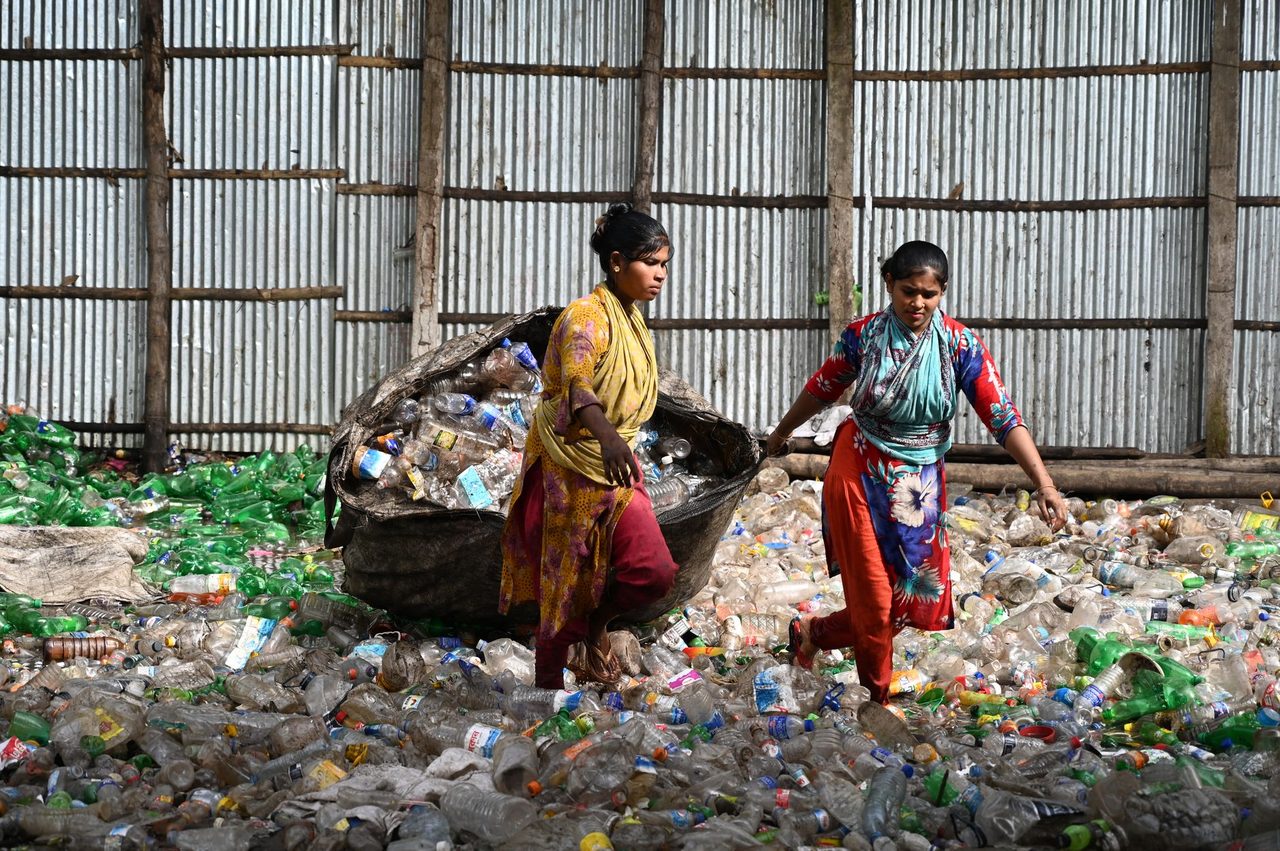
The opportunity is large, but so is the execution risk. India generates well above 160 million tonnes per annum of municipal solid waste, large volumes of cattle dung, press mud, spent wash, food waste and crop residues, while imported LNG and domestic gas pricing continue to reinforce interest in indigenous gaseous fuels. At the same time, state discom stress, feedstock aggregation gaps, inconsistent waste segregation and municipal counterparty risk mean that project developers cannot rely on generic assumptions. Project viability in 2026 depends on granular structuring: feedstock contracts, offtake certainty, digestate monetisation, policy-linked incentives, logistics radius and realistic capacity utilisation.
This article provides a practitioner view of CBG and WtE project economics in India in 2026, with a focus on policy, tariffs, offtake models and risk allocation.
Why CBG and waste-to-energy are strategically important in India in 2026
Three structural drivers are making this segment investable.
First, energy security. CBG can substitute compressed natural gas in transport, piped gas in industry and, in some cases, fossil gas used in boilers or process heating. For industrial buyers exposed to gas price volatility, domestic biofuel supply improves portfolio resilience.
Second, compliance and waste management. Urban local bodies face mounting pressure under the Solid Waste Management Rules, 2016, and related state-level directions to reduce landfill disposal and improve scientific processing. Industrial waste generators, food processors, distilleries, sugar mills and large campuses are also under increasing environmental scrutiny.
Third, circularity-linked value creation. Unlike many narrow waste-disposal models, well-designed CBG projects can create multiple revenue lines:
- Sale of CBG for transport or industrial use
- Sale of electricity or captive energy in select configurations
- Tipping fees for accepting waste
- Sale of fermented organic manure or digestate-derived products
- Carbon-market upside, where eligible and properly structured
- Avoided fuel costs for captive users
These multiple value streams are precisely why investors are interested. They are also why diligence must go beyond top-line capacity numbers.
Policy and regulatory framework shaping projects
The anchor policy remains SATAT, the Sustainable Alternative Towards Affordable Transportation initiative, which was designed to promote CBG production and offtake into the transport fuel ecosystem. In practice, SATAT has been most useful where it provides a pathway to predictable offtake discussions with oil marketing companies (OMCs), though actual project bankability still depends on local execution and commercial terms.
Project developers in 2026 should closely map the following policy layers:
- National Bioenergy Programme and related MNRE support structures for biogas and waste-to-energy pathways
- SATAT-linked procurement ecosystem for CBG
- State bioenergy policies and capital subsidy mechanisms, where available
- Solid Waste Management Rules, 2016 for municipal feedstock handling
- Waste processing concession frameworks issued by urban local bodies
- Pollution control board consents for waste handling, digestion, combustion, RDF or biomethanation pathways
- Fertiliser and agriculture-linked standards affecting digestate or bio-manure sales
- GST treatment and state levies affecting project economics
For power-producing WtE plants, regulatory treatment varies by state and by use case. A merchant sale to the grid is rarely the strongest model unless there is a supportive tariff order and credible payment security. Captive or near-captive use, industrial steam substitution or integrated municipal concession models are usually stronger.
For CBG, the critical policy question is not only whether there is a headline support scheme, but whether the project can secure:
- Long-term feedstock rights
- Compression, bottling or pipeline interconnection clarity
- Transport economics to end users or OMC stations
- Quality specifications and testing protocols
- Working-capital support during ramp-up
Developers should also track the evolving market for bio-inputs. In several projects, digestate monetisation assumptions are overestimated in financial models. Actual conversion of wet slurry into saleable, standardised manure products requires processing, branding, dealer networks and agronomic acceptance.
Project economics: what makes a CBG plant work
In 2026, standalone CBG project viability typically hinges on five variables: feedstock cost, gas yield, plant uptime, offtake price and digestate realisation.
A practical project benchmark for India is a plant in the 5 to 15 TPD CBG output range, though smaller decentralised projects can work in captive industrial or institutional contexts. Capital expenditure varies widely depending on feedstock type, pre-treatment complexity, land conditions, storage, compression and dispensing infrastructure. As a broad market indication, a mid-scale CBG plant may require capex in the range of Rs 18 crore to Rs 45 crore or more, while larger integrated facilities can move significantly higher.
Typical economics vary by feedstock:
- Cattle dung and agri residues can offer lower nominal feedstock costs but often face aggregation and seasonal logistics challenges
- Press mud and distillery-linked feedstocks can support attractive yields where integrated supply is available
- Food waste and segregated wet waste can provide strong methane potential but require disciplined segregation and contamination control
- Municipal organic waste may appear cheap but can become expensive after accounting for sorting losses, moisture variability and collection inefficiencies
As a directional commercial range, CBG sale prices in 2026 often need to land in the rough band of Rs 52 to Rs 68 per kg equivalent, depending on feedstock economics, transport distance, concession support and by-product revenue. Projects with lower-cost captive feedstock and local offtake can operate below this requirement; projects dependent on fragmented third-party feedstock and long-haul transport will need stronger pricing support.
For industrial buyers comparing CBG against alternate fuels, useful reference ranges in 2026 include:
- Domestic or administered gas supply where available: highly location- and category-dependent
- LNG-linked industrial gas supply: often more volatile and materially higher on an energy-equivalent basis during tight market periods
- Furnace oil and LPG substitution cases: can be attractive for biofuel-based thermal applications depending on burner modifications and delivery model
For lenders, a realistic DSCR profile requires conservative assumptions on plant load factor during the first 12 to 18 months. Many models still assume aggressive stabilisation curves that do not reflect commissioning realities. A prudent underwriting case should stress-test:
- 60% to 70% utilisation during initial ramp-up months
- Moisture and contamination shocks in feedstock
- Digestate price underperformance
- Delays in OMC offtake, CGD tie-ins or industrial customer onboarding
- Higher-than-budgeted O&M and enzyme or inoculum costs
In a well-structured project, EBITDA resilience comes from integrated economics, not gas sale alone. If tipping fee revenue is reliable and digestate sales are real, project returns improve materially. If both are uncertain, the gas price must do heavy lifting, which weakens bankability.
Waste-to-energy pathways beyond CBG: where each model fits
Waste-to-energy in India is often discussed as a single category, but the economics differ sharply across technologies.
Biomethanation and anaerobic digestion are generally best suited for:
- Segregated wet municipal waste
- Food processing waste
- Canteen and hospitality waste
- Sewage sludge and organic industrial waste
- Press mud and distillery-linked streams
Incineration-based municipal WtE is more relevant where cities can aggregate large waste volumes and provide long-duration concessions, land and waste supply support. However, these projects are sensitive to calorific value, moisture content, segregation quality and public acceptance.
Refuse-derived fuel (RDF) models can work where dry combustible fractions are available and end-use markets exist, such as cement kilns or industrial boilers. The challenge is less about making RDF and more about ensuring consistent quality, chlorine control, logistics and long-term offtake.
Gasification and pyrolysis continue to attract interest, especially for niche feedstocks, but bankability remains technology- and vendor-specific. Lenders will generally prefer proven reference plants operating at similar feedstock composition and ambient conditions in India.
For municipalities and state agencies, the key takeaway is simple: matching technology to actual waste composition matters more than installing a politically visible plant. A city with poor segregation and high organic moisture may struggle with combustion-led models but perform better with decentralised biomethanation plus material recovery.
Offtake structures, tariffs and revenue stacking
The offtake model is the heart of the project.
For CBG, the strongest offtake routes in 2026 include:
- OMC-linked supply under negotiated commercial arrangements
- Supply to city gas distribution networks, where technical and contractual integration is feasible
- Direct industrial fuel substitution under long-term contracts
- Captive fleet fueling for buses, logistics fleets, municipal vehicles or agri-transport ecosystems
Each route has different risk characteristics.
OMC-linked offtake offers institutional credibility, but developers must closely review delivery obligations, quality compliance, escalation mechanics and payment cycles. Industrial bilateral offtake can provide better pricing flexibility, but buyer credit quality becomes central. Fleet-linked captive use can produce attractive margins if throughput is controlled, though customer concentration risk rises.
For power-producing WtE projects, tariff quality matters more than tariff headline. A tariff of Rs 7.0 to Rs 9.5 per kWh may appear viable on paper for certain state or municipal contexts, but delayed payments from discoms or weak escrow arrangements can erode returns quickly. By contrast, behind-the-meter or open-access-linked captive structures may create stronger economics if grid and regulatory conditions permit.
Revenue stacking should be modelled conservatively. Common line items include:
- CBG sale revenue
- Tipping fee from urban local bodies, hotels, processors or institutions
- Sale of power, heat or steam in hybrid configurations
- Bio-manure or digestate sales
- Avoided disposal costs for industrial waste generators
- Carbon-credit-linked income, only where methodology, ownership and verification are clear
A frequent mistake is to treat all five or six lines as fully bankable from day one. In practice, lenders usually haircut the more uncertain components. Developers should build a base-case model that remains viable even if digestate realisation is delayed or tipping fee collection is inconsistent.
Key risks for developers, lenders and utilities
The Indian market has enough policy support to create pipeline, but execution still determines outcomes. The main risks in 2026 are operational rather than conceptual.
Feedstock risk remains number one.
- Does the developer control enough feedstock within a practical radius?
- Is the waste segregated at source?
- Are there competing users for the same biomass or organics?
- What happens in monsoon months or crop-season transitions?
Counterparty risk is number two.
- Is the municipal concession authority able to honour tipping-fee obligations?
- Is the industrial offtaker investment-grade or otherwise creditworthy?
- Are payment security mechanisms adequate?
Technology and O&M risk is number three.
- Has the EPC contractor delivered similar plants in India?
- Is gas yield based on lab assumptions or operating references?
- Can the O&M team manage feedstock variability without prolonged outages?
Regulatory and permitting risk is number four.
- Land title and zoning issues
- Pollution control approvals
- Fire and safety clearances
- Pipeline interconnection permissions where relevant
For lenders, the most effective mitigation framework includes:
- Independent feedstock assessment
- Sensitivity analysis on methane yield and uptime
- Strong EPC performance guarantees
- O&M contracts with clear KPIs
- Escrow or payment security for major offtake streams
- Conservative debt sizing during early years
For utilities and municipalities, project success depends on contract design. Concession agreements should specify minimum waste quantity, composition assumptions, rejection protocols, land access, tipping-fee mechanics, change-in-law treatment and dispute resolution timelines. Vague concession documents are one of the fastest ways to create stranded assets.
What Indian C&I consumers and developers should do now
For C&I energy users, CBG should be evaluated not merely as a sustainability add-on, but as a fuel diversification tool. Industrial clusters with exposure to thermal energy costs, transport fleets or captive organic waste streams may find integrated CBG solutions commercially relevant today.
Priority actions for C&I buyers include:
- Map current fuel basket by cost per MMBtu and volatility exposure
- Identify process applications where bio-gas or CBG substitution is technically feasible
- Assess on-site or near-site organic waste volumes for captive projects
- Evaluate long-term bilateral purchase structures with credible developers
For RE developers and EPC players, the strongest opportunities are rarely generic municipal mega-projects. Better risk-adjusted plays often include:
- Distillery and sugar-integrated CBG projects
- Food processing and dairy-linked biomethanation
- Cluster-based industrial organic waste aggregation
- Medium-scale city projects with secured segregated wet waste and land support
- Hybrid platforms combining waste processing, fuel production and bio-input monetisation
For lenders and infrastructure investors, the winning screen in 2026 is disciplined selectivity. Back projects with feedstock control, proven technology, contracted offtake and realistic commissioning timelines. Avoid models that depend on optimistic waste segregation reforms without enforceable municipal capacity.
For policymakers, the next phase should focus less on headline MoUs and more on execution enablers:
- Standardised concession templates for wet-waste biomethanation and WtE projects
- Better segregation enforcement at source
- Payment security frameworks for municipal tipping fees
- State-level facilitation for pipeline access, land and permits
- Market development for digestate and bio-manure products
India has entered a stage where circularity projects must be judged with the same rigour as utility-scale solar, C&I open access or BESS deployments. The capital is available for good projects. What the market needs is disciplined development, better contracting and credible operating data.
If your organisation is evaluating CBG, waste-to-energy, biofuel offtake, municipal concession strategy or project financing, contact Growthifye’s advisory desk for technical, commercial and transaction support.
About the author

Chief Executive Officer, Growthifye — With over 23 years in management consulting, Sudarshan has taken businesses from concept to scale — building and scaling new-age digital and energy businesses.
- 23+ years in management consulting
- EY alumnus
- Led large-scale BESS programmes, capital raises and advisory mandates
Want this analysis applied to your project?
Talk to our team