Battery Materials Hedging in India 2026: Price Risk, Contracts and Circularity Strategy
By Sudarshan Karweer · sudarshan@growthifye.com · +91 84510 99371 (Call / WhatsApp) · 2026-08-31
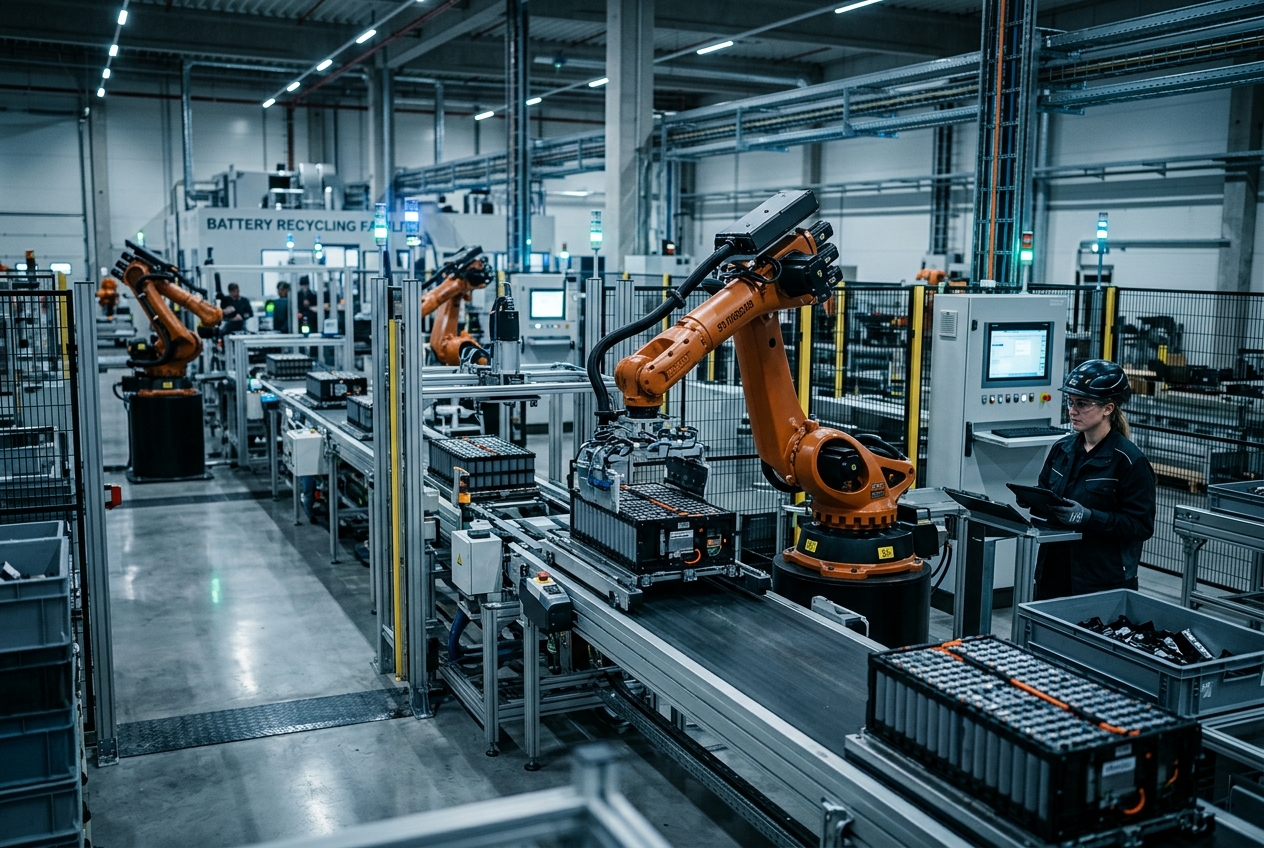
India’s battery circularity market in 2026 is entering a more disciplined phase. Capacity announcements are still coming, but the real differentiator is not nameplate tonnes per annum. It is the ability to manage commodity-price risk across lithium, nickel, cobalt, manganese, copper, aluminium and graphite while staying compliant with the Battery Waste Management Rules, 2022 and evolving producer-responsibility execution.
For Indian recyclers, OEMs, cell manufacturers, EV ecosystem players, energy-storage developers and lenders, battery-recycling projects now need the same commercial rigour that power projects apply to fuel supply, offtake, dispatch and payment security. The key question is straightforward: if black mass prices, recovered-metal values and scrap intake costs move sharply over a 12- to 24-month period, does the project still generate bankable cash flow?
This article focuses on a distinct but critical angle within circularity: battery materials hedging and contract design in India in 2026. The objective is not to predict metal prices. It is to build commercial structures that can absorb volatility.
Why battery recycling margins in India are now highly sensitive to metal-price cycles
Most Indian battery recyclers do not operate in a stable tolling environment. They buy mixed scrap, manufacturing rejects, warranty returns, damaged packs, end-of-life EV batteries and imported intermediate feedstock where permitted. Their input cost is negotiated in a market where sellers increasingly understand the underlying value of nickel, cobalt, lithium salts, copper foil and aluminium.
At the same time, output realisations are linked directly or indirectly to global benchmark prices. Even when a recycler does not sell refined lithium carbonate equivalent or nickel sulphate directly, the pricing formula for black mass, mixed hydroxide precipitate, alloy fractions, copper and aluminium scrap usually references prevailing commodity conditions.
This creates three linked exposures:
- feedstock procurement risk: paying too much for scrap at the top of a price cycle
- process yield risk: underperforming recovery assumptions because of chemistry mix or contamination
- output price risk: selling recovered products into a falling metals market
In 2026, this matters more because India’s battery scrap market is becoming more transparent. Collection networks are broader, OEM take-back systems are maturing, and larger generators are running competitive tenders instead of bilateral spot sales. As a result, weaker recyclers are losing the easy arbitrage they once relied on.
A simple example illustrates the issue. If a recycler buys NMC battery scrap assuming a cobalt-rich payability and the actual lots contain lower cobalt loading, higher moisture, more plastics, and lower recoverable lithium than expected, EBITDA can swing from positive to negative even before considering compliance and logistics costs. In LFP, the problem is different: lower inherent metal value means the business is much more dependent on process cost, logistics efficiency, scale and downstream monetisation strategy.
The 2026 Indian context: chemistries, price bands and margin realities
India’s chemistry mix is widening. Two-wheelers, three-wheelers and stationary storage continue to support LFP volumes. Passenger EVs and some commercial applications still contribute NMC and NCA streams, though market shares vary by OEM and import source. Consumer electronics add cobalt-bearing material but often in smaller lot sizes and with higher aggregation complexity.
In practitioner terms, 2026 projects should stress-test at least three feedstock baskets:
- LFP-heavy portfolio with low cobalt and nickel exposure
- mixed NMC/LFP portfolio from mobility and ESS channels
- manufacturing-scrap-heavy portfolio with more predictable composition and lower collection cost
Indicative realities seen in the market this year include:
- black mass pricing remains highly sensitive to benchmark moves in lithium and nickel, with discounts widening for uncertain provenance, high impurities or inconsistent assay data
- copper and aluminium recovery can materially support project economics in low-value chemistry streams
- freight, compliant packaging, discharge, dismantling and hazardous-material handling still add meaningful cost, often ₹8/kg to ₹30/kg depending on battery format, distance, safety measures and lot quality
- formal-sector collection and compliance costs under EPR can compress recycler gross margins if not built into producer contracts
For lenders, the takeaway is clear: do not underwrite only on nameplate recycling yields. Underwrite on net realised value after feedstock competition, assay dispute risk, logistics, safety capex, working capital and product-sale lags.
Contract structures that reduce volatility for recyclers, OEMs and large waste generators
The most robust Indian recycling businesses in 2026 are moving away from pure spot exposure. They are building layered commercial contracts with formula pricing, assay protocols, floor-ceiling bands and quality-based adjustments.
Common structures include:
- Purchase contracts linked to published metal benchmarks
- - Scrap purchase price is set as a percentage of contained metal value, subject to agreed recovery assumptions and deductions.
- - This works best when chemistry and state of health are reasonably known.
- Tolling or processing-fee contracts
- - The generator retains title to material and pays the recycler a per-kg or per-kWh processing fee.
- - This reduces commodity exposure for the recycler but requires a creditworthy customer and robust audit trail.
- Revenue-sharing contracts
- - Recovered value is shared after deducting processing, transport, compliance and refining costs.
- - Useful when both sides want upside participation but need transparency on assays and yields.
- Floor-and-collar arrangements
- - A minimum recycler realisation or minimum generator payment is established, with upside sharing above a threshold.
- - This is increasingly relevant for long-term OEM partnerships.
- Indexed offtake for black mass or intermediate products
- - Downstream buyers agree formula-based offtake linked to benchmark prices minus refining deductions.
- - This is essential when the recycler does not yet have full hydrometallurgical refining capacity.
In India, one of the most underused protections is tighter assay governance. Disputes over moisture, inert content, pack-level contamination, residual charge and actual chemistry can erase margins quickly. Contracts should specify:
- sampling method and sample retention protocol
- third-party lab hierarchy for dispute resolution
- acceptable variance thresholds
- settlement timeline
- treatment of mixed lots and non-conforming material
- deductions for hazardous contamination or undeclared components
For OEMs and fleet operators, this discipline also supports EPR compliance and auditability. Growthifye’s work in End-of-life fleet audits and Reverse logistics can be especially relevant where battery ownership history, chemistry tagging and collection quality are fragmented.
Hedging without a domestic battery-metals derivatives market: what is practical in India
India does not yet have a deep, project-friendly hedging ecosystem specifically for all battery materials in recycled-product form. That does not mean risk cannot be managed. It means the toolkit is more operational and contractual than purely financial.
Practical hedging approaches in 2026 include:
- Pass-through pricing
- - Link scrap purchase and product sale contracts to the same or correlated benchmarks with minimal timing mismatch.
- - The goal is to preserve processing margin rather than speculate on metal prices.
- Short settlement cycles
- - Reduce the lag between intake pricing and output sale realisation.
- - Weekly or fortnightly reset mechanisms can materially cut working-capital and mark-to-market risk.
- Feedstock diversification
- - Balance high-value but volatile NMC streams with more stable manufacturing scrap or contracted LFP channels.
- - Diversification reduces dependence on one metal-price thesis.
- Inventory discipline
- - Holding 60-90 days of unpriced or partially priced inventory can be dangerous in a falling market.
- - Better operators target lower speculative inventory unless they have firm offtake cover.
- Matched offtake and procurement windows
- - Align procurement commitments with downstream sale windows to narrow basis risk.
- Currency risk management
- - If output pricing is benchmarked internationally and key reagents or equipment are imported, USD-INR exposure must be managed alongside metal prices.
- Tolling for selected streams
- - Where commodity uncertainty is too high, tolling can convert part of the business into fee-based earnings.
Some larger industrial players may also use broader exchange-traded or OTC hedges for copper, aluminium or nickel where feasible through treasury functions, but this is usually more realistic for integrated manufacturers than standalone recyclers. Even then, basis risk remains because scrap and black-mass values do not track benchmark contracts perfectly.
The central point for boards and lenders is this: the best hedge in Indian battery recycling is still contract design plus operating control, not speculative market calls.
LFP recycling strategy is different from NMC: do not use one underwriting model
A common mistake in project evaluation is to apply one revenue logic across all chemistries. In 2026, LFP volumes are rising in India, but LFP economics are structurally different.
For NMC and NCA streams:
- value concentration is higher
- nickel and cobalt often drive economics materially
- assay precision and payability terms are critical
- export-linked pricing references may influence sale realisations where regulations permit intermediate trade
For LFP streams:
- intrinsic metal value is lower on many lots
- collection density and logistics cost become more important
- safe discharge, dismantling and preprocessing efficiency matter more to EBITDA margin
- recovery pathways for lithium, graphite and phosphate-bearing fractions need realistic assumptions, not aspirational capex decks
- copper, aluminium and plastics management can become decisive value levers
This has strategic implications. A recycler chasing LFP tonnage without low-cost collection access, strong preprocessing automation and secure downstream offtake can easily build volume without profit. By contrast, an OEM or utility evaluating Second-life battery applications may find more value in cascading selected LFP assets into stationary use before recycling, provided testing, warranty allocation, fire safety and residual-life modelling are robust.
What lenders, developers and policymakers should check before backing capacity
Circularity projects are increasingly crossing into mainstream infrastructure and industrial financing conversations. Yet due diligence standards are often inconsistent. In 2026, any serious evaluation should ask the following:
- What percentage of feedstock is contracted for 3-5 years, and on what pricing formula?
- How much of the plant’s throughput assumption depends on spot-market scrap?
- Are yields quoted at lab scale, pilot scale or demonstrated commercial scale?
- What impurity levels and moisture assumptions are embedded in the financial model?
- Is there a binding offtake arrangement for black mass, salts or metal-bearing intermediates?
- How exposed is EBITDA to a 20% fall in lithium or nickel benchmark prices?
- What is the working-capital requirement under slow customer settlements or falling metal prices?
- Are EPR-related compliance costs, storage norms, insurance and fire-safety systems fully budgeted?
- Does the sponsor have process know-how across changing chemistries or only one narrow stream?
For policymakers, the priority is not only adding capacity. It is enabling formalisation. That means stronger traceability, enforcement against unsafe informal handling, practical transport rules, quality standards for recycled outputs and clearer pathways for second-life use, decommissioning and end-of-life certification.
This is also where Module & battery recycling and Circularity reporting become board-level concerns rather than sustainability side notes. Large C&I buyers, fleet operators and energy developers increasingly need auditable data on where materials came from, how they were processed, and what value or liability remains on the balance sheet.
A practical playbook for Indian market participants in 2026
For recyclers:
- avoid long unhedged inventory positions
- prioritise assay discipline and lot segregation
- build at least partial fee-based or formula-based revenue streams
- secure downstream offtake before scaling upstream procurement aggressively
For OEMs and fleet operators:
- tender recycling and take-back contracts with transparent price formulas, not only headline scrap rates
- integrate EPR compliance into commercial and data architecture early
- classify batteries by chemistry, condition and residual value before disposal decisions
For developers and utilities managing storage assets:
- plan end-of-life pathways during project design, not after warranty expiry
- evaluate second-life versus recycling based on tested residual capacity and safety condition
- include decommissioning and circularity costs in lifecycle economics
For lenders:
- stress-test commodity downside scenarios and working-capital shocks
- distinguish fee-based earnings from speculative metal exposure
- check whether sponsor claims are backed by commercial-scale operating data
India’s circular battery economy will not be built by capacity alone. It will be built by disciplined contracting, realistic yield assumptions, safer logistics, stronger compliance and better management of commodity volatility. In 2026, the winners are likely to be the firms that treat battery recycling as an industrial value-chain business with infrastructure-grade risk controls, not as a simple scrap trade.
If your organisation is evaluating recycling capacity, take-back strategy, second-life monetisation or portfolio-wide circularity risk, contact Growthifye’s advisory desk for a practical assessment tailored to Indian market conditions.
Explore Growthifye's related capabilities
This analysis connects directly to our advisory practice: End-of-life fleet audits · Second-life battery applications · Module & battery recycling · EPR compliance.
About the author

Chief Executive Officer, Growthifye — With over 23 years in management consulting, Sudarshan has taken businesses from concept to scale — building and scaling new-age digital and energy businesses.
- 23+ years in management consulting
- EY alumnus
- Led large-scale BESS programmes, capital raises and advisory mandates
Want this analysis applied to your project?
Talk to our team