Battery Take-Back in India 2026: Reverse Logistics, EPR Costs and Bankability
By Sudarshan Karweer · sudarshan@growthifye.com · +91 84510 99371 (Call / WhatsApp) · 2026-09-13
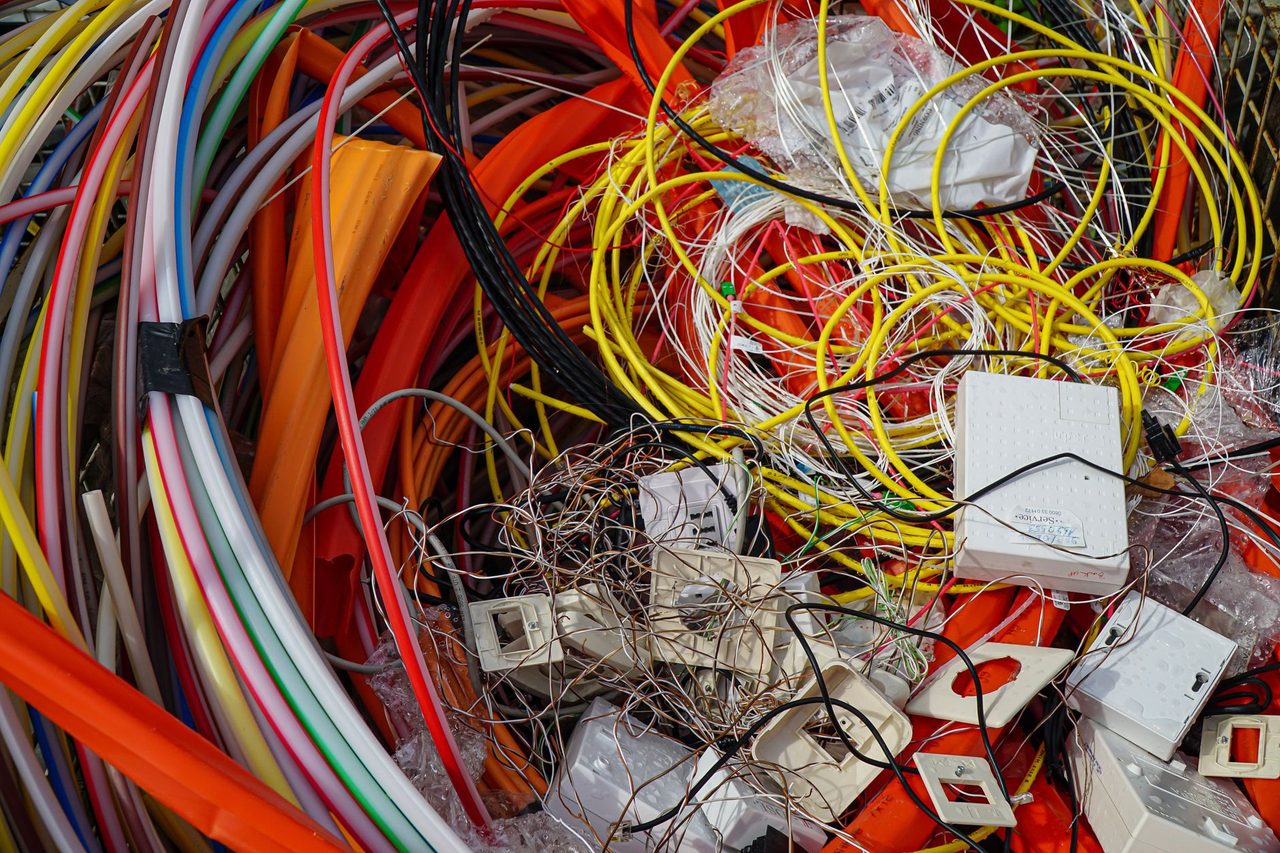
Photo: Willians Huerta on Pexels
India’s battery circularity market is entering a less glamorous but more decisive phase in 2026: take-back execution. Recycling capacity announcements get headlines, but bankable circularity depends on what happens upstream of the plant gate: who collects spent batteries, how they are aggregated, who owns them at each stage, how EPR evidence is created, what transport and storage compliance costs look like, and how leakage into informal channels is reduced without destroying margins.
This is a different problem from plant design or black-mass yields. For OEMs, fleet operators, recyclers, lenders and state agencies, the real question is whether India can build a reverse logistics system that delivers compliant volumes at predictable cost. In 2026, that question matters as much as metallurgical recovery.
For Indian C&I users, EV ecosystem players and energy-storage developers, battery take-back now sits at the intersection of compliance, commodity recovery and project finance. A recycling facility may look viable on paper at nameplate throughput, but if collection density is weak or logistics cost per kg is volatile, EBITDA and debt service coverage can deteriorate quickly. That is why battery circularity strategy increasingly starts with Reverse logistics and EPR compliance, not only with plant capex.
Why take-back is now the bottleneck in India’s battery circularity market
India’s battery waste stream is still fragmented across chemistries, geographies and use cases. In 2026, the largest formalisable near-term pools are typically:
- 2W and 3W EV batteries reaching early retirement or warranty replacement
- Consumer electronics batteries collected through OEM and channel programs
- Telecom and data-centre backup batteries, especially lead-acid replacements and growing Li-ion volumes
- Stationary storage packs from pilots and early deployments
- Manufacturing scrap from cell, pack and module assembly lines
- Fleet batteries from e-rickshaws, last-mile logistics and swapping networks
The challenge is that these streams behave very differently.
Manufacturing scrap is relatively clean, traceable and high-yield. End-of-use field returns are not. Field returns involve mixed state-of-health, damaged packaging, incomplete serialisation, uncertain chemistry labels, ownership disputes and high first-mile cost. A recycler can model black-mass yields within a narrow range; it is much harder to model how many tonnes per month can be sourced compliantly from dispersed districts at a delivered cost below the recovered value plus EPR monetisation.
This is where many business plans become optimistic. A plant may assume 8,000-12,000 tonnes per annum of steady feedstock, but real inbound volumes often depend on collection partner performance, OEM enforcement, scrap dealer behaviour and state-level operational frictions. In India, battery recycling margins are highly sensitive to utilisation. A 15-20 percentage point shortfall in plant utilisation can materially alter payback periods.
The 2026 cost stack for battery reverse logistics in India
For practitioners, the right way to think about take-back is to break the chain into six cost buckets:
- Collection and channel incentives
- Sorting, testing and safe discharge
- Packaging and compliant storage
- Transportation to hub or recycler
- Data capture and EPR evidence generation
- Leakage, rejection and working-capital loss
In 2026, first-mile economics vary sharply by battery category.
For small portable batteries and mixed consumer waste, collection cost can exceed material value unless OEMs use retail networks, service centres or municipal aggregation support. For EV packs, economics improve because ticket size is higher, but handling and safety costs are also materially higher.
Indicative 2026 practitioner ranges seen in the market for lithium-ion battery take-back can look like this, depending on scale and geography:
- Consumer and small-format mixed batteries: Rs 18-45/kg collection and aggregation cost before long-haul transport
- 2W/3W removable batteries: Rs 12-28/kg for organised channel collection in dense clusters
- Larger EV packs and fleet returns: Rs 8-22/kg collection cost, but with higher testing and packaging overheads
- Inter-city compliant transport: often Rs 4-12/kg depending on distance, backhaul availability and packaging class
- Temporary storage, sorting and documentation: Rs 2-8/kg
- Total delivered reverse-logistics cost to recycler gate: frequently Rs 18-55/kg across many real-world use cases
These are not universal benchmarks, but they illustrate the problem: reverse logistics can consume a large share of recoverable value, especially for lower-cobalt chemistries such as LFP. This is one reason India’s circularity model cannot rely only on recovered metal value. EPR credit markets, OEM take-back obligations, service-contract design and second-life triage all matter.
For LFP-heavy streams, a recycler or OEM may only achieve acceptable economics if one or more of the following are true:
- Collection density is high in a limited radius
- Packs are pre-sorted and traceable
- EPR value is contractually secured
- Cells suitable for reuse are diverted into Second-life battery applications
- Logistics are integrated with forward service networks
EPR rules are creating demand, but compliance execution remains uneven
India’s battery waste market in 2026 is shaped by the Battery Waste Management Rules, 2022 and subsequent compliance implementation under CPCB’s digital systems. Producers now face stronger expectations around registration, collection, refurbishment, recycling pathways and target fulfilment. But the market is still learning how to operationalise these obligations efficiently.
The key issue is that legal responsibility sits more clearly than operational responsibility. A producer may have EPR targets, but unless it has a robust field architecture, targets can become expensive to meet. Buying credits without a collection strategy may solve immediate compliance gaps but does not guarantee long-term cost control or supply-chain resilience.
In practice, market participants are pursuing four main models:
- OEM-led collection through dealer and service networks
- Outsourced producer responsibility organisations and collection partners
- Recycler-led sourcing with EPR service wraparound
- Fleet or swapping-network integrated take-back programs
Each model has trade-offs.
OEM-led systems usually offer better data integrity and customer access, but they require process discipline, staff training and working capital. Recycler-led models can scale quickly where scrap trade relationships are strong, but chain-of-custody quality varies. Fleet-linked models can be very efficient because volumes are concentrated, serial numbers are known and return points are few.
In 2026, EPR credit prices and service charges remain dynamic, with pricing dependent on chemistry, documentation strength, recycler credibility and timing relative to compliance deadlines. Producers should avoid treating EPR procurement as a spot-market exercise alone. Multi-year contracting with clearly defined evidence, rejection protocols and audit rights is increasingly the prudent route.
Contract design: the missing piece in bankable battery take-back
Many reverse logistics programs fail not because the policy is unclear, but because contracts are incomplete. For lenders and institutional investors evaluating battery circularity platforms, weak contracting is a major risk flag.
A bankable take-back chain usually needs clarity on the following points:
- Who owns the battery at pickup, at storage hub and at recycler intake
- How residual value is calculated if packs contain reusable modules or cells
- What happens if chemistry declaration is incorrect
- Who pays for dangerous-goods packaging and rejected consignments
- What service-level agreement governs pickup time and collection radius
- How EPR evidence is generated, validated and transferred
- What indemnities apply for fire, leakage, injury or non-compliant storage
- What insurance is mandatory at each node
- What testing protocol determines recycling versus refurbishment versus second life
This is especially important for EV OEMs, fleet operators and BESS owners because retired batteries are not homogeneous waste. Some fraction can have residual utility, and that creates value-allocation disputes. A take-back contract that sends everything to recycling may leave money on the table. A contract that overemphasises reuse without robust testing may create liability and performance risk.
For this reason, serious market participants are starting with End-of-life fleet audits before structuring long-term take-back arrangements. Audits help estimate chemistry mix, expected retirement profile, geographic concentration, state-of-health distribution and compliance burden. Without this baseline, commercial terms are often mispriced.
Informal leakage is still the biggest operational threat
India’s formal battery recycling ecosystem does not compete in a vacuum. Informal aggregation channels still attract material because they offer speed, cash settlement and local relationships. This is particularly relevant for small-format batteries, mixed scrap and lightly damaged packs.
From a circularity standpoint, leakage creates three problems:
- Producers lose visibility on target fulfilment and evidence quality
- Formal recyclers face feedstock uncertainty despite installed capacity
- Safety and environmental risks increase due to poor handling and unregulated processing
The response cannot be compliance rhetoric alone. Formal channels have to become economically and operationally competitive.
What works in practice?
- Faster claim settlement for dealers and collection partners
- Digital traceability from pickup to recycler receipt
- Standardised buyback or incentive tables by chemistry and condition
- Cluster-based aggregation hubs near high-density EV and electronics markets
- Joint collection models using OEM service networks and recycler backend processing
- Better field training for packaging, quarantine and damaged-battery handling
States with dense urban clusters, strong OEM channel presence and shorter haul distances are more likely to formalise volumes faster. Maharashtra, Karnataka, Tamil Nadu, Gujarat, Delhi-NCR and parts of Telangana continue to be important reverse-logistics theatres in 2026 because they combine EV activity, industrial demand and better transport connectivity.
What lenders and investors now look for in circularity platforms
For debt providers and strategic investors, battery take-back is no longer a side process. It is part of core credit assessment. A recycler or integrated circularity platform may show attractive recovery economics at scale, but lenders increasingly test the durability of inbound feedstock and compliance-linked revenues.
In 2026, the most common lender questions include:
- What percentage of plant feedstock is secured through contracted channels versus spot sourcing?
- What is the weighted average delivered cost per kg by chemistry and source type?
- How much of projected revenue depends on EPR credits or compliance services?
- Are there concentration risks with one OEM, one fleet customer or one state?
- What fire-safety, storage and transport protocols are in place?
- How are rejected, swollen or damaged batteries handled operationally and financially?
- Is there a documented split between recycling feedstock and batteries fit for refurbishment or repurposing?
- Are data systems robust enough for audit, target reconciliation and insurer review?
This means circularity businesses need stronger operating metrics. At minimum, serious platforms should track:
- Pickup success rate
- Average turnaround time from return request to collection
- Cost per kg by route and source channel
- Loss and rejection rate
- Traceability completion rate
- EPR evidence acceptance rate
- Share of feedstock arriving within safe packaging norms
- Inventory days at aggregation hubs
Where these metrics are missing, valuation and leverage usually suffer. Conversely, businesses that can demonstrate disciplined sourcing, documented compliance and stable delivered-cost curves are better positioned for project debt and strategic capital.
Strategic choices for OEMs, fleets, utilities and policymakers
Different stakeholders should prioritise different actions in 2026.
For OEMs:
- Build take-back design into channel contracts, not as an afterthought
- Link warranty replacement workflows with collection and traceability systems
- Use regional hubs to reduce first-mile cost
- Contract EPR services on multi-year terms with audit rights
For fleet operators and swapping networks:
- Maintain serial-level records and retirement triggers
- Tender take-back and testing services together, not separately
- Evaluate residual value from reuse before final recycling dispatch
- Negotiate shared upside where recovered value exceeds floor assumptions
For utilities and BESS developers:
- Include decommissioning, take-back and repurposing terms in battery procurement documents
- Ask suppliers to disclose reverse-logistics and EPR pathways at bid stage
- Ring-fence liability for damaged or warranty-returned units
For policymakers:
- Improve alignment across transport, hazardous handling and storage enforcement
- Support formal collection density through urban aggregation models
- Tighten auditability of EPR evidence while reducing portal friction for compliant actors
- Encourage standard labelling, chemistry disclosure and digital traceability
The larger point is simple: India does not need only more recycling capacity; it needs cheaper, safer and more auditable movement of batteries from user to compliant endpoint. That is the infrastructure layer underneath circularity.
For many companies, the highest-value intervention in 2026 is not building another processing line immediately. It is redesigning take-back architecture: channel incentives, collection contracts, hub locations, testing pathways, EPR evidence systems and insurer-approved SOPs. Done well, this lowers compliance cost, improves recovery value and makes future recycling or repurposing capex more bankable.
Growthifye works with market participants on Module & battery recycling, EPR compliance and reverse-chain strategy across renewable and storage value chains. If your organisation is evaluating battery take-back, aggregator models or circularity-linked project risk, contact Growthifye’s advisory desk.
Explore Growthifye's related capabilities
This analysis connects directly to our advisory practice: End-of-life fleet audits · Second-life battery applications · Module & battery recycling · EPR compliance.
About the author

Chief Executive Officer, Growthifye — With over 23 years in management consulting, Sudarshan has taken businesses from concept to scale — building and scaling new-age digital and energy businesses.
- 23+ years in management consulting
- EY alumnus
- Led large-scale BESS programmes, capital raises and advisory mandates
Want this analysis applied to your project?
Talk to our team