CBG in India 2026: CO2 Monetisation, Bio-LNG and Circular Project Economics
By Sudarshan Karweer · sudarshan@growthifye.com · +91 84510 99371 (Call / WhatsApp) · 2026-09-19

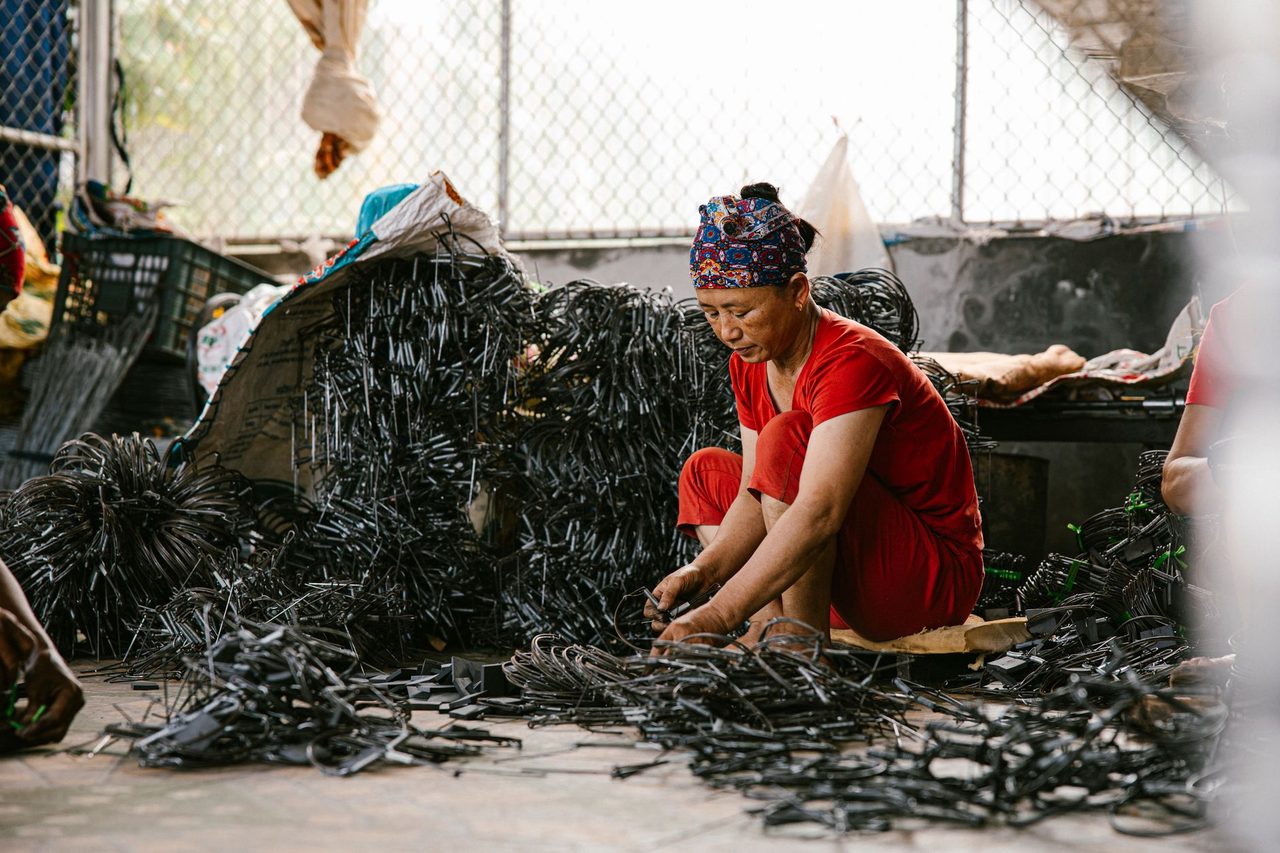
Photo: Vivek Sharma on Pexels
India’s compressed biogas market in 2026 is moving beyond a single-revenue model. For developers, lenders and C&I offtakers, the critical shift is that project viability increasingly depends on monetising the full carbon and circularity stack around a CBG plant: upgraded gas, captured CO2, bio-LNG for transport applications, treated water reuse, and nutrient products where technically and commercially feasible.
That creates a distinct bankability question from the topics already discussed widely around gate fees, digestate offtake or basic SATAT-linked economics. The next frontier is whether Indian CBG projects can structure multi-product revenue in a way that improves debt service coverage without overcomplicating execution risk.
In this article, we look at the 2026 economics of CO2 monetisation and bio-LNG integration for Indian CBG projects, the technology choices that matter, the offtake contracts lenders will accept, and the circularity implications for utilities, transport fleets, city gas distributors and industrial buyers.
Why CO2 and bio-LNG matter in 2026
A standard CBG plant upgrading biogas to fuel-grade methane removes a substantial CO2 fraction from raw biogas. Depending on feedstock and digester performance, raw biogas often contains roughly 50-60% methane and 40-45% CO2, along with H2S, moisture and trace contaminants. That means a 10 TPD CBG-equivalent project can generate a meaningful side stream of CO2 during upgrading.
Historically, many Indian projects vented this stream after basic treatment or treated it as a low-priority by-product. In 2026, that is becoming harder to justify for three reasons:
- Debt sizing remains tight for stand-alone CBG projects exposed to feedstock volatility.
- Transport and industrial decarbonisation markets are paying premiums for cleaner gaseous fuels with traceability.
- Carbon accounting and circularity reporting expectations are pushing developers to demonstrate better resource efficiency per tonne of waste processed.
For developers, the practical implication is simple: if two projects have the same feedstock, gas yield and capex, the one that can reliably monetise purified CO2 or convert upgraded gas into bio-LNG for trucked supply may show stronger DSCR and resilience against feedstock cost inflation.
A well-structured by-product revenue stack can add 8-20% to topline in many cases, though the range varies widely based on purity specifications, location, logistics and offtake certainty. Lenders will not fully value speculative upside, but contracted auxiliary revenues can still improve base-case underwriting.
Revenue stack: what can a CBG project actually monetise?
The real question is not whether side streams have value, but whether they can be monetised at bankable scale. In India’s 2026 market, four adjacent value pools are most relevant.
- Purified CO2 sale to beverage, food processing, welding, dry ice, cold-chain or industrial users
- Bio-LNG production through liquefaction of upgraded biomethane for heavy transport or remote industrial supply
- Carbon attribute monetisation where accounting and buyer requirements are clear
- Water and nutrient recovery in industrial clusters with actual reuse demand
CO2 monetisation is usually the first option evaluated because upgrading already separates the gas stream. But selling food-grade or beverage-grade CO2 requires purification, drying, compression and quality control beyond what many basic CBG EPC packages provide. Industrial-grade CO2 has a wider market but lower pricing.
Indicatively in 2026, ex-plant industrial CO2 pricing in India may fall in the range of Rs 4-8/kg in commoditised local markets, while higher-purity applications in tighter regional markets can realise Rs 8-15/kg or more, subject to packaging, liquefaction and delivery costs. Netbacks are highly location-sensitive because transport economics for CO2 deteriorate quickly over distance unless there is an established captive buyer or hub demand.
Bio-LNG can offer stronger value per unit of methane where diesel displacement economics are compelling. For heavy commercial vehicles, mining fleets, long-haul trucking or industrial users beyond pipeline reach, bio-LNG can command a premium over compressed gas if customers value energy density, storage convenience and decarbonisation claims. However, liquefaction adds capex, auxiliary power load and operating complexity.
In practice, a project does not need to pursue every by-product. The best projects choose one adjacent revenue stream that matches their geography and customer base rather than layering multiple unproven monetisation assumptions.
Economics: how much uplift is realistic?
Developers often overestimate auxiliary revenues in pitch decks. A more disciplined approach is to separate gross opportunity from financeable cash flow.
Consider a mid-scale Indian CBG project in 2026 processing segregated agri-residue, press mud, food waste or similar organic feedstock and producing around 10 TPD CBG-equivalent output. The specific numbers vary by substrate mix, methane content and plant uptime, but a broad economic illustration is useful.
Base project economics may be driven by:
- Feedstock procurement and handling cost: highly variable, from negative-cost or gate-fee-linked waste streams to paid agri biomass
- O&M including digester operations, desulphurisation, upgrading chemicals or membranes, manpower and parasitic load
- CBG sale under OMC-linked arrangements, CGD offtake, industrial fuel substitution or transport fuel contracts
- Digestate management cost or revenue depending on local market maturity
Now add CO2 recovery. If a 10 TPD CBG project can recover a saleable portion of separated CO2 and place, for example, 8-20 TPD into a nearby industrial market, the gross annual revenue potential can become meaningful. At a conservative net realisation of Rs 3-6/kg after purification and logistics in an industrial-use case, annual incremental revenue could land in the broad range of Rs 0.9-4.0 crore depending on utilisation and uptime.
That spread is large because many projects cannot place all recovered CO2 every day. Seasonality, purity disputes, tanker dispatch availability and customer shutdowns reduce realised sales. Lenders therefore tend to haircut CO2 revenue aggressively unless there is a minimum offtake commitment.
For bio-LNG, the economics can be more attractive but require larger capital discipline. Liquefaction systems, cryogenic storage, loading infrastructure and tighter process control can add substantial capex, often increasing total project cost by 20-40% or more depending on scale and integration philosophy. Yet if the project can secure fleet offtake at a premium to compressed gas sales, EBITDA may improve materially.
A useful financing test is whether bio-LNG integration lifts project IRR after including:
- Higher capex and interest during construction
- Additional auxiliary power consumption
- More specialised O&M and spares
- Cryogenic transport and dispensing logistics
- Stricter uptime expectations from transport customers
In several 2026 cases, developers are finding that CO2 recovery is a lower-risk first step than full bio-LNG integration, especially for projects below large scale. Bio-LNG makes more sense where developers already control demand, such as captive fleets, mining logistics, municipal transport, or anchor industrial users with round-the-clock energy needs.
Technology choices that drive commercial outcomes
From a lender’s perspective, technology matters not as a branding exercise but because it affects guaranteed output, impurity management, auxiliary consumption and downtime.
For CO2 monetisation, the key decision points include:
- Upgrading route: water scrubbing, PSA, chemical absorption or membrane systems
- Residual contaminant profile after methane separation
- CO2 purification train design, including H2S removal, drying and compression
- Whether the target market needs compressed gaseous CO2, liquid CO2 or dry ice integration
The wrong configuration can leave a project with a technically recoverable CO2 stream that is not commercially saleable. This is a common failure mode when by-product monetisation is appended late rather than built into FEED-stage design.
For bio-LNG, integration risks are even sharper. Liquefaction economics depend heavily on throughput and uptime. Small plants can become capex-heavy per unit output. Developers should model:
- Minimum viable liquefaction scale
- Specific power consumption under Indian ambient conditions
- Methane slip and boil-off handling
- Fleet loading profile and dispatch turnaround
- Redundancy philosophy for critical cryogenic systems
This is also where Growthifye’s work in Module & battery recycling and broader circularity transactions becomes relevant at a strategic level: circular projects are often won or lost not on top-line sustainability claims, but on process yield guarantees, residue handling and offtake discipline. CBG is no different.
Contracts and bankability: what lenders will actually accept
Bankability in 2026 is increasingly about contract architecture, not just policy alignment. A CBG project with side-stream revenues needs clear allocation of market risk, quality risk and logistics responsibility.
For CO2 offtake, lenders prefer:
- Multi-year agreement with monthly minimum offtake or take-or-pay structure
- Well-defined quality parameters and testing protocol
- Clear custody transfer point
- Logistics responsibility assigned explicitly to seller or buyer
- Price reset formula linked to inflation, energy costs or benchmark industrial gas prices
A spot-market assumption for all CO2 volumes may support sponsor upside, but it usually gets limited credit in debt underwriting.
For bio-LNG, credit quality of the transport or industrial offtaker becomes central. Bankable structures may include:
- Fleet-fuel supply agreements with floor volumes
- Parent guarantee or LC-backed payment support
- Indexed pricing benchmarked against diesel, LNG or alternate industrial fuel
- Penalties tied to non-delivery only where plant availability is realistically controllable
- Defined treatment of environmental attributes and emissions claims
Developers should also avoid double counting. If a buyer is paying a premium because fuel is biogenic and low-emission, the project cannot casually assume separate monetisation of the same attribute elsewhere without legal clarity.
Utilities and CGD players evaluating CBG-linked procurement need to scrutinise whether CO2 or bio-LNG side businesses distract from core methane delivery obligations. The best structures ring-fence operational priorities so methane offtake remains protected.
Policy and market context in India
India’s 2026 policy environment still supports biogas and waste-to-energy development, but practical execution remains state- and offtaker-specific. SATAT continues to influence market development, while state pollution control approvals, PESO considerations for storage and transport, local factory compliance, and transport regulations affect execution timelines.
For CO2 utilisation, no single national support mechanism guarantees project viability. Market access remains local and commercial. That means siting is strategic. A project near food processing, industrial gas demand, welding clusters, cold chain hubs or dry ice consumers has a much stronger monetisation case than a remote plant relying on long-haul CO2 transport.
For bio-LNG, policy tailwinds come more from fuel substitution economics, trucking decarbonisation and city-level air quality pressures than from one uniform incentive framework. Industrial and fleet users increasingly want auditable circularity narratives, especially multinational buyers with supplier disclosure obligations. This creates scope for Circularity reporting and traceability-backed contracts, but only if underlying plant data are robust.
Developers should also watch state-level waste allocation policies. A CBG project that depends on municipal or agro-industrial feedstock access can lose bankability quickly if feedstock aggregation rights are weak or politically contested.
A practical screening framework for developers and investors
Before adding CO2 recovery or bio-LNG to a CBG project, sponsors should run a strict screen.
- Is there a verified local demand sink within economical logistics distance?
- Can the project maintain purity and uptime levels required by that customer segment?
- Does side-stream monetisation improve DSCR under conservative utilisation assumptions?
- Is the additional capex proportionate to throughput?
- Are permits, safety compliance and storage systems fully mapped?
- Can offtake be contracted for at least part of the output?
If the answer to two or more of these is weak, a simpler CBG model may be more financeable.
For investors, the best diligence questions are straightforward:
- How much of projected revenue comes from firm contracted gas sales versus side-stream optionality?
- What percentage of CO2 or bio-LNG revenue survives a downside case with 20-30% lower utilisation?
- What is the sponsor’s contingency for impurity excursions or customer rejection?
- Has the EPC contractor provided integrated performance responsibility, or are interfaces fragmented?
A good circular project is not one with the maximum number of outputs. It is one where each output has a realistic route to sale, measured quality, and a contract structure that survives operational volatility.
The 2026 outlook
The most investable CBG projects in India over the next 12-24 months will likely be those that combine disciplined feedstock strategy with one carefully chosen value-add stream. For many sites, that will be CO2 recovery linked to local industrial demand. For selected larger projects with anchor transport or industrial customers, bio-LNG can create a stronger premium pathway.
But the central lesson for 2026 is this: circularity only improves bankability when it is engineered into the business model, not added as a slide in the financing deck. Developers need integrated technical design, realistic offtake assumptions, conservative pricing and lender-readable contracts.
For C&I buyers, utilities, municipalities and financiers, this opens an opportunity. Better structured CBG projects can do more than manage waste and supply renewable gas. They can build resilient circular value chains with measurable commercial outcomes.
If you are evaluating a CBG, CO2 utilisation, bio-LNG or wider waste-to-energy opportunity, contact Growthifye’s advisory desk for project diligence, commercial structuring and circularity strategy support.
Explore Growthifye's related capabilities
This analysis connects directly to our advisory practice: End-of-life fleet audits · Second-life battery applications · Module & battery recycling · EPR compliance.
About the author

Chief Executive Officer, Growthifye — With over 23 years in management consulting, Sudarshan has taken businesses from concept to scale — building and scaling new-age digital and energy businesses.
- 23+ years in management consulting
- EY alumnus
- Led large-scale BESS programmes, capital raises and advisory mandates
Want this analysis applied to your project?
Talk to our team