Substation Automation for Indian DISCOMs 2026: IEC 61850, SAS and Grid ROI
By Sudarshan Karweer · sudarshan@growthifye.com · +91 84510 99371 (Call / WhatsApp) · 2026-08-31
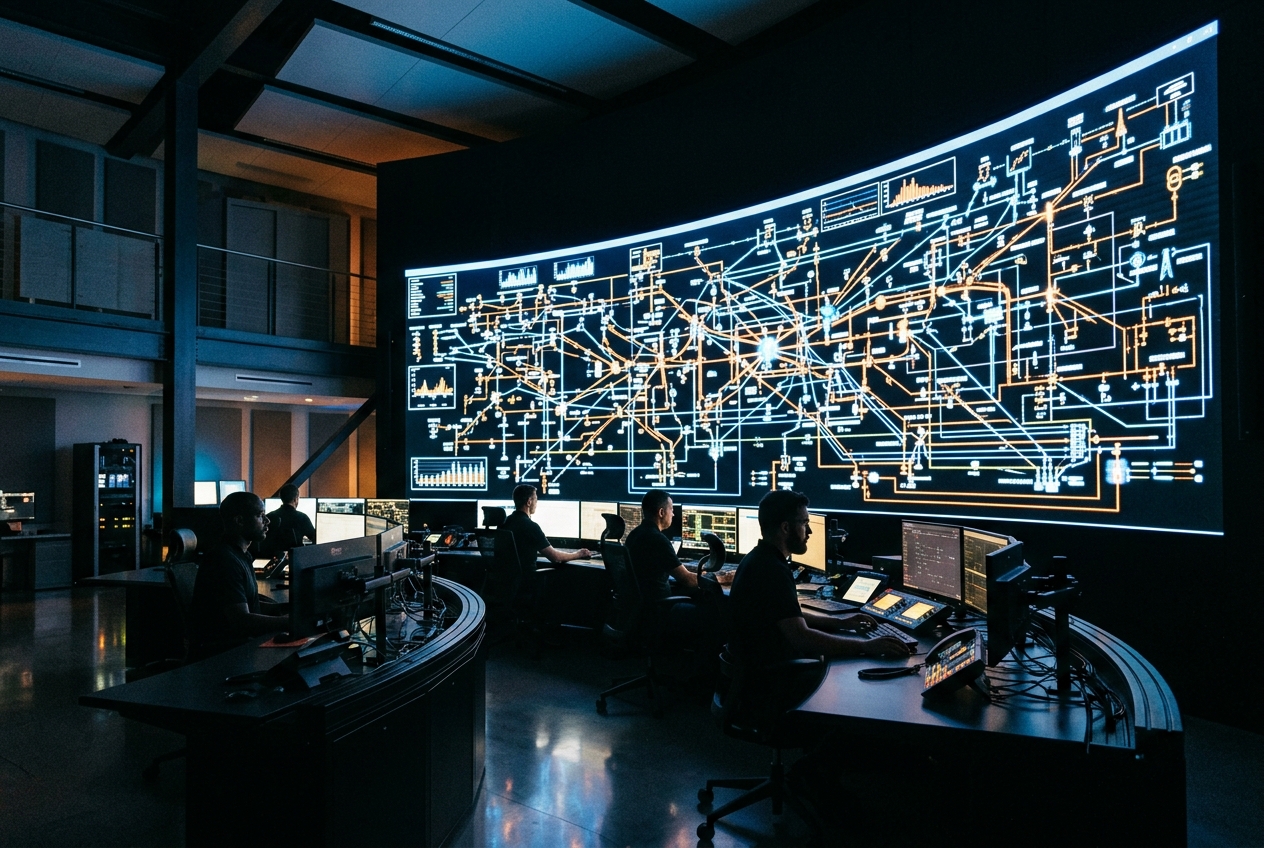
Substation automation for Indian DISCOMs is moving from pilot activity to a core grid-modernisation layer in 2026. After several years of focus on AMI, meter data systems, outage visibility and feeder-level analytics, utilities are increasingly finding that many reliability, safety and loss-reduction targets stall unless the substation itself becomes digital, remotely operable and event-rich.
For India’s utilities, state transmission entities, industrial consumers connected at 33 kV and above, renewable developers evacuating through utility bays, and lenders evaluating network-upgrade bankability, the question is no longer whether substation automation matters. The practical question is where it creates the highest value: secondary substations in urban areas, 33/11 kV distribution substations with high complaint density, renewable evacuation nodes with fluctuating power flows, or aging yards where operations still depend on manual switching and fragmented relay panels.
This article focuses on that specific opportunity: substation automation systems, or SAS, for Indian distribution networks in 2026, with emphasis on IEC 61850 architectures, operations value, RDSS alignment, cost ranges and measurable return on investment.
Why substation automation has become a 2026 priority
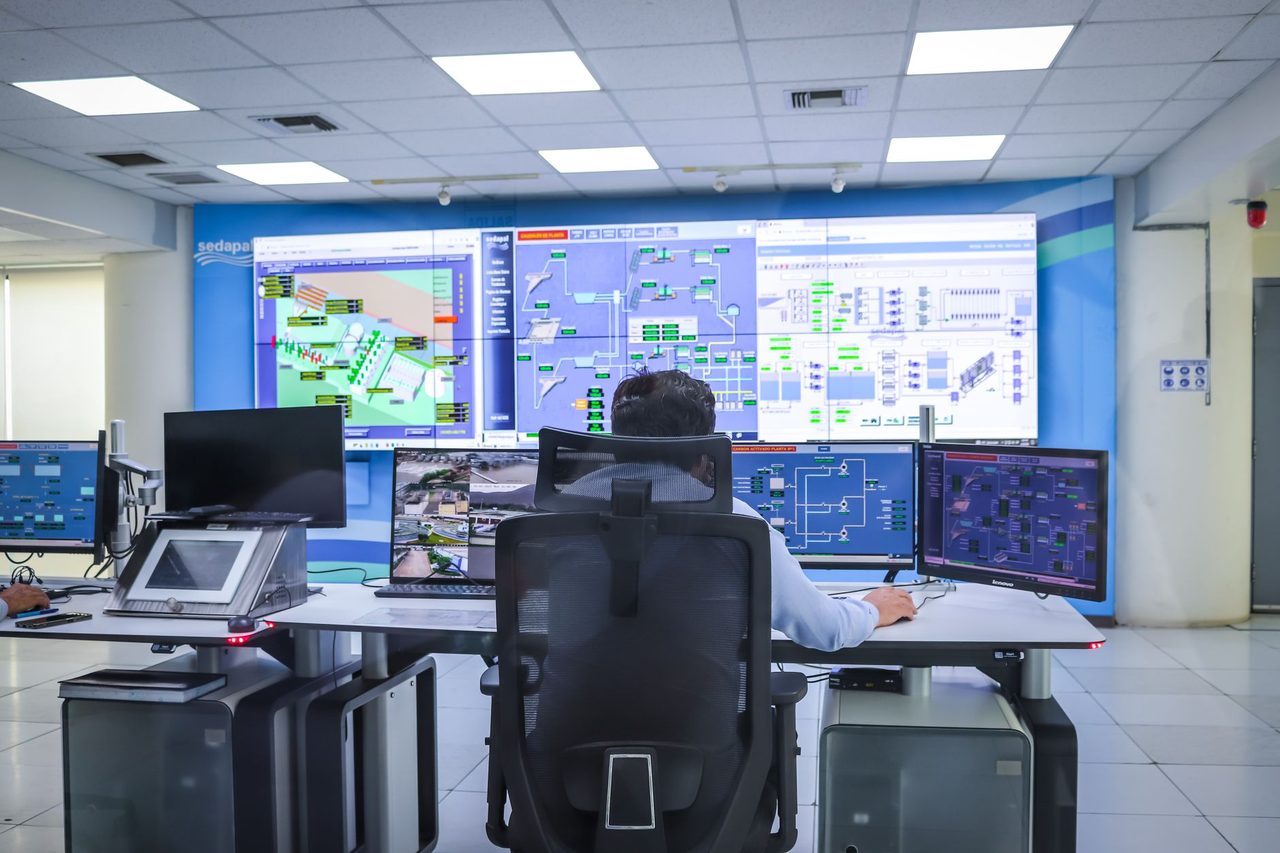
Most Indian DISCOMs already have at least partial control-room visibility at EHV levels, while 33/11 kV substations remain a mixed landscape. Some have legacy RTUs with limited points, some have standalone numerical relays without event integration, and many still depend on site visits for breaker status confirmation, alarm handling, tap changes and restoration switching.
That operating model is increasingly expensive for five reasons.
- Urban reliability expectations are rising, especially in high-revenue circles serving metros, IT parks, airports, logistics hubs and industrial estates.
- Renewable energy variability is pushing more frequent switching, voltage management and protection coordination reviews at the distribution edge.
- RDSS investments in feeder separation, system metering and consumer-side digitalisation need substation data quality to deliver full value.
- Safety compliance is under scrutiny as utilities try to reduce manual intervention in energized equipment.
- Power-quality complaints from C&I users are carrying more commercial weight, especially where open access, captive and third-party procurement structures are active.
A modern SAS addresses these constraints by integrating intelligent electronic devices, bay control units, protection relays, disturbance recorders, station HMI, gateway functions and remote-control capability into a coherent digital architecture. For a DISCOM, this is not just a technology refresh. It changes fault response time, manpower productivity, switching discipline, event analysis and asset availability.
What a modern SAS looks like in an Indian 33/11 kV or 66/11 kV substation
In practical Indian deployments, a substation automation system usually includes the following layers.
- Process and bay equipment: breakers, isolators, CTs, PTs, transformers, OLTCs, capacitor banks and protection interfaces
- IED layer: protection relays, bay controllers, meters, transformer monitoring devices and fault recorders
- Station bus: IEC 61850-based communications over industrial Ethernet for status, controls, alarms and event messaging
- Station HMI and engineering workstation: local operator visibility, sequence-of-events review, alarm acknowledgment and maintenance access
- Gateway/RTU function: secure transfer of points and controls to the control centre
- Time synchronisation: GPS or network time protocols for accurate event chronology
- Cybersecurity controls: role-based access, network segmentation, logging and secure remote engineering paths
In brownfield Indian substations, the reality is often hybrid rather than fully native IEC 61850 from day one. Utilities may retain some legacy relays with protocol converters while standardising all new bays on IEC 61850. That is a sensible transition strategy if the utility’s technical specifications are disciplined and the long-term architecture is clear.
The most important design principle is not merely digitising points. It is ensuring that protection, control, metering and event data are structured for operation, maintenance and future analytics. This is where IEC 61850 substation automation becomes more than a procurement label. It creates interoperability, standard naming, scalable engineering and easier multi-vendor expansion.
The strongest business case: reliability, safety and O&M productivity
The easiest mistake in evaluating SAS is to treat it as an IT-style dashboard project. The strongest value actually comes from field operations.
First, restoration time falls when operators can identify breaker trips, lockouts, transformer overload alarms and bus conditions remotely. In a conventional setup, field confirmation may take 20 to 60 minutes depending on travel and staffing. In a digital substation, the control room can verify event sequences in seconds and dispatch teams with much better fault context. In dense urban networks, even a 10 to 15 minute reduction in outage duration can materially improve annual reliability indices.
Second, switching safety improves. Manual switching errors remain a serious issue in many networks, particularly where documentation is outdated or interlocks are not digitally supervised. SAS can enforce command checks, status validation and event logs. For utilities under pressure to improve safety KPIs, this matters as much as outage metrics.
Third, transformer and feeder loading become easier to manage. More granular visibility of currents, voltages, power factor and tap positions supports voltage discipline and overload prevention. For C&I consumers, that translates into fewer voltage complaints and lower process disruption risk.
Fourth, maintenance becomes more targeted. Numerical relay events, breaker operation counts, alarm histories and transformer condition points help shift from reactive site visits to exception-based maintenance planning. A utility running 100 to 300 substations in a circle can save substantial manpower hours when alarm triage and first-level diagnosis are centralised.
Fifth, SAS strengthens the value of wider utility automation. When the substation provides quality status and event data, upstream control applications perform better. This is especially true where utilities are planning SCADA / ADMS integration or feeder automation overlays.
How the economics work in India
Costs vary sharply by voltage class, number of bays, greenfield versus brownfield scope, redundancy standards and communication upgrades. But in 2026, indicative market ranges for India are clearer than they were a few years ago.
For a typical 33/11 kV distribution substation retrofit with 6 to 12 bays, utilities may see broad capex in the range of Rs 40 lakh to Rs 1.5 crore for automation scope, depending on how much legacy equipment can be retained. A more extensive package including relay replacement, new bay controllers, networking, HMI, gateway, annunication migration, cybersecurity hardening and integration engineering can go higher.
For new-build substations, the incremental cost of specifying an IEC 61850-native SAS from the design stage is often much lower than retrofitting later. In many cases, this may add only a modest percentage to total substation project cost while materially improving lifecycle operability.
Where does ROI come from?
- Reduced outage duration in high-revenue urban and industrial service areas
- Lower O&M travel and manual inspection costs
- Fewer switching errors and associated equipment or safety incidents
- Better transformer loading discipline and reduced forced outages
- Faster commissioning and future expansion through standardised architecture
- Higher usefulness of central SCADA and control-centre investments
For some DISCOMs, the financial case is strongest when substations feeding high-paying C&I demand are prioritised. Even if average retail tariffs vary by state and category, many C&I consumers still effectively value reliability at far above their energy charge because process interruptions create production, data-centre or logistics losses. A utility serving such loads can justify SAS even where direct regulated return calculations are conservative.
Utilities should also distinguish between direct monetary savings and avoided capex. Better substation visibility can defer unnecessary augmentation by exposing actual loading patterns, phase imbalance and operational bottlenecks with more accuracy.
Where SAS fits with RDSS and state utility programmes
Although RDSS discussions often focus on smart metering and loss reduction, the scheme’s wider distribution-strengthening logic supports automation layers that improve reliability, accountability and network visibility. In practice, many state utilities are combining centralised monitoring with substation upgrades under broader capex programmes funded through a mix of scheme support, utility balance sheets and institutional debt.
For policymakers and lenders, SAS should be viewed as enabling infrastructure rather than isolated electronics. It improves the performance of:
- distribution strengthening projects
- n- feeder segregation outcomes
- outage-response processes
- demand growth management in urban load pockets
- renewable evacuation reliability at the distribution interface
It also improves data credibility. That matters for utilities trying to build serious capex cases, because planning quality depends on trustworthy event and loading data.
A practical approach for RDSS-era deployment is to rank substations using a weighted index such as:
- annual outage minutes in downstream feeders
- consumer mix and revenue density
- transformer loading stress
- complaint frequency related to voltage and interruptions
- renewable injection or reverse-flow likelihood
- age and maintainability of existing protection and control systems
- communication readiness
This avoids thinly spreading funds across too many sites and instead creates visible reliability gains in the first phase.
Procurement pitfalls Indian utilities should avoid
Many substation automation projects underperform not because the technology is immature, but because specifications are fragmented. The recurring mistakes are familiar.
- Protocol compliance is specified, but interoperability testing is weak.
- Relay replacement and SAS design are tendered without a unified architecture.
- Control-centre integration requirements are left vague until late stages.
- Cybersecurity is treated as an afterthought.
- Event naming, asset IDs and engineering conventions are inconsistent across substations.
- FAT and SAT are rushed, leading to nuisance alarms, wrong point mapping or incomplete command logic.
This is why Vendor-neutral specifications matter. A DISCOM that wants flexibility over a 10 to 15 year horizon should not lock itself into proprietary engineering dependencies unless there is a very strong and explicit justification.
Utilities should insist on a clear functional design specification covering:
- single-line philosophy and bay-wise scope
- control hierarchy and interlock logic
- sequence-of-events requirements with time accuracy targets
- cyber architecture and remote access policy
- integration points to SCADA, GIS, outage systems and analytics platforms where relevant
- spare philosophy and lifecycle support obligations
- test procedures from FAT to SAT
For lenders and private developers building dedicated substations or evacuation infrastructure, these disciplines are equally important. Weak SAS engineering can delay energisation, complicate utility handover and create hidden lifecycle costs.
Why this matters for C&I consumers and renewable developers too
At first glance, substation automation looks like a utility-only topic. In reality, large consumers and renewable players have direct exposure.
If you are a C&I consumer connected at 33 kV, substation automation in the serving network can influence outage frequency, restoration time, switching transparency and voltage quality. These factors affect diesel backup usage, process continuity and effective cost of power.
If you are a renewable developer, especially in solar, wind or hybrid projects connected into distribution or sub-transmission networks, SAS quality at pooling or interconnection substations affects curtailment diagnosis, disturbance visibility and coordination during grid events. As distributed energy grows, the interface between substation control and DER management systems will become more important, not less.
That is also why utilities should design today’s substation systems with future integration in mind. A substation modernised in 2026 should not become a stranded island by 2029. It should be ready to support feeder automation, advanced volt-var control, distributed resource coordination and eventually tighter control-centre orchestration.
What a realistic deployment roadmap looks like
A credible SAS rollout for an Indian DISCOM usually starts with portfolio segmentation rather than mass tendering.
Phase 1 should target 15 to 30 critical substations where reliability gains are easiest to capture and communication readiness is acceptable. These can include urban substations, industrial supply nodes, renewable-heavy pockets and high-fault corridors.
Phase 2 should standardise the utility’s reference architecture, point lists, naming conventions, test formats and integration workflows. This is the stage where an experienced advisor can create repeatability across circles and vendors.
Phase 3 should link substation events with central operations, analytics and field maintenance processes. Without this step, utilities digitise assets but fail to change operating outcomes.
Phase 4 should expand to adjacent automation layers such as bay-level remote switching, feeder fault automation and eventually FLISR & self-healing networks where the feeder topology and communications environment support it.
For most utilities, the winning strategy in 2026 is not chasing the most complex digital-substation concept on day one. It is building a disciplined, interoperable SAS estate that improves reliability quickly and scales without vendor lock-in.
Growthifye supports utilities, developers and financiers across this journey, from technical due diligence and investment planning to IEC 61850 substation automation design review, Vendor-neutral specifications, integration strategy and FAT to SAT support.
If you are planning substation modernisation, RDSS-aligned automation or a utility digitalisation roadmap, contact Growthifye’s advisory desk for a project-focused assessment.
Explore Growthifye's related capabilities
This analysis connects directly to our advisory practice: IEC 61850 substation automation · FLISR & self-healing networks · DER management systems · SCADA / ADMS integration.
About the author

Chief Executive Officer, Growthifye — With over 23 years in management consulting, Sudarshan has taken businesses from concept to scale — building and scaling new-age digital and energy businesses.
- 23+ years in management consulting
- EY alumnus
- Led large-scale BESS programmes, capital raises and advisory mandates
Want this analysis applied to your project?
Talk to our team