SCADA-ADMS Integration for Indian DISCOMs 2026: Outage Control, VVO and ROI
By Sudarshan Karweer · sudarshan@growthifye.com · +91 84510 99371 (Call / WhatsApp) · 2026-09-14
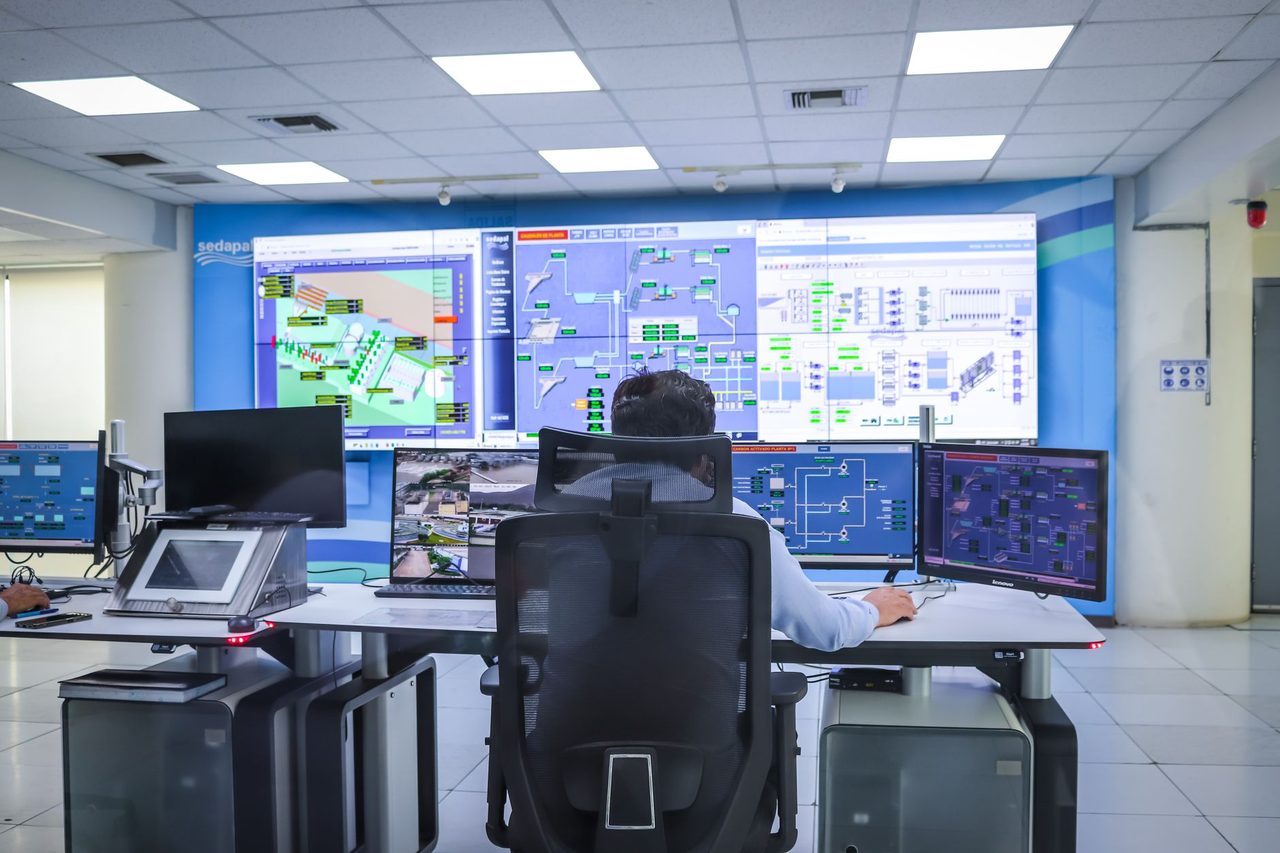
Photo: Fernando Narvaez on Pexels
India’s power distribution sector has moved beyond pilot-mode digitalisation. In 2026, the practical question for DISCOM boards, state utilities, regulators, lenders and large consumers is no longer whether to digitise the grid, but which digital layers create measurable operational and financial returns fastest. One of the most important shifts is the move from standalone SCADA deployments to integrated SCADA-ADMS environments that can support real-time network operations, switching optimisation, voltage management and distributed resource visibility.
For many Indian utilities, the first generation of SCADA delivered substation telemetry, breaker status and limited remote control. That was valuable, but insufficient for today’s operating context. Rooftop solar penetration is increasing on urban feeders, agricultural load remains volatile, feeder overloading persists in fast-growing towns, and reliability benchmarks are under tighter scrutiny under RDSS-linked reform expectations. Against this backdrop, Advanced Distribution Management Systems, when tightly integrated with SCADA, GIS, outage systems and field workflows, can materially improve restoration speed, voltage quality, O&M productivity and AT&C outcomes.
This article focuses on a topic distinct from FLISR-only and ADMS Volt/VAR-only discussions: how end-to-end SCADA-ADMS integration should be approached by Indian DISCOMs in 2026, where the ROI really comes from, and what utilities, developers, financiers and policymakers should evaluate before procurement.
Why standalone SCADA is no longer enough in 2026
A typical legacy SCADA deployment in an Indian DISCOM covers EHV and major urban substations, selected ring main units and some feeder breakers. Operators can see alarms, open and close devices remotely, and monitor demand at the control centre. However, several structural gaps remain:
- poor model alignment between field assets and control-room displays
- limited integration with GIS and consumer indexing
- absence of network applications such as switching sequence validation
- weak outage localisation below the substation level
- minimal coordination with distributed generation and capacitor banks
- fragmented event logs across SCADA, billing, AMI and complaint systems
These gaps matter because outages and technical losses are created and resolved on the distribution network, not only at the substation bus. A feeder trip visible in SCADA is only the start of the story. Operators still need to know which downstream sections are affected, which switches can safely isolate the fault, whether alternate backfeed capacity exists, how many high-value consumers are impacted, and whether the switching plan will violate loading or voltage limits. ADMS adds that operating intelligence.
In 2026, utilities that stop at basic SCADA risk underutilising capex already spent on RTUs, FRTUs, communication links and substation automation. Integration is what converts visibility into action.
What SCADA-ADMS integration means in practice
SCADA-ADMS integration is not just a software overlay. It is the creation of a live operational stack in which telemetry, control, network models and workflow systems are synchronised. In a strong implementation, the following layers work together:
- SCADA for real-time data acquisition, alarms and remote control
- GIS for accurate feeder, DT, switch and consumer connectivity models
- OMS functions for outage detection, impact tracing and crew dispatch support
- distribution power flow and state estimation for network awareness
- switching management for safe, validated restoration steps
- voltage and reactive power applications for loss and power-quality improvement
- integration with AMI, billing and consumer indexing for event verification and commercial analytics
The practical outcome is that a control room does not merely observe the network. It operates the network with decision support.
For example, if a 11 kV feeder fault occurs in a city division, integrated SCADA-ADMS can identify the likely affected section, assess downstream load blocks, validate sectionalising and backfeed options, notify field teams with exact device references and estimate restoration boundaries. If AMI last-gasp or power-restored messages are integrated, the utility can cross-check whether restoration has actually occurred at consumer level rather than assuming success from upstream breaker closure alone.
This is especially relevant in India, where feeder topology records are often outdated, normally-open points are not consistently maintained in digital models, and field switching logs may still be partially manual.
The strongest 2026 use cases for Indian DISCOMs
The ROI case for SCADA-ADMS integration becomes much clearer when tied to high-frequency operational problems.
1) Faster fault isolation and service restoration
Although FLISR is often discussed as a separate capability, broader SCADA-ADMS integration is what enables repeatable utility-scale restoration discipline. Even where full automation is not feasible on day one, semi-automated switching recommendations can reduce restoration time significantly.
In Indian urban networks, utilities commonly report 20 to 60 minutes of avoidable delay between fault occurrence and effective field isolation due to poor section visibility, uncertain switch status or overloaded fallback routes. A well-configured integrated platform can reduce this by 15 to 40 minutes on priority feeders, especially where FRTUs and ring main units are already present.
That translates into:
- lower consumer minutes lost
- fewer complaint calls to call centres
- reduced diesel backup dependency for commercial and industrial consumers
- better reliability performance in high-revenue circles
For large C&I consumers, each avoided outage or faster restoration event can have production-value far above the utility’s direct accounting metrics. That is why industrial clusters increasingly support feeder automation and visibility investments around their supply corridors.
2) Voltage profile improvement and technical loss reduction
Many Indian 11 kV feeders operate with wide voltage variation, especially at tail-end rural-urban mixed loads. Persistent low voltage increases motor stress, causes process interruptions and raises technical losses. Capacitor banks may exist, but their switching logic is often local, time-based or not coordinated with actual feeder conditions.
Integrated SCADA-ADMS supports feeder-level voltage monitoring, reactive power coordination and switching analytics. Even without a full advanced Volt/VAR programme, utilities can identify chronic undervoltage pockets, overloaded sections and ineffective capacitor placement faster.
Typical technical benefits seen in structured deployments include:
- 1% to 3% reduction in feeder technical losses on targeted urban and semi-urban feeders
- improved voltage compliance at sensitive C&I nodes
- lower peak current on selected sections after reactive power correction
- better transformer loading visibility
For a DISCOM with average cost of supply above Rs 7/kWh and high procurement cost during peak periods, even a 1% technical loss reduction on a dense urban area can create meaningful annual savings. On a 100 MW average load base, 1% energy saving roughly corresponds to 8.76 million units annually. At Rs 7 per kWh, that is about Rs 6.1 crore per year in gross avoided cost terms before implementation and O&M expenses.
3) Better field crew productivity and safer switching
One of the least discussed benefits in India is workflow discipline. Many outages are prolonged not because equipment is unavailable, but because control-room instructions, field verification and switching clearances are inconsistent. Integrated switching management reduces this risk.
With a validated network model, operators can:
- generate step-by-step switching orders
- avoid unsafe backfeed or unintended islanding conditions
- record who executed which step and when
- reduce repeat site visits caused by wrong device identification
This matters for both safety and auditability. Under RDSS-era scrutiny, utilities need clearer evidence of operational control, not just procurement completion.
Growthifye’s experience in SCADA / ADMS integration and Vendor-neutral specifications is particularly relevant here, because software value depends heavily on interoperable field architecture rather than on a single OEM promise.
4) Revenue protection through operational-commercial data convergence
SCADA-ADMS is not a billing system, but it can support AT&C reduction when integrated with AMI, feeder metering and DT metering datasets. The biggest value comes from identifying mismatch patterns:
- feeder energy supplied vs billed energy in specific restoration zones
- recurring abnormal loading after restoration that indicates hooking or bypass
- DT overloading not explained by registered consumer base
- outage claims inconsistent with network event records
When network events are mapped against consumer and transformer hierarchies, vigilance and loss-reduction teams can prioritise field action more intelligently. This is especially useful in high-loss urban pockets where indiscriminate inspections waste resources.
5) Renewable and flexible-load readiness
Many state utilities are beginning to face localised reverse power flow, rooftop solar clustering and power-quality issues on feeders serving institutional, commercial and residential prosumers. While full DER orchestration may require separate DER management systems, a modern ADMS-ready architecture is a necessary foundation.
In 2026, utilities that install new SCADA points without model-based integration risk duplicating capex later when DER visibility becomes essential. Planning for future interoperability with DER management systems and IEC 61850 substation automation can avoid expensive redesign.
Where the ROI really comes from
Indian utility business cases often fail when justified only on abstract digital transformation language. The better approach is to stack benefits that can be measured feeder by feeder, division by division.
The most credible ROI drivers are:
- avoided outage duration in high-revenue urban and industrial feeders
- reduced field travel and restoration labour inefficiency
- lower technical losses through voltage and loading visibility
- deferred capex by better utilisation of existing feeder transfer capacity
- lower complaint handling and manual reporting overhead
- improved regulatory defensibility on reliability and supply quality
A realistic 2026 financial model for a medium to large city-circle deployment should test at least three cases:
- conservative case: 0.5% technical loss benefit, limited restoration gains, modest crew productivity improvement
- base case: 1% to 1.5% technical loss benefit on priority feeders, 15% to 25% outage-duration reduction, measurable O&M savings
- upside case: higher automation density, AMI integration, improved switching execution and industrial feeder prioritisation
For many urban circles, project economics improve sharply if the utility focuses phase 1 on feeders with:
- high energy input
- high complaint volume
- dense commercial or industrial load
- recurring voltage issues
- existing communication backbone and remotely operable devices
This targeted approach is usually superior to a thin, system-wide rollout that creates dashboards without operational depth.
Implementation pitfalls Indian utilities should avoid
The market has enough examples where utilities procured software but did not achieve operational outcomes. Common reasons include:
- inaccurate GIS or feeder connectivity model
- field device naming mismatch between SCADA and GIS
- poor telecom uptime to FRTUs and switching devices
- insufficient substation and feeder metering granularity
- lack of control-room process redesign
- no measurable KPI baseline before go-live
- over-customisation that makes maintenance difficult
A recurring problem is treating integration as an IT exercise rather than an operations programme. ADMS applications are only as good as the network model, telemetry quality and operator trust in recommendations.
Utilities should also pay close attention to standards and testing. IEC 60870-5-104, DNP3 and IEC 61850 environments often coexist in Indian networks. If protocol mapping and time synchronisation are weak, the control room may receive inconsistent device states. Structured FAT to SAT execution is therefore critical, especially where multiple OEMs, communication vendors and system integrators are involved.
What lenders, policymakers and large consumers should look for
The importance of SCADA-ADMS integration goes beyond utility operations.
For lenders and infrastructure financiers, better operating visibility lowers execution risk in distribution modernisation programmes. They should examine whether projects have:
- a credible feeder prioritisation logic
- interoperable architecture rather than closed OEM dependency
- defined KPIs such as outage duration reduction, voltage improvement and loss benefit
- telecom readiness and asset-data quality plans
- O&M capability for post-deployment sustainability
For policymakers, the priority should be outcome-linked digitalisation. Funding support or reform tracking should distinguish between simple control-centre software procurement and actual integrated feeder operations capability.
For C&I consumers, especially those in manufacturing corridors, digital utility operations can directly affect plant uptime, voltage stability and DG backup costs. Industrial associations can play a useful role by engaging utilities on feeder automation priorities in high-value supply zones.
A practical roadmap for 2026 deployments
For Indian DISCOMs considering deployment or expansion in 2026, a pragmatic roadmap looks like this:
- clean feeder and switch connectivity data using GIS and field validation
- identify 20 to 100 highest-value feeders for phase 1 based on outage, revenue and load density
- integrate existing SCADA, substation telemetry and feeder devices before buying unnecessary new layers
- ensure switching applications are tied to actual operating procedures
- connect AMI outage and restoration events where available
- define feeder-level KPIs for restoration time, voltage excursions, loading and technical loss
- build a scale plan toward wider automation, not just a pilot dashboard
Utilities should insist on architecture that supports future expansion into outage management, distributed resource visibility, mobile workforce integration and substation automation upgrades. The objective is not simply to “have ADMS”, but to create a reliable digital operations backbone for the distribution business.
In that sense, SCADA-ADMS integration is one of the most practical 2026 investments for Indian DISCOMs. It sits at the intersection of reliability, loss reduction, renewable readiness and field efficiency. Done well, it can convert earlier digital capex into measurable utility performance and better service quality for consumers.
If your utility, lending team or project consortium is evaluating distribution digitalisation, contact Growthifye’s advisory desk for a practical assessment of architecture, ROI, specifications and implementation readiness.
Explore Growthifye's related capabilities
This analysis connects directly to our advisory practice: IEC 61850 substation automation · FLISR & self-healing networks · DER management systems · SCADA / ADMS integration.
About the author

Chief Executive Officer, Growthifye — With over 23 years in management consulting, Sudarshan has taken businesses from concept to scale — building and scaling new-age digital and energy businesses.
- 23+ years in management consulting
- EY alumnus
- Led large-scale BESS programmes, capital raises and advisory mandates
Want this analysis applied to your project?
Talk to our team