OMS for Indian DISCOMs 2026: Outage Management, CAIDI Reduction and RDSS ROI
By Sudarshan Karweer · sudarshan@growthifye.com · +91 84510 99371 (Call / WhatsApp) · 2026-09-19

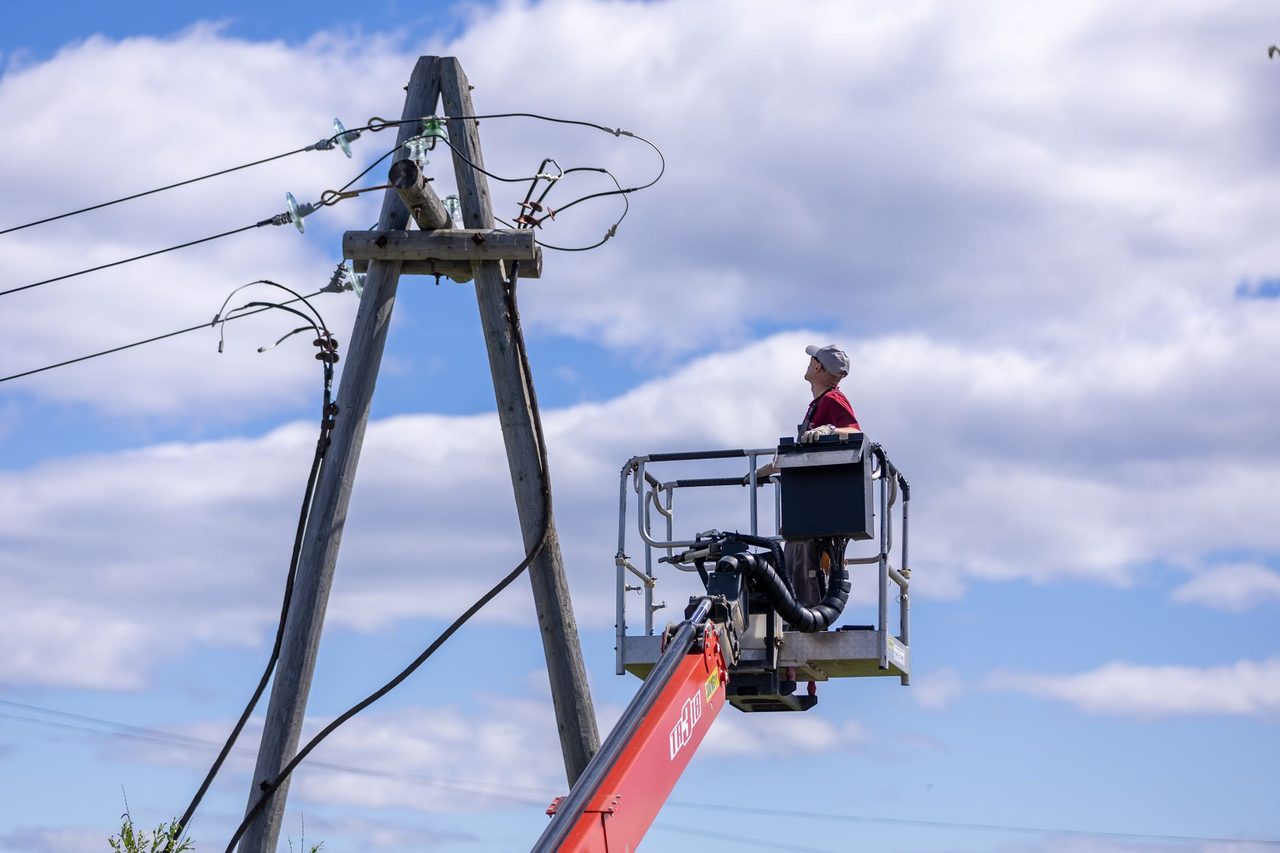
Photo: Thampapon Otavorn on Pexels
Indian DISCOMs are spending heavily on smart metering, substation automation and network visibility under RDSS, but many still struggle with one operational gap: converting alarms, calls and feeder events into fast, auditable outage restoration. This is where an Outage Management System, or OMS, creates value.
Unlike topics such as MDM, FLISR, DERMS or SCADA-ADMS already widely discussed, OMS deserves separate attention because it sits at the operational centre of customer outage response. For Indian utilities in 2026, OMS is no longer just a call-centre tool. It is becoming the transaction layer that links AMI last-gasp events, GIS connectivity, crew dispatch, switching approvals, estimated restoration time and regulator-facing reliability reporting.
For C&I consumers, better OMS deployment means fewer production losses from prolonged faults. For lenders and policymakers, it means measurable service-quality outcomes from digital capex. For utilities, it means lower restoration cost per incident, better reliability indices and stronger consumer trust.
Why OMS matters for Indian DISCOMs in 2026
Many DISCOMs already have fragments of outage visibility:
- 1912 or utility call-centre complaints
- SCADA alarms from primary substations and major feeders
- WhatsApp or phone-based field updates from section staff
- AMI smart meter last-gasp and power-restoration pings
- GIS asset maps of feeders, DTRs and consumer indexing
- Workforce systems or contractor dispatch logs
The problem is not the absence of data. The problem is orchestration.
In many state utilities, restoration still depends on manual correlation between feeder tripping, customer calls and field feedback. That slows fault localization, creates duplicate crew dispatch and weakens communication with high-value consumers. The result is higher CAIDI, avoidable SAIDI inflation and poor complaint closure quality.
An OMS can change this by:
- Predicting outage extent from network connectivity models
- Correlating breaker operations, feeder alarms and AMI outage events
- Identifying probable fault locations and affected consumer counts
- Grouping customer calls into a single incident rather than many isolated complaints
- Dispatching the nearest qualified crew with switching context
- Updating estimated restoration times automatically as field status changes
- Recording the outage timeline for regulator and internal KPI reporting
For industrial feeders and urban circles with dense C&I loads, even a 20-40 minute reduction in average restoration time has real economic value. In states where industrial tariffs remain in the range of about Rs 7-10 per kWh and demand charges are material, unplanned outages create costs far beyond energy non-supply, including process interruption, quality losses and backup diesel generation.
What an OMS actually does in a modern utility stack
A practical OMS for Indian DISCOMs in 2026 is not a standalone software island. It must sit across four layers.
First is the network model layer. This comes from GIS, feeder mapping, DTR connectivity and consumer indexing. Without this, the OMS cannot infer which consumers are downstream of a faulted device.
Second is the event layer. This includes:
- SCADA breaker and relay indications
- RMU and recloser events
- AMI last-gasp and restoration notifications
- Call-centre complaints
- Mobile app outage tickets
- Field crew status updates
Third is the decision layer. Here the OMS performs event correlation, outage prediction, trouble-call clustering, restoration workflow management and crew assignment. In more advanced setups, it also interacts with DMS or ADMS logic for switching plans.
Fourth is the communication and reporting layer. This includes SMS updates to customers, outage dashboards for management, service-level tracking, and reliability reports aligned with SERC expectations.
Where utilities are already pursuing SCADA / ADMS integration, OMS becomes the customer-facing and crew-facing operational extension of that investment. SCADA tells the control room what tripped. OMS tells the utility who is affected, where to send crews, what to communicate and how to measure restoration performance.
Indian use cases where OMS creates the highest ROI
Not every circle will see the same benefit from OMS at the same pace. In India, the strongest use cases are usually the following.
Urban underground networks
Dense urban areas with mixed residential and commercial demand generate high complaint volume during outages. Manual complaint handling overwhelms call centres and section offices. OMS can cluster incidents, reduce duplicate dispatches and improve estimated restoration time accuracy.
Industrial and high-value feeders
On dedicated or semi-dedicated industrial feeders, outage visibility matters commercially and politically. A robust OMS can support priority restoration workflows, auditable switching approvals and more credible communication with major consumers.
Areas with high smart meter penetration
As AMI expands under RDSS, smart meters generate large numbers of power-loss and restoration events. Without OMS, these signals remain underused. With OMS, AMI becomes a low-voltage visibility input that helps detect outage extent beyond the substation and feeder head.
Storm and monsoon-prone circles
States facing cyclones, heavy monsoon faults or frequent tree-fall events need structured incident command during mass outages. OMS provides outage aggregation, crew prioritization and restoration sequencing.
Utilities improving reliability regulation compliance
As service quality reporting becomes stricter, utilities need cleaner outage records, standardized cause coding and asset-level incident histories. OMS supports this discipline far better than spreadsheet-based closure processes.
OMS architecture choices and integration priorities
Indian DISCOMs often ask whether OMS should be procured before or after ADMS, whether AMI must be universal, and whether GIS quality has to be perfect before go-live. The practical answer is that OMS can be phased, but three prerequisites matter.
1. Usable connectivity model
Perfection is not required, but the GIS and network model must at least represent:
- Primary substation to feeder hierarchy
- Feeder to sectionalizing points
- DTR mapping where available
- Consumer indexing quality high enough for major outage zones
If consumer indexing error rates are very high, outage extent prediction becomes unreliable. Many utilities find that targeted data cleansing on high-load urban and industrial feeders delivers faster OMS value than attempting enterprise-wide perfection first.
2. Event source normalization
Different systems time-stamp events differently and use different naming conventions. Breaker identifiers, feeder names and DTR codes must be normalized. If AMI HES, SCADA and call-centre systems refer to the same asset in different formats, correlation quality suffers.
3. Dispatch workflow discipline
An OMS will not generate results if crews still close jobs informally over phone calls. Field mobility, switch approval workflows and mandatory cause-code closure are essential.
A sensible Indian deployment path is often:
- Phase 1: major urban circles, 33/11 kV feeders, call-centre integration, basic crew dispatch
- Phase 2: AMI last-gasp integration, DTR-level outage grouping, automated customer communication
- Phase 3: integration with DMS/ADMS, switching optimization, outage analytics by asset class
- Phase 4: semi-automated restoration in selected networks alongside FLISR & self-healing networks
Quantifying benefits: CAIDI, OPEX and commercial value
Utilities and lenders increasingly ask for OMS business cases in numbers, not generic digital promises. The value usually appears in five buckets.
Restoration speed
A well-configured OMS commonly reduces diagnosis and dispatch time by 15-30 minutes for feeder and downstream outages in urban networks. In circles with poor current processes, the improvement can be larger.
If a utility handles 20,000 meaningful outage incidents annually in a major license area, even a 20-minute average CAIDI reduction translates into substantial consumer minutes saved. For regulators, this directly supports better service-quality performance.
Crew productivity
Duplicate truck rolls are common where multiple complaints are logged for the same outage. OMS reduces this by clustering incidents and assigning one event record with controlled dispatch. In practice, utilities can see 10-20% improvement in crew utilization for certain classes of incidents.
Call-centre efficiency
When customer complaints are linked to known outage incidents, average handling time falls. Agents no longer need to create isolated tickets for each affected consumer. This can reduce complaint overload during major outages and improve first-contact response quality.
Reliability reporting and auditability
Manual outage records often contain inconsistent start times, restoration times and cause codes. OMS improves traceability, which matters for internal performance management and external reporting.
C&I consumer retention and satisfaction
This is not always booked as direct utility ROI, but it matters. High-value consumers are more likely to invest and expand in service areas where outage response is credible, transparent and predictable. For states competing for manufacturing investment, utility reliability is now an economic-development issue.
A realistic 2026 OMS capex and integration range for a medium to large Indian DISCOM can vary widely depending on user count, GIS maturity, mobility scope and integration depth. Enterprise programmes may range from several crore rupees for limited-scope rollouts to much larger budgets when bundled with GIS remediation, mobility and control-centre modernization. The ROI is strongest when OMS is positioned not as standalone IT, but as an operational layer leveraging sunk and planned investment in AMI, GIS and automation.
Procurement mistakes Indian utilities should avoid
OMS projects fail less because of software and more because of weak scope definition. Common mistakes include:
- Buying a complaint management tool and calling it OMS
- Ignoring GIS cleanup and connectivity validation
- Excluding AMI event integration from the core scope
- Treating crew mobility as optional
- Not defining cause codes, switching workflows and user roles up front
- Accepting vendor lock-in through proprietary interfaces
- Running FAT but not validating realistic outage scenarios in SAT
For this reason, Vendor-neutral specifications matter. Utilities should define event volumes, latency expectations, asset hierarchy, outage prediction logic, API requirements, cyber controls and performance KPIs before tendering. They should also insist on scenario-based FAT to SAT validation using Indian operating conditions, including feeder trips, nested outages, communication loss and mass outage events.
Key bid parameters should include:
- Maximum event-correlation latency
- Accuracy targets for outage extent prediction on modelled feeders
- Integration with existing 1912/call-centre stack
- AMI HES and GIS interoperability
- Role-based access control and audit trails
- Support for multilingual customer communications
- Disaster recovery and cyber compliance
- Open APIs for future DMS, DER and mobility layers
Cybersecurity, data governance and regulator alignment
As OMS becomes a live operational system, cyber hygiene becomes non-negotiable. OMS touches outage command, switching context, customer data and field dispatch. Security controls should include:
- Segregation between OT and enterprise IT zones
- API authentication and encrypted integrations
- Role-based access and maker-checker approvals for sensitive actions
- Immutable audit logs for outage events and status changes
- Backup communication paths during control-centre failure
- Periodic cyber drills and restoration playbooks
On the governance side, utilities should define one source of truth for:
- Asset identifiers
- Feeder and DTR hierarchies
- Customer indexing
- Cause-code taxonomy
- Reliability index computation logic
Regulator alignment is also important. SERCs and utility boards increasingly expect measurable service improvement from digital investments. OMS programmes should therefore commit to a pre- and post-deployment baseline across:
- CAIDI
- n- SAIDI
- SAIFI
- Average complaint closure time
- Repeat complaint rates
- Crew response time
- Estimated restoration time accuracy
A 12-month baseline and a 12-month post-stabilization review usually give a fair picture. Monsoon adjustments should be built into interpretation.
Where OMS fits in the next DISCOM digital stack
The Indian utility stack is moving toward deeper automation, but not every network is ready for fully automated fault isolation. OMS offers a practical bridge.
It is especially relevant where utilities have already invested in:
- AMI under RDSS
- feeder and DTR metering
- substation SCADA
- GIS and consumer indexing
- reclosers and sectionalizers
In such environments, OMS creates immediate operating value even before advanced automation matures. Later, the same OMS data can support stronger analytics on bad-actor assets, outage-prone corridors, vegetation-linked faults and contractor performance.
For utilities planning IEC 61850 substation automation or broader SCADA / ADMS integration, OMS should be treated as a coordinated workstream rather than an afterthought. Without OMS, control-room visibility improves, but customer-facing restoration execution often remains manual and fragmented.
In 2026, the most credible Indian DISCOM digital roadmaps are those that connect asset intelligence to service outcomes. OMS does exactly that. It converts event streams into faster restoration, better communication and auditable reliability gains.
For C&I consumers, developers, lenders and policymakers, that makes OMS more than a software category. It is a measurable reliability instrument.
If your utility, project team or financing mandate is evaluating outage-management investments, contact Growthifye’s advisory desk for support on business case design, system architecture, tender strategy and implementation oversight.
Explore Growthifye's related capabilities
This analysis connects directly to our advisory practice: IEC 61850 substation automation · FLISR & self-healing networks · DER management systems · SCADA / ADMS integration.
About the author

Chief Executive Officer, Growthifye — With over 23 years in management consulting, Sudarshan has taken businesses from concept to scale — building and scaling new-age digital and energy businesses.
- 23+ years in management consulting
- EY alumnus
- Led large-scale BESS programmes, capital raises and advisory mandates
Want this analysis applied to your project?
Talk to our team