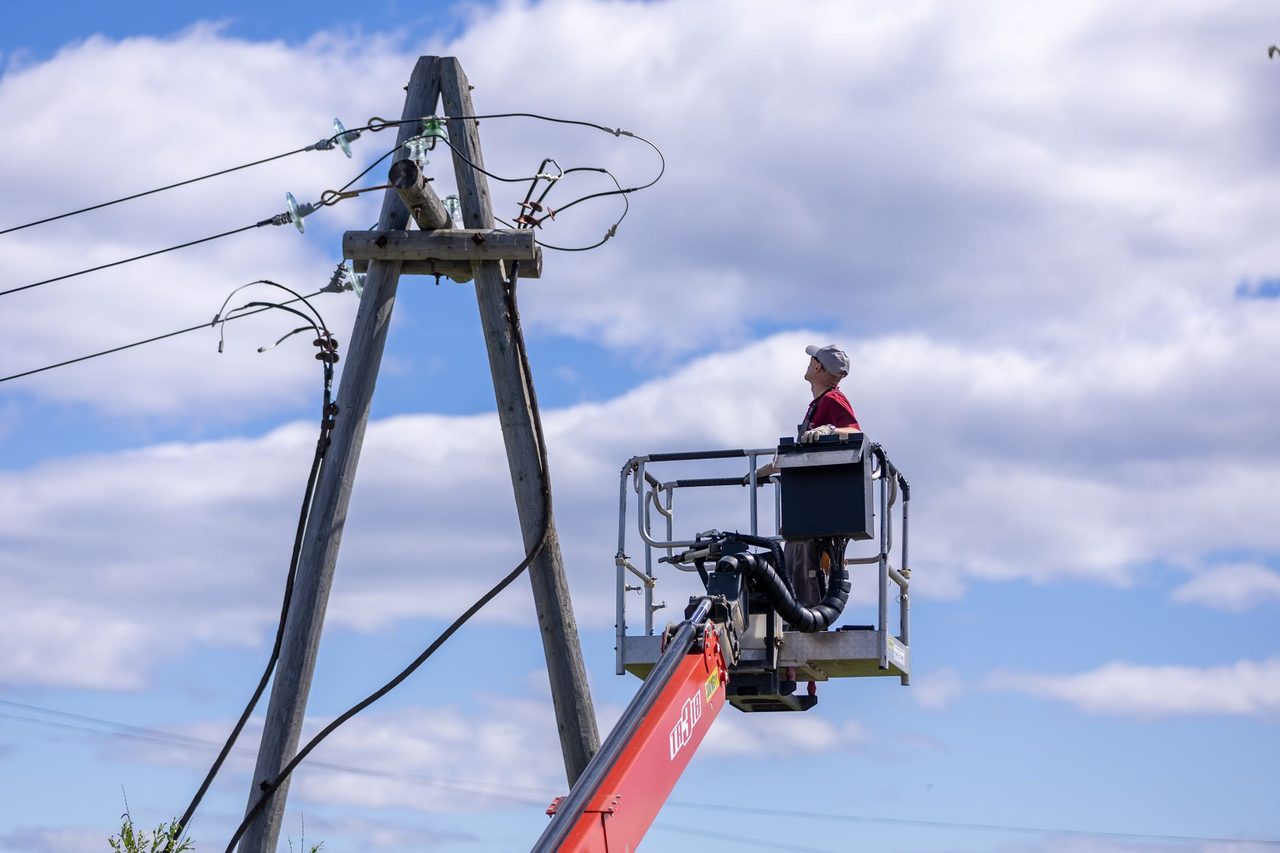
FLISR for Indian DISCOMs 2026: Faster Restoration, SAIDI Cuts and RDSS ROI
By Sudarshan Karweer · sudarshan@growthifye.com · +91 84510 99371 (Call / WhatsApp) · 2026-09-13
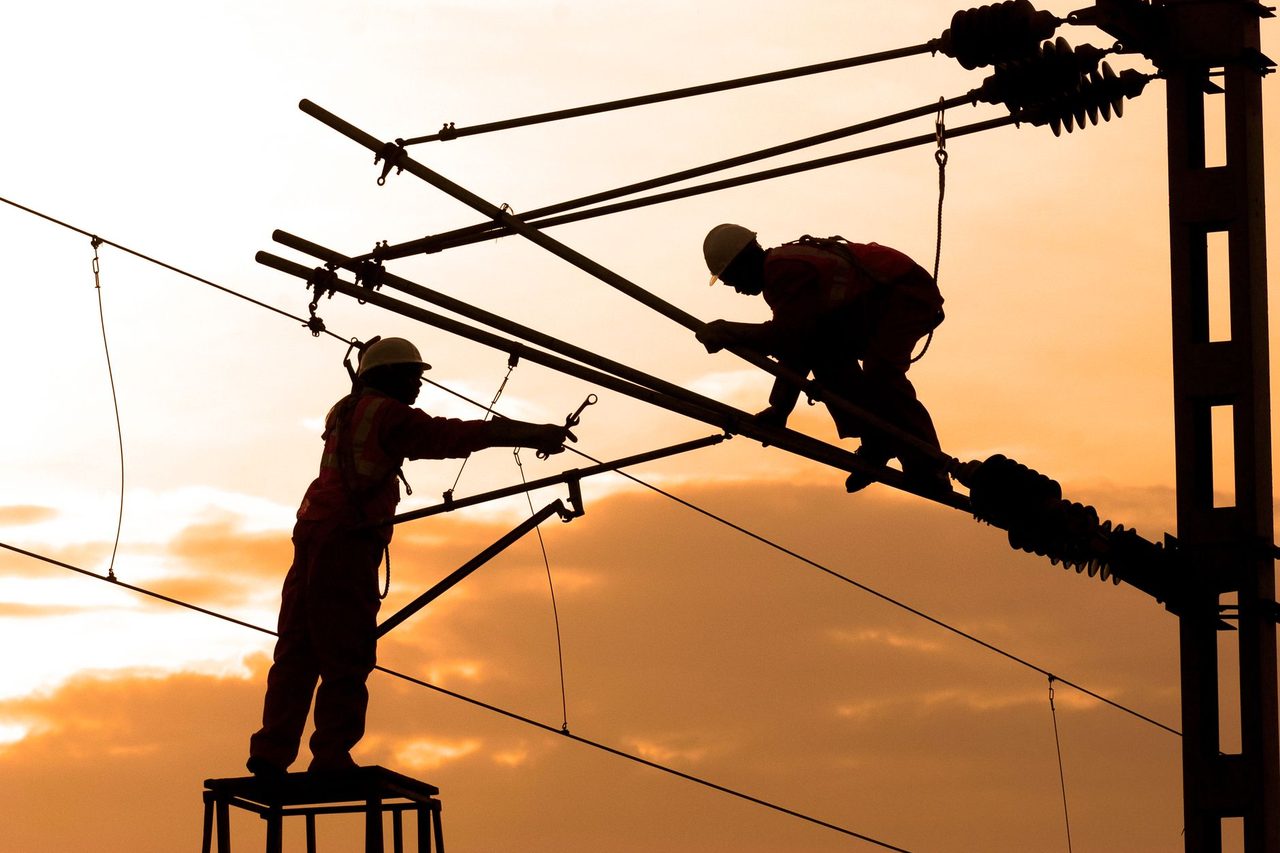
Photo: Gansham Ramchandani on Pexels
India’s distribution sector has spent the last three years talking about smart meters, data lakes and digital substations. In 2026, the more urgent operational question is simpler: when a feeder fault occurs, how quickly can power be restored to unaffected consumers without waiting for manual switching, field calls and substation-level guesswork?
That is where FLISR—Fault Location, Isolation and Service Restoration—has become commercially relevant for Indian DISCOMs. Unlike broader ADMS programs that can take longer to architect and absorb, FLISR can be deployed in phased, feeder-level packages on urban rings, industrial corridors, high-value mixed-load areas and reliability-sensitive zones. The objective is direct and measurable: locate a fault faster, isolate only the faulted section, and restore healthy sections automatically or semi-automatically.
For Indian utilities facing RDSS execution pressure, rising consumer expectations, more rooftop solar on urban feeders, and tighter scrutiny from regulators and lenders, FLISR is no longer a pilot-only concept. It is a practical reliability and loss-reduction tool with near-term payback when applied to the right feeders.
Why FLISR matters in India in 2026
Most Indian DISCOMs still operate large parts of their 11 kV and 33 kV distribution systems with limited visibility below the substation. Even where SCADA exists, automation often stops at breaker status and basic feeder measurements. Fault restoration on the downstream network remains dependent on operator judgment, phone-based coordination, patrol teams and local switching.
This creates four recurring problems:
- unnecessary outage spread because healthy sections remain de-energised longer than required
- slow fault isolation due to weak sectionalising logic and limited real-time field visibility
- high O&M cost from repeated truck rolls and manual patrolling
- poor reliability outcomes for high-paying C&I consumers, especially in urban and industrial load pockets
In 2026, these problems have become more expensive.
For C&I consumers, one avoidable hour of outage can mean lost production, diesel backup consumption, process instability and contractual penalties. For DISCOMs, reliability underperformance increasingly affects regulator scrutiny, consumer complaints, collection efficiency and the credibility of RDSS-funded digitalisation. For lenders and state governments, the issue is whether capex is translating into measurable network outcomes rather than just hardware deployment.
FLISR addresses this gap by automating sectionalising and restoration using feeder topology, real-time switch status, fault indications and switching rules. On a ring-main or multi-source network, the system can isolate the affected section and restore supply from alternate sources where available. Even in semi-urban radial systems, partial automation can materially reduce outage duration if the network has remotely operable sectionalizers and reliable communications.
What FLISR actually includes on a DISCOM network
FLISR is not one device and not just software. It is a coordinated automation scheme spanning field assets, communications, control logic and operator procedures.
A typical Indian deployment stack includes:
- feeder breaker integration at 33/11 kV substations
- remotely monitored or remotely operated ring main units, reclosers and sectionalizers
- fault passage indicators or intelligent electronic devices on selected sections
- reliable communications through fiber, RF, LTE/4G/5G or hybrid networks
- SCADA or DMS applications with feeder topology awareness
- switching logic with safety interlocks, source constraints and restoration rules
- operator HMI, event logs and override capability
For utilities that already have substation SCADA and some field automation under RDSS, FLISR can often be layered on with incremental investment rather than a full control-system replacement. That is why it is attracting attention as a mid-path strategy: more operationally impactful than plain monitoring, but less capital-heavy and institutionally demanding than full distribution automation across the whole license area.
This is also where Growthifye’s SCADA / ADMS integration capability becomes relevant. Many Indian DISCOMs have fragmented legacy systems from multiple OEMs, and FLISR performance depends heavily on clean topology, reliable status acquisition and disciplined switching sequences across that heterogenous estate.
Best-fit use cases: where FLISR delivers the strongest ROI
The biggest mistake in FLISR planning is trying to justify it uniformly across all feeders. The economics vary sharply by topology, consumer mix and outage cost.
In Indian conditions, the best first-wave FLISR candidates are usually:
- urban 11 kV ring feeders with multiple sectionalizing points
- CBD and metro distribution areas with dense commercial load
- industrial estates and dedicated high-revenue corridors
- high-complaint feeders with repeated transient and permanent faults
- mixed-load urban feeders with significant rooftop solar where switching visibility matters more
- franchisee or PPP-operated urban circles with explicit service-level targets
By contrast, long rural radial feeders with sparse load and weak communications may not justify full automation immediately, though selective fault indicators and remotely operable switches can still improve restoration.
A practical screening framework for DISCOMs in 2026 is to rank feeders on five parameters:
- annual outage minutes affecting billed energy and key consumers
- load density and average revenue per unit sold
- switching flexibility and alternate source availability
- existing field device readiness and communications availability
- maintenance burden and truck-roll frequency
If a feeder serves 8-15 MW of mixed urban or industrial load, has at least two useful sectionalising points, and experiences repeat interruptions, FLISR economics usually become compelling.
Cost structure and realistic ROI for Indian utilities
Indian utilities and lenders increasingly want a bottom-up view rather than generic smart-grid promises. A realistic FLISR business case in 2026 should include both direct and indirect benefits.
Indicative capex ranges vary widely by starting condition, but for urban 11 kV feeders the incremental cost envelope often looks like this:
- remotely operable switchgear or RMU upgrades: Rs 8 lakh to Rs 22 lakh per location depending on configuration and OEM
- reclosers/sectionalizers with protection and communications: Rs 12 lakh to Rs 30 lakh per point
- communication backhaul and integration: Rs 2 lakh to Rs 8 lakh per site equivalent
- control center software, engineering and integration allocation: project dependent, often Rs 20 lakh to Rs 1.5 crore spread across a feeder cluster
- training, testing and commissioning: typically 3% to 7% of package value
A first-phase package covering 15-30 strategic feeders in a city circle can therefore range from roughly Rs 8 crore to Rs 35 crore depending on field readiness and software maturity.
The revenue-side and cost-side benefits generally come from:
- reduction in SAIDI and customer outage minutes
- lower ENS, especially for high-value urban and industrial consumers
- fewer manual switching operations and patrol dispatches
- reduced overtime and faster fault crew utilization
- lower diesel backup reliance for utility-critical installations
- better regulator-facing reliability metrics and consumer satisfaction
- operational foundation for later ADMS, VVO and DER coordination
On strong urban feeders, FLISR can reduce restoration time for isolatable faults from 45-120 minutes to 5-20 minutes for unaffected sections, provided switching paths are physically available and communications are dependable. That does not eliminate field repair time on the faulted segment; it sharply limits the footprint of the outage.
For a city circle with 100-150 MW on target feeders, even a 20-40% reduction in sustained outage minutes can translate into substantial commercial value. If just 25 MW of high-paying load sees 30 fewer outage hours per year and average realization is Rs 7-9/kWh, avoided energy-not-served and retention value can be meaningful. Add truck-roll reduction, O&M productivity gains and complaint-cost avoidance, and simple payback can fall in the 2.5-5 year range on good feeders. On weaker topologies, the payback may stretch beyond 6 years.
Utilities should avoid overclaiming AT&C-loss reduction directly from FLISR. The primary value is reliability and operational efficiency. However, secondary loss benefits can appear where faster fault isolation reduces repeated technical stress, unauthorised back-feeding risks and prolonged outage-related billing disputes.
FLISR and RDSS: how the alignment works
RDSS has primarily pushed smart metering, loss reduction, infrastructure strengthening and utility modernisation. In practice, FLISR sits at the intersection of these goals, especially where feeder reliability, automation and consumer service quality are under review.
The RDSS relevance in 2026 is strongest in four areas:
- field device digitisation under distribution infrastructure strengthening
- control-center modernisation through SCADA and related operational systems
- measurable service-quality improvement for urban consumers
- support for AT&C improvement indirectly through better network discipline and fewer supply disputes
DISCOMs should present FLISR not as an isolated software purchase but as an outcome layer over already funded digital and physical investments. If a utility has installed feeder metering, substation automation, communication links and remotely operable devices, FLISR is the logic that converts those assets into lower interruption duration.
For program approval and internal governance, the strongest KPI set usually includes:
- baseline and post-deployment SAIDI/SAIFI by feeder cluster
- mean time to isolate and mean time to restore unaffected sections
- number of remote versus manual switching actions
- truck-roll reduction per 100 feeder faults
- supply-restoration time for industrial and commercial zones
- operator override frequency and misoperation rate
A disciplined FAT to SAT process is critical here. Many utility automation programs in India underperform because topology models, field naming conventions, status mapping and protection settings are not fully harmonised before go-live.
Technical and implementation risks DISCOMs must manage
FLISR is highly effective, but only when the network model and field reality match. Indian utilities should be cautious about five common failure points.
First, poor topology data. If the control system does not know the true feeder configuration, switch normally-open points, or alternate source constraints, restoration logic can become unreliable.
Second, inadequate communications. FLISR needs timely and trustworthy device status. High latency, frequent packet loss or weak telecom redundancy can force the utility back into advisory-only mode.
Third, mixed-vendor interoperability issues. Urban distribution estates often contain switchgear, RTUs, relays and SCADA elements from multiple suppliers and vintages. Vendor-neutral specifications are essential if the utility wants long-term scalability rather than OEM lock-in.
Fourth, weak operations discipline. Automation does not remove the need for field and control-room standard operating procedures. Lockout-tagout, maintenance bypasses, manual overrides and protection coordination must be updated before commissioning.
Fifth, over-automation on unsuitable feeders. Not every fault scenario should trigger unattended switching. Many Indian utilities will benefit most from a staged model:
- advisory fault location first
- operator-approved isolation and restoration second
- selected closed-loop automation later on mature feeder groups
This phased strategy is usually more acceptable to utility leadership, regulators and field staff than attempting fully autonomous restoration everywhere on day one.
Why C&I consumers, developers and lenders should care
FLISR is often discussed as a utility-side technology, but its downstream implications matter to several market participants.
For C&I consumers, especially those in manufacturing, data centers, cold chain, pharma, commercial complexes and export-oriented clusters, feeder automation can improve supply continuity without requiring all resilience spending to sit behind the meter. That can affect DG runtime, battery sizing assumptions and captive backup economics.
For renewable developers, especially those active in rooftop, open access integration support or urban network-facing projects, better utility-side switching visibility reduces uncertainty around feeder behaviour and restoration after disturbances. As more urban feeders host rooftop PV and BESS, the ability to isolate faults and reconfigure healthy sections becomes more important.
For lenders and state finance departments, FLISR is one of the cleaner examples of digital capex tied to operational KPIs. Unlike broad transformation claims, its impact can be measured feeder by feeder. If the project is scoped correctly, lenders can ask for quarterly evidence on outage reduction, switching success rate and asset utilisation.
For policymakers, FLISR offers a bridge between legacy reliability issues and future flexibility ambitions. Before utilities can confidently scale advanced applications like local DER coordination, they need predictable visibility and control over core feeder operations. In that sense, FLISR is not just a reliability upgrade; it is part of the pathway toward more responsive urban distribution systems.
This is also why FLISR & self-healing networks should be viewed as a practical intermediate step between basic SCADA and full-scale advanced distribution orchestration.
A pragmatic roadmap for Indian DISCOMs
The most bankable FLISR programs in India are not statewide blanket rollouts. They are sequenced reliability programs built around measurable feeder cohorts.
A pragmatic 2026 roadmap looks like this:
- identify top 25-100 feeders by outage cost, consumer criticality and switching potential
- verify as-built topology, field device health and communication quality
- define automation philosophy by feeder type: advisory, supervised, or automatic
- standardise interoperability, cyber and switching specifications
- implement feeder-cluster pilots with clear baseline KPIs
- validate performance across one storm season and one peak-load season
- scale city by city with lessons built into design standards
Utilities that already have digital substations, feeder RTUs and urban ring infrastructure should move now. The opportunity cost of delay is no longer theoretical; it shows up in complaints, service quality, lost utility productivity and slower monetisation of digital capex already incurred.
The strongest results will come from combining field engineering realism with control-system discipline, not from buying software alone. Successful FLISR is ultimately a network-operating model, not just a dashboard.
If your utility, lending team or project platform is evaluating feeder automation, restoration strategy or RDSS-linked reliability investments, contact Growthifye’s advisory desk. We help clients scope bankable FLISR programs, integration architecture, technical specifications and implementation pathways grounded in Indian utility conditions.
Explore Growthifye's related capabilities
This analysis connects directly to our advisory practice: IEC 61850 substation automation · FLISR & self-healing networks · DER management systems · SCADA / ADMS integration.
About the author

Chief Executive Officer, Growthifye — With over 23 years in management consulting, Sudarshan has taken businesses from concept to scale — building and scaling new-age digital and energy businesses.
- 23+ years in management consulting
- EY alumnus
- Led large-scale BESS programmes, capital raises and advisory mandates
Want this analysis applied to your project?
Talk to our team