RDSS System Integrators for Indian DISCOMs 2026: Specs, Interoperability and ROI
By Sudarshan Karweer · sudarshan@growthifye.com · +91 84510 99371 (Call / WhatsApp) · 2026-08-30
India’s 2026 RDSS Pipeline: Why System Integration Decides Utility Digitalisation ROI
India’s power distribution sector has moved beyond the question of whether to digitise. In 2026, the more important question is whether digital investments are actually integrated well enough to produce measurable gains in billing efficiency, outage restoration, AT&C loss reduction and supply reliability. Across state DISCOMs, large capital commitments have already gone into AMI rollouts, feeder monitoring, SCADA expansion, distribution automation, consumer indexing and IT-OT upgrades under the Revamped Distribution Sector Scheme (RDSS). Yet many programmes still underperform because the utility buys components, not outcomes.
That gap is where system integration matters. A DISCOM may have smart meters from one vendor, head-end systems from another, MDMS from a third party, billing software from a legacy provider, and SCADA or GIS platforms built years earlier. If these systems do not exchange data cleanly, in near-real time and with clear ownership of business processes, the utility gets islands of automation instead of enterprise performance.
For Indian C&I consumers, RE developers and lenders, this matters more than it may appear. Distribution digitalisation directly affects outage frequency, restoration speed, open access settlement quality, energy accounting, demand visibility, rooftop solar integration and payment discipline in the power value chain. For policymakers and utilities, integration quality is now central to whether RDSS spending translates into sustained operational improvement.
This article looks at the 2026 case for utility system integration in India, with a focus on AMI, MDMS, billing, GIS, OMS, SCADA, ADMS and field automation under RDSS. The angle is different from generic smart metering or SCADA discussions: the core issue is how to architect, specify and govern interoperable utility platforms that deliver bankable operational ROI.
Why integration is now the binding constraint in RDSS execution
By 2026, many utilities have achieved substantial progress in meter deployment and substation-level digitisation, but three persistent problems remain.
- Data silos between AMI, MDMS, billing and outage operations
- Weak linkage between consumer indexing, network assets and commercial loss analytics
- Vendor-specific deployments that are difficult to scale or modify
A smart meter deployment can improve billing only if meter reads reliably flow through HES to MDMS and then into the billing engine with exception handling, tamper event workflows and disconnection-reconnection controls. A feeder automation project improves reliability only if switching status, fault data and network topology are visible within a coordinated operational system. A GIS platform creates value only if consumer, distribution transformer and feeder hierarchies are aligned with both commercial and technical databases.
In practical terms, integration determines whether the utility can answer basic performance questions such as:
- Which feeders show the highest technical losses after netting billed energy, energy delivered and meter health issues?
- Which DTs have overloaded evening peaks linked to EV charging, agricultural load shifts or rooftop export backfeed?
- Which outage pockets are genuine faults versus communication loss events?
- Which high-value C&I consumers should move to tighter demand monitoring or faster remote service restoration?
- Which RDSS-funded assets are creating measurable gains in SAIDI, SAIFI, billing efficiency or collection efficiency?
Without integration, each answer requires manual reconciliation across systems. With integration, the utility can act daily rather than review quarterly.
What a 2026 DISCOM integration stack should look like
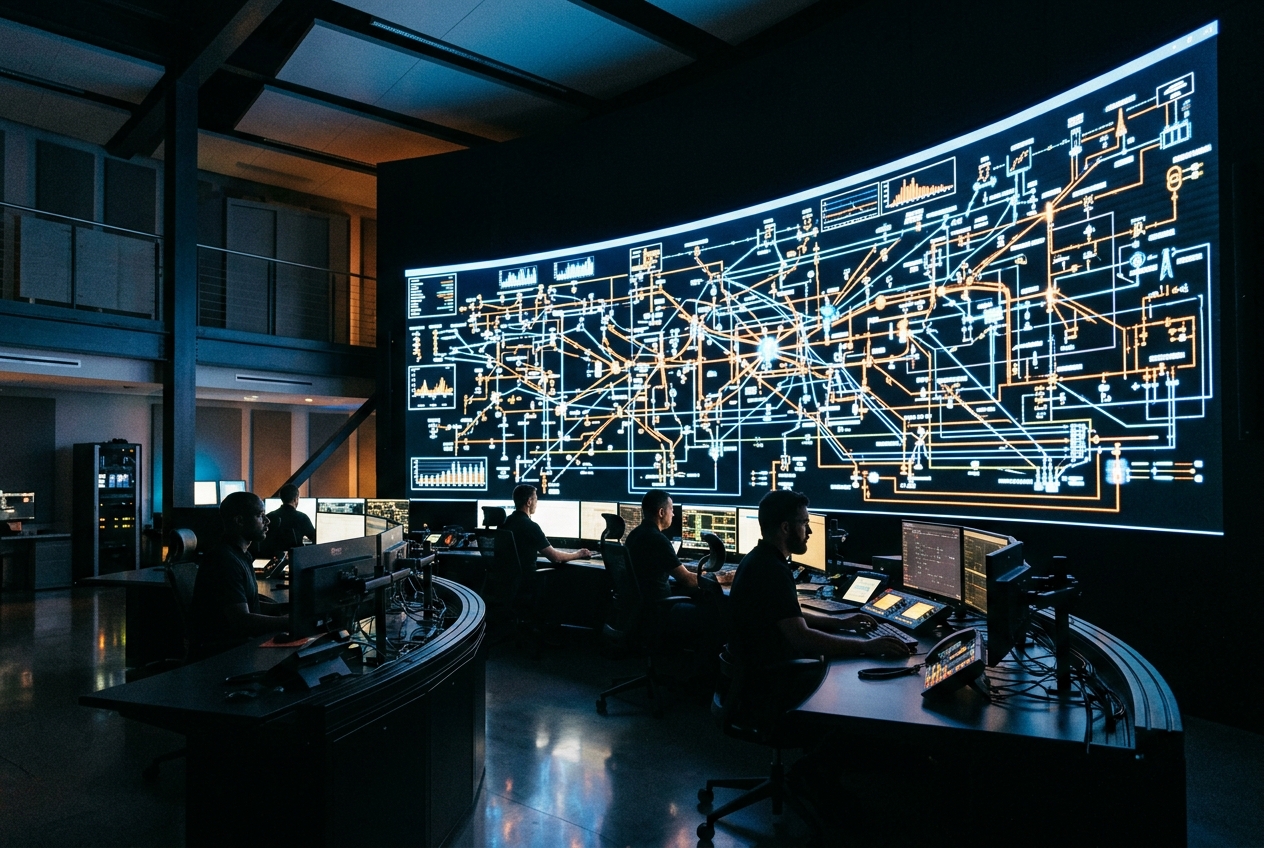
A modern distribution utility stack in India should not be viewed as a single software package. It is an operating architecture. At minimum, the stack should connect the following layers:
- Field layer: smart meters, feeder meters, DT meters, RTUs, IEDs, reclosers, RMUs, capacitor bank controllers, fault passage indicators
- Communication layer: RF mesh, cellular, fiber, MPLS, utility WAN, substation LANs
- Control and collection layer: HES, SCADA masters, substation gateways, protocol converters
- Data layer: MDMS, historian, event repository, outage database, asset database, GIS, consumer indexing platform
- Enterprise layer: billing, CRM, collections, ERP, work management, mobile workforce systems
- Intelligence layer: OMS, ADMS, analytics, demand forecasting, theft analytics, DER orchestration
In Indian conditions, this architecture must accommodate old and new assets together. That means live integration with legacy billing systems, mixed communication environments, varying substation automation maturity and uneven asset tagging quality.
The best-performing deployments increasingly use open interface principles, standardised APIs, time-synchronised event models and clean master data governance. This is where Vendor-neutral specifications make a major difference during procurement. If the tender architecture is too vendor-specific, the DISCOM may lock itself into expensive upgrades, proprietary interfaces and difficult performance enforcement.
A robust integration roadmap typically includes:
- Consumer and asset master-data clean-up before full-scale software go-live
- Feeder-DT-consumer hierarchy validation for energy accounting
- Interface definition documents for every system handoff
- Unified timestamping and event normalisation rules
- API, cybersecurity and data retention requirements written into contracts
- Measurable acceptance criteria from FAT to SAT
The business case: where integration unlocks measurable ROI
Indian utilities do not need abstract digital transformation language. They need operational numbers. Integration creates value in at least five measurable areas.
First, billing efficiency and revenue realisation. With AMI-MDMS-billing integration, meter reading exceptions, stale reads and estimated billing can fall sharply. In urban smart metering zones, utilities often target billing efficiency above 98 percent for communicating meters, compared with much lower effective levels in pre-AMI processes. Remote connect-disconnect for selected categories also reduces field visit cost and improves collection discipline.
Second, AT&C loss reduction. When feeder, DT and consumer-level metering are linked through a validated hierarchy, loss pockets can be identified with much greater precision. Even a 1 to 2 percentage point reduction in AT&C loss for a large DISCOM can translate into hundreds of crore rupees annually, depending on input energy, average cost of supply and collection gap. Integration is essential because technical and commercial losses cannot be separated credibly without aligned data.
Third, outage management and restoration. If AMI last-gasp alerts, feeder SCADA alarms and consumer complaint systems are integrated, the utility can confirm outage extents faster and dispatch teams more effectively. For industrial consumers, this reduces uncertainty around restoration. For DISCOMs, it improves reliability indices and service quality. In high-density urban circles, even a 10 to 20 percent reduction in average restoration time can materially improve customer experience and regulatory reporting.
Fourth, power procurement and load visibility. Better interval consumption data improves day-ahead and intra-day load estimation. As time-of-day tariffs, demand response pilots and EV charging loads expand in 2026, integrated data platforms help DISCOMs avoid overdrawal risk and optimise procurement.
Fifth, DER readiness. Rooftop solar, behind-the-meter storage and embedded generation are growing in commercial and industrial segments. Utilities need visibility on reverse power flow, voltage excursions and export-import patterns at feeder and DT level. This is where DER management systems and SCADA / ADMS integration become relevant not just for advanced utilities, but increasingly for mainstream planning in urban and industrial areas.
Key technical standards and interfaces Indian utilities should prioritise
One of the biggest reasons digital utility programmes struggle is that interface design is treated as an IT afterthought. In reality, interoperability should be structured from tender stage onward.
For substations and bay-level equipment, IEC 61850 is now central to scalable digitalisation. It supports standardised communication between intelligent electronic devices and higher-level utility systems. For utilities planning network modernisation beyond basic telemetry, IEC 61850 substation automation helps reduce protocol fragmentation and simplifies future extension to advanced control applications.
For AMI and meter data systems, utilities should focus on:
- Standardised data models for interval reads, events, tamper flags and outage indicators
- Secure APIs between HES, MDMS, billing and outage systems
- Time synchronisation for event sequence accuracy
- Device lifecycle and firmware management workflows
For SCADA and control integration, utilities should clearly specify:
- Real-time telemetry refresh rates by asset class
- Command acknowledgement logic
- Alarm prioritisation and suppression rules
- Topology processing requirements for network applications
- Cybersecurity zoning between enterprise IT and OT environments
For enterprise integration, the non-negotiables are:
- Common asset IDs and consumer IDs across systems
- GIS-linked network model governance
- Role-based access controls and audit trails
- Data archival, disaster recovery and failover requirements
In 2026, lenders and state agencies are increasingly alert to whether digital investments are technically extensible. A platform that works only with one vendor’s stack may meet short-term commissioning goals but undercut long-term value.
Common tender and implementation mistakes under RDSS
The most expensive utility digitalisation errors are usually made before deployment starts. Several patterns are visible across Indian tenders.
- Procuring meters, SCADA or software in separate silos without a unified integration architecture
- Under-specifying data quality, interface performance and cybersecurity obligations
- Treating consumer indexing and GIS data clean-up as parallel tasks instead of prerequisites
- Focusing on device counts installed rather than end-to-end business outcomes
- Accepting proprietary protocols and custom connectors without source-code or interoperability safeguards
- Weak training and change-management plans for utility operations staff
Another recurring issue is the mismatch between pilot success and state-wide scale-up. A city pilot with strong connectivity, limited asset diversity and intense vendor support may perform well. The same architecture can fail in mixed urban-rural deployment if communication redundancy, exception handling and field service workflows are not redesigned.
This is why utilities increasingly need independent technical advisors to frame specifications, review interface design, validate vendor claims and monitor FAT to SAT execution against measurable operational criteria rather than presentation-level promises.
How C&I consumers, developers and lenders should read DISCOM digitalisation plans
Digital utility investment is often seen as an internal DISCOM matter. That is no longer accurate. Large C&I consumers, open access users, renewable generators, storage developers and financiers should assess distribution digitalisation quality because it affects commercial outcomes.
For C&I consumers, better utility integration can mean:
- More accurate interval billing and demand recording
- Faster outage visibility and restoration communication
- Better support for rooftop solar, net metering or behind-the-meter storage
- Fewer disputes on consumption, meter events and power quality incidents
For renewable developers, especially rooftop and distributed generation players, the utility’s digital maturity influences interconnection speed, export accounting quality and local network hosting capacity assessments.
For lenders and investors, digitally mature DISCOMs can show stronger operational transparency. Better energy accounting, improved collections and auditable outage-performance data reduce uncertainty around counterparties and payment ecosystems.
As states push reliability, renewable integration and financial turnaround together, utility digitalisation should be evaluated not by installed device numbers alone but by whether the DISCOM has created a coherent operational platform.
A practical roadmap for 2026 utility integration programmes
For Indian DISCOMs planning the next phase of RDSS and utility automation, a practical roadmap should include the following sequence.
- Establish a target operating model across commercial, outage and network functions
- Clean consumer indexing and asset hierarchy before major software integration
- Define enterprise architecture and interoperability requirements at tender stage
- Prioritise high-value interfaces first: AMI-HES-MDMS-billing, GIS-asset hierarchy, SCADA-OMS, feeder-DT-consumer energy accounting
- Build phased acceptance criteria tied to business KPIs such as billing efficiency, outage confirmation time, loss-pocket identification and communication uptime
- Create a cybersecurity and data-governance model spanning IT and OT
- Train utility operations teams to use workflows, not just dashboards
The strongest outcomes generally come from programmes that combine advisory, engineering and implementation governance instead of treating these as separate disconnected scopes. Integration is not just a software job; it is a utility operating model redesign.
For stakeholders outside the utility, the takeaway is clear. In 2026, the value of RDSS digitalisation depends less on how many assets are installed and more on whether the systems work together in a way that produces lower losses, better reliability and clearer commercial accountability.
Growthifye supports utilities, developers and investors across utility digitalisation strategy, technical specifications, interoperability planning and implementation assurance, including Vendor-neutral specifications, SCADA / ADMS integration and IEC 61850 substation automation.
If your organisation is evaluating a DISCOM digitalisation programme, RDSS investment case or utility automation tender, contact Growthifye’s advisory desk for a practical discussion on architecture, bankability and execution.
Explore Growthifye's related capabilities
This analysis connects directly to our advisory practice: IEC 61850 substation automation · FLISR & self-healing networks · DER management systems · SCADA / ADMS integration.
About the author

Chief Executive Officer, Growthifye — With over 23 years in management consulting, Sudarshan has taken businesses from concept to scale — building and scaling new-age digital and energy businesses.
- 23+ years in management consulting
- EY alumnus
- Led large-scale BESS programmes, capital raises and advisory mandates
Want this analysis applied to your project?
Talk to our team