RDSS Smart Metering and Utility Digitalisation in India: 2026 Guide
By Sudarshan Karweer · sudarshan@growthifye.com · +91 84510 99371 (Call / WhatsApp) · 2026-08-25

India’s power distribution sector is entering a decisive phase in 2026. The conversation is no longer limited to adding renewable capacity or meeting peak demand. The operational question now is whether discoms, state utilities, private licensees and large consumers can run a digital grid that measures, controls and monetises electricity flows with far greater precision than before. That is where utility digitalisation and automation have shifted from optional capex to core sector reform.
For Indian stakeholders, the biggest signal is that digitalisation is now linked directly to loss reduction, subsidy targeting, billing efficiency, outage restoration, renewable integration and lender confidence. Under the Revamped Distribution Sector Scheme (RDSS), smart metering and distribution infrastructure upgrades have become central to improving aggregate technical and commercial (AT&C) performance. At the same time, utilities are scaling SCADA, ADMS, feeder automation, outage management, IEC 61850-based substation communication and early-stage DERMS capabilities.
For C&I consumers, this matters because utility digitalisation affects time-of-day tariffs, billing accuracy, outage quality, open-access scheduling, demand management and the bankability of power supply arrangements. For renewable developers and storage investors, the digital readiness of the local grid increasingly determines evacuation quality, curtailment risk and data visibility. For lenders and policymakers, digital infrastructure is now a measurable operating lever, not just an IT upgrade.
This article explains how AMI, RDSS-linked smart metering, SCADA/ADMS, FLISR, IEC 61850 and DERMS fit together in India’s 2026 distribution landscape, what numbers matter, and how utilities and private stakeholders should evaluate implementation.
Why utility digitalisation is now a balance-sheet issue
Indian discom reform has always been tied to the same metrics: billing efficiency, collection efficiency, technical losses, power purchase cost recovery and subsidy reimbursement. But in 2026, digital systems are finally making these variables auditable at scale.
AT&C losses remain the single most important operating metric in distribution. While top-performing urban utilities can operate in the high single digits to low teens, many state discoms still struggle in the 15% to 25% range, and some pockets remain higher. Even a 1 percentage point reduction in AT&C losses can materially improve annual cash flow for a large utility with sales above 20,000 MU. For a discom with an average revenue realisation gap of Rs 0.50 to Rs 1.50 per kWh in weak consumer segments, reducing unbilled or uncollected energy directly improves liquidity.
Digitalisation addresses this through:
- accurate interval metering
- remote connect-disconnect for delinquency control
- feeder and DT energy accounting
- tamper detection and exception analytics
- outage localisation and faster restoration
- reduction in manual meter reading and billing disputes
- load visibility to optimise transformer and feeder utilisation
- better integration of distributed energy resources
For lenders, these systems improve the predictability of collections and operating performance. For regulators, they create more credible baselines for tariff petitions and loss trajectories. For C&I consumers, they reduce estimated billing and improve service-quality measurement.
RDSS and AMI: what is actually changing on the ground
RDSS remains the principal national platform pushing power distribution modernisation. Its two major pillars relevant here are prepaid smart metering and distribution infrastructure strengthening. In practice, the scheme is accelerating deployment across consumer categories, feeders and distribution transformers, with an implementation model that often combines utility ownership, system integrators and OPEX-style service structures.
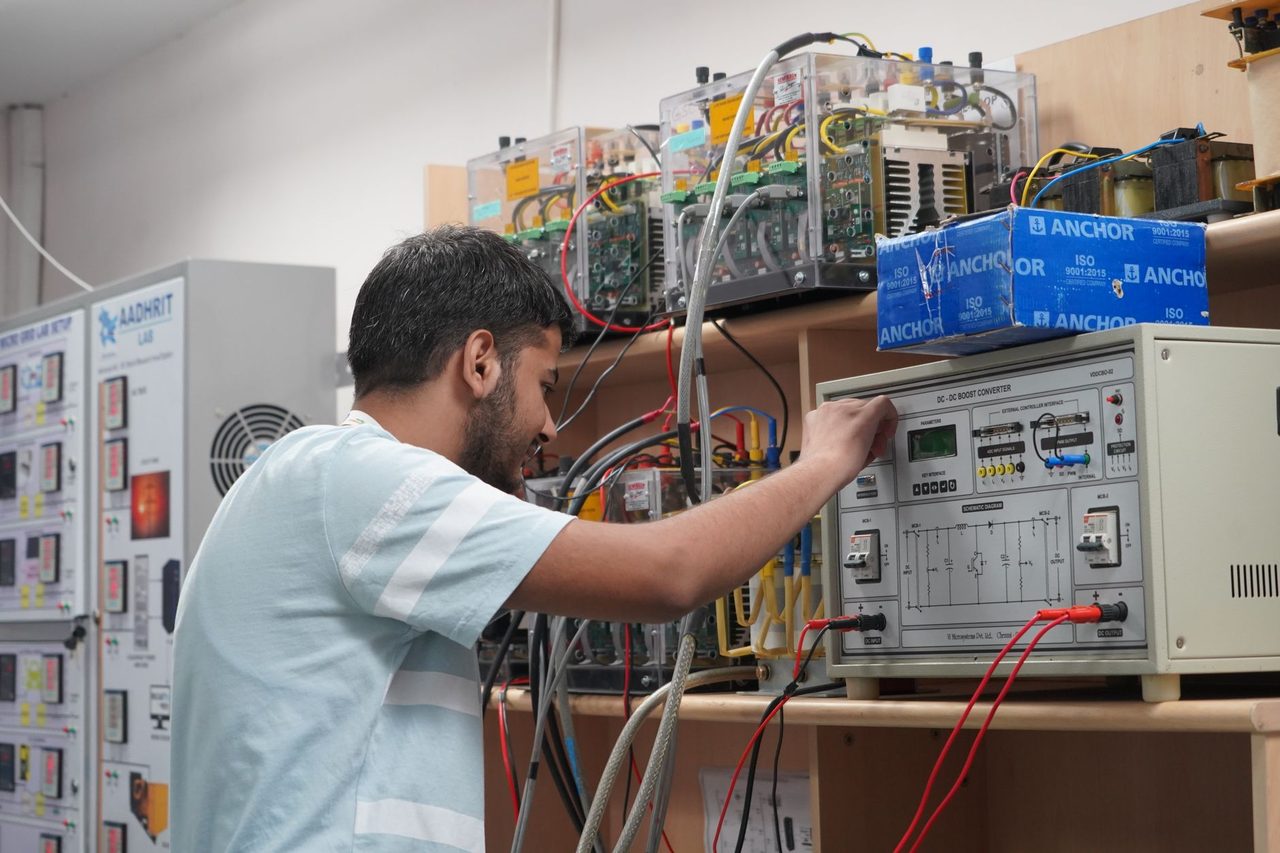
Advanced Metering Infrastructure (AMI) is not just the replacement of an electromechanical or static meter with a smart meter. A functional AMI stack usually includes:
- smart consumer meters with interval data capture
- communication network using RF mesh, cellular or hybrid architecture
- head-end system (HES)
- meter data management system (MDMS)
- integration with billing, collection and outage platforms
- analytics for tamper, theft, load curves and exceptions
By 2026, the focus has expanded beyond consumer count to effective use cases. A utility that installs 1 million smart meters but still relies on delayed billing integration or manual exception handling will not realise the expected benefits. The real value appears when smart metering enables:
- daily or near-real-time energy accounting
- prepaid or pay-as-you-go billing where approved
- remote disconnection and reconnection
- consumer portal visibility
- detection of meter bypass or abnormal load patterns
- time-of-day or dynamic tariff readiness
- transformer-level balancing of input and billed output
Typical savings cases are now better understood. Manual meter reading and field visit savings can range from Rs 40 to Rs 120 per consumer per month depending on geography and current process inefficiency. Billing efficiency can improve by 2 to 5 percentage points in problematic circles. Collection efficiency can also improve where prepaid functionality or remote disconnection is effectively deployed. Theft analytics and energy accounting can unlock further gains, especially in high-loss urban and peri-urban areas.
For large C&I consumers, smart metering is equally relevant because it improves interval data quality for demand management. A consumer paying an industrial tariff in the range of Rs 6.5 to Rs 9 per kWh, with demand charges and power factor penalties on top, can use accurate 15-minute or 30-minute data to reduce peak demand, optimise DG and battery dispatch, and validate open-access energy accounting.
SCADA, ADMS and FLISR: moving from monitoring to automated restoration
Smart meters solve only part of the distribution problem. They are largely edge-level visibility tools. The operational backbone for medium-voltage and urban distribution management is built through SCADA and, increasingly, ADMS.
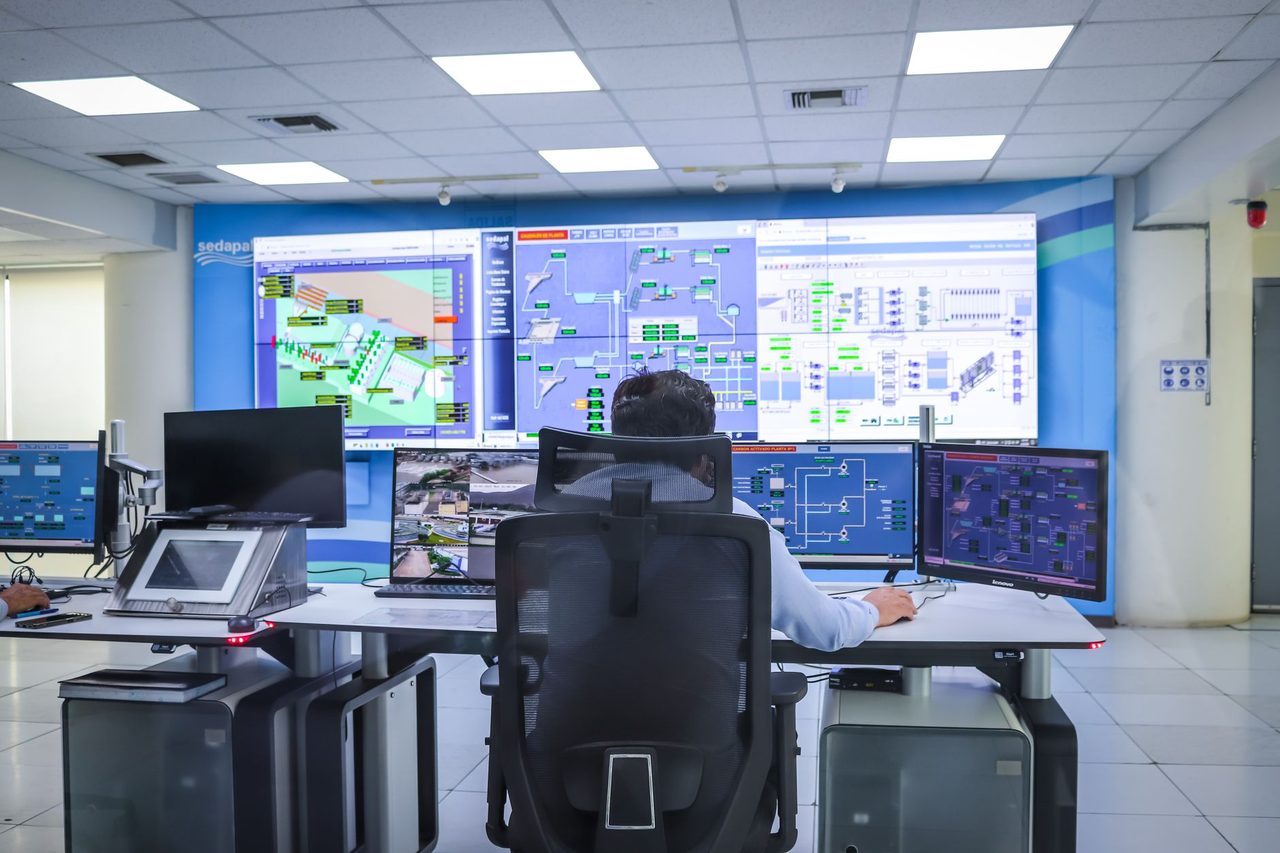
SCADA gives utilities visibility and remote control over substations, breakers, ring main units, capacitor banks and feeder status. In mature urban environments, SCADA is already standard. But 2026 is seeing a stronger push to extend visibility deeper into the distribution network and to integrate data across substations, feeders and consumer endpoints.
ADMS adds a higher layer of intelligence. It combines network topology, outage management, switching logic, load flow and operational decision support. With the right field devices and communication architecture, ADMS can reduce restoration time significantly.
One of the most practical applications is FLISR, or Fault Location, Isolation and Service Restoration. In a distribution network with automated switches and reliable communication, FLISR can:
- identify the faulted section
- isolate the fault automatically
- reroute supply through alternate feeders or rings
- restore service to unaffected consumers faster than manual switching
For utilities measured on SAIDI and SAIFI, FLISR is one of the clearest digitalisation business cases. In dense urban networks, avoiding even 15 to 30 minutes of outage for thousands of consumers can materially improve customer service and reduce commercial disruption. For industrial clusters, this has a direct economic value. A manufacturing unit with process losses during unplanned voltage interruptions may lose far more than the energy charge itself.
In India, the challenge is not only software deployment but field readiness:
- remote terminal units and IEDs must be properly configured
- network maps must be accurate
- switchgear health and communication uptime must be dependable
- feeder segmentation must support sectionalisation logic
- operating staff must trust and use the system
A common implementation mistake is buying SCADA or ADMS platforms before data discipline, asset tagging and field automation maturity are in place. Utilities that sequence the programme correctly usually start with network mapping, feeder instrumentation, GIS alignment, communication reliability, then move into advanced applications.
IEC 61850 and substation automation: the less visible but critical foundation
In many Indian utility tenders, IEC 61850 is mentioned as a specification checkbox. In reality, it is one of the key enablers of interoperable substation automation.
IEC 61850 standardises communication within substations and supports efficient data exchange between intelligent electronic devices, protection systems, bay controllers and higher-level control systems. For utilities modernising 33/11 kV and higher-voltage nodes, the benefits are practical:
- reduced vendor lock-in compared with isolated proprietary systems
- better event recording and sequence-of-events analysis
- faster engineering and integration for substation automation
- improved compatibility with SCADA master stations
- more reliable and structured communication for control and protection
For lenders and project owners evaluating digital capex, IEC 61850 compliance should not be treated as a theoretical standards issue. It affects lifecycle integration cost. A substation modernised today without a robust interoperability approach may create higher integration costs later when the utility wants centralised monitoring, renewable interface visibility or advanced protection analytics.
In renewable-rich states, substation automation also matters because power flow behaviour is changing. Reverse flows, fluctuating injections and more dynamic voltage profiles require faster and clearer operational awareness. A well-automated substation can provide cleaner event data, better disturbance visibility and more flexible control logic than legacy architectures.
DERMS and the next challenge: integrating rooftop solar, BESS, EV loads and open access
As distributed energy resources expand, India’s distribution utilities will need to move beyond conventional load-serving models. Rooftop solar, behind-the-meter battery storage, EV charging, demand response, feeder-level storage and flexible C&I loads are beginning to alter distribution operations.
That is where DERMS, or Distributed Energy Resource Management Systems, becomes relevant. In the Indian context, DERMS is still early-stage, but it is rapidly moving from concept to necessity in high-penetration pockets.
A functional DERMS environment can help utilities:
- monitor distributed generation and storage assets
- forecast feeder-level net load more accurately
- manage voltage excursions caused by solar injection
- coordinate flexible loads and storage response
- reduce curtailment through better operational dispatch logic
- support local congestion management
For C&I consumers, this has growing significance. Many industrial and commercial facilities now combine rooftop solar, group captive or third-party open access procurement, diesel backup, and increasingly battery storage. Without digital coordination between consumer systems and utility-side visibility, disputes arise over scheduling, export limits, demand spikes and outage responses.
Take a typical industrial consumer in a high-tariff state. Grid power may cost Rs 7 to Rs 9 per kWh on a blended basis, while solar open-access supply may land lower depending on banking, wheeling and cross-subsidy surcharge treatment. The economics look attractive, but value realisation depends on data granularity and dispatch control. If interval data, feeder constraints or import-export logic are poorly managed, expected savings can erode.
For renewable developers and storage players, utilities with stronger digital infrastructure are easier counterparties. Better telemetry, metering visibility and network awareness reduce operational ambiguity. Over time, this should support more sophisticated flexibility markets and local balancing structures, though regulation is still evolving.
AT&C loss reduction: where digital projects succeed or fail
The strongest argument for digitalisation in Indian distribution remains AT&C loss reduction. But this is also where projects are most often oversold. Not every loss is recoverable through software, and not every smart meter deployment creates a measurable financial turnaround.
A disciplined AT&C reduction strategy should separate the problem into layers:
- technical loss on overloaded or poorly configured feeders and transformers
- commercial loss from theft, meter tampering, bypass or unauthorised load
- billing loss due to poor reading, wrong consumer indexing or delayed cycle closure
- collection loss due to delinquency, litigation or weak enforcement
- data loss due to broken system integration and poor exception management
Digitalisation can address each layer, but only if linked to field operations and governance.
Examples of high-impact interventions include:
- consumer indexing linked to feeder and DT mapping
- 100% metering of feeders, distribution transformers and consumers in target zones
- daily energy balancing at feeder and DT level
- anomaly scoring for sudden load drops, zero-consumption profiles and tamper events
- prepaid migration for selected government or high-default consumer classes where permitted
- remote connect-disconnect for persistent non-payment cases
- feeder automation in high-value urban or industrial corridors
- capacitor and voltage management linked to SCADA for technical loss reduction
Utilities should also be realistic about payback. In high-loss circles, smart metering and energy accounting can deliver compelling returns if the baseline is poor and enforcement follows. In already efficient urban systems, the justification may rely more on service quality, labour savings, outage metrics and tariff modernisation than on dramatic theft reduction.
For lenders, the key diligence questions are straightforward:
- What is the baseline AT&C loss at circle, division and feeder level?
- Is there a measurable benefit-sharing or payment security structure in the implementation contract?
- Are communication SLAs and meter uptime guarantees enforceable?
- Has the utility integrated HES/MDMS with billing and outage systems?
- Is there a field process for acting on tamper and exception alerts?
- Are cybersecurity and data governance controls built into the architecture?
Without these elements, digital infrastructure risks becoming a dashboard layer on top of unchanged field performance.
What Indian stakeholders should do in 2026
For utilities, the 2026 priority is to move from equipment procurement to operational integration. The winning model is not the utility that installs the most devices, but the one that converts data into billing, collection, outage and network outcomes.
For C&I consumers, especially those with open-access procurement, captive generation, solar rooftop or storage plans, it is worth assessing the digital maturity of the host utility area. Questions around meter compatibility, interval data access, feeder reliability, outage restoration and export-import logic have direct commercial consequences.
For renewable developers, project risk assessment should now include distribution digital readiness wherever injection, evacuation or behind-the-meter optimisation depends on discom coordination. A technically strong interconnection in a digitally weak distribution environment can still create avoidable operating inefficiencies.
For policymakers, the next step is to tighten the link between capex approval and performance metrics. Deployment milestones should increasingly be judged on billing efficiency improvement, outage restoration gains, feeder-level energy accounting, and documented AT&C reduction rather than only installation counts.
For financiers, digital utility assets should be evaluated like performance infrastructure, with clear KPIs, integration milestones, payment-security logic and cyber-risk controls. This is especially important where revenue assumptions depend on measured efficiency gains over a multi-year period.
India’s distribution transformation will not be solved by one technology. AMI, SCADA, ADMS, FLISR, IEC 61850 and DERMS each address different layers of the value chain. The real opportunity comes from integrating them into a coherent operating model that improves revenue realisation, service quality and renewable readiness at the same time.
If your organisation is evaluating RDSS smart metering, feeder automation, substation digitalisation, DER integration or AT&C loss reduction strategy, contact Growthifye’s advisory desk for project structuring, technical due diligence, implementation support and financing guidance.
About the author

Chief Executive Officer, Growthifye — With over 23 years in management consulting, Sudarshan has taken businesses from concept to scale — building and scaling new-age digital and energy businesses.
- 23+ years in management consulting
- EY alumnus
- Led large-scale BESS programmes, capital raises and advisory mandates
Want this analysis applied to your project?
Talk to our team