IEC 61850 Bay-Level Automation for Indian DISCOMs 2026: Substation ROI
By Sudarshan Karweer · sudarshan@growthifye.com · +91 84510 99371 (Call / WhatsApp) · 2026-09-15
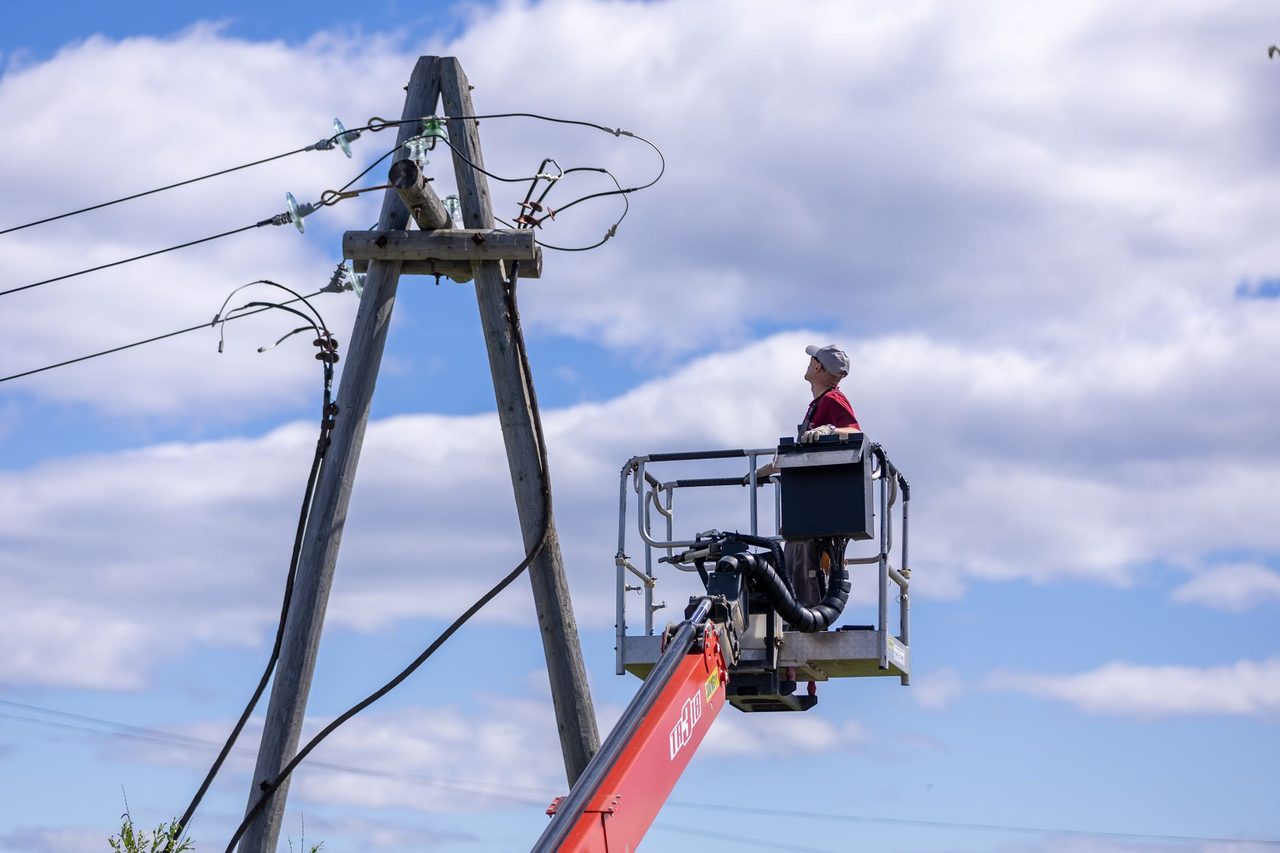
Photo: Hitesh Sharma on Pexels
India’s distribution modernisation agenda in 2026 is no longer only about deploying smart meters and central control rooms. The harder reliability gains now depend on what happens inside the substation: protection coordination, bay control, event visibility, faster switching and interoperable automation that can support future ADMS, DER and outage-management layers. For many DISCOMs, that makes IEC 61850 bay-level automation a practical next step.
This is a different conversation from enterprise SCADA-ADMS convergence or process-bus digital substations. Bay-level IEC 61850 automation focuses on digitising the control and protection architecture at 33/11 kV and urban 66/11 kV substations using intelligent electronic devices, bay control units, station bus communications and standardised data models. In Indian conditions, that can deliver measurable reductions in outage duration, truck rolls, commissioning time and vendor lock-in risk, while making RDSS-funded substation modernisation more durable.
For C&I consumers, developers and lenders, this matters because substation automation quality directly affects feeder reliability, outage restoration speed, power-quality events and the readiness of a DISCOM network to host rooftop solar, EV charging, BESS and open-access demand nodes.
Why bay-level automation matters in India in 2026
Across states, DISCOMs are under pressure to improve supply reliability while controlling capex and reducing AT&C losses. RDSS has accelerated feeder metering, DT metering, consumer smart metering and system strengthening. But a recurring field problem remains: many substations still rely on fragmented relay panels, hard-wired mimic boards, non-standard RTUs, paper event logs and slow manual switching workflows.
The operational consequences are expensive:
- Fault isolation can take 15-45 minutes longer than necessary because event sequences are unclear.
- Protection disturbance analysis often depends on manual retrieval from relay front panels or vendor-specific tools.
- Switching operations remain person-dependent, raising safety and restoration risks.
- Expansion of bays or feeders becomes cumbersome when each vendor uses proprietary naming, logic and engineering tools.
- SCADA points are often limited to breaker status and analog values, without rich asset and event semantics.
IEC 61850 addresses these issues through a standard communication and data modelling framework for substation automation. At bay level, that means individual feeders, transformers, bus couplers and capacitor-bank bays can be equipped with interoperable IEDs and standard station-bus communications, giving operators a consistent model for indications, alarms, controls and event records.
In practical Indian utility terms, the goal is not standards compliance for its own sake. The goal is to reduce mean time to detect, diagnose and restore, while building a substation architecture that does not have to be replaced when the utility later adds advanced analytics or SCADA / ADMS integration.
What IEC 61850 bay-level automation includes
A typical bay-automation scope for a 33/11 kV or 66/11 kV distribution substation may include:
- Numerical protection relays for incomers, outgoing feeders, transformers, capacitor banks and bus couplers
- Bay control units or relay-integrated control functionality
- Human-machine interface at station level
- Substation gateway for control-centre integration
- Station bus network architecture, typically Ethernet-based with managed switches
- Time synchronisation, sequence-of-events recording and disturbance records
- Interlocking logic and remote switching capability
- Standardised naming, engineering files and point lists using IEC 61850 data objects
In brownfield substations, the preferred architecture is often station-bus first, not full process bus. That keeps retrofit complexity manageable while still replacing large volumes of hard-wired control and event ambiguity. This is especially relevant for Indian DISCOMs dealing with constrained outages, mixed-vendor installed bases and legacy relay populations.
The distinction is important. A process-bus project may require extensive changes to CT/PT secondary circuits, merging units and protection philosophy. Bay-level station-bus automation is usually a more financeable and execution-friendly step for distribution substations where the immediate ROI comes from control, visibility and interoperability.
Where the business case comes from
The ROI case for bay automation is rarely captured in a single line item. It comes from a combination of reliability, O&M and life-cycle cost benefits.
First, outage restoration improves. In conventional substations, identifying whether a feeder trip was transient, persistent, upstream or relay-miscoordination-related may require site attendance or delayed event extraction. With digitised sequence-of-events and standardised relay data, operators and maintenance teams can determine cause and location faster. In urban areas with high-value loads, even a 5-10 minute reduction in restoration time across repeated feeder incidents can create meaningful avoided economic loss for consumers.
Second, truck rolls and maintenance effort decline. When substation alarms, event logs and disturbance records are remotely available, utilities can avoid dispatching teams for every abnormal indication. Even if only 20-30 percent of diagnostic site visits are avoided, the annual O&M savings across a fleet of substations can be material.
Third, commissioning and future expansion become easier. Utilities that adopt Vendor-neutral specifications reduce dependence on a single OEM for relay replacements, bay additions or protocol integration. In Indian tenders, this matters because apparent low initial pricing often masks future integration cost and lifecycle lock-in.
Fourth, safety improves. Remote status verification, interlocking logic and event visibility reduce human error during switching operations. This is not only an operational benefit but also a governance issue for boards, regulators and lenders reviewing utility modernisation outcomes.
A typical cost envelope in 2026 for bay-level automation varies widely by voltage level, bay count, legacy condition and communication scope. For a medium-sized 33/11 kV urban substation with 8-12 bays, retrofit automation can range from roughly Rs 1.2 crore to Rs 3.5 crore if it includes new relays, bay control, station HMI, gateway, networking, engineering and integration. For larger 66/11 kV nodes with higher redundancy and more extensive replacement scope, budgets can be higher. The exact economics depend on whether the utility is already replacing aging protection panels, adding feeders, or integrating the substation into a centralised control environment.
Payback is usually not best expressed as a narrow direct-cash payback alone. Instead, utilities assess:
- SAIDI and SAIFI improvement contribution
- O&M savings from fewer emergency visits and faster diagnostics
- Avoided capex from reusing open architecture in future upgrades
- Reduced outage claims and improved supply quality for industrial feeders
- Better asset utilisation through event-driven maintenance
For industrial and commercial consumers connected to 11 kV or 33 kV feeders, these improvements translate into fewer nuisance interruptions, quicker restoration after feeder faults and better utility responsiveness during abnormal events.
RDSS alignment and utility procurement strategy
In 2026, DISCOMs do not have unlimited room for standalone digital capex with unclear outcomes. Bay automation proposals have to fit within RDSS-linked system strengthening, loss reduction and reliability programmes, or align with state utility capex approved by regulators and boards.
The strongest procurement cases usually position bay automation as part of one of three pathways:
- Substation renovation and augmentation at overloaded or reliability-critical nodes
- Urban reliability improvement for high-density, high-revenue feeders
- Integration-ready modernisation to support centralised operations, feeder automation and future DER visibility
This is where project design matters. If tenders are framed only around relay replacement, utilities may miss the value of interoperable data models, event granularity and lifecycle engineering discipline. If tenders are framed too ambitiously, including every possible digital feature, execution risk rises and procurement gets delayed.
A pragmatic Indian approach is to define a standard bay-automation package by substation typology:
- Urban 33/11 kV high-load substations
- Industrial or mixed-load substations with high outage cost
- New 66/11 kV receiving stations
- Brownfield reliability-upgrade substations in state capitals and tier-1 cities
Each package should specify minimum performance outcomes, cyber controls, interoperability requirements, event-recording capability, engineering deliverables and integration testing criteria. This is where IEC 61850 substation automation and Vendor-neutral specifications become commercially important, not just technically elegant.
Technical choices that determine success or failure
Many substation automation projects underperform because utilities focus on hardware lists rather than engineering decisions. In practice, at least six design choices shape outcome quality.
- Naming and data model governance: inconsistent logical node naming and point mapping create years of integration headaches.
- Time synchronisation quality: poor SOE timestamp alignment undermines root-cause analysis.
- Interlocking philosophy: remote control without robust interlocks can increase operational risk.
- Redundancy architecture: communication-switch and gateway redundancy should reflect substation criticality, not generic templates.
- Legacy integration scope: utilities need clear rules on what old relays remain, what gets protocol-converted and what is replaced.
- Test discipline: FAT to SAT planning is essential to avoid site-stage surprises, especially in mixed-vendor systems.
Cybersecurity also needs attention, but with practical utility priorities. Bay-level networks should include role-based access, secure engineering access procedures, event logging, network segmentation and baseline hardening. Indian utilities do not need to overdesign to transmission-utility levels for every site, but they do need minimum cyber hygiene that survives audits and vendor turnover.
Another key issue is communications backhaul. A highly capable digital substation still underdelivers if its data path to the control centre is unreliable. Utilities should define what must remain local for autonomous operation and what needs dependable remote visibility. Bay automation should improve substation resilience even when WAN connectivity is degraded.
How lenders, developers and C&I buyers should read this trend
For lenders financing distribution upgrades, bay-level IEC 61850 projects are attractive when they are embedded in a broader utility modernisation roadmap with measurable reliability KPIs. The bankability improves when the project has standard designs, repeatable procurement lots, strong acceptance testing and links to high-revenue load pockets.
For renewable-energy developers, especially those working on rooftop solar, BESS, captive/open-access parks and urban charging infrastructure, stronger substation automation improves network-operating discipline. Even before a DISCOM deploys full DER management systems, better substation event visibility and remote control can reduce uncertainty around feeder behaviour, outage handling and restoration sequencing.
For C&I consumers, especially manufacturers, data centres, hospitals, IT parks and metro-area commercial campuses, the value lies in service continuity. A feeder supplied from a modern automated substation is not outage-proof, but it is typically easier to diagnose, restore and operate safely. In states where industrial tariffs remain in the range of roughly Rs 7-10 per kWh for many HT categories, the cost of a single avoidable interruption can exceed the annual per-consumer share of utility digitalisation investment many times over.
For policymakers, the message is straightforward: metering digitalisation alone does not deliver full reliability gains. India’s next distribution-performance step requires substation-grade operational data and controllability at scale.
A practical roadmap for Indian DISCOMs
Utilities looking to move in 2026 should avoid trying to automate every substation at once. A better sequence is:
- Identify 25-100 substations with the highest reliability, load-density or operational criticality
- Standardise one or two bay-automation reference architectures by substation class
- Define interoperable engineering standards and common point lists
- Bundle communication, gateway and control-centre integration requirements early
- Use pilot lots to validate engineering, then scale through framework procurement
- Track post-commissioning KPIs such as restoration time, remote switching success rate, repeat faults and site-visit reduction
This roadmap also improves the quality of utility capex discussions with regulators and financiers. Instead of presenting automation as abstract digitisation, DISCOMs can present quantified service improvements from targeted substations and then justify scaling.
In our experience, projects create the most durable value when engineering authority is retained by the utility or its independent advisor rather than fully outsourced to a single OEM-led design philosophy. That is why disciplined architecture review, interoperability planning and FAT to SAT governance often matter as much as the hardware itself.
The 2026 takeaway
IEC 61850 bay-level automation is emerging as one of the most practical next-step investments for Indian DISCOMs that have already started AMI and central control modernisation but still struggle with restoration speed, substation event visibility and vendor-fragmented field systems. It is not as headline-friendly as smart metering and not as ambitious as full digital substations, but for many utilities it is the layer where operational reliability and digital architecture finally meet.
Done well, it can reduce outage diagnosis time, improve switching safety, support future automation layers and create a repeatable substation standard for the decade ahead. Done poorly, it becomes another proprietary retrofit with limited integration value.
For utilities, developers, lenders and large power consumers evaluating distribution-modernisation priorities in 2026, bay-level IEC 61850 automation deserves serious attention as a grounded, financeable reliability upgrade.
If you are planning substation modernisation, utility digitalisation or RDSS-aligned automation, contact Growthifye’s advisory desk for project structuring, technical diligence, specifications and implementation support.
Explore Growthifye's related capabilities
This analysis connects directly to our advisory practice: IEC 61850 substation automation · FLISR & self-healing networks · DER management systems · SCADA / ADMS integration.
About the author

Chief Executive Officer, Growthifye — With over 23 years in management consulting, Sudarshan has taken businesses from concept to scale — building and scaling new-age digital and energy businesses.
- 23+ years in management consulting
- EY alumnus
- Led large-scale BESS programmes, capital raises and advisory mandates
Want this analysis applied to your project?
Talk to our team