IEC 61850 for Indian DISCOMs 2026: SAS, Bay Automation and RDSS ROI
By Sudarshan Karweer · sudarshan@growthifye.com · +91 84510 99371 (Call / WhatsApp) · 2026-09-15

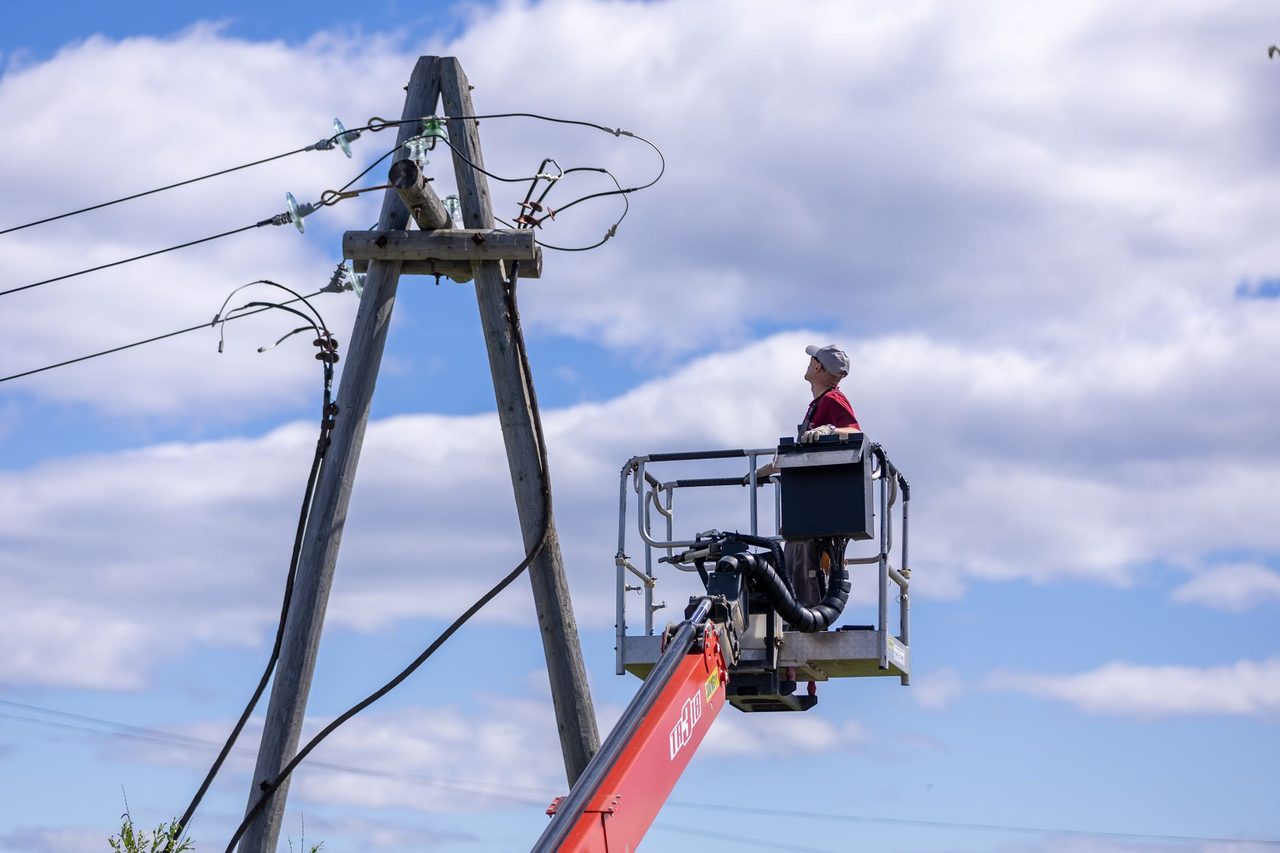
Photo: Sergey Sergeev on Pexels
Utilities across India have spent the last few years discussing AMI, SCADA, ADMS and feeder-level automation. But one layer still determines whether those investments actually work at grid edge speed: the substation. In 2026, IEC 61850-based substation automation systems, bay-level control and digital protection communication are becoming central to how DISCOMs reduce outages, improve switching discipline and build a credible RDSS-linked loss-reduction story.
For C&I consumers, this matters because substation automation affects outage duration, restoration quality, voltage stability and switching-related downtime. For lenders and policymakers, it matters because capex on feeders, SCADA, RTUs and smart meters delivers lower returns if substations remain manually operated, poorly alarmed and dependent on fragmented legacy protocols. For developers and EPC players, it matters because evacuation and downstream distribution reliability increasingly influence project bankability, especially in renewable-rich and industrial corridors.
This article looks at a distinct angle: not control-centre integration, not process bus, and not generic digital substations, but practical IEC 61850 substation automation for Indian DISCOMs in 2026. The focus is on station automation systems, bay controllers, interoperable IED communication, event visibility, remote switching and the ROI logic under current Indian utility conditions.
Why IEC 61850 matters now for Indian DISCOMs
Many Indian urban and semi-urban substations still run with a mix of electromechanical or standalone numerical relays, local annunciation, separate disturbance recorders, hardwired interlocking and protocol silos such as Modbus, IEC 60870-5-103, proprietary relay interfaces or fragmented RTU gateways. The result is predictable:
- slower fault identification
- higher switching time during outages and maintenance
- limited sequence-of-events visibility
- poor asset condition insights
- high engineering effort during retrofit and expansion
- vendor lock-in for future bays and protection additions
IEC 61850 addresses these pain points by standardising how intelligent electronic devices, bay control units, station HMIs, gateways and control systems model and exchange data. In practical utility terms, that means:
- common naming and data models across protection and control devices
- easier multi-vendor integration
- fast peer-to-peer messaging for interlocking and trips through GOOSE
- consistent event and disturbance records with better time synchronisation
- cleaner pathways to remote operation from SCADA or ADMS environments
This is particularly relevant under RDSS execution. DISCOMs are under pressure to show measurable improvement in reliability, metering, loss reduction and operational performance. A feeder may be visible in the control room, but if the 33/11 kV or 66/11 kV substation still requires manual confirmation, phone-based coordination and field travel for switching, outage metrics and operational efficiency will lag.
Where the value sits: station automation and bay automation
In India, the strongest IEC 61850 business case is often not at the transmission-grade digital substation end, but at the distribution-substation automation layer. Typical use cases include 33/11 kV substations, 66/11 kV urban intake stations, industrial load pockets and renewable-heavy receiving substations where load transfer, feeder sectionalisation and faster breaker operations matter.
The major value pools are straightforward.
First, outage response. With bay-level visibility, breaker status, protection indications, alarms and SOE records available in near real time, operators can isolate and restore faster. Even a 10 to 20 minute reduction in average switching and diagnosis time across repeated feeder incidents can materially affect SAIDI and complaint volumes in dense urban circles.
Second, fewer switching errors. Manual switching sequences in overloaded substations are a known operational risk. Proper interlocking logic, bay mimic panels, command select-before-operate workflows and remote confirmation reduce avoidable trips and safety events.
Third, lower O&M burden. Utilities often underestimate the annual cost of fragmented substation systems: repeated relay protocol troubleshooting, local panel modifications, travel for data collection, event reconstruction after faults and dependence on OEM-specific service teams. IEC 61850 does not eliminate O&M complexity, but it reduces lifecycle friction if designed well.
Fourth, feeder and transformer performance visibility. Bay-level current, voltage, breaker operation counts, alarms, transformer loading and event trends improve maintenance planning and support capex prioritisation. In circles where transformer failures, nuisance tripping or overloaded outgoing feeders drive consumer dissatisfaction, this visibility has direct value.
Fifth, future-readiness. As utilities add rooftop solar, BESS, EV charging clusters and industrial quality-of-supply requirements, substations need cleaner interoperability with upstream systems. That is where IEC 61850 substation automation and eventual SCADA / ADMS integration become strategically important.
The 2026 Indian utility business case: what ROI really looks like
The mistake in many board presentations is to sell substation automation only as a technology upgrade. In 2026, the better way is to build a utility economics case around avoided cost, reliability improvement and reduced operating friction.
For a typical 33/11 kV urban substation with 8 to 16 outgoing feeders, an IEC 61850-based retrofit or new-build station automation package may include:
- numerical protection IEDs with IEC 61850 support
- bay control units where needed
- station HMI and engineering workstation
- redundant Ethernet network
- time synchronisation
- gateway to control centre
- SOE and disturbance integration
- basic cybersecurity hardening
- testing, configuration and commissioning
Depending on scope, retrofit complexity and approved vendor list, costs can vary significantly. In 2026 conditions, many utilities will see broad capex ranges of roughly Rs 1.5 crore to Rs 4 crore for meaningful automation at a distribution substation, excluding major civil modifications and depending on bay count and extent of protection replacement. New substations can optimise this better than brownfield retrofits.
Where does payback come from?
- Reduced outage handling time and lower manual intervention
- Lower field travel and troubleshooting effort
- Better fault analysis and fewer repeat incidents
- Reduced accidental or non-standard switching operations
- Improved asset life through more disciplined operation and earlier alerts
- Better utilisation of upstream control-centre investments
For large urban DISCOMs, even conservative savings add up. If a circle operates 40 to 60 substations and automation cuts just 1 to 2 truck rolls per substation per month, along with fewer emergency callouts and faster restoration, annual opex savings can be meaningful. Add C&I consumer retention, reduced compensation risk in high-service territories and lower downtime for high-revenue feeders, and the economics strengthen.
For lenders, the key is not a simplistic direct tariff uplift. The real question is whether substation automation improves cash flows indirectly by supporting AT&C reduction, reducing outage-linked revenue loss and enabling system discipline around billing-quality supply. In high-loss areas, that effect is weaker if foundational governance remains poor. In urban and industrial belts, it can be compelling.
How IEC 61850 supports AT&C loss reduction indirectly
IEC 61850 is not a metering or billing solution, so it should not be oversold as a direct AT&C reduction tool. But it contributes to loss reduction indirectly in ways that matter under RDSS and utility reform programmes.
One, better feeder availability increases billed energy opportunity, especially on commercial and industrial feeders where every avoided outage protects high-tariff sales. Many state industrial tariffs in 2026 remain in the broad range of Rs 7 to Rs 10 per kWh effective delivered cost, depending on demand charges, time-of-day structure and state category. Reliability therefore has immediate revenue significance.
Two, improved transformer and feeder loading visibility helps utilities identify technical losses arising from persistent overloads, imbalance and poor switching configuration. This is not a substitute for DT metering or energy accounting, but it strengthens operational correction.
Three, event logs and bay alarms help detect repeated feeder trips, breaker health issues and abnormal conditions that often translate into unserved energy and complaint-driven supply instability.
Four, remote control discipline reduces the time feeders stay unnecessarily isolated after faults or maintenance, limiting avoidable energy sales loss.
When combined with AMI, feeder metering and GIS-linked network models, substation automation becomes part of a stronger energy-accounting environment. That is especially useful in circles trying to convert raw RDSS capex into sustained operational outcomes.
What DISCOMs should specify in tenders
A large share of poor utility outcomes comes from weak specifications rather than weak technology. In 2026, DISCOMs should move beyond line-item procurement and define interoperable, testable performance requirements.
Key specification areas include:
- mandatory IEC 61850 edition compatibility and object modelling requirements
- GOOSE-based interlocking and trip signalling design philosophy where appropriate
- time synchronisation accuracy and architecture
- minimum SOE resolution and disturbance record retrieval requirements
- cyber hardening for substation LAN, user access and remote engineering workflows
- redundancy for communication switches, power supplies and station controllers where justified
- interoperability with existing SCADA master, gateways and future ADMS roadmap
- clear FAT and SAT procedures with multi-vendor device testing
- lifecycle documentation including SCL files, logic diagrams and as-built communication maps
This is where Vendor-neutral specifications matter. Utilities should avoid locking future expansion into a single OEM’s engineering ecosystem unless there is a compelling total-cost rationale. In practice, multi-vendor interoperability is only real if it is demonstrated under test conditions, not merely promised in compliance sheets.
Utilities also need to insist on FAT to SAT continuity. Too many projects pass factory checks but fail in site conditions due to grounding issues, time sync drift, wiring mismatches, relay logic inconsistencies or incomplete control-centre mapping. Commissioning discipline is not a soft issue; it is the difference between a showcase SAS and a half-used panel room.
Implementation pitfalls in Indian retrofit projects
Brownfield Indian substations present challenges that are often underestimated in budget and schedule planning.
First, legacy panel condition. Existing marshalling, CT/PT wiring quality, breaker auxiliary contacts and panel space constraints can force redesign mid-project.
Second, mixed relay populations. Utilities may have 4 to 6 relay makes across bays, some IEC 61850 capable and others not. Partial retrofit requires careful gateway architecture and clear decisions on what to replace now versus later.
Third, outage windows. Retrofitting live urban substations requires tightly sequenced shutdown planning, often across high-revenue feeders. Delays can quickly erode contractor margins and utility confidence.
Fourth, staff readiness. Station automation changes workflows for operators, maintenance teams and load dispatch personnel. Without training and role clarity, many utilities underuse available functionality and revert to manual habits.
Fifth, cybersecurity governance. As more substations become remotely accessible, password hygiene, patch control, remote vendor access and event logging become essential. These should be built into utility operating procedure, not treated as optional IT overlays.
A practical rollout model for DISCOMs is to standardise 2 to 3 substation archetypes by voltage class and urban/rural operating profile, then pilot, test and replicate. This is usually better than issuing overcomplicated one-size-fits-all tenders.
Why this matters to C&I consumers, RE developers and lenders
For C&I consumers, substation automation is not an abstract grid modernisation topic. It is linked to production loss, DG dependence, power-quality risk and contract-demand utilisation. Industrial feeders with frequent manual restoration delays impose hidden costs far above the utility tariff itself.
For renewable-energy developers, especially in open-access and captive ecosystems, downstream reliability affects scheduling confidence, balancing strategies and customer perception. As more commercial customers compare utility supply, group captive structures, storage-backed solutions and behind-the-meter optimisation, DISCOM reliability becomes part of the competitive equation.
For lenders, IEC 61850-enabled substation automation is a governance signal. It indicates whether a utility is building an operable digital stack or merely buying disconnected equipment. Bankable utility digitalisation is about integration quality, measurable KPIs and asset lifecycle control.
In 2026, the strongest programmes are those that connect substation automation to a wider architecture: AMI for visibility, GIS for topology, feeder metering for accounting, outage systems for service quality and selective FLISR & self-healing networks where network density justifies it. Substations are the control hinge in that chain.
The practical 2026 takeaway
Indian DISCOMs do not need to digitise every substation at once. But they do need to stop treating substations as passive nodes in an otherwise intelligent network. If RDSS-era investments in metering, network strengthening and control centres are to yield full value, substation automation must become a priority layer.
The right IEC 61850 strategy in 2026 is pragmatic:
- prioritise high-load, high-fault, high-revenue substations first
- use interoperable engineering standards from day one
- define measurable KPIs for restoration time, truck rolls, switching errors and feeder availability
- align substation design with future control-centre and DER integration needs
- enforce testing, documentation and operator training with the same seriousness as hardware procurement
Done properly, IEC 61850 substation automation is not just a protection-and-control upgrade. It is an operational productivity programme, a reliability programme and, increasingly, a prerequisite for credible digital utility transformation in India.
If your utility, lending team or project platform is evaluating substation automation, interoperability strategy or RDSS-linked digitalisation business cases, contact Growthifye’s advisory desk for a practical assessment and implementation roadmap.
Explore Growthifye's related capabilities
This analysis connects directly to our advisory practice: IEC 61850 substation automation · FLISR & self-healing networks · DER management systems · SCADA / ADMS integration.
About the author

Chief Executive Officer, Growthifye — With over 23 years in management consulting, Sudarshan has taken businesses from concept to scale — building and scaling new-age digital and energy businesses.
- 23+ years in management consulting
- EY alumnus
- Led large-scale BESS programmes, capital raises and advisory mandates
Want this analysis applied to your project?
Talk to our team