Open Access Ready DISCOM Digitisation in India 2026: DSM, PQ and Grid Integration
By Sudarshan Karweer · sudarshan@growthifye.com · +91 84510 99371 (Call / WhatsApp) · 2026-08-31
India’s open-access market in 2026 is forcing a new conversation in utility digitalisation. For years, most DISCOM automation programmes were justified through outage reduction, billing improvement or headline AT&C loss reduction. Those remain important. But a different operational challenge is now becoming material: how to run a distribution network where large commercial and industrial consumers are simultaneously procuring power through green open access, adding behind-the-meter solar, signing hybrid PPAs, installing battery systems and expecting utility-grade power quality.
This is not just a policy issue. It is a system-operations issue. If a DISCOM cannot see feeder conditions in near real time, segment consumers correctly, validate schedules, manage reactive power, identify reverse flows and settle energy accurately, open access becomes commercially contentious and technically inefficient. That hurts everyone: the utility, the C&I consumer, the renewable developer and the lender underwriting project revenues.
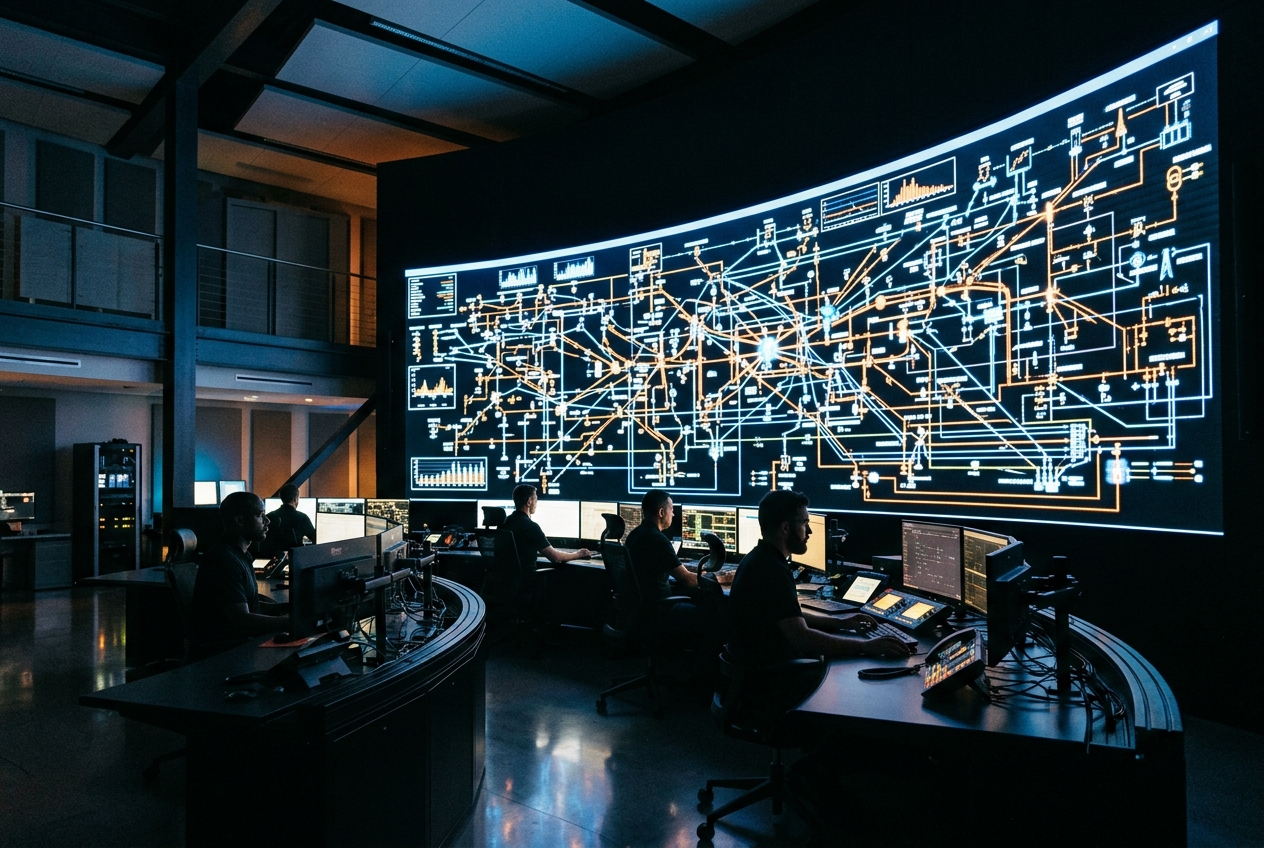
For Indian utilities, the next wave of value is not simply more devices in the field. It is a digital stack that makes open-access heavy networks manageable. That means interval data, event visibility, feeder-level observability, substation automation, power-quality analytics and practical control-room workflows. In many states, this stack will matter as much as tariff design.
Why 2026 is different for DISCOMs and open-access consumers
The economics of captive, group captive and third-party open access have stayed attractive in several states despite wheeling charges, banking limits, cross-subsidy surcharge treatment and changing regulatory approaches. For many HT consumers, especially data centres, auto-component manufacturers, metals, chemicals, pharma and large campuses, the landed cost of renewable open-access supply in 2026 often remains below grid industrial tariffs by Rs 1.0-3.5/kWh depending on state, time block and contract structure.
At the same time, the operational profile of these consumers is changing:
- Rooftop and behind-the-meter solar are common in the 0.5-20 MW range
- Wind-solar hybrid and FDRE supply are entering more C&I portfolios
- Battery storage is moving from pilot to selective deployment where demand charges and outage risk justify it
- Harmonic-producing loads, EV charging, VFD-heavy processes and data-centre loads are increasing power-quality sensitivity
- More consumers are asking for 15-minute and, in some cases, finer visibility into drawal, demand peaks and outage events
For the DISCOM, this creates four simultaneous pressures:
- Revenue pressure from migration of high-paying consumers
- Technical pressure from bidirectional and variable feeder flows
- Settlement pressure around metering, scheduling and energy accounting
- Service-quality pressure because remaining grid dependence still needs reliable, quality supply
A utility that responds only with surcharge petitions or manual approvals will underperform. A utility that digitises for operational visibility can protect revenue, reduce disputes and integrate more third-party and consumer-owned DER without excessive reinforcement.
The digital use cases that matter beyond basic AMI
Most discussions on utility digitalisation stop at smart meters. That is too narrow for open-access heavy areas. The practical use cases are broader and should be engineered from the feeder and substation upward.
First, interval energy accounting has to become settlement-grade across the network, not just at the consumer meter. If the feeder meter, boundary meter, distribution transformer and HT consumer meter tell conflicting stories, disputes over wheeling losses, deemed drawal, scheduling deviation or standby consumption are inevitable. In open-access pockets, 15-minute data alignment is the minimum operating requirement.
Second, power quality must move into the utility dashboard. Voltage excursions, low power factor, harmonics, flicker and phase imbalance increasingly matter where sensitive industrial loads and inverter-based resources coexist. Even when consumers are using open-access power, the local distribution network is often still the delivery platform. That means DISCOMs need visibility into feeder voltage profiles, transformer loading and recurring disturbance signatures.
Third, reverse power flow visibility is becoming essential. In industrial estates and high-solar commercial belts, certain daytime periods now show net export tendencies at local nodes, especially on holidays or low-load days. Without visibility, protection settings and switching practices designed for one-way flow can create nuisance trips or hidden safety risks.
Fourth, flexibility management matters. Utilities do not need a full, expensive enterprise architecture on day one, but they do need a control philosophy for dispatchable loads, capacitor banks, OLTC coordination, feeder reconfiguration and future battery or demand-response participation.
This is where capabilities like SCADA / ADMS integration and DER management systems become relevant, not as abstract digital-transformation labels, but as tools for practical grid operations in mixed-supply environments.
A workable architecture for open-access ready distribution networks
For Indian DISCOMs, a pragmatic architecture in 2026 should avoid overdesign and focus on measurable operational outcomes. In most cases, the right stack has six layers.
The first layer is revenue and interface metering with synchronized interval data. This includes HT consumer meters, boundary meters, feeder meters and key DT or RMU metering where open-access penetration is meaningful. Time synchronisation, communications reliability and data validation rules are more important than simply counting endpoints.
The second layer is substation and feeder observability. Utilities should prioritise 33/11 kV and selected 66/11 kV substations serving industrial and urban commercial clusters. Event recording, breaker status, transformer loading, bus voltage, capacitor bank status and alarm management should be available centrally. In many projects, IEC 61850 substation automation can materially reduce integration complexity and improve scalability compared with fragmented protocol landscapes.
The third layer is feeder device visibility and controllability. Reclosers, sectionalizers, RMUs and fault indicators matter not only for outages but also for managing feeder topology under changing flow conditions. On industrial feeders with high service expectations, the value of selective automation can be substantial even if the raw feeder count is small.
The fourth layer is analytics. This should include energy balance, exception detection, power-quality dashboards, transformer overloading trends, demand peak analysis, tamper/event correlation and open-access schedule validation support. Utilities do not need an AI-heavy platform to start. They need reliable data models, good alarms and operators who trust the outputs.
The fifth layer is workflow and settlement integration. Meter exceptions, communication failures, outage-tagged intervals, consumer complaints and energy-accounting adjustments must connect to operational and commercial processes. A dashboard no one uses for field action or billing correction has little value.
The sixth layer is future DER orchestration. Even if active dispatch is limited in 2026, systems should be designed so batteries, flexible loads, EV charging hubs and controllable DG can eventually be monitored and, where regulation permits, coordinated.
Business impact: what utilities, C&I consumers and lenders should expect
A common mistake is to ask for one universal ROI number. Open-access related utility digitalisation does not create value in only one line item. The value stack is distributed.
For DISCOMs, the most immediate benefits usually come from better energy accounting, lower dispute resolution time, improved billing confidence for standby and backup supply, reduced manual meter reading dependencies and better management of technical losses on feeders with complex flow patterns. On selected industrial feeders, improved switching visibility and automation can also reduce outage duration for high-value consumers.
Indicatively, utilities can see benefit pools such as:
- 0.3-1.2 percentage point improvement in billed energy integrity on problem feeders through interval-data reconciliation and exception reduction
- 10-30% lower time spent on open-access meter data validation and dispute handling where data systems are integrated well
- 1-3% reduction in avoidable technical losses on targeted feeders through phase balancing, voltage optimisation, capacitor control and overload detection
- 15-40% reduction in complaint investigation time for voltage and interruption-related industrial cases
For C&I consumers, the benefit is not only tariff arbitrage. Better network digitisation can reduce hidden costs that are often ignored in boardroom savings estimates:
- Fewer unexplained demand spikes
- n- Better evidence for power-quality claims and root-cause analysis
- Lower risk of process disruption from repeated short outages or voltage instability
- Cleaner settlement of open-access and backup-supply energy
- More bankable operating data for future storage or demand-response investments
For lenders and investors, stronger utility-side digitalisation reduces operational ambiguity. That matters when assessing merchant exposure, deemed-generation claims, curtailment risk, payment behaviour and the practical deliverability of contracted renewable energy. A project connected to a poorly instrumented network can be financially weaker than a similar project on a digitally mature feeder, even if the PPA headline terms look identical.
The policy and implementation context in India
In 2026, the policy backdrop remains supportive of distribution modernisation, but execution quality varies sharply by state and utility. RDSS continues to influence smart metering, system strengthening and digital utility investments. The Green Energy Open Access Rules remain an important structural driver for larger consumer participation, though state-level implementation still determines real-world bankability. State ERC orders on scheduling, banking, CSS, AS and standby arrangements continue to shape the digital requirements for settlement and compliance.
At the same time, utilities face practical constraints:
- Mixed legacy meter fleets and communication protocols
- Incomplete GIS and asset registries
- Separate IT and OT procurement silos
- Weak time synchronisation across systems
- Limited field capacity for configuration management and testing
- Vendors pushing closed architectures that raise long-term integration cost
This is why Vendor-neutral specifications matter. For DISCOMs planning substation upgrades, feeder automation or industrial-cluster digitalisation, specification discipline is often more important than software branding. The tender should define interoperability, time-stamped event quality, cybersecurity baselines, reporting outputs, data ownership and handover requirements clearly. It should also define performance testing from FAT to SAT so that integration success is measured, not assumed.
For policymakers, the takeaway is straightforward: if open access is expected to grow without undermining grid discipline, distribution utilities need targeted digital capex that is linked to measurable operational outcomes, not generic digitisation claims.
Where to start: a practical roadmap for Indian DISCOMs
A realistic roadmap does not begin with a statewide control-room mega-project. It begins with prioritised network segments.
Step one is feeder segmentation. Identify industrial feeders, urban commercial clusters, mixed-load substations and open-access dense corridors. Rank them by revenue significance, complaint frequency, DER penetration and metering complexity.
Step two is data hygiene. Before adding advanced applications, align meter time stamps, feeder naming conventions, consumer mapping, CT/PT records and communication uptime KPIs. Many analytics failures are actually data-governance failures.
Step three is substation and feeder observability. Upgrade selected nodes with communications, event visibility and standardised interfaces. Focus on places where a few assets influence a large share of industrial or open-access energy flows.
Step four is integrated analytics and operating procedures. Build dashboards for energy balance, power quality, outage-event tracing and reverse-flow alerts. Then train control-room and field teams on what action each alert should trigger.
Step five is commercial-process linkage. Ensure interval data and event logs are usable by billing, open-access settlement, complaint resolution and regulatory reporting teams.
Step six is selective automation. Add control functions only where visibility shows clear operational benefit. A staged path generally delivers better ROI than broad, underused automation.
Utilities that execute this sequence well will be in a stronger position to support consumer choice without surrendering network control or financial discipline.
What this means for the broader energy market
The next phase of India’s power transition will be won or lost on the distribution edge. Generation capacity additions and C&I renewable procurement can keep growing, but if local networks remain commercially opaque and operationally blind, friction will rise. That friction shows up as delayed approvals, curtailment disputes, poor power quality, stranded flexibility investments and lower lender confidence.
Conversely, a digitally capable DISCOM can become an enabler of growth. It can accommodate more open-access consumers, integrate more distributed generation, reduce avoidable loss, improve service quality and create a more financeable environment for renewable projects and industrial decarbonisation.
For C&I buyers, developers and capital providers, the message is clear: evaluate the digital maturity of the distribution interface, not just the tariff and PPA. In 2026, grid visibility, metering integrity and operational interoperability are becoming material drivers of project value.
Growthifye supports utilities, developers and large consumers on utility digitalisation strategy, technical architecture, tendering, implementation oversight and project-finance readiness across India. If you are planning an open-access heavy feeder, substation automation programme or DER integration roadmap, contact Growthifye’s advisory desk.
Explore Growthifye's related capabilities
This analysis connects directly to our advisory practice: IEC 61850 substation automation · FLISR & self-healing networks · DER management systems · SCADA / ADMS integration.
About the author

Chief Executive Officer, Growthifye — With over 23 years in management consulting, Sudarshan has taken businesses from concept to scale — building and scaling new-age digital and energy businesses.
- 23+ years in management consulting
- EY alumnus
- Led large-scale BESS programmes, capital raises and advisory mandates
Want this analysis applied to your project?
Talk to our team