OMS for Indian DISCOMs 2026: Outage Management, CAIDI Reduction and RDSS Value
By Sudarshan Karweer · sudarshan@growthifye.com · +91 84510 99371 (Call / WhatsApp) · 2026-08-29
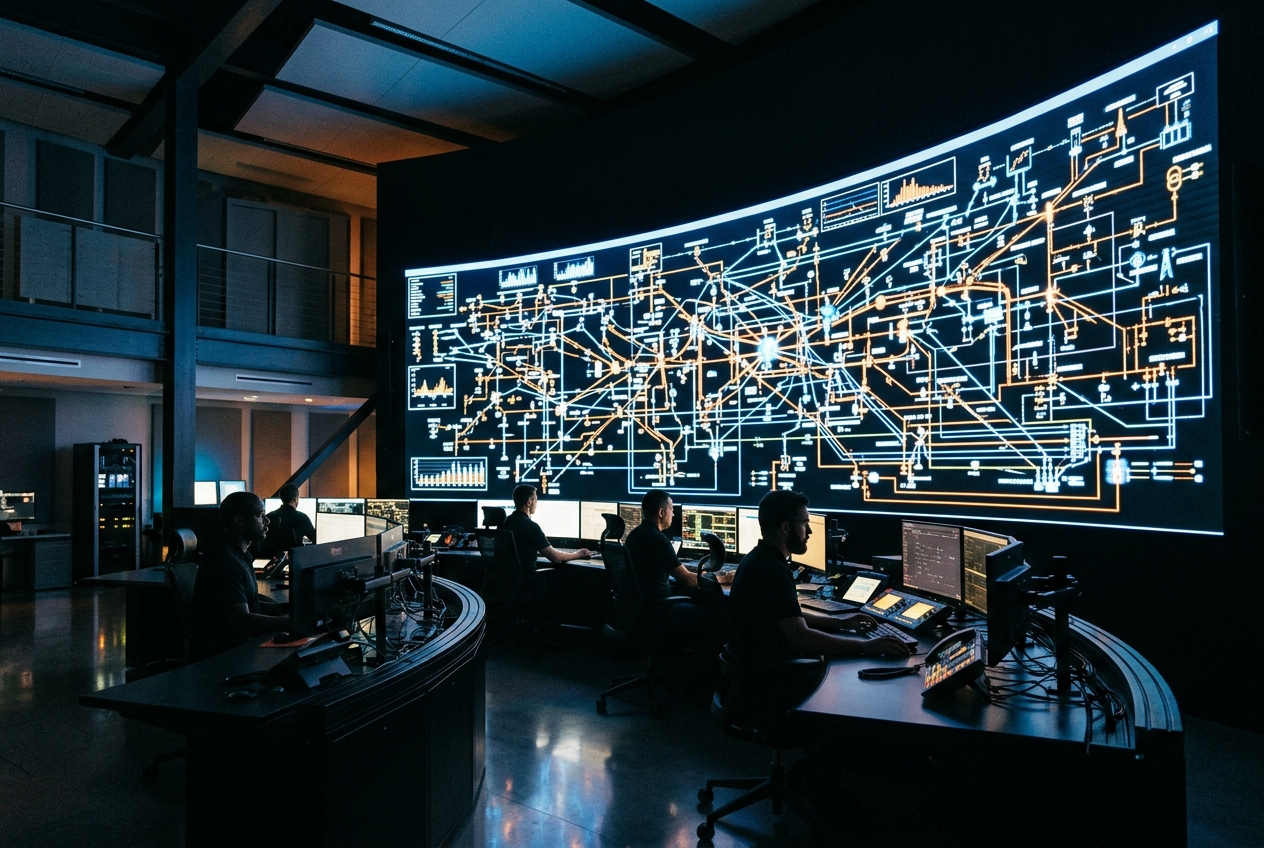
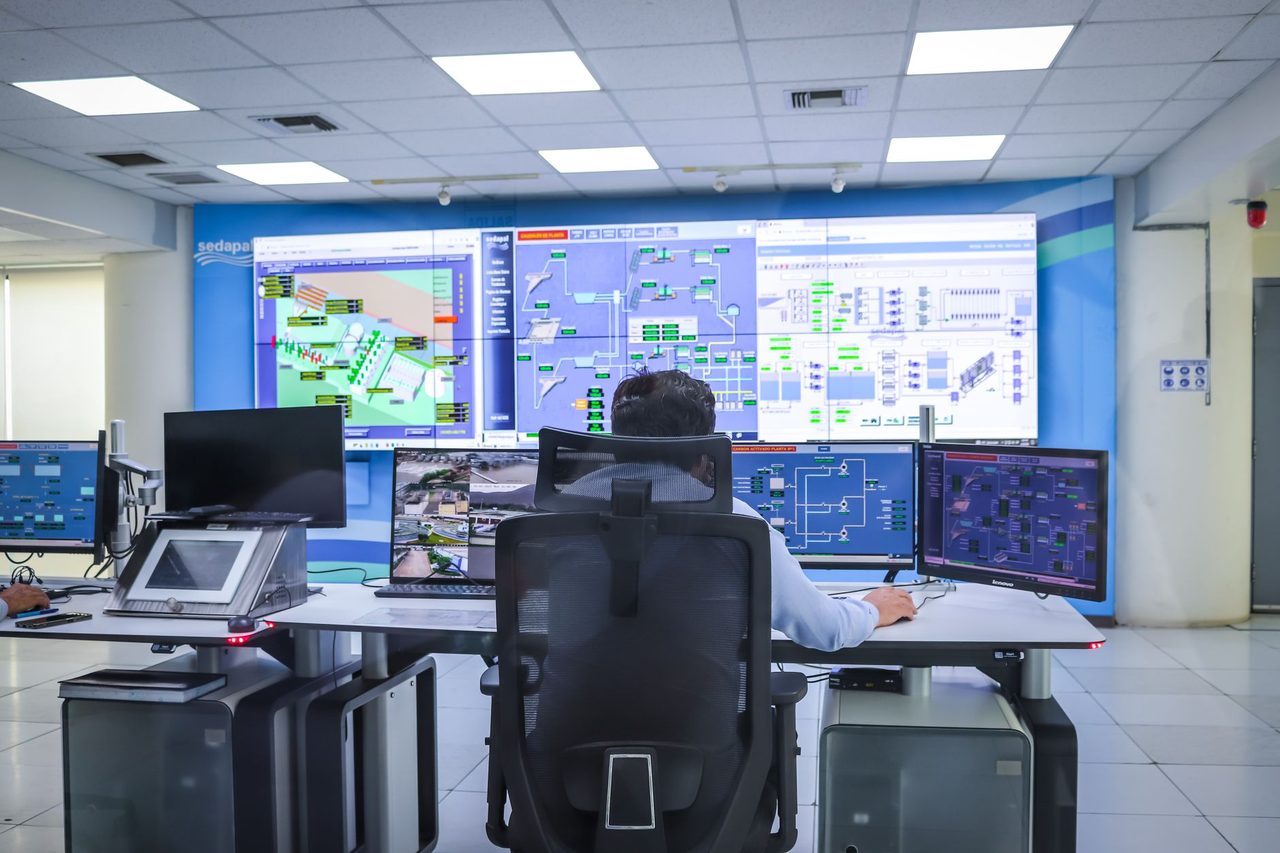
Indian DISCOMs have spent the last few years discussing AMI, SCADA, feeder monitoring and analytics. In 2026, the sharper question is no longer whether to digitalise, but how to make different systems work together during the moments that matter most: outages, restoration, complaint handling and field execution. That is where an Outage Management System, or OMS, becomes strategically important.
For many Indian utilities, outage handling is still fragmented. Consumer calls come into a call centre. AMI head-end systems show last-gasp events but may not be integrated with switching operations. SCADA alarms remain confined to control rooms. Field crews depend on WhatsApp groups, phone calls or local knowledge. The result is familiar: long restoration times, duplicate complaint tickets, poor visibility on fault location, weak outage accounting and rising consumer dissatisfaction.
An OMS addresses this gap by creating a single operational layer that ingests outage signals, predicts likely fault locations, manages crew dispatch, tracks switching and restoration, and closes the loop with customer communication. For DISCOMs under pressure to improve reliability, reduce AT&C losses and justify digital capex under RDSS and state-level reform programmes, OMS is now a practical operational priority.
Why OMS is a distinct 2026 priority for Indian DISCOMs
AMI, SCADA and GIS each solve a different problem, but none of them alone provides end-to-end outage orchestration. OMS sits between network intelligence and field action.
In Indian conditions, that matters because outages are not only a reliability issue. They also affect:
- Revenue recovery when supply interruptions trigger billing disputes
- Complaint escalation costs at call centres and local offices
- Regulatory performance on SAIDI, SAIFI and increasingly CAIDI-style restoration metrics
- Public and political scrutiny in urban circles and high-value industrial feeders
- Transformer stress and repeat failures when fault isolation is delayed
- Energy accounting quality, especially when feeder and DT-level interruption records are weak
By 2026, several DISCOMs have already built islands of automation through smart metering, urban SCADA, ring-main upgrades and feeder metering under RDSS. OMS is the layer that converts those investments into measurable service outcomes.
For C&I consumers, this is equally relevant. Industrial and commercial users increasingly care about outage frequency, restoration credibility and prior notification quality. In states where open access, rooftop solar, battery systems and captive models are expanding, distribution reliability is now linked to customer retention and network planning. A DISCOM that can identify, communicate and restore outages faster is in a stronger position with both regulators and paying consumers.
What an OMS should actually do in an Indian utility context
A modern OMS for a DISCOM should not be treated as a complaint-registration tool with a map attached. Its core function is operational decision support.
At minimum, the system should be able to:
- Receive outage inputs from AMI last-gasp and power-restored events
- Ingest SCADA breaker, recloser and RMU status changes where available
- Use GIS network connectivity to infer the probable affected zone, transformer or feeder section
- Correlate multiple customer calls into a single outage incident
- Prioritise incidents by consumer category, feeder criticality and duration
- Recommend switching steps or dispatch actions
- Track field crew assignment, travel, arrival, work progress and restoration confirmation
- Notify consumers through SMS, app or IVR updates
- Produce auditable outage reports for regulatory and management review
For utilities with stronger automation maturity, OMS can go further by integrating with SCADA / ADMS integration environments to support controlled switching workflows, network topology updates and post-event analysis.
The most effective OMS deployments in India are usually phased.
Phase 1 often covers complaint correlation, outage visualisation and crew dispatch for urban circles.
Phase 2 adds AMI event integration, GIS connectivity validation and feeder-level restoration analytics.
Phase 3 brings in switching coordination, mobile workforce management and FLISR-driven restoration suggestions in automation-ready areas.
This phased model is practical because most Indian DISCOMs still operate with uneven asset data quality across circles.
The operational architecture: AMI, GIS, SCADA and field systems
The quality of OMS outcomes depends less on the software brand and more on integration discipline.
There are four foundational layers.
First, GIS and network model quality. If feeder, DT and consumer connectivity are inaccurate, outage prediction logic will generate noisy or misleading results. A utility may know that 2,000 consumers are off supply, but not which switchable section is responsible. Before a full OMS roll-out, utilities should clean feeder hierarchies, transformer mappings, switch IDs and consumer-to-DT associations.
Second, AMI event ingestion. Smart meter last-gasp alerts can significantly improve outage visibility, especially in low-voltage networks beyond SCADA visibility. However, AMI systems produce huge event volumes. OMS design must filter noise, define event confidence thresholds and distinguish communication failure from actual outages. In dense urban deployments, clustering logic is essential to avoid false mass-outage detection.
Third, SCADA and substation integration. Where 11 kV and 33 kV assets are visible, breaker trips, lockouts and recloser operations give control rooms the upstream context they need. Utilities planning IEC 61850 substation automation can gain extra value if event naming, time synchronisation and status quality are standardised with OMS requirements in mind.
Fourth, field mobility. An OMS without crew workflow integration becomes a passive dashboard. Mobile apps for line staff, contractors and supervisors should allow:
- Ticket acceptance and reassignment
- Geo-tagged arrival and completion timestamps
- Photo evidence
- Isolation and restoration notes
- Material usage and fault cause coding
- Consumer-impact confirmation
A robust implementation also requires a common outage master data structure across customer information systems, call centres, GIS, AMI HES/MDM, SCADA and ERP or work-order tools. This is where Vendor-neutral specifications help utilities avoid being locked into a single platform architecture.
The KPI stack and financial case: beyond software ROI
Indian utility boards often ask the wrong first question: what is the software cost per consumer? The better question is: what operational and regulatory value can OMS unlock when integrated with existing digital assets?
Typical value pools include:
- Reduction in CAIDI through faster fault location and dispatch
- Reduction in duplicate truck rolls and complaint-handling effort
- Better transformer and feeder fault root-cause visibility
- Lower restoration delays for high-revenue industrial and commercial consumers
- More accurate planned versus unplanned outage records
- Improved reliability reporting for regulators and state governments
- Better prioritisation of automation investments in chronic outage zones
In practical terms, a mid-sized urban circle with 4-8 lakh consumers may handle thousands of outage-related complaints during monsoon months. If OMS reduces average complaint handling time by even 20-30%, the utility can cut call-centre load, local office escalation and field confusion materially.
More importantly, restoration time savings have direct commercial value. Consider an urban-industrial feeder serving 20 MW of mixed load at an average effective revenue realisation of Rs 7-8 per kWh. A one-hour avoidable interruption implies Rs 14-16 lakh of unrealised billed energy opportunity across the affected load footprint, even before considering industrial disruption and reputational costs. Not every outage hour is fully recoverable, but faster isolation and sectional restoration can meaningfully reduce the impacted load-duration product.
At system level, DISCOMs should track:
- SAIDI and SAIFI by circle, division and feeder class
- CAIDI or average restoration time for sustained interruptions
- Percentage of outages auto-detected before first consumer complaint
- Average time from alarm to crew dispatch
- Average time from dispatch to fault localisation
- Percentage of incidents with root-cause classification
- Repeat outages on the same feeder or DT within 30 days
- Unserved energy estimates by feeder category
For boards and lenders, OMS business cases should be tied to measurable service and operating outcomes over 24-36 months, not just capex line items.
OMS under RDSS and the 2026 utility reform agenda
RDSS has already pushed large-scale smart metering, feeder metering, DT metering and distribution infrastructure strengthening. In many states, the next challenge is getting operational value from those investments.
OMS aligns naturally with several RDSS-era priorities:
- Improved consumer service quality and complaint responsiveness
- Better energy accounting through event-linked outage visibility
- Higher utilisation of AMI and feeder monitoring investments
- Stronger urban reliability management as undergrounding, RMUs and ring networks expand
- Data-backed prioritisation of automation capex in chronic fault pockets
Even where OMS is not always a separately highlighted procurement category, it can be positioned within broader utility digitalisation, control centre modernisation, customer service transformation or SCADA / ADMS integration programmes.
For policymakers and lenders, OMS also provides better evidence. If a DISCOM claims reliability improvements after automation investments, outage logs, restoration timestamps and consumer-impact maps should substantiate that claim. This matters for reform-linked disbursement, performance review and future funding approvals.
A 2026 best practice is to define OMS-related outcomes at tendering stage itself. Instead of procuring software modules in isolation, utilities should specify:
- Required source-system integrations
- Outage detection accuracy thresholds
- Maximum event latency
- Mobile workforce functionality
- GIS data-cleaning responsibilities
- Reporting formats for regulatory submissions
- Acceptance criteria from FAT to SAT
Without this discipline, many projects go live technically but fail operationally.
Common implementation pitfalls and how to avoid them
OMS projects in India fail less because the technology is immature and more because utility processes are not redesigned around it.
The biggest pitfalls are predictable.
Poor GIS connectivity data is the first. If switch states, feeder branches and consumer mappings are inaccurate, the OMS will mis-predict affected pockets. Utilities should budget real time and money for network model validation, not assume existing GIS layers are ready.
The second is weak ownership. OMS cuts across IT, operation, customer service, metering and field maintenance teams. Unless one accountable business owner drives the programme, integration disputes and process gaps multiply.
The third is over-automation too early. Some utilities try to jump directly to advanced switching logic without stabilising alarm quality, crew workflows and source-system data integrity. In most cases, staged maturity is better.
The fourth is ignoring low-voltage realities. In Indian distribution networks, many consumer outages originate below the visibility of upstream SCADA. AMI events, DT monitoring and call correlation remain essential.
The fifth is insufficient training and change management. Control-room operators and field staff must trust the system enough to use it during real faults. That requires drills, SOPs and escalation matrices.
The sixth is vendor lock-in through opaque integration layers. Utilities should insist on open interfaces, documented APIs, interoperable event models and Vendor-neutral specifications, especially if future expansion may include FLISR & self-healing networks or DER management systems.
Why OMS matters more as DER, EV charging and premium consumers grow
OMS is not only about restoring conventional outages. It is becoming more important as the distribution edge becomes more dynamic.
By 2026, several Indian urban networks are seeing a mix of:
- Rooftop solar on commercial buildings and housing societies
- Group captive and open-access consumers with backup coordination needs
- Battery energy storage pilots
- EV charging clusters on urban feeders
- Rising power-quality sensitivity among data centres, hospitals and high-value commercial loads
As distributed resources and sensitive loads increase, outage management becomes more complex. Utilities must know not only where supply is lost, but also where embedded generation, reverse flow or controlled reconnection may matter. That is one reason OMS should not be planned in isolation from future DER management systems and grid-edge visibility roadmaps.
For C&I consumers, better outage intelligence can support more credible communication around planned shutdowns, emergency restoration estimates and feeder reliability history. That, in turn, helps consumers make informed decisions on captive backup, storage sizing, process scheduling and contractual supply arrangements.
For developers and financiers, a utility with stronger outage analytics presents lower operational uncertainty in industrial corridors and urban commercial demand centres. Reliability may not be the only bankability factor, but it increasingly influences demand forecasts, backup assumptions and customer economics.
A practical roadmap for DISCOM boards and programme teams
For Indian DISCOMs considering OMS in 2026, a practical roadmap looks like this:
- Start with 2-3 circles where AMI, GIS and basic control-room systems already exist
- Clean feeder, DT and consumer connectivity data before software configuration
- Define outage workflows jointly across operations, IT, call centre and field teams
- Integrate high-confidence AMI events first, then widen event logic carefully
- Link OMS to crew mobility from day one
- Track baseline KPIs for at least 3-6 months before go-live comparison
- Include monsoon-season stress testing in acceptance planning
- Build expansion plans toward switching orchestration and self-healing feeders only after stabilising incident workflows
The strategic point is simple. AMI tells a DISCOM what is happening at the edge. SCADA shows what is happening on monitored assets. GIS shows how the network is connected. OMS tells the utility what to do next, who should act and how fast service can be restored.
That is why OMS is emerging as a distinct value layer in Indian utility digitalisation. For DISCOMs under pressure to improve service quality, defend revenue, reduce field inefficiency and make RDSS-era investments deliver visible outcomes, it is no longer optional to treat outages as disconnected events. They need to be managed as a unified operating process.
If your utility, lending team or project developer group is evaluating outage digitalisation, control-centre modernisation or integration between AMI and network operations, contact Growthifye’s advisory desk to discuss a practical roadmap, technical architecture and procurement strategy.
Explore Growthifye's related capabilities
This analysis connects directly to our advisory practice: IEC 61850 substation automation · FLISR & self-healing networks · DER management systems · SCADA / ADMS integration.
About the author

Chief Executive Officer, Growthifye — With over 23 years in management consulting, Sudarshan has taken businesses from concept to scale — building and scaling new-age digital and energy businesses.
- 23+ years in management consulting
- EY alumnus
- Led large-scale BESS programmes, capital raises and advisory mandates
Want this analysis applied to your project?
Talk to our team