NGO Community Energy MRV in India 2026: Financing, Tariffs and Delivery Models
By Sudarshan Karweer · sudarshan@growthifye.com · +91 84510 99371 (Call / WhatsApp) · 2026-08-25
India’s NGO-led energy-access market is moving beyond one-time donations and pilot-scale solar kits. In 2026, the stronger opportunity is community energy designed with measurable outcomes, utility alignment and finance discipline. For corporates using CSR budgets, lenders evaluating blended structures, renewable developers entering underserved geographies, and policymakers shaping last-mile delivery, the central question is no longer whether rural energy access matters. It is whether projects can be structured to produce reliable service, verifiable impact and long-term operational viability.
This article focuses on a different angle from generic CSR, clean-cooking and rural-solar overviews: how to build bankable NGO community-energy programmes around robust impact MRV, realistic tariffs, utility coordination and fit-for-purpose financing. The practical use cases include village-level solar for productive loads, health and education institutions, agricultural service centres, livelihood clusters and community-owned or community-managed energy assets. In each case, the success variable is not capex alone. It is the full delivery stack: demand assessment, technical design, operator model, tariff logic, subsidy layering, data collection and outcome verification.
Why community energy needs a new operating model in 2026
India’s grid expansion has materially improved village electrification, but quality of supply remains uneven across many remote and low-income pockets. Typical challenges include feeder interruptions, low evening voltage, transformer overloading, delayed service connections for public institutions and poor economics for low-density demand clusters. For NGOs and CSR programmes, this creates a narrow but important role: not replacing the grid, but improving service reliability and energy use outcomes where the grid alone is not delivering.
The old model of distributing appliances or standalone systems with weak after-sales support has limited value. Asset failure rates rise quickly when there is no local O&M, no remote monitoring and no revenue collection framework. Community energy in 2026 works better when designed as a service platform with one or more of the following characteristics:
- A defined anchor load such as a health sub-centre, school, dairy chilling point, drinking-water system or micro-enterprise cluster
- Hybrid supply logic with grid-interactive operation where feasible, rather than permanent islanding by default
- Productive-use integration so that electricity consumption drives local incomes, not just lighting hours
- Digital monitoring that supports grant reporting, lender diligence and course correction
- A tariff or fee-for-service mechanism that covers at least routine O&M and part replacement reserves
For Indian stakeholders, this matters because community-energy projects now sit at the intersection of ESG goals, utility planning, rural livelihoods and concessional capital deployment. Poorly structured projects continue to consume grant budgets. Well-structured ones can unlock repeatable pipelines.
The project archetypes that are scaling now
A practitioner lens is essential. Not all community-energy projects should be treated as the same asset class. The most relevant archetypes in India in 2026 are the following.
1) Solarised public-service nodes
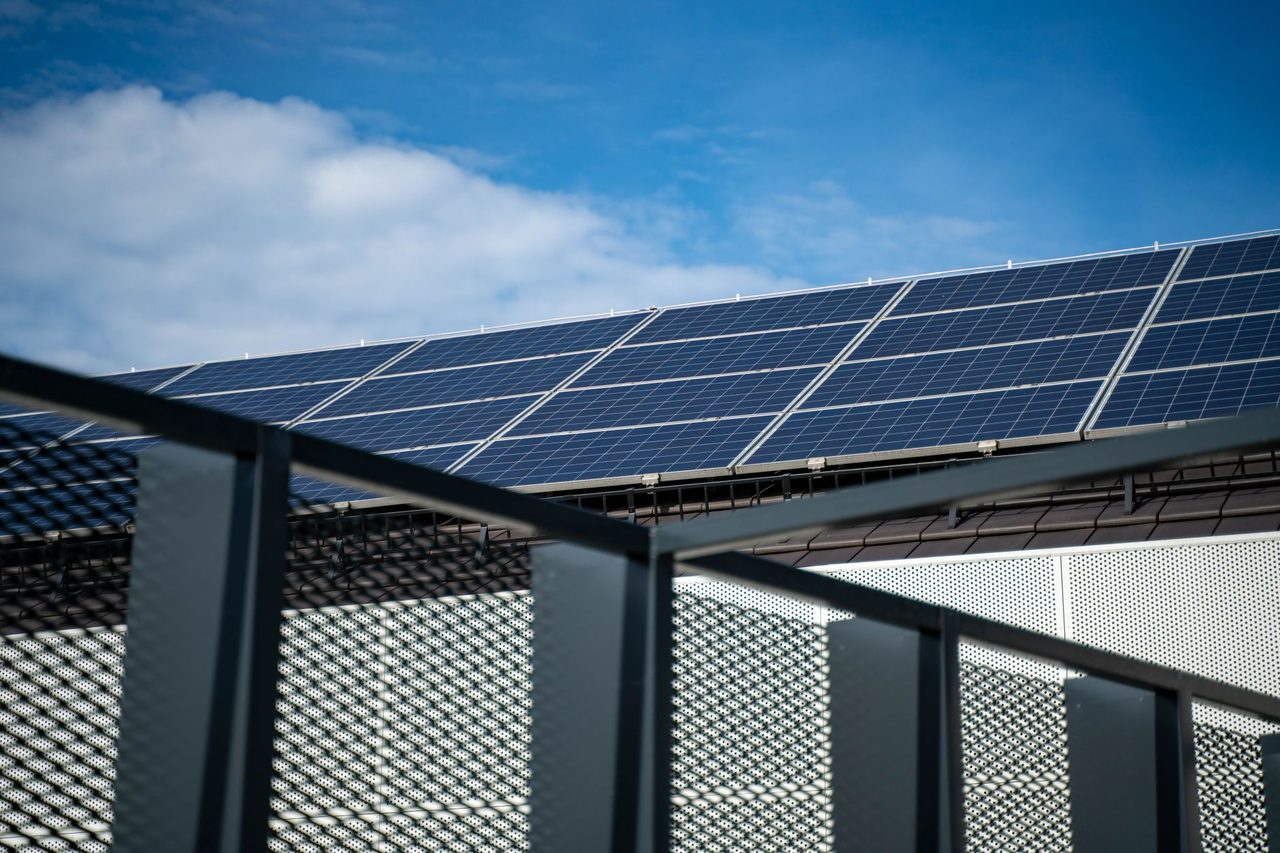
These include primary health centres, anganwadis, hostels, panchayat offices and government schools. Typical systems are 5 kW to 50 kW rooftop or ground-mounted with battery backup sized for critical loads. In many districts, installed costs for quality systems can still range broadly from about Rs 55,000 to Rs 85,000 per kW depending on battery chemistry, BOS complexity, civil works and remote-site logistics. Battery-backed systems for essential health loads can move meaningfully above plain rooftop solar costs because autonomy and power-quality requirements are stricter.
The value case is strongest where outages disrupt vaccine refrigeration, maternal care, digital learning or water pumping. For NGO and CSR sponsors, MRV can be outcome-linked: reduction in diesel hours, vaccine cold-chain uptime, school digital-equipment usage, or litres of safe water pumped.
2) Community livelihood mini-grids and nano-grids
These systems serve clusters such as weaving units, food processing groups, SHG enterprises, fisheries, forest-produce processing or rural workshops. Capacity can range from 10 kW to 200 kW depending on anchor demand and diversity of loads. Productive demand is critical because household-only consumption often remains too low and peaky for sustainable operations.
Tariffs vary sharply by service quality and subsidy support. In several practical structures, community-energy tariffs for reliable local supply may need to be in the range of Rs 8 to Rs 18 per kWh equivalent to support O&M and replacement costs, especially with storage. That can sound high relative to subsidised grid tariffs for domestic users, but it may still be economically attractive when compared with diesel-based power, interrupted production, lost perishables or outsourced processing costs. Diesel-generated electricity in dispersed rural settings frequently exceeds Rs 20 to Rs 30 per kWh once fuel transport, maintenance and low-load inefficiency are considered.
3) Solar for agriculture-linked shared infrastructure
Not every farm needs an individual energy intervention. Shared infrastructure often creates better economics: village cold rooms, milk chilling units, irrigation service centres, water-user associations, seed processing, grading and drying units. Here, the energy asset should be assessed as part of an agricultural value chain rather than as a stand-alone solar project. Revenue can be tied to services rendered per litre, per tonne, per hour or per acre.
4) Clean-energy service models for institutions and NGOs
NGOs themselves run hostels, clinics, field offices and training centres in off-grid and weak-grid regions. Solar plus storage, efficient cooling, electric cooking in specific institutional settings, and energy-efficiency retrofits can reduce recurring opex. These sites are ideal for establishing internal benchmarks for energy access MRV before the same methods are scaled to communities.
Financing structures: what actually works for NGO energy access
The biggest mistake in this segment is matching long-life infrastructure with short-horizon grant thinking. Community energy becomes more resilient when capital stacks are intentionally layered.
A practical financing toolkit in 2026 may include:
- CSR grants for early-stage development, viability-gap support, first-loss reserves or social-outcome components that cannot be monetised directly
- Philanthropic grants for community mobilisation, energy-literacy training and baseline-endline surveys
- Concessional debt from development-focused lenders for scalable portfolios with stable anchor loads and robust remote monitoring
- Utility or state-agency support where projects reduce network stress or improve service delivery to public institutions
- Community contributions in cash, labour, land or prepaid service commitments to strengthen ownership and reduce vandalism risk
- Carbon-revenue potential in select clean-cooking or diesel-displacement cases, if methodologies and transaction sizes justify the effort
For lenders and project developers, portfolio size matters. A single 10 kW or 25 kW project rarely supports transaction costs for formal debt. But a district-level pipeline of 1 MW to 5 MW aggregated across public institutions, livelihood clusters and social infrastructure can justify technical diligence, standardised documentation and central O&M systems.
The most bankable structures usually include an anchor customer. Examples:
- A dairy cooperative paying monthly service fees
- A health facility under a multi-year operating agreement
- A water utility or panchayat-backed pumping application
- A producer company aggregating energy costs into processing fees
When structuring tariffs, the right benchmark is not just grid tariff parity. It is avoided cost plus service-quality value. If the local grid tariff for a rural commercial load is around Rs 6 to Rs 8 per kWh but outages force diesel backup and equipment downtime, a higher blended service tariff may still produce lower total cost of operation.
MRV is now the centre of credibility, not a reporting afterthought
Impact MRV in community energy has matured. In 2026, serious sponsors want more than installation counts. They want evidence that energy access changed outcomes. For Growthifye’s client base, this is especially relevant because lenders, utilities, corporates and public stakeholders all require different forms of proof.
A robust MRV framework should capture four layers.
Technical performance metrics
- Plant generation in kWh
- Battery charge-discharge cycles and state of health
- Uptime and outage minutes
- Load served by category: critical, productive and domestic
- Diesel displacement in litres where hybrid systems are replacing gensets
Financial and operating metrics
- Collection efficiency
- Average revenue per user or per service point
- O&M response time
- Spare-parts replacement cycle
- Cost per kWh delivered, not just cost per kW installed
Social and development metrics
- Additional operating hours for clinics, schools or enterprises
- Household savings on kerosene, phone charging, transport for milling or water access
- Livelihood income uplift for energy-enabled micro-enterprises
- Women’s time savings and participation in energy committees or enterprises
- Service reliability for health, nutrition and drinking-water outcomes
Environmental metrics
- Diesel and kerosene displacement
- Estimated avoided emissions using transparent assumptions
- Improved local air-quality proxies in clean-cooking or diesel-reduction programmes
The design principle is simple: measure outputs, outcomes and persistence. A solar plant that worked for six months and then failed should not be counted the same as a five-year service asset with 97 percent uptime. Remote monitoring has become more affordable, but it still needs disciplined implementation. Data loggers, smart meters, mobile-based field apps and photo-verification protocols should be specified at procurement stage, not added later.
For CSR funders, MRV also supports compliance and credibility. Many boards now ask whether the programme produced durable community assets and quantifiable impact per rupee deployed. That requires baseline studies, pre-agreed KPIs, data governance and third-party verification for larger programmes.
Policy and regulatory touchpoints stakeholders should track
Community energy does not operate in a policy vacuum. Several central and state-level frameworks shape project design even when the project itself is grant-backed.
First, the PM Surya Ghar: Muft Bijli Yojana has expanded public familiarity with distributed solar, though its primary thrust is household rooftop. Its indirect effect is increased installer capacity, local market awareness and state-level administrative experience with distributed systems.
Second, PM-KUSUM continues to influence decentralised solar economics in agriculture, especially where feeder separation, pump solarisation or decentralised generation affects local demand profiles. NGO projects linked to irrigation or rural livelihoods should understand whether a shared-infrastructure model offers better economics than subsidised individual assets.
Third, state electricity regulatory commissions and DISCOM procedures remain crucial wherever systems are grid-connected or located on public facilities. Interconnection approvals, metering arrangements, banking provisions, standby assumptions and safety compliance must be clarified early. For small community systems, the key question is often not net metering itself but whether the project can operate smoothly in a weak-grid environment without protection and power-quality conflicts.
Fourth, clean-cooking projects with electric or bioenergy components must align with local fuel economics and public-distribution realities. Even where LPG access exists, refill affordability and last-mile availability still shape user behaviour. Community-energy planners should avoid assuming a linear shift from traditional fuels to electric cooking unless the load profile, wiring, appliance quality and user economics are fully validated.
Fifth, public procurement and institutional ownership rules matter. Systems located at schools, health centres or panchayat properties need clear agreements on asset ownership, O&M accountability, replacement funding and handover terms. Ambiguity here is one of the top causes of asset neglect.
Delivery risks and how to de-risk them
The Indian market has enough project history to identify recurring failure modes.
Demand overestimation
Many village systems are oversized because surveys capture aspirations rather than paying demand. Productive-use loads should be validated through seasonal cash-flow analysis, not optimistic interviews.
Underpricing O&M
Battery-backed systems in remote areas are not maintenance-free. Annual O&M budgets, communication costs, battery reserve policies and local technician training must be built into the model from day one.
Weak ownership structures
Village committees can help, but they do not replace contractual accountability. Define who operates the asset, who collects fees, who approves major repairs and who owns spares.
Poor appliance quality
End-use efficiency is often the difference between project success and failure. Efficient motors, BLDC fans, refrigeration controls and productive-use appliances can sharply reduce system size and improve economics.
Data without governance
Collecting data is easy; maintaining reliable datasets is harder. Calibrate meters, standardise timestamp conventions, establish exception flags and reconcile field records with portal data.
A practical de-risking approach includes:
- Standard technical specifications for repeatable portfolios
- District-level O&M hubs rather than site-by-site maintenance arrangements
- Escrowed O&M reserves for critical public-service systems
- Tiered tariffs or service packages based on load type and reliability requirement
- Third-party commissioning and periodic performance audits
- Predefined MRV templates acceptable to CSR sponsors and lenders
What Indian C&I buyers, developers, lenders and utilities should do next
For C&I consumers, community energy is no longer just a philanthropic side topic. It can sit within supplier development, rural value-chain resilience and social-impact strategy, particularly for food, textiles, dairy, healthcare and agribusiness sectors. The strongest programmes are linked to business ecosystems where reliable energy improves procurement quality, cold-chain performance or income stability.
For renewable developers and EPC firms, the opportunity lies in portfolio aggregation, standardisation and long-term service capability. Margins on one-off rural projects can be thin. But district and state-level pipelines with repeat designs, remote diagnostics and blended finance can create durable business lines.
For lenders, the key is segmentation. Public-institution solar with contracted service payments is a different credit from community livelihood mini-grids or clean-cooking transitions. Risk pricing, tenor and covenant design should reflect actual cash-flow drivers rather than generic distributed-energy assumptions.
For utilities and policymakers, community energy works best when treated as a grid-supporting complement. Productive village loads, resilient public services and reduced diesel dependence can all serve broader state energy goals if interconnection and operational protocols are made simpler and more predictable.
India’s next phase of NGO energy access will be won on execution quality. The projects that scale in 2026 will not be those with the loudest sustainability narrative. They will be the ones with clear demand logic, realistic tariffs, disciplined O&M, defensible MRV and finance structures that align incentives across sponsors, communities, operators and public institutions.
If your organisation is evaluating community energy, impact MRV, CSR-linked capital deployment or rural clean-energy delivery models, contact Growthifye’s advisory desk for project structuring, technical diligence, financing strategy and implementation support.
About the author

Chief Executive Officer, Growthifye — With over 23 years in management consulting, Sudarshan has taken businesses from concept to scale — building and scaling new-age digital and energy businesses.
- 23+ years in management consulting
- EY alumnus
- Led large-scale BESS programmes, capital raises and advisory mandates
Want this analysis applied to your project?
Talk to our team