India 2026 NGO Energy Access: Solar Telecom Towers, CSR Funding and MRV
By Sudarshan Karweer · sudarshan@growthifye.com · +91 84510 99371 (Call / WhatsApp) · 2026-09-16
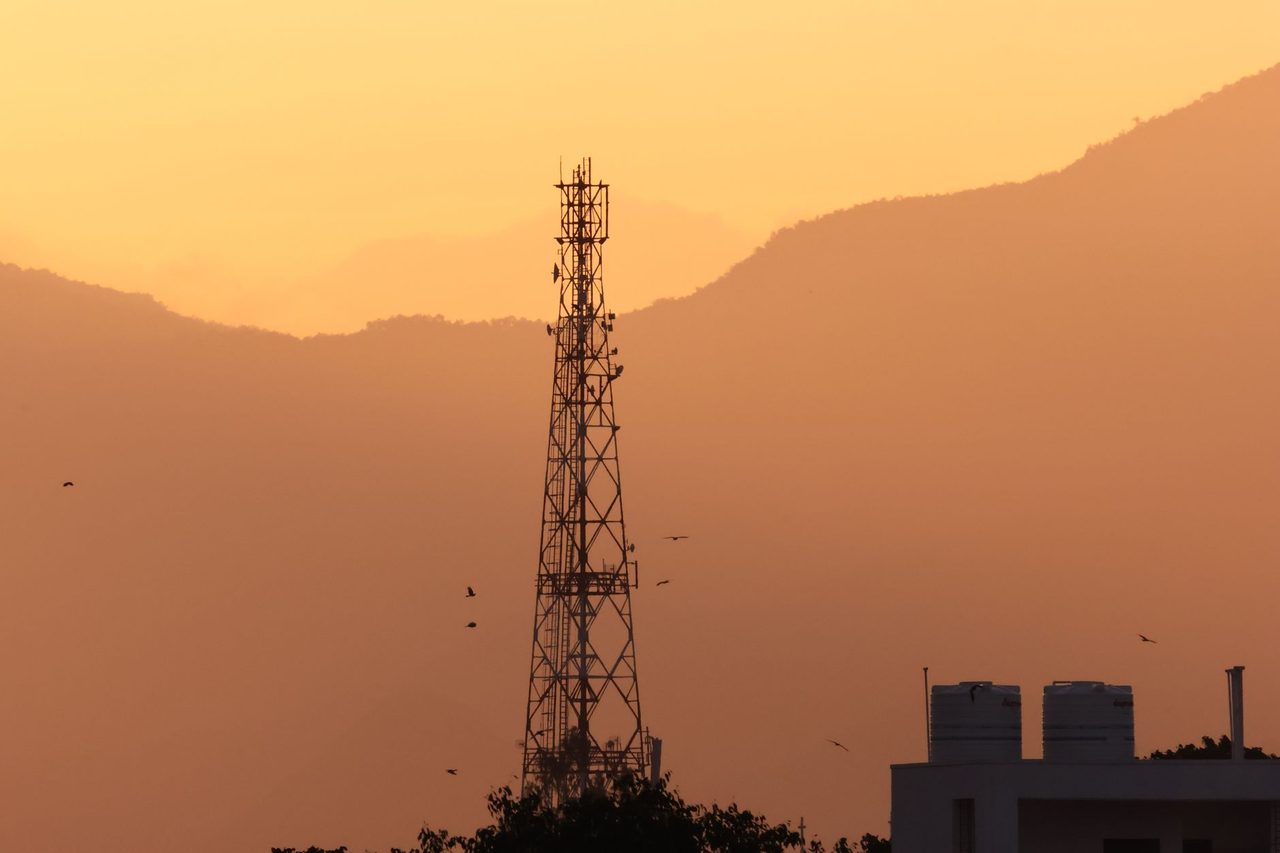
Photo: Alex Jaison on Pexels
India’s rural digital economy depends on telecom towers, but many sites outside strong grid zones still rely on diesel gensets and weak distribution feeders. For NGOs working on energy access, this is a practical 2026 intervention area that is clearly different from school, clinic, water, cooking and mini-grid programmes. Solarising rural telecom infrastructure can improve network uptime for communities, reduce diesel logistics, lower emissions, support digital inclusion and create measurable CSR outcomes that are easier to verify than many household-energy programmes.
For Indian corporates, tower solarisation also aligns with CSR themes around rural development, technology access, education enablement, livelihoods and climate action. For developers and lenders, telecom towers offer a more stable load profile than many community assets. For policymakers and utilities, the segment can reduce diesel dependence in remote service areas while supporting resilient communications. The key is to structure projects so that they remain compliant with CSR rules, technically robust, and auditable under a clear impact framework.
This article sets out how NGOs, CSR teams, tower operators, RE developers and funders can design solar-plus-storage interventions for rural telecom towers in India in 2026, including project economics, procurement routes, policy touchpoints and MRV design.
Why rural telecom towers are an energy-access priority in 2026
India has a very large telecom tower base, and while most urban and many semi-urban sites now have more reliable grid supply, a meaningful subset of rural locations continues to face long outages, low-voltage conditions or expensive diesel dependence. Even where nominal electrification exists, telecom uptime can still be compromised by feeder interruptions during evening peaks, storms or local maintenance.
From an NGO energy-access perspective, telecom infrastructure is not just a commercial asset. It is a backbone for:
- Digital payments in villages
- Access to telemedicine and e-health platforms
- School connectivity and digital learning
- Emergency communications during floods and heat events
- Market information for farmers and rural MSMEs
- Government service access through mobile networks
That makes tower reliability a community-energy issue, particularly in aspirational districts, hilly regions, forest-fringe areas, island territories and remote blocks where diesel transport is costly and service interruptions hurt local economic activity.
In 2026, this matters even more because data traffic growth continues, 4G network densification remains relevant in many rural zones, and selective 5G expansion is increasing the need for higher-quality power at edge sites. While not every CSR programme can directly fund a private operator’s capex, there are workable models where NGOs support underserved geographies, shared community outcomes, pilot demonstrations, viability-gap layers, or blended grant mechanisms linked to measurable social benefit.
What a typical rural telecom tower energy system looks like
A common rural ground-based telecom tower may have a critical continuous load in the range of 2 kW to 6 kW, depending on tenancy, equipment mix, cooling requirement and technology stack. Some low-load sites can be below this range, while multi-tenant or active cooling configurations can go higher.
A practical retrofit architecture in 2026 often includes:
- Rooftop or ground-mounted solar PV, typically 5 kWp to 20 kWp per site
- Lithium-ion battery storage sized for several hours of backup, often 10 kWh to 60 kWh depending on autonomy needs
- Existing grid connection where available
- Existing diesel genset retained as tertiary backup
- Smart energy management system with remote monitoring
- DC optimisation or hybrid controller to reduce conversion losses
Illustrative design logic:
- A 3 kW average load consumes around 72 kWh per day
- If the site has 5.0 to 5.5 kWh/m2/day solar resource and a practical PV yield of 4.0 to 4.5 kWh/kWp/day after losses, a 10 kWp system may generate roughly 40 to 45 kWh/day on average annual basis
- Battery capacity of 20 to 30 kWh usable can help shave outages and reduce genset runtime, but not necessarily deliver full overnight autonomy unless PV and storage are sized more aggressively
This means most projects are diesel-displacement and uptime-improvement solutions rather than total diesel elimination systems. That is acceptable if impact claims are realistic and MRV is properly designed.
Economics in India: what the 2026 business case looks like
The strongest economic lever is avoided diesel. Delivered diesel cost at remote rural sites is often materially above retail pump price due to transport, pilferage, handling and service overheads. In 2026, an effective delivered diesel energy cost of Rs 24 to Rs 38 per kWh is not unusual for poor-access locations once genset efficiency and operational losses are included. In tougher geographies it can be even higher.
By comparison:
- Utility power for commercial or mixed-use telecom supply can range broadly from about Rs 6.5 to Rs 9.5 per kWh in many states once energy charges, fixed charges and duties are considered, though actual tower billing structures vary by DISCOM and service category
- Solar PV generation cost on a site-specific capex basis can often land in the Rs 3.5 to Rs 5.5 per kWh equivalent range over system life, depending on utilisation and O&M assumptions
- Battery-supported hybrid energy cost is higher than plain solar, but still competitive when diesel displacement and uptime value are included
Indicative 2026 capex ranges for small rural tower retrofits:
- Solar PV: roughly Rs 38,000 to Rs 52,000 per kWp for small distributed sites, depending on structure, logistics and module/BOS choice
- Battery storage: around Rs 11,000 to Rs 18,000 per kWh installed for telecom-grade hybrid applications, depending on chemistry, enclosure, controls and warranty terms
- Hybrid controller, SCADA, security, civil and integration: site-dependent and often substantial in remote areas
An illustrative project:
- 10 kWp solar PV at Rs 4.5 lakh
- 25 kWh battery and controls at Rs 4.0 to Rs 4.5 lakh
- Installation, structure, telemetry, fencing, integration and contingencies at Rs 1.5 to Rs 2.5 lakh
- Total installed cost: about Rs 10 lakh to Rs 11.5 lakh
If such a system avoids 8,000 to 12,000 litres of diesel annually across poor-grid conditions, and effective delivered diesel cost is Rs 95 to Rs 105 per litre, the gross annual diesel-cost avoidance can be about Rs 7.6 lakh to Rs 12.6 lakh before accounting for battery degradation, O&M, remaining genset runtime and financing structure. In reality, savings vary significantly by site. Some low-outage locations will not justify the same storage size. Others with severe outages can support a stronger business case even with higher logistics costs.
This is why NGOs and CSR sponsors should focus on a screened portfolio, not random single sites. Baseline energy audits matter.
CSR and grant structures that actually work
A common mistake is to treat tower solarisation as generic equipment donation. In practice, the transaction must connect to eligible social outcomes and avoid weak ownership structures. The most workable 2026 models are usually portfolio-based and geography-led.
Potential structures include:
- Viability-gap CSR support for telecom-energy retrofits in remote districts where diesel dependence materially affects community connectivity
- NGO-managed demonstration programme across underserved blocks, with tower companies or infracos contributing co-funding and O&M responsibilities
- Grant-funded resilience pilots for disaster-prone regions, especially coastal, Himalayan or flood-affected zones where communication uptime has public-interest value
- Shared infrastructure models where the same solar asset supports tower load plus a defined community service load such as a digital learning hub or emergency charging point, subject to technical and contractual feasibility
Useful funding stack elements:
- Corporate CSR contribution as catalytic capex support
- Anchor contribution from tower company, telecom operator or infrastructure provider
- Philanthropic or multilateral grant for design, community engagement and monitoring
- Developer or ESCO participation for execution and long-term maintenance
For NGOs, the bankable value often lies in careful Program design & theory of change combined with strong Compliance & governance. CSR boards and implementation partners need a documented answer to three questions:
- What underserved outcome is being financed beyond normal commercial investment?
- How is public or community benefit defined and measured?
- Who owns, operates and maintains the asset over 5 to 10 years?
Programmes that cannot answer these questions tend to struggle in due diligence.
Policy and regulatory touchpoints in 2026
There is no single central scheme dedicated only to NGO-funded telecom tower solarisation, so projects must be anchored in broader legal and policy frameworks.
Relevant 2026 touchpoints include:
- Companies Act CSR provisions and Schedule VII alignment through rural development, environmental sustainability, education enablement, disaster resilience or livelihood support themes
- State renewable-energy policies where distributed solar deployment or rural resilience is encouraged
- Electricity supply regulations governing behind-the-meter systems, net metering or gross metering eligibility where applicable, though many tower sites may remain simple captive self-consumption cases
- Telecom infrastructure uptime and service expectations that make resilience investments strategically important for operators even when not mandated through CSR
- E-waste and battery waste compliance obligations for storage systems and replaced equipment
- Local land-use, safety and fire compliance for tower premises
Net metering is often not the central value driver for remote telecom towers because daytime self-consumption and battery charging typically absorb much of the solar generation. Still, site-by-site review is important because state rules on consumer category, sanctioned load and export limits differ.
For developers and NGOs, contracting should clearly cover:
- Asset ownership
- n- Access rights to tower compounds
- Performance guarantees and availability assumptions
- Data-sharing rights for MRV
- Battery replacement responsibility
- Insurance, theft and force-majeure treatment
Where programmes are positioned as public-interest pilots, Corporate & utility partnerships can be particularly useful in securing local coordination, feeder data and resilience planning.
How to design credible impact MRV for tower solar projects
This segment is attractive because impact is measurable if instrumented correctly. Unlike some household interventions, telecom tower projects can generate continuous digital energy data. That makes auditability stronger, but only if the baseline is not guessed.
A robust MRV framework in 2026 should track five layers:
- Energy baseline: grid availability hours, diesel litres consumed, genset runtime, average load, battery status, outages and maintenance events for at least 3 to 6 months pre-intervention where possible
- Post-install performance: solar generation, battery throughput, diesel displacement, site uptime, grid import reduction and specific fuel consumption improvements
- Climate metrics: tCO2e avoided from diesel reduction and any grid displacement using transparent emission factors and methodology notes
- Community outcomes: change in network uptime, service continuity for local users, support to digital payments, telemedicine sessions or school connectivity where measurable
- Financial outcomes: operating cost savings, avoided fuel logistics, maintenance savings and payback trajectory
Practical KPIs include:
- kWh generated by solar per site per month
- Diesel litres displaced per site per month
- Telecom uptime percentage before and after retrofit
- Number of outage events greater than 15 minutes
- Estimated tCO2e avoided annually
- Number of villages or population served by improved coverage reliability
Be conservative in attribution. Better tower uptime does not automatically equal improved education or health outcomes unless the programme also collects usage evidence. A credible NGO report should separate direct energy outcomes from downstream social outcomes.
This is where Impact measurement & MRV becomes critical. The best programmes use remote telemetry, timestamped baseline datasets, independent verification protocols and exception logs for theft, weather and equipment downtime. Lenders and CSR committees increasingly expect this level of discipline.
Key execution risks and how practitioners should mitigate them
Tower projects look simple on paper but fail when portfolio discipline is weak. The main risks are familiar to EPC and advisory teams:
- Poor site selection in locations where diesel use is already low, reducing savings
- Under-sized batteries that do not match outage profile
- Over-sized PV on shaded or constrained compounds
- Theft and vandalism of modules, cables or batteries
- Ambiguous O&M responsibility after NGO grant disbursement
- Weak integration with existing DG and rectifier systems
- Data gaps that make CSR impact claims unprovable
Mitigation steps:
- Start with a 20 to 50 site screening pool and select only high-diesel, poor-grid, community-critical locations
- Require at least 12 months of fuel logs where available, then validate with physical inspection and controller data
- Use standardised hybrid designs with remote monitoring and alarm escalation
- Ring-fence battery warranties and replacement reserves in the financial model
- Include local security measures and tamper alerts in the BoQ
- Contract O&M for at least 5 years, not just defect-liability period
- Write an MRV protocol before procurement, not after commissioning
For many NGOs, partnering with an advisory that can combine technical diligence, funding strategy and reporting design is the difference between a replicable model and a one-off pilot.
Where the strongest opportunities are in India
The best near-term opportunities are generally not metro-linked sites. They are portfolios where poor power quality coincides with clear social-use dependence on mobile connectivity. In 2026, that often includes:
- Aspirational districts with patchy distribution reliability
- Northeast states with difficult diesel logistics
- Hilly and border districts where communications resilience is essential
- Flood-prone and cyclone-prone zones where outage backup has public value
- Tribal and forest-fringe blocks where digital access constraints affect welfare delivery and markets
A practical programme size for NGO and CSR sponsors could be 25 to 100 sites in a defined geography. Below that, transaction costs are high relative to impact. Above that, procurement and monitoring need stronger platform capability.
The most successful programmes will combine three features:
- A sharply defined geography and beneficiary logic
- Co-investment by asset owner or operator
- A digital MRV stack that stands up to audit
For Indian renewable developers, tower portfolios can also create an adjacent business line in distributed C&I-like infrastructure, especially where standard EPC skills can be adapted to remote hybrid systems. For lenders and philanthropic funders, the segment offers clearer operational data than many rural-energy interventions, provided contracts and ownership are clear.
Solar telecom towers are not a substitute for mini-grids, school solarisation or health-energy programmes. But in 2026 they are a valuable addition to the NGO energy-access toolkit because they support the digital rails of rural development while delivering quantifiable diesel reduction and resilience benefits.
If your organisation is exploring NGO-led rural telecom energy programmes, CSR structuring, technical due diligence or MRV architecture, contact Growthifye’s advisory desk to discuss project design, financing options and implementation support.
Explore Growthifye's related capabilities
This analysis connects directly to our advisory practice: Program design & theory of change · CSR funding pipelines · Grant & philanthropic fundraising · Compliance & governance.
About the author

Chief Executive Officer, Growthifye — With over 23 years in management consulting, Sudarshan has taken businesses from concept to scale — building and scaling new-age digital and energy businesses.
- 23+ years in management consulting
- EY alumnus
- Led large-scale BESS programmes, capital raises and advisory mandates
Want this analysis applied to your project?
Talk to our team