NGO Clean Cooking & Rural Solar Aggregation in India 2026: CSR, Carbon and MRV
By Sudarshan Karweer · sudarshan@growthifye.com · +91 84510 99371 (Call / WhatsApp) · 2026-08-25
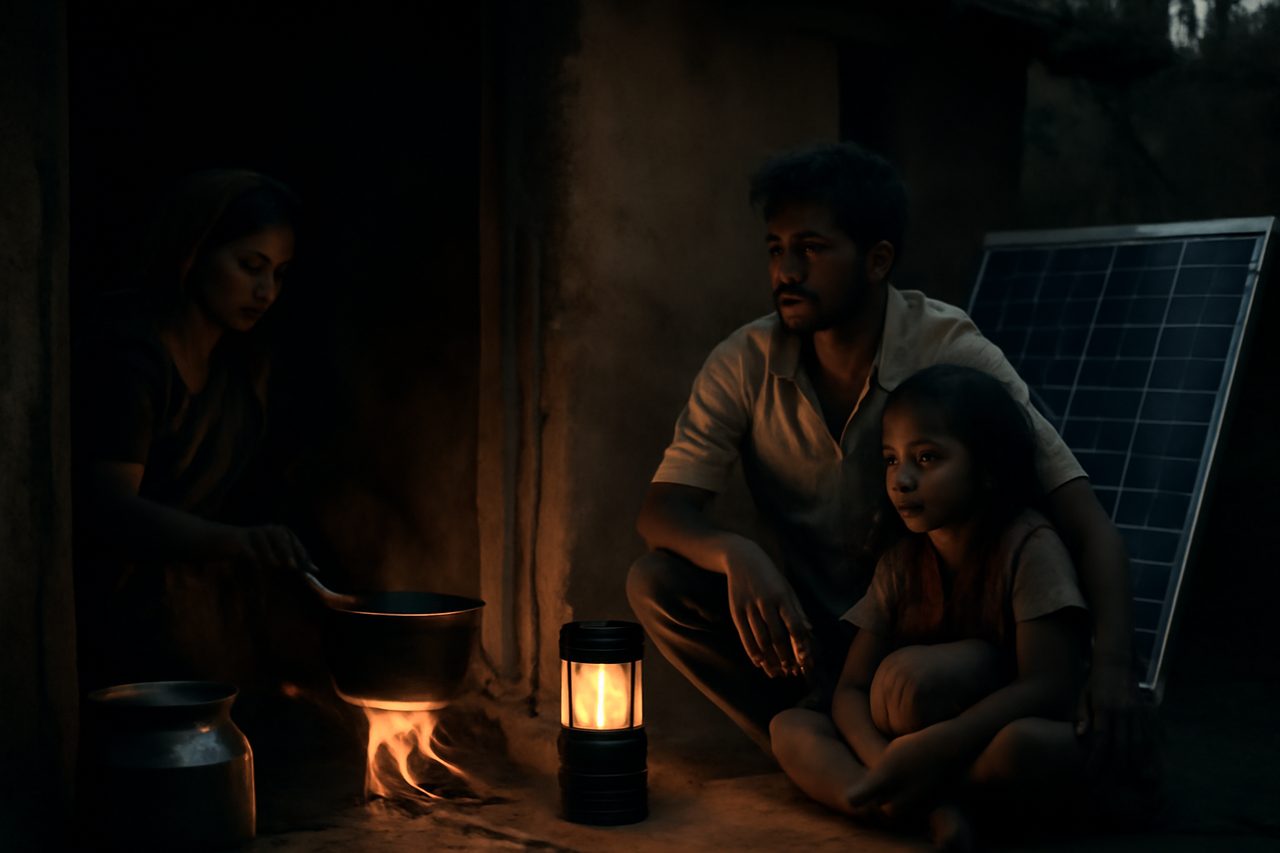
India’s NGO-led energy-access market is entering a more disciplined phase in 2026. The easy narratives around “last-mile impact” are no longer enough for CSR committees, development partners, district administrations, lenders or carbon-credit buyers. What is getting funded now are programmes that can demonstrate three things at the same time: measurable household energy outcomes, realistic unit economics, and operational delivery that survives beyond a one-time donation cycle.
For NGOs working in clean cooking, rural solar and community energy, the most underused strategy is aggregation. Instead of treating each district, block or village intervention as a standalone social project, NGOs can bundle demand, procurement, monitoring and revenue streams across geographies. That aggregation approach improves pricing, makes MRV more credible, reduces per-unit overheads, and creates a clearer pathway to blended finance through CSR, grants, carbon-linked revenues and outcome-based structures.
For Indian C&I consumers, RE developers, lenders, utilities and policymakers, this matters because the NGO energy-access segment is increasingly influencing rural demand creation, productive-load growth, carbon accounting, and the social licence for distributed-energy deployment. In many aspirational districts, the practical question is no longer whether energy-access interventions are needed; it is how to structure them so that they are technically reliable, financially resilient and auditable.
This article examines how aggregation can work in 2026 for NGO-led clean cooking and rural solar portfolios in India, with a focus on CSR design, tariff and cost benchmarks, carbon and impact MRV, and implementation choices that make projects bankable.
Why aggregation is the real financing lever in 2026
Single-village projects still attract attention, but they rarely attract durable financing. A rural solar programme of 200 home systems or a clean-cooking intervention covering 500 households typically suffers from high customer-acquisition costs, fragmented after-sales service, weak baseline data and poor negotiating power with equipment suppliers. The result is a portfolio that is socially meaningful but financially thin.
Aggregation changes this in four ways.
- It lowers hardware costs through pooled procurement.
- It spreads development and MRV costs across a larger base.
- It creates scale large enough for carbon and results-based financing to become viable.
- It improves standardisation in technology, training, spare parts and reporting.
In 2026, NGOs that aggregate 5,000 to 50,000 households across multiple districts are in a much stronger position than those pursuing isolated pilots. For example, procurement discounts for improved biomass cookstoves, electric induction bundles, solar DC livelihood kits or solar street-light packages can easily move by 8% to 18% once volumes cross state-level thresholds. For solar home systems and DC appliance bundles, BOS and logistics savings can be significant when installations are clustered block-wise instead of scattered across multiple states without service density.
Scale also matters for transaction costs. A serious MRV architecture for energy access now requires digital beneficiary mapping, baseline surveys, device-level tagging where feasible, usage verification, grievance records and periodic field audits. If an NGO spends Rs 18 lakh to Rs 35 lakh setting up an end-to-end data system and third-party validation workflow, that cost is prohibitive for a 1,000-household project but manageable for a 20,000-household portfolio.
This is one reason CSR teams in 2026 increasingly prefer multi-year, programmatic NGO platforms rather than fragmented one-off donations. A three-year portfolio with annual disbursement linked to verified milestones is easier to defend internally, easier to audit and more likely to produce lasting outcomes.
The strongest use cases: clean cooking plus rural solar, not one or the other
The biggest delivery mistake in energy access is to separate thermal energy poverty from electricity poverty. Rural households do not manage these as distinct categories. They manage a total energy budget across LPG, biomass, kerosene replacement, phone charging, lighting, fans, irrigation, sewing, small retail loads and seasonal livelihood activities.
That is why a bundled intervention is often more effective than a single-technology push.
In practical terms, the most financeable NGO portfolios in 2026 are built around combinations such as:
- Improved biomass or pellet cookstoves plus rooftop or DC solar lighting kits
- Electric cooking pilots in peri-urban or high-reliability feeder areas plus efficient appliances
- Solar-powered livelihood loads for women’s SHGs combined with clean-cooking access
- Community solar for health, education and productive use alongside household cooking transitions
Indicative market benchmarks in 2026 vary sharply by state and delivery model, but some working numbers are useful.
- Basic solar home lighting kits with battery and 2-4 light points: roughly Rs 8,000 to Rs 18,000 per household-equivalent package
- Higher-quality DC energy bundles with fan, mobile charging and appliance support: roughly Rs 18,000 to Rs 35,000
- Solar livelihood kits for sewing, retail refrigeration support, micro-enterprise or nano-processing: often Rs 35,000 to Rs 1.5 lakh per unit depending on load profile
- Improved biomass cookstoves: approximately Rs 2,000 to Rs 6,000 depending on design, durability and monitoring features
- Pellet or forced-draft clean cooking systems: approximately Rs 5,000 to Rs 12,000 excluding recurring fuel logistics
- Electric induction starter packages: approximately Rs 3,000 to Rs 8,000 per household before wiring upgrades, utensil replacement and any distribution-system strengthening
The financing implication is straightforward. A pure donation model works for low-cost dissemination, but longer-term adoption usually needs an economic stack. That stack may include CSR subsidy, beneficiary contribution, carbon-linked revenue, local entrepreneur service fees, and in some cases convergence with government schemes or district livelihoods budgets.
For rural solar, the useful comparison is not only with grid extension but with actual service quality. In many regions, nominal electrification does not guarantee dependable evening supply, voltage stability or productive-load support. A village may be grid-connected yet still rely on diesel, candles, battery swapping or suppressed demand. Therefore, NGO project design should benchmark against effective service delivered, not just connection status.
CSR structuring: what gets approved by boards and what gets rejected
Indian CSR capital remains one of the most important enablers of NGO energy-access projects, but approval standards are tightening. Corporate boards and CSR committees in 2026 want measurable social outcomes, low reputational risk, and clean separation between philanthropy and commercial benefit.
Programmes are more likely to secure support when they have the following features:
- Clear district and beneficiary targeting linked to health, livelihoods, women’s empowerment or tribal development
- Standardised budgets per household, institution or village cluster
- Milestone-based implementation plans over 24-36 months
- Third-party verification of installations and usage
- Defined asset-ownership and maintenance arrangements
- A pathway for post-grant sustainability beyond the first 12 months
Programmes are more likely to be rejected when they rely on vague impact claims, untested technologies, overestimated carbon revenues, or unclear O&M responsibilities.
For CSR-funded clean cooking and rural solar portfolios, one practical structure is a three-layer design.
- Layer 1: CSR grant covers programme setup, community mobilisation, training, and a portion of capex.
- Layer 2: Beneficiary or community contribution, often 5% to 20%, improves ownership and filters non-serious demand.
- Layer 3: Performance-linked revenue from carbon, service contracts, local enterprise margins, or institutional anchor loads supports ongoing operations.
This model is especially relevant in tribal districts, aspirational districts and geographies with weak formal credit access. It reduces free-distribution failures while keeping affordability within reach.
NGOs should also recognise that corporate donors are increasingly asking for alignment with recognised frameworks and domestic policy priorities, including SDG-linked reporting, just transition narratives, women-led livelihood enhancement, and climate-adaptation co-benefits. Programmes framed only as “technology donation” often lose out to those framed as measurable development infrastructure.
Carbon revenue is useful, but only if MRV is built from day one
Many energy-access projects in India still treat carbon revenue as an afterthought. In 2026, that is a costly error. Carbon-linked cash flows for clean cooking and rural solar can materially improve project viability, but only where baseline design, device traceability, usage estimation and leakage controls are credible.
The broad market reality is this: small, poorly documented projects do not command strong buyer confidence. Aggregated portfolios with disciplined data systems do.
For clean cooking, the critical MRV questions include:
- What traditional fuel was displaced, and in what quantity?
- What was the pre-project cooking behaviour by season, household size and income group?
- What is the actual usage rate of the improved device after 3, 6 and 12 months?
- Is stacking behaviour occurring, where households continue significant traditional fuel use?
- How are non-functional units identified and replaced?
For rural solar, the relevant questions are different:
- What baseline energy source is being displaced: kerosene, diesel, battery charging, unreliable grid consumption or unmet demand?
- Is generation measured directly or estimated by design assumptions?
- Are systems functioning at expected uptime levels?
- Are batteries being replaced within planned cycles?
- Are productive loads increasing household income or merely shifting existing consumption?
An NGO portfolio intending to monetise carbon or impact outcomes should budget for MRV from the start. As a working planning range, robust digital survey and monitoring costs can add 3% to 8% to programme cost depending on technology and geography. Third-party assurance and verification can add more. But this is usually still cheaper than losing future revenue because data quality is unfit for buyer due diligence.
There is also a policy interface to watch. India’s carbon-market architecture is still evolving, and voluntary buyer expectations remain high on transparency, additionality and permanence of outcomes. NGOs should avoid overcommitting projected revenue in early cash-flow models. A conservative underwriting approach is better: treat carbon-linked income as upside unless documentation, registration pathway and buyer engagement are already advanced.
Delivery models that actually work in the field
Technology selection is only half the challenge. The delivery model determines whether an NGO programme survives beyond inauguration.
In 2026, the more reliable delivery models tend to be:
- NGO as programme aggregator, with specialist EPC or product suppliers executing installations
- NGO plus local entrepreneur network for after-sales service and spare-part fulfilment
- Anchor-institution model where schools, PHCs, FPOs or women’s collectives support demand aggregation
- Cluster-based service territories that ensure technician density and manageable response times
The least reliable models are usually free-distribution approaches with no technician network, no inventory planning and no customer education.
For community and rural solar systems, service economics are often the deciding factor. A project can be technically sound but fail because the nearest trained technician is 70 km away and battery replacement lead time is three weeks. Likewise, clean-cooking programmes can show strong initial adoption but collapse if pellets are unavailable locally, if stoves are difficult to maintain, or if households were never trained on actual usage patterns.
A practical benchmark for village-cluster design is to ensure enough density so that one local service partner or technician can support 300 to 800 households or a defined bundle of community assets within a reasonable travel radius. This is not a universal number, but it helps prevent service fragmentation.
Where mini-grids or community solar assets are involved, NGOs also need to understand local tariff and collection realities. In many rural settings, sustainable tariffs for community energy remain highly context-specific, depending on load factor, anchor demand and subsidy structure. Institutional loads such as health centres, schools, drinking-water systems, telecom towers or rural enterprises can materially improve viability. Without anchor demand, household-only models often struggle unless grants absorb a substantial share of capex.
Policy and utility alignment: the missing piece in many NGO projects
NGO energy-access portfolios in India often underperform because they are designed as parallel systems rather than aligned systems. In 2026, alignment with DISCOM realities, state rural-development priorities and appliance-efficiency programmes is essential.
That does not mean every project needs formal utility integration. It means project designers must understand feeder reliability, subsidy landscapes, local electrification status, agricultural-load patterns, and whether the proposed solution complements or conflicts with state priorities.
Examples of useful alignment include:
- Prioritising electric-cooking pilots only in areas with adequate supply quality and household wiring readiness
- Using rural solar for resilience, productive use and quality-of-service improvement rather than duplicating soon-to-arrive infrastructure
- Linking women-led clean-cooking interventions with SHG federations and district livelihoods missions
- Coordinating with local administrations for beneficiary validation and grievance escalation
- Aligning community-energy assets with schools, health centres and drinking-water schemes already embedded in public service delivery
For policymakers and utilities, NGO-led portfolios can function as test beds for demand stimulation, appliance adoption and decentralised resilience. For RE developers and EPC firms, these programmes create a pipeline for distributed assets, service models and local capability building. For lenders and impact-oriented capital providers, well-aggregated NGO portfolios can generate future investable opportunities once grant-funded market creation reduces delivery risk.
What a bankable NGO energy-access portfolio should look like in 2026
A credible portfolio in today’s market should contain the following elements before major funding is raised:
- Geographic clustering strategy with district-level rationale
- Household and institutional demand segmentation
- Technology shortlist with vendor-quality criteria
- Full capex and lifecycle O&M budget
- Baseline survey methodology and digital data plan
- MRV protocol for energy, health, livelihood and emissions outcomes
- Asset-ownership and replacement policy
- Local service-network map and training plan
- Revenue stack showing CSR, grants, community contribution and conservative carbon assumptions
- Risk register covering adoption, fuel supply, battery replacement, service failure and policy changes
If these basics are in place, NGO programmes move from “good causes” to executable infrastructure interventions. That shift is important because the energy-access market in India is becoming more metrics-driven. Households need reliability. Corporate donors need auditable impact. Carbon buyers need defensible data. Utilities and policymakers need programmes that support, not distort, local energy systems.
The organisations that will succeed are not those with the most emotive storytelling, but those that can aggregate demand, standardise execution, document outcomes and build long-term service capacity.
For NGOs, corporates and partners working on clean cooking, rural solar, community energy and impact MRV, the next wave of value in 2026 lies in disciplined portfolio design rather than isolated pilots. Aggregation is the bridge between social intent and financial durability.
If your organisation is designing an NGO energy-access programme in India, contact Growthifye’s advisory desk for support on project structuring, vendor strategy, MRV design, CSR alignment, blended-finance planning and implementation support.
About the author

Chief Executive Officer, Growthifye — With over 23 years in management consulting, Sudarshan has taken businesses from concept to scale — building and scaling new-age digital and energy businesses.
- 23+ years in management consulting
- EY alumnus
- Led large-scale BESS programmes, capital raises and advisory mandates
Want this analysis applied to your project?
Talk to our team