Meter Data Management for Indian DISCOMs 2026: RDSS, AMI Scale and Loss ROI
By Sudarshan Karweer · sudarshan@growthifye.com · +91 84510 99371 (Call / WhatsApp) · 2026-09-08
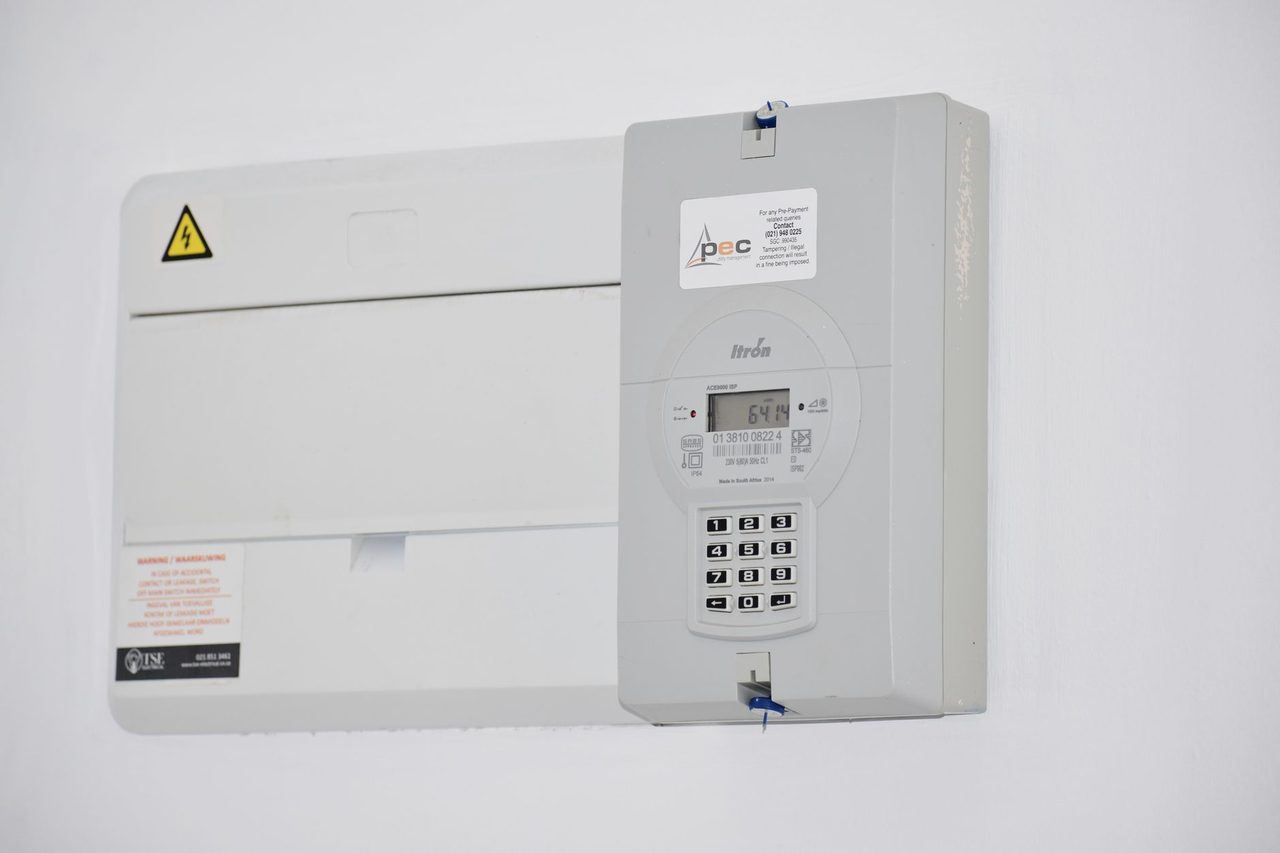
Photo: Akashni Weimers on Pexels
India’s smart metering debate in 2026 is no longer about whether AMI should scale. That question has largely been settled by RDSS targets, prepaid metering momentum, state utility tenders, and the need to tighten billing and collection performance. The harder question now is this: after deploying millions of smart meters, how does a DISCOM actually convert interval data, event logs, outage flags and tamper alerts into measurable financial and operational gains?
The answer sits in a layer that still gets less board-level attention than it deserves: Meter Data Management, or MDM.
For Indian DISCOMs, MDM is not just an IT repository between the head-end system and the billing application. It is the operational data engine that determines whether AMI becomes a revenue-improvement platform or remains a meter replacement programme. For C&I consumers, developers, lenders and policymakers, MDM quality increasingly influences billing accuracy, outage visibility, settlement confidence, and the bankability of utility digitalisation investments.
This article looks at why MDM is emerging as a priority topic for Indian utilities in 2026, how it fits into RDSS-era architectures, where the financial value comes from, and what execution pitfalls to avoid.
Why MDM matters more than meter rollout in 2026
A typical Indian AMI programme now produces huge data volumes. A 15-minute interval meter sends 96 consumption records per day, plus voltage data, power factor, outage-restoration events, tamper alarms, cover-open alerts, and communication diagnostics. Multiply that by 10 lakh, 50 lakh or 1 crore meters, and the operational issue is no longer meter procurement. It is data integrity at scale.
Without a robust MDM layer, DISCOMs face predictable problems:
- missing interval reads that distort billing and energy accounting
- duplicate records from communication retries or head-end replays
- inconsistent time stamps affecting time-of-day and demand calculations
- weak validation rules that allow bad data to enter billing systems
- poor linkage between meter events and field action workflows
- inability to reconcile feeder, DT and consumer-level energy balances
- limited integration with outage, collection, CRM and analytics platforms
These failures directly dilute AMI ROI. A utility may have 95% meter installation progress on paper but still struggle to improve collection efficiency or reduce AT&C losses if data cannot be trusted, normalised and operationalised.
MDM solves this by validating, estimating, editing, storing and distributing meter data in a controlled, auditable way. In Indian terms, it becomes the bridge between RDSS-funded field deployment and actual utility outcomes.
The 2026 Indian use case: beyond billing to loss and reliability analytics
In many early AMI programmes, MDM was viewed mainly as a billing enabler. That framing is now too narrow.
By 2026, the more mature Indian DISCOM use cases include:
- automated billing determinants for residential, commercial and industrial consumers
- prepaid balance and recharge processing support
- transformer-wise and feeder-wise energy balancing
- tamper, bypass and reverse-current analytics for revenue protection
- last-gasp and first-breath outage event analysis
- service quality monitoring through voltage and supply duration data
- consumer segmentation by load profile, seasonality and payment behaviour
- open-access and captive-consumer data confidence improvement
- rooftop solar prosumer accounting and net-export validation
- support for demand response and future tariff innovation
This has important implications for utilities and regulators. If interval data quality improves, DISCOMs can get much more precise about where technical loss ends and commercial loss begins. That matters because in several urban circles, aggregate AT&C loss may already be in the low-to-mid teens, and incremental reduction now depends on sharper analytics rather than broad-brush enforcement.
For high-loss circles, MDM supports prioritisation. A utility can isolate feeders where billed energy as a percentage of input remains abnormally low despite high smart meter coverage, then drill down to meter communication gaps, transformer overloading, theft patterns or billing exceptions.
For C&I consumers, better MDM means fewer billing disputes and more reliable load data for tariff optimisation. In states where demand charges for HT consumers can range from roughly Rs 250/kVA/month to over Rs 500/kVA/month depending on category and utility, errors in maximum demand computation or time-stamped interval data can have material cost implications.
Where MDM sits in the digital utility architecture
A clean utility architecture in 2026 typically includes the following layers:
- field devices: smart meters, DT meters, feeder meters, communication modules
- communication network: RF mesh, cellular, NB-IoT, fibre or hybrid
- head-end system: command, control and meter communication management
- MDM platform: validation, estimation, editing, storage, event processing, data publishing
- enterprise integrations: billing, CRM, outage management, GIS, ERP, collection systems
- analytics and operations: loss analytics, consumer indexing, reliability analytics, dashboards
The common mistake is to assume the head-end system can do enough of what MDM should do. It usually cannot, at least not at utility scale over multiple years and multiple vendor ecosystems.
Head-end platforms are optimised for communication and command functions. MDM is optimised for data governance and enterprise use. The distinction matters even more when DISCOMs inherit mixed AMI environments through phased tenders, acquisitions, franchise areas, or meter-vendor changes.
This is where Vendor-neutral specifications become valuable. Indian utilities that define meter-data models, APIs, validation rules, event taxonomy, cyber controls and integration standards clearly at procurement stage avoid being locked into a single vendor logic for core utility data. That matters for long-asset-life institutions like DISCOMs, where IT and OT systems may need to remain interoperable for 10-15 years.
How MDM creates measurable ROI for Indian DISCOMs
The strongest argument for MDM is financial, not architectural.
Here are the main value levers in 2026.
1. Billing accuracy and billing-cycle compression
If actual reads improve and exceptions reduce, DISCOMs can lower provisional billing and manual intervention. Even a 1-2 percentage point improvement in billable energy capture across a large urban consumer base can produce meaningful annual revenue impact.
For example, a utility segment selling 10,000 MU annually at an average realised billing rate of Rs 6.0/kWh would see about Rs 60 crore of gross annual value from a 1% uplift in accurately billed energy. Not all of this is attributable to MDM alone, but MDM is often the control layer that makes the uplift sustainable.
2. AT&C loss reduction through better exception targeting
Field enforcement is expensive. Sending teams blindly after generic tamper alerts produces low hit rates. MDM can rank alerts by persistence, load behaviour deviation, phase mismatch, zero-consumption anomalies and local network context.
If a DISCOM improves field recovery productivity by focusing only on high-confidence cases, both OPEX and revenue outcomes improve. In circles with AT&C losses above 20%, this can materially accelerate RDSS-linked performance gains.
3. Reduced collection leakage in prepaid and remote disconnection workflows
Prepaid smart metering depends on timely and accurate data exchange between meter, head-end, MDM and vending/billing systems. Data delays or reconciliation mismatches undermine consumer trust and increase complaints. A mature MDM layer helps maintain transaction consistency and event trails, especially where remote connect-disconnect and recharge validation must be auditable.
4. Better outage and restoration intelligence
AMI cannot replace SCADA for network operations, but meter event data is increasingly useful in LV outage visibility. MDM can aggregate outage events by transformer pocket, identify restoration delays, and improve customer communication. When combined with SCADA / ADMS integration, utilities can correlate MV and LV disturbances more effectively.
5. Lower manual OPEX and dispute resolution costs
Meter-reading visits, billing corrections, complaint handling and historical data retrieval all cost money. MDM reduces friction by preserving auditable interval and event histories. For regulators and ombudsman cases, strong data lineage is now a governance asset.
Key implementation issues Indian utilities should address early
Most MDM failures are not software failures. They are programme-design failures.
Consumer indexing and asset hierarchy
If meter-to-consumer, meter-to-DT and DT-to-feeder mappings are weak, even a good MDM platform cannot produce reliable loss analytics. Utilities should treat consumer indexing and network model alignment as prerequisites, not parallel afterthoughts.
Data quality rules tuned to Indian conditions
Validation rules must reflect Indian operating realities:
- voltage fluctuation bands by geography and consumer category
- communication blackout tolerance in weak-network areas
- transformer outage patterns during seasonal peaks
- prepaid transaction behaviours
- net-metering and prosumer bidirectional flows
- demand reset and TOD structures used by state tariffs
Imported default rule libraries often need localisation.
Integration with billing and collections
A technically successful MDM that does not reliably feed the billing engine is still a business failure. Utilities should define cutover logic, exception handling, retry protocols and reconciliation reports clearly before go-live.
Cybersecurity and role-based access
Meter data is commercially sensitive, and remote-control pathways are operationally sensitive. As Indian utilities expand digital control surfaces, access governance, encryption, logging and incident response become core design requirements. This is especially important when AMI, outage analytics and consumer apps are converging on shared data platforms.
Performance testing at real scale
A pilot with 50,000 meters proves little for a utility targeting 50 lakh meters. Database performance, event-ingest rates, estimation jobs, billing-cycle peaks and API response times should all be tested for realistic scale. This is where disciplined FAT to SAT execution separates successful rollouts from paper compliance.
MDM and RDSS: what lenders, policymakers and developers should watch
RDSS has pushed utilities toward measurable digital outcomes rather than isolated hardware purchases. In that context, MDM deserves much closer scrutiny from financing institutions and public stakeholders.
Lenders evaluating utility modernisation programmes should ask:
- is MDM included as a core system or treated as an optional afterthought?
- are data ownership and interoperability clauses clearly drafted?
- how will benefits be measured: billing uplift, collection improvement, outage metrics or loss reduction?
- is there an integration roadmap with GIS, CRM, outage and analytics tools?
- does the utility have internal data-governance capacity after commissioning?
For policymakers, the issue is similar. Smart metering penetration percentages are useful but incomplete. More meaningful 2026 performance questions are:
- what share of consumers are billed from validated interval or daily reads?
- what is the billing exception rate after AMI migration?
- how many tamper alerts convert into verified field cases?
- has feeder-to-DT-to-consumer energy accounting improved?
- have complaint volumes for billing disputes declined?
For renewable developers and open-access market participants, DISCOM data maturity increasingly affects practical integration. Better meter data supports cleaner import-export accounting, more confidence in scheduling and settlement interfaces, and smoother handling of prosumer and behind-the-meter assets.
As distributed energy grows, the line between metering infrastructure and broader DER management systems will become thinner. MDM is not the same thing as DER orchestration, but high-quality interval data is foundational for future flexibility markets, EV charging management, distributed storage dispatch and local network hosting-capacity analytics.
What a pragmatic 12- to 18-month roadmap looks like
For Indian DISCOMs that already have AMI underway but weak data outcomes, a realistic roadmap is often more effective than a giant reset.
A practical sequence can look like this:
- assess current head-end, billing and data-flow architecture
- define source-of-truth ownership for meter, consumer and network master data
- establish MDM functional requirements and validation rule sets
- clean consumer indexing and feeder/DT mapping for priority circles
- integrate billing, CRM and outage-related workflows first
- create exception dashboards for revenue, operations and IT teams separately
- run circle-wise benefit tracking against baseline KPIs
- expand to advanced use cases such as outage clustering, load research and prosumer analytics
The best programmes are cross-functional. IT cannot own MDM alone. Commercial, metering, operations, finance and regulatory teams all need aligned KPIs.
That is also why advisory and systems design support matter. Utilities often need help with specification drafting, integration sequencing, acceptance criteria, cybersecurity design and benefit measurement, especially in multi-vendor environments.
The bottom line for 2026
India’s utility digitalisation story is entering a more serious phase. The easy metric was meters installed. The harder metric is value realised.
Meter Data Management is central to that transition. It turns AMI from device deployment into an enterprise capability. It improves billing confidence, sharpens loss analytics, strengthens outage visibility and builds the data foundation for more advanced utility automation.
For DISCOMs under pressure to deliver RDSS outcomes, for lenders assessing digital capex credibility, and for C&I consumers who need accurate, dispute-free electricity data, MDM is no longer back-office plumbing. It is a strategic utility platform.
Growthifye supports utilities and energy-sector stakeholders with practical digitalisation strategy, Vendor-neutral specifications, SCADA / ADMS integration planning, and FAT to SAT support across complex power-sector programmes. To discuss MDM architecture, AMI data strategy or RDSS-aligned utility automation, contact Growthifye’s advisory desk.
Explore Growthifye's related capabilities
This analysis connects directly to our advisory practice: IEC 61850 substation automation · FLISR & self-healing networks · DER management systems · SCADA / ADMS integration.
About the author

Chief Executive Officer, Growthifye — With over 23 years in management consulting, Sudarshan has taken businesses from concept to scale — building and scaling new-age digital and energy businesses.
- 23+ years in management consulting
- EY alumnus
- Led large-scale BESS programmes, capital raises and advisory mandates
Want this analysis applied to your project?
Talk to our team