Meter Data Management for Indian DISCOMs 2026: AMI ROI, RDSS and Loss Reduction
By Sudarshan Karweer · sudarshan@growthifye.com · +91 84510 99371 (Call / WhatsApp) · 2026-08-28

India’s smart-metering conversation has matured in 2026. The question for most DISCOMs is no longer whether AMI rollout will happen under RDSS, but whether the data coming from millions of endpoints will be converted into measurable operating and financial gains. That conversion layer is meter data management, or MDM.
For Indian utilities, MDM is not just an IT system sitting between head-end systems and billing. It is the operating backbone that determines whether interval data, event logs, tamper alerts, voltage profiles, outage flags and remote connect-disconnect commands lead to better billing accuracy, lower AT&C losses, faster complaint resolution and stronger lender confidence. Without a fit-for-purpose MDM stack, AMI can become an expensive data exhaust. With it, smart metering becomes a utility reform instrument.
This article looks at the 2026 Indian business case for MDM in the context of RDSS, prepaid and postpaid smart metering, urban-rural feeder digitisation, and rising expectations from regulators, lenders and large consumers.
Why MDM is now a board-level issue for Indian DISCOMs
India’s DISCOMs are under pressure on three fronts in 2026.
- AT&C loss reduction targets remain central to utility turnaround plans.
- Billing and collection efficiency is under scrutiny from state governments, regulators and funding agencies.
- Smart-metering investments under RDSS require visible outcomes, not just installation counts.
In many states, approved smart-meter programs now cover residential, commercial, industrial, government and feeder/DT metering at significant scale. A utility with 10 lakh to 50 lakh smart meters can easily generate billions of records per month when 15-minute interval data, load survey reads, event logs and voltage-quality data are included. If data quality is poor, consumer indexing is incomplete, and billing integration is weak, the utility does not get the expected benefits.
This is why MDM has become a board-level issue. It directly affects four KPIs that matter in India:
- Billing efficiency
- Collection efficiency
- AT&C loss visibility by feeder, DT and consumer segment
- Reliability and service metrics linked to outage detection and restoration workflows
For utilities serving high-paying C&I consumers, the stakes are higher. Even small metering or billing errors can trigger disputes over demand charges, time-of-day energy charges, power factor penalties, open-access accounting and rooftop solar settlement. For lenders and investors evaluating distribution reform or utility-facing digital infrastructure, MDM maturity is a practical indicator of execution capability.
What MDM actually does in an Indian AMI stack
At a technical level, MDM sits between upstream data collection systems and downstream enterprise applications. In practice, its role is broader.
A utility-grade MDM typically performs:
- Data ingestion from AMI head-end systems and communication platforms
- VEE: validation, estimation and editing of meter data
- Storage and management of interval, register, event and alarm data
- Consumer and asset mapping to feeders, DTs and substations
- Billing determinants calculation
- Tamper and anomaly analytics
- Exception handling and workflow management
- Data exchange with billing, CIS, OMS, GIS, SCADA and analytics systems
In India, the VEE layer is particularly critical. Communication gaps are still common in dense urban pockets, basements, weak RF zones, and remote rural feeders. Meters may miss reads because of telecom outages, device firmware issues, HES congestion or transformer-side power-quality disturbances. If the utility lacks robust estimation rules and auditable exception workflows, billing delays and consumer grievances increase.
A good MDM platform also normalises meter data from multiple OEMs and communication types. This matters because many DISCOMs have mixed estates across phases, vendors, meter generations and implementation packages. Vendor lock-in at the data layer can complicate future procurement, analytics and integration. That is where Vendor-neutral specifications become commercially important during system design and RFP preparation.
The strongest MDM use case: feeder-to-consumer energy accounting
The clearest financial use case for MDM in India is not fancy analytics. It is granular energy accounting.
When feeder meters, distribution transformer meters and consumer smart meters are mapped correctly, utilities can move from monthly top-down loss estimates to near-real-time segment analysis. This enables a practical answer to a recurring DISCOM problem: where exactly are losses rising, and are they technical, commercial or data-related?
A robust MDM-supported energy accounting setup allows the utility to:
- Compare feeder input energy with billed consumer energy at daily or weekly resolution
- Identify DTs with abnormal consumption patterns, persistent imbalance or high unaccounted energy
- Detect sudden loss spikes after new connections, seasonal agricultural load changes or network reconfiguration
- Separate probable theft, defective metering, billing exceptions and asset mapping errors
- Prioritise enforcement and field inspection budgets
For example, if a mixed urban feeder shows input energy of 1,00,000 kWh over a period and mapped downstream billed energy plus approved technical loss benchmarks explain only 78,000 kWh, the utility has a 22 percent gap to investigate. MDM can narrow that gap to specific DT clusters, high-consumption pockets or meters with repeated tamper events, neutral disturbance, missing interval data or reverse current patterns.
This is far more actionable than traditional monthly loss reporting.
In Indian conditions, even a 1 to 3 percentage-point reduction in AT&C losses over a large urban circle can translate into substantial annual value. The exact rupee impact depends on average cost of supply, average billing rate and collection efficiency, but for a utility serving high-load commercial and industrial clusters, the value can run into tens of crores per year.
Billing accuracy, prepaid operations and C&I dispute reduction
A second major 2026 driver is billing integrity.
Smart meters do not automatically guarantee clean billing. The chain includes meter configuration, time synchronisation, communication uptime, tariff engine alignment, netting logic, event handling and data transfer to the billing application. MDM is the control point where these inconsistencies can be detected before they become revenue leakage or consumer disputes.
This is especially relevant in the Indian C&I segment, where tariffs can include:
- Time-of-day or time-of-use energy charges
- n- Maximum demand charges
- Power factor incentives or penalties
- Voltage-wise tariff treatment
- Seasonal tariff blocks in some jurisdictions
- Separate handling of solar net-metering or gross-metering consumers
A 15-minute interval misalignment or clock drift can alter billed demand and TOD slot allocation. If this occurs across a portfolio of HT consumers, the utility faces disputes, delayed payment and reputational risk. A mature MDM validates meter time, flags interval gaps, reconstructs billing determinants where policy permits, and maintains audit trails.
For prepaid smart metering, the commercial role is even more direct. Token recharge, balance updates, low-balance alerts, disconnection logic, emergency credit and reconnection workflows all depend on stable data handling and low-latency integration between AMI, MDM and consumer systems. Poor exception handling in prepaid environments quickly becomes a political issue, especially for government consumers, urban low-income users and public-service connections.
Utilities that have improved MDM discipline typically report benefits such as:
- Reduced manual billing exceptions
- Faster billing cycle completion
- Lower complaint volumes linked to wrong reads or estimated bills
- Better realization from prepaid segments
- Improved collection predictability
MDM as an operations tool, not only a billing tool
One mistake seen in some projects is treating MDM as a pure revenue application. In reality, it is also an operations system.
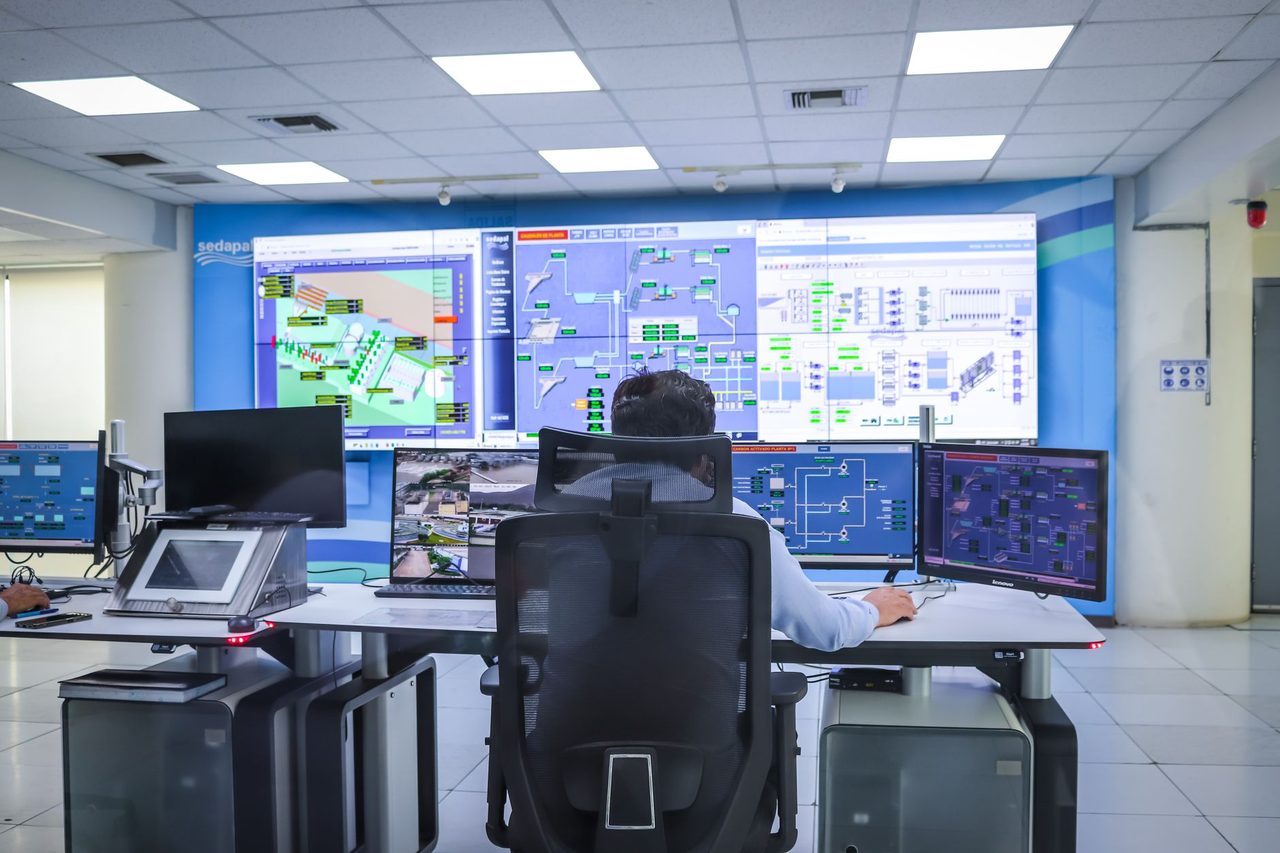
Last-gasp and first-breath signals from smart meters can support outage detection when processed at scale. Voltage sag, swell and missing-phase events can reveal local power-quality issues before complaints accumulate. Repeated neutral disturbance or terminal-cover events can point to tampering or unsafe installations. When this data is integrated with network operations platforms, utilities gain operational intelligence beyond billing.
This is where coordination with SCADA / ADMS integration becomes valuable. MDM-derived edge events are not a substitute for primary network automation, but they can enrich visibility in low-voltage networks and consumer endpoints where SCADA coverage is limited. For high-loss urban areas, combining meter events with feeder status and outage management workflows can reduce fault-location time and improve crew dispatch prioritisation.
Similarly, as rooftop solar, battery systems, EV charging and behind-the-meter flexibility increase, meter data becomes a foundational input for DER management systems. Even before full DER orchestration becomes common in India, DISCOMs need interval consumption and export visibility to plan transformer loading, net-load behaviour and tariff design.
In short, MDM is one of the few utility platforms that creates value simultaneously for revenue, loss reduction, outage operations, planning and consumer service.
What a realistic 2026 ROI case looks like
Indian utilities and financiers should avoid simplistic payback claims. MDM ROI depends on baseline process maturity, network mix, consumer segmentation, communication performance and the quality of system integration.
Still, a realistic ROI framework can be built around the following value buckets:
- Reduction in unbilled or under-billed consumption
- Faster bill issuance and reduced billing-cycle slippage
- Higher collection rates in prepaid or remote disconnection-enabled segments
- Lower field visit costs for meter reading, reconnection and complaint investigation
- AT&C loss reduction through targeted enforcement and energy accounting
- Reduced HT billing disputes and associated collection delays
- Better outage handling and lower complaint-management costs
Suppose a DISCOM has 20 lakh smart-metered consumers, with average annual billed revenue of Rs 6,000 crore. If MDM-led process improvements help recover even 0.5 percent through billing corrections, exception reduction and reduced leakage, that alone is Rs 30 crore annually. If targeted analytics contribute another 1 percentage-point AT&C loss improvement in selected circles, the aggregate impact can be materially higher.
Capex and opex vary widely depending on architecture, data retention, cloud strategy, cybersecurity design, redundancy, integration scope and analytics depth. However, the financial discussion should not focus only on software cost per meter. The right lens is avoided revenue leakage, improved working capital and sustained process control.
For lenders, one of the strongest signals is whether the utility has measurable KPI governance around MDM outputs, not merely system go-live milestones.
Common failure points in Indian AMI-MDM programs
Several Indian programs still underperform for reasons that are mostly avoidable.
- Incomplete consumer indexing and weak GIS linkage
- Poor mapping of consumers to DTs and feeders
- Multiple data silos across HES, billing, CIS and analytics
- RFPs that define installation volumes but not data quality KPIs
- Weak VEE rules and inadequate exception workflow design
- Limited interoperability across meter vendors and system integrators
- Inadequate cybersecurity and role-based access design
- No clear ownership between IT, metering, commercial and operations teams
Another recurring issue is acceptance testing. Utilities often spend months debating whether the platform is “working” because use cases and acceptance criteria were not defined in operational terms. FAT to SAT discipline is essential here. Factory acceptance should validate business rules, integrations, tariffs, event handling and performance loads. Site acceptance should test real-field communication conditions, billing-cycle behaviour, outage-event flows, user roles and reporting outputs across representative circles.
For multi-vendor estates, interoperability testing is non-negotiable. If one meter OEM sends event codes differently, or one HES package handles retry logic differently, the MDM layer must standardise behavior. Otherwise, analytics outputs become unreliable and field teams lose trust.
How DISCOMs, developers and C&I consumers should think about MDM now
For DISCOMs, the priority is to stop viewing MDM as a compliance IT item and treat it as a commercial-control platform. Procurement should specify business outcomes such as billing exception rates, data availability thresholds, VEE performance, feeder/DT mapping coverage, tamper case workflow closure and integration readiness with operational systems.
For state policymakers, smart-meter progress should be measured not only by installation counts but also by:
- Percentage of meters delivering usable interval data
- Billing generated from validated AMI reads
- Share of consumers mapped to feeder and DT hierarchy
- Reduction in manual exceptions
- Loss reduction attributable to analytics-led intervention
For RE developers and distributed energy players, DISCOM MDM maturity increasingly affects project execution. Net-metering settlements, behind-the-meter solar visibility, export measurement, and future flexibility programs depend on clean meter data. As utilities move toward more granular demand management and edge visibility, developers will benefit from stronger utility data architecture.
For C&I consumers, especially those with rooftop solar, open access, multiple meters or demand-sensitive tariffs, MDM maturity at the serving utility can reduce disputes and improve transparency. Better interval-data handling also creates opportunities for consumption optimisation, demand control and tariff verification.
In 2026, the most successful utilities will be the ones that connect AMI infrastructure to a disciplined data and operations model. MDM is that model’s centre of gravity. It turns meter reads into cash flow, exception reports into field action, and interval data into planning insight.
The core lesson is straightforward: the business case for smart metering in India will be won or lost in the data layer. Utilities that invest in fit-for-purpose architecture, process ownership, interoperability and measurable operational KPIs will extract value. Those that focus only on installation numbers will continue to struggle with the same old commercial and service problems, just at digital scale.
If your organisation is evaluating AMI architecture, RDSS-aligned utility digitalisation, data integration or loss-reduction analytics, contact Growthifye’s advisory desk. Our team supports utilities, developers and investors with practical strategy, Vendor-neutral specifications and implementation oversight.
Explore Growthifye's related capabilities
This analysis connects directly to our advisory practice: IEC 61850 substation automation · FLISR & self-healing networks · DER management systems · SCADA / ADMS integration.
About the author

Chief Executive Officer, Growthifye — With over 23 years in management consulting, Sudarshan has taken businesses from concept to scale — building and scaling new-age digital and energy businesses.
- 23+ years in management consulting
- EY alumnus
- Led large-scale BESS programmes, capital raises and advisory mandates
Want this analysis applied to your project?
Talk to our team