MDMS for Indian DISCOMs in 2026: Turning Smart Meter Data into Loss Reduction
By Sudarshan Karweer · sudarshan@growthifye.com · +91 84510 99371 (Call / WhatsApp) · 2026-08-28

India’s smart metering discussion often stops at meter procurement, communication technology and installation targets. In practice, the larger value sits one layer above the field device: the meter data management system, or MDMS. In 2026, as RDSS-linked AMI roll-outs expand across states and utilities move from pilot to scale, the quality of meter data operations is becoming the difference between a dashboard project and a real AT&C loss reduction programme.
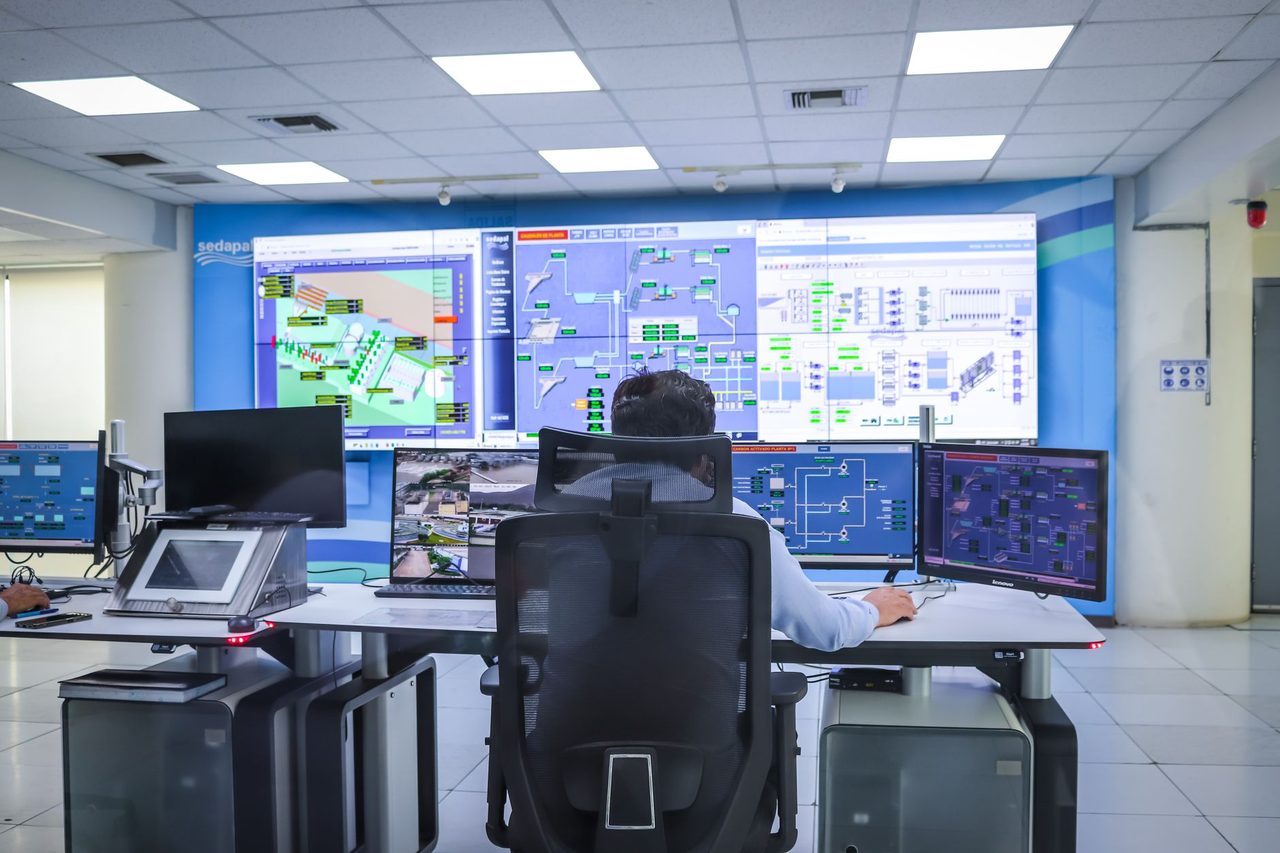
For Indian DISCOMs, AMI creates interval data, event logs, tamper alarms, outage notifications, voltage quality information and remote connect-disconnect capability. But without a disciplined MDMS layer, this information remains fragmented across HES, billing, CRM, outage systems, collection systems and analytics tools. That fragmentation shows up in familiar utility pain points: missing bills, delayed bills, disputed consumption, weak theft case quality, poor feeder energy accounting and slow complaint resolution.
This article looks at MDMS as a utility operations and loss-reduction platform rather than only an IT application. The focus is on what Indian stakeholders should care about in 2026: how MDMS improves billing quality, supports AT&C reduction, integrates with RDSS smart metering programmes, and helps lenders and policymakers assess whether a digitalisation plan is bankable and scalable.
Why MDMS matters now in India’s 2026 utility context
India’s power distribution sector in 2026 is under pressure from three sides at once.
- RDSS implementation timelines are forcing utilities to industrialise AMI operations, not just install endpoints.
- State regulators continue to scrutinise AT&C losses, ACS-ARR gaps, billing efficiency and collection performance.
- Consumers, especially urban C&I consumers, expect fewer billing errors, faster complaint closure and better outage communication.
Many utilities have already learned the first lesson of AMI at scale: head-end connectivity is not the same as business value. A utility may read 85% to 95% of meters on a daily basis and still struggle with billing exceptions, duplicate consumers, mis-mapped transformers and weak energy accounting. The missing layer is usually data validation, estimation, editing workflows, event correlation and cross-system reconciliation, all of which sit inside or around a robust MDMS.
For policymakers and lenders, MDMS is equally important because it determines whether capital spent on smart metering actually converts into measurable outcomes. If a DISCOM claims a 3% to 6% improvement in billing efficiency, a 15% to 25% reduction in manual meter-reading cost, or better theft detection hit rates, those outcomes must be supported by an auditable data architecture. That architecture starts with meter data governance.
What an MDMS actually does beyond storing meter reads
A weak MDMS implementation is treated as a repository. A strong one is treated as a utility control layer for commercial operations.
At a minimum, an MDMS in the Indian DISCOM context should perform the following functions:
- Ingest interval data, billing reads, load survey data and events from multiple HES platforms
- Validate, estimate and edit missing or suspicious data
- Create a single usable source for billing determinants
- Reconcile consumer, feeder, DT and meter hierarchies
- Support tamper and theft analytics using event patterns
- Feed OMS, CRM, billing and analytics systems with standardised data
- Maintain audit trails for disputes, adjustments and regulatory review
- Enable dashboarding on billing efficiency, meter health and communication performance
The practical importance of this is easy to see. Suppose a DISCOM has 20 lakh smart meters with a nominal 92% daily read success rate. That still implies 1.6 lakh meters with no valid daily read on any given day. If the utility lacks strong VEE logic, exception handling and route-cause analysis, these gaps accumulate into billing delays, estimated consumption, consumer disputes and reduced confidence in the AMI programme.
MDMS also helps separate communication issues from meter issues from consumer-level abnormalities. A voltage outage event, a communication outage, a persistent zero-consumption profile, and a terminal-cover tamper are very different operational cases. Without proper data classification and workflows, field teams waste truck rolls and revenue teams pursue weak cases.
The direct link between MDMS and AT&C loss reduction
AT&C loss reduction is often discussed through feeder segregation, HVDS, aerial bunched cable, feeder metering or smart prepaid metering. All of those matter. But at the consumer and distribution-transformer level, loss reduction increasingly depends on data granularity and actionability.
MDMS contributes to AT&C reduction in five concrete ways.
First, it improves billing accuracy and timeliness. If billing determinants come from validated remote reads instead of manual processes, billing efficiency rises. Even a 2% to 4% improvement in billed energy can materially affect a high-loss urban division or peri-urban circle.
Second, it improves collection discipline through better exception handling. Consumers receiving accurate, on-time bills with interval consumption visibility are easier to engage on arrears and payment behaviour. This is especially relevant where prepaid or hybrid postpaid-prepaid smart metering models are being expanded.
Third, it sharpens theft analytics. Event sequences such as neutral disturbance, magnetic influence, current reversal, prolonged zero consumption with live voltage, repeated cover-open alarms, or bypass signatures become more useful when correlated with load patterns, feeder loading and consumer category. A raw alarm is not a theft case; a validated pattern is.
Fourth, it enables transformer-level and feeder-level energy accounting. If consumer meters, DT meters and feeder meters are properly mapped and time-synchronised, utilities can isolate technical versus commercial loss pockets much faster. A 5 MVA urban feeder with 11 distribution transformers and 2,400 consumers can be broken into actionable zones rather than treated as one opaque loss number.
Fifth, it supports service quality improvement. Outage and restoration data from AMI can reduce complaint handling time and improve outage verification. That matters because better service quality supports payment discipline, especially among paying C&I and residential consumers who are less tolerant of estimated billing and uncertain restoration information.
In Indian conditions, utilities that use AMI only for billing often leave 30% to 50% of the value untapped. The larger gains come when MDMS supports revenue protection, consumer service, outage operations and network planning together.
Design choices that make or break MDMS programmes
Several DISCOMs are now confronting the second-generation problem of AMI: they procured components, but not operating architecture. In 2026, the most important design choices are not cosmetic dashboard features. They are structural.
The first design choice is whether the utility wants a multi-vendor, scalable architecture. Many Indian DISCOMs will end up with multiple meter OEMs, communication technologies and systems integrators over time. An MDMS should therefore be able to absorb heterogeneous data sources and avoid locking the utility into one proprietary expansion path. This is where Vendor-neutral specifications matter in tendering and system design.
The second choice is data model discipline. Utilities frequently struggle because feeder, DT and consumer hierarchies are inconsistent across GIS, billing and AMI systems. If the consumer indexing is weak, analytics outputs will also be weak. A technically sound MDMS cannot compensate for poor asset-consumer mapping forever.
The third choice is integration depth. The highest-value use cases require MDMS to exchange data with billing, CRM, OMS, GIS, payment systems and utility analytics platforms. Where the utility has substation and field automation ambitions, the roadmap should also consider SCADA / ADMS integration so that outage signals, voltage quality and field operations can eventually align.
The fourth choice is workflow ownership. Who resolves data exceptions: the AMI vendor, IT cell, meter operations team, billing team or circle office? Many projects underperform because there is no utility-side operating model for exception queues, SLA tracking and field follow-up.
The fifth choice is commissioning discipline. For AMI and MDMS, project success is often lost between FAT and field reality. Utilities should insist on structured FAT to SAT processes, sample-based validation of meter-event logic, role-based user acceptance and cutover planning before billing dependence increases.
Key use cases for C&I consumers, developers and lenders
Although MDMS is usually seen as a DISCOM system, its performance affects external stakeholders too.
For C&I consumers, better MDMS operations mean fewer billing disputes, more transparent load profiles and stronger support for demand-side decisions. Large consumers evaluating open access, captive, group captive or rooftop solar often need interval consumption history to optimise contract demand, banking assumptions and time-of-day economics. Where tariffs vary sharply by consumer category and state, good interval data can influence crores of rupees in annual power cost decisions.
For example, a medium-sized industrial consumer with 3 MW to 8 MW demand may use 15-minute interval data to identify peak demand spikes, low-load periods and process scheduling opportunities. In states with meaningful peak-hour differentials or demand penalties, that can reduce avoidable network and energy charges. If utility data is inconsistent, the consumer’s planning quality drops.
For renewable-energy developers, especially those evaluating behind-the-meter solar, storage or flexible loads, reliable interval demand data reduces sizing errors. A poor quality baseline can distort battery duration assumptions, inverter loading strategy or savings estimates under open access and net/gross metering structures.
For lenders, MDMS quality is a hidden indicator of utility modernisation. A DISCOM with strong data lineage, auditable billing determinants and transformer-level loss visibility is easier to underwrite than one relying on manual reconciliation and fragmented reports. Digital maturity increasingly affects how investors judge payment discipline, subsidy true-up reliability and operational transparency.
Implementation economics: what returns are realistic in 2026
Utilities should avoid exaggerated software ROI claims. The better approach is to link MDMS benefits to measurable utility KPIs.
Typical benefit buckets include:
- Improvement in billing efficiency through higher valid-read availability
- Reduction in manual meter reading and bill distribution costs
- Lower billing complaint volume and faster dispute resolution
- Better theft detection productivity per field inspection
- Better DT and feeder energy accounting coverage
- Reduced revenue leakage from meter malfunction or exception backlog
- Improved outage visibility and complaint handling
In Indian deployments, the scale of benefit depends on starting conditions. A high-loss urban division with poor manual reading quality may see fast gains from AMI plus MDMS, while a relatively better-run urban utility may see more value in analytics precision and consumer service. As a broad 2026 planning range, utilities often target:
- 1.5% to 4% improvement in billing efficiency over the first 12 to 24 months
- 10% to 30% reduction in field meter-reading related operational effort
- 20% to 40% improvement in tamper-case prioritisation quality versus alarm-only approaches
- Faster monthly billing cycle closure by several days
- Meaningful reduction in unbilled or disputed consumption for selected circles
The commercial value can be substantial. For a DISCOM billing 10,000 MU annually at an average realised revenue of Rs 6.0 to Rs 7.0 per kWh, even a 1% improvement in billed and collected energy quality represents a material revenue effect. The exact benefit depends on subsidy flows, category mix, collection discipline and technical loss structure, but the directional case is clear: once AMI is in place, data operations determine revenue conversion.
A practical roadmap for Indian DISCOMs
DISCOMs planning or scaling MDMS in 2026 should sequence the programme pragmatically.
Start with data governance and source-system mapping. Meter, consumer, feeder and DT master data quality should be assessed before analytics promises are made.
Then define high-value use cases, not generic software modules. Billing determinant quality, prepaid support, theft analytics, DT energy accounting, outage verification and consumer service are better anchors than broad digital-transformation language.
Next, set measurable operational KPIs:
- Daily read success by meter cohort
- Valid billing read percentage
- Exception backlog ageing
- Consumer hierarchy mapping completeness
- Tamper-to-inspection conversion rate
- DT-wise energy accounting availability
- Billing complaint closure time
Then design integration carefully. Utilities with future automation ambitions should ensure the MDMS architecture can align with wider digital utility layers, including DER management systems where rooftop solar, storage and distributed resources start affecting distribution operations at scale.
Finally, build utility-side capability. No software stack can substitute for trained revenue, operations and IT teams who understand exception handling, meter-event logic, auditability and field enforcement workflows.
What stakeholders should ask before approving an MDMS programme
Before approving budgets, tenders or financing support, stakeholders should ask a few disciplined questions.
- Is the business case tied to billing, collection and loss KPIs, or only to installation volume?
- Are meter, feeder and DT hierarchies clean enough for energy accounting?
- Can the architecture work across multiple vendors and communication stacks?
- How will exceptions be resolved operationally and within what SLA?
- What data from HES, billing, CRM and outage systems will be reconciled automatically?
- What audit trail exists for estimated bills, corrected reads and disputed consumption?
- How will the programme move from pilot dashboards to division-wide action?
These questions matter because India’s next phase of utility digitalisation is no longer about proving that smart meters can send data. It is about proving that utilities can use that data to improve cash flow, service quality and system visibility.
A strong MDMS is therefore not a back-end compliance tool. It is a revenue operations platform for the modern DISCOM. Under RDSS and beyond, the utilities that treat it that way will be in a far better position to reduce AT&C losses, improve consumer trust and support a more distributed, data-driven power system.
If your organisation is evaluating AMI scale-up, loss-reduction architecture or a utility data roadmap, contact Growthifye’s advisory desk for a practical discussion on programme design, system integration and implementation priorities.
Explore Growthifye's related capabilities
This analysis connects directly to our advisory practice: IEC 61850 substation automation · FLISR & self-healing networks · DER management systems · SCADA / ADMS integration.
About the author

Chief Executive Officer, Growthifye — With over 23 years in management consulting, Sudarshan has taken businesses from concept to scale — building and scaling new-age digital and energy businesses.
- 23+ years in management consulting
- EY alumnus
- Led large-scale BESS programmes, capital raises and advisory mandates
Want this analysis applied to your project?
Talk to our team