India Data Centre Microgrids 2026: Islanding, Black Start and BESS Design
By Sudarshan Karweer · sudarshan@growthifye.com · +91 84510 99371 (Call / WhatsApp) · 2026-08-31

India’s data centre market in 2026 is no longer asking only how to buy renewable power at the lowest landed tariff. The more operationally relevant question is how to keep critical IT load online through grid disturbances, restoration delays, diesel minimisation targets and increasingly complex power contracts. That is why microgrid design has become a serious board-level topic for hyperscalers, colocation operators, EPC contractors, lenders and state utilities.
A data centre microgrid in the Indian context is not just rooftop solar plus a battery. It is an engineered power architecture that can synchronise with the grid during normal conditions, separate safely during upstream failures, stabilise voltage and frequency for sensitive loads, coordinate UPS and diesel generator assets, and restore operations through a black start sequence when needed. For facilities targeting 24/7 clean power, diesel runtime reduction and lower outage risk, this architecture matters as much as the energy procurement strategy.
This article focuses on a different angle from tariff, wheeling and procurement topics: islanding capability, black start design, protection philosophy, BESS operating roles and the reliability economics of microgrids for Indian data centres in 2026.
Why microgrids are moving from optional to strategic in Indian data centres
The trigger is a combination of load growth, grid complexity and uptime expectations.
India’s primary data centre markets including Mumbai, Chennai, Hyderabad, Pune, Noida and Bengaluru continue to add large campuses with 25 MW to 150 MW power demand. At these scales, a conventional architecture of utility incomer plus DG plus UPS is still common, but it is becoming less sufficient for four reasons.
First, grid reliability is not uniform even in major commercial hubs. A site may have dual feeders, but those feeders can still share upstream constraints such as substation faults, transmission congestion, transformer outages or weather-related disturbances. Operators therefore want more than redundancy on paper; they want electrical separation and controllable island operation.
Second, state pollution controls and corporate decarbonisation targets are increasing pressure to reduce diesel test hours and emergency runtime. Even where diesel backup remains non-negotiable for Tier III and Tier IV style designs, operators want batteries to absorb sub-second and minute-level disturbances so DGs are reserved for true long-duration events.
Third, server racks are becoming denser. AI and accelerated computing deployments can drive steeper load ramps, higher harmonic sensitivity and greater cooling-energy coupling. That means power disturbances now affect both IT continuity and PUE performance.
Fourth, power purchase portfolios are becoming more diversified. A campus may simultaneously use grid supply, open access renewable energy, rooftop solar, gas-based standby, UPS batteries and front-of-meter or behind-the-meter BESS. Without a coordinated control scheme, these assets can work against each other.
This is where Load & reliability engineering and Grid connectivity & redundancy move from design line items to core operating strategy.
What an Indian data centre microgrid typically includes in 2026
A bankable microgrid for a large data centre campus generally includes the following layers:
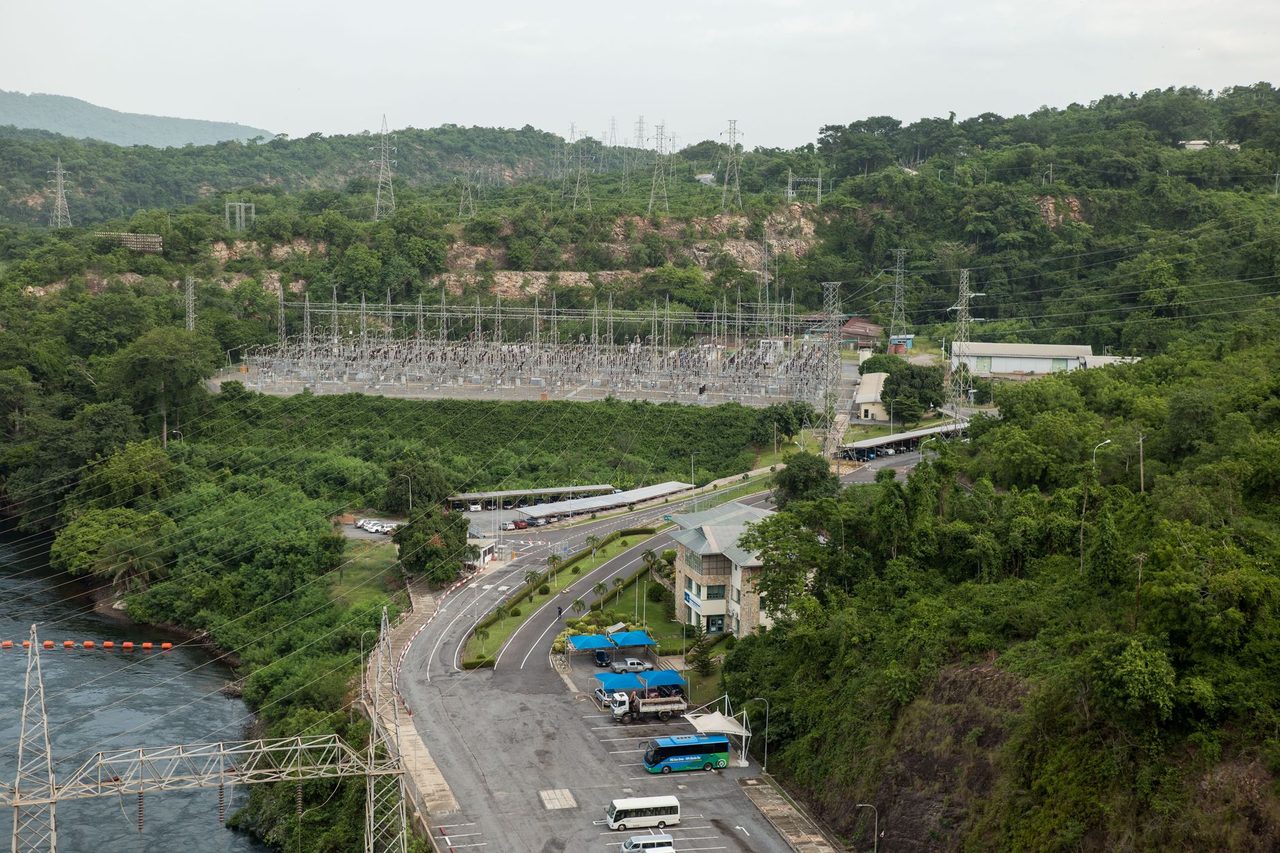
- Utility interconnection at 110 kV, 220 kV or 400 kV depending on campus scale and state network topology
- Dual receiving substations or dual bus arrangements where feasible
- N+1 or 2N transformer and switchgear philosophy for critical loads
- Centralised or block-level UPS systems for ride-through and conditioned supply
- Diesel generator plant sized for critical and essential load categories
- Behind-the-meter BESS, often in the 10 MW to 50 MW range for large campuses, with discharge durations from 15 minutes to 2 hours depending on use case
- Solar PV, usually rooftop or carport, modest in contribution versus total load but useful for daytime auxiliary support
- Microgrid controller or EMS integrated with SCADA, protection relays, DG controls, BMS and building systems
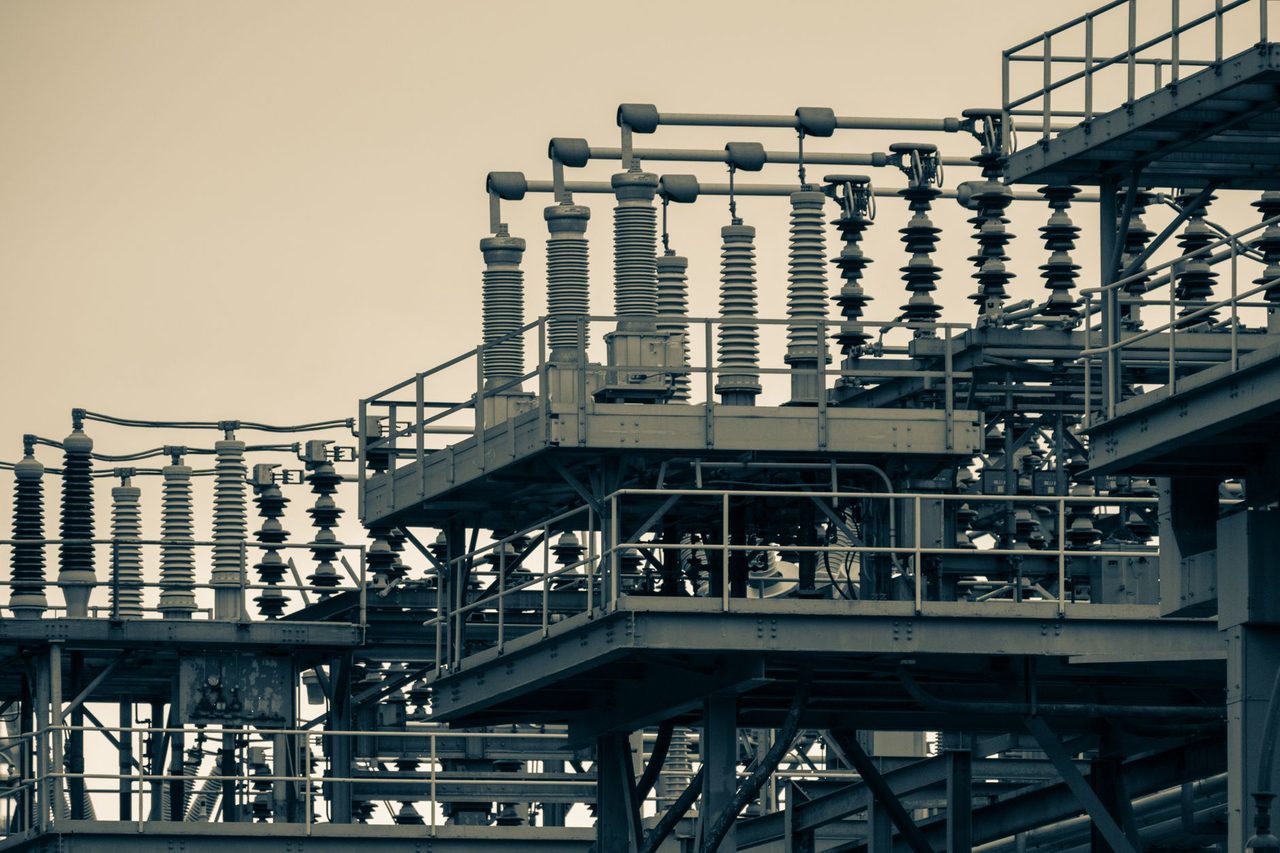
- Power quality equipment including harmonic filters, STATCOM or fast inverter support where needed
In India, the practical role of solar inside a data centre microgrid remains limited by land and roof constraints. BESS is therefore the central new element, not solar. For a 60 MW campus, an on-site PV installation may contribute only a few MW at peak, while a 20 MW/40 MWh battery can materially improve disturbance ride-through, black start sequencing and diesel optimisation.
Islanding design: the real engineering challenge
Many project documents mention “islanding capability,” but far fewer sites are truly engineered to island without operational surprises. For data centres, successful islanding depends on protection, controls and load hierarchy, not only on battery size.
The first question is whether the campus is designed for seamless transition or short-break transfer. Sensitive IT loads are usually shielded by UPS, but cooling systems, pumps and auxiliary loads can still see disturbances if the sequence is not tightly coordinated.
A robust islanding design in 2026 typically addresses:
- Point of common coupling detection logic for upstream voltage and frequency anomalies
- Anti-islanding compliance with utility and CEA/grid code requirements during normal grid-connected operation
- Fast transfer controls that separate the campus from the grid without nuisance tripping
- BESS grid-forming capability to establish local voltage and frequency reference after separation
- DG synchronisation logic so generators can pick up stable island load in stages
- Prioritised load shedding between critical IT, cooling, life-safety and non-essential loads
- Reconnection and resynchronisation logic after utility restoration
The shift toward grid-forming inverters is important. Traditional grid-following batteries need an external voltage source. In island mode, a grid-forming BESS can create that reference and stabilise the microgrid until DGs are online. This is especially valuable in the first few seconds after grid loss, when the objective is to avoid a cascading transition across UPS, chillers and generator buses.
For campuses above 40 MW, operators are increasingly evaluating sectionalised microgrids rather than one monolithic island. In practice, this can mean separate critical blocks with independent BESS and DG support, reducing common-mode failure risk and allowing staged recovery.
Black start architecture: what lenders and operators should test
Black start capability is different from ordinary backup. It assumes that no external grid support is available and the facility must energise its own systems in a controlled sequence. Many data centres have backup generation, but not all have a verified black start path that accounts for auxiliary loads, inrush current and control dependencies.
A practical black start sequence for an Indian data centre often looks like this:
- Start control power from DC systems and designated battery-backed auxiliaries
- Use BESS to energise selected LV and MV buses, protection systems and control circuits
- Start essential auxiliaries such as fuel systems, cooling water pumps, ventilation and selected HVAC support
- Crank designated black-start-capable DG units
- Stabilise frequency and voltage on an islanded bus
- Pick up UPS input sections and then add cooling and non-IT loads in defined blocks
- Synchronise additional DG units or feeders as the load grows
- Reconnect to utility only after voltage, frequency and phase conditions are met
Why does this matter commercially? Because black start readiness can reduce outage duration materially during low-probability, high-impact events. For a hyperscale site with contracted service penalties, even one avoided extended outage can justify substantial microgrid capex.
Lenders should insist on more than single-line diagrams. They should review:
- Verified dynamic studies for step load acceptance and transient stability
- Factory and site acceptance test protocols for BESS and microgrid controller functions
- Protection coordination studies covering both grid-connected and islanded modes
- DG minimum loading logic and wet-stacking mitigation if diesel runtime is reduced
- Start-up energy budget showing the BESS state of charge required for black start
- Nuisance-trip scenarios for chillers, CRAH units, pumps and power conversion systems
In India, a common weakness is underestimating cooling restart dynamics. A data centre may preserve IT continuity through UPS and BESS, but if chilled water systems or mechanical cooling stages return too slowly, thermal margin can shrink quickly in dense halls. Microgrid design therefore has to be linked with PUE & efficiency programs, not treated as a separate electrical exercise.
How to size BESS for data centre microgrids in 2026
There is no single rule of thumb, but there are practical sizing ranges by use case.
If the battery is intended mainly for power quality support, transfer bridging and generator start coordination, durations of 10 to 20 minutes may be adequate. A 20 MW/5 MWh or 20 MW/10 MWh system can deliver strong value if its primary function is to absorb grid events and avoid unnecessary DG starts.
If the battery must also support tariff arbitrage, demand charge reduction, curtailment management or limited diesel displacement, durations of 30 to 120 minutes become more relevant. For example:
- 10 MW campus: 5 MW/10 MWh to 10 MW/20 MWh can cover transfer support plus limited peak shaving
- 30 MW campus: 10 MW/20 MWh to 20 MW/40 MWh is increasingly common for resilience plus operational optimisation
- 60 MW campus: 20 MW/40 MWh to 40 MW/80 MWh may be evaluated where island support, ramp smoothing and limited long-duration bridging are all required
Indicative 2026 turnkey costs in India vary with chemistry, PCS architecture, fire protection, import mix and integration scope, but large commercial systems often fall in a broad range of about Rs 4.5 crore to Rs 6.5 crore per MW for shorter-duration systems, and roughly Rs 2.3 crore to Rs 3.2 crore per MWh for energy capacity on multi-hour configurations. Site-specific EPC and interconnection costs can shift these numbers materially.
The sizing mistake to avoid is designing the BESS only around energy arbitrage. For data centres, the reliability value per avoided event may exceed the arbitrage value. Therefore, battery sizing should start with disturbance scenarios:
- How much load must remain online during feeder loss?
- How long until first DG synchronisation?
- How much inrush and motor starting support is required?
- What minimum state of charge must be reserved for contingencies?
- How much cooling load can be staged or shed without SLA impact?
The answer often leads to a reserve-based dispatch strategy where a portion of battery capacity is locked for resilience, and only the balance is used for commercial optimisation by Energy management systems.
Regulatory and utility interface issues in India
Microgrids are not purely behind-the-meter technical assets. Their design must fit Indian interconnection and utility practice.
Key 2026 considerations include:
- Compliance with CEA technical standards for connectivity, protection and metering
- State discom or STU requirements for parallel operation, breaker schemes and relay settings
- Fault contribution and short-circuit studies at the interconnection point
- Reverse power flow restrictions where on-site generation or battery export is contemplated
- Treatment of standby demand, contract demand and reactive power penalties
- Synchronisation permissions for DG and BESS in grid-parallel mode
- Fire safety and local permitting for lithium-ion systems
Some states remain more comfortable with conventional DG-backed campuses than inverter-dominated microgrids. Developers should therefore engage early with utilities and not wait until commissioning to resolve protection settings, communication protocols or export restrictions.
A related commercial point is that island-capable design may reduce the need to overbuild certain upstream redundancies, but only if the utility and insurer accept the operating philosophy. This requires clear evidence from studies, OEM warranties and commissioning tests.
The business case: beyond tariff savings
The strongest data centre microgrid business cases in India are multi-value, not single-value.
Value buckets include:
- Avoided outage costs and SLA penalties
- Lower diesel consumption and lower DG maintenance cycles
- Reduced nuisance trips affecting UPS and cooling systems
- Improved resilience against upstream substation or feeder events
- Potential contract-demand optimisation and peak management
- Better integration of 24/7 clean power procurement portfolios
- Lower curtailment exposure for on-site or contracted renewable balancing strategies
- Enhanced lender confidence in operational continuity
For a large colocation operator, even a few basis points of higher uptime confidence can influence customer acquisition and pricing power. For lenders, the presence of tested islanding and black start capability can strengthen downside protection, especially in markets where grid restoration timelines remain uncertain.
That said, not every site needs an extensive microgrid. A 6 MW edge facility may justify a simpler architecture, while a 100 MW AI-focused campus may require segmented islands, grid-forming BESS and highly automated restoration logic. The correct design depends on load criticality, local grid strength, campus phasing and the operator’s diesel reduction pathway.
What Indian data centre stakeholders should do next
For operators, the immediate priority is to move from generic backup philosophy to scenario-based resilience engineering. Ask not only whether the site has DG and UPS, but whether it can ride through feeder loss, support cooling continuity, black start from darkness and reconnect without manual improvisation.
For developers and EPC firms, the opportunity is to integrate microgrid controls, BESS architecture and protection studies at concept stage rather than treating them as later add-ons. Retrofits are possible, but the economics and operating flexibility are usually better when islanding logic is built into the original electrical design.
For lenders, diligence should expand beyond capex line items toward operating sequences, SoC reserve philosophy, OEM interoperability and utility-interface risks.
For policymakers and utilities, the goal should be clear and predictable frameworks for inverter-based parallel operation, site islanding and fast-track approvals for resilience-enhancing BESS installations at strategic digital infrastructure facilities.
India’s data centre sector is becoming too large and too economically important to rely on outdated assumptions about backup power. In 2026, resilient energy architecture means a coordinated microgrid that can island safely, black start predictably and use BESS as a reliability asset, not just a tariff tool.
If your team is evaluating campus resilience, BESS sizing, utility interconnection or microgrid operating philosophy, contact Growthifye’s advisory desk to discuss a site-specific roadmap for data centre energy design and delivery.
Explore Growthifye's related capabilities
This analysis connects directly to our advisory practice: Load & reliability engineering · 24/7 clean power contracting · Grid connectivity & redundancy · On-site generation & BESS.
About the author

Chief Executive Officer, Growthifye — With over 23 years in management consulting, Sudarshan has taken businesses from concept to scale — building and scaling new-age digital and energy businesses.
- 23+ years in management consulting
- EY alumnus
- Led large-scale BESS programmes, capital raises and advisory mandates
Want this analysis applied to your project?
Talk to our team