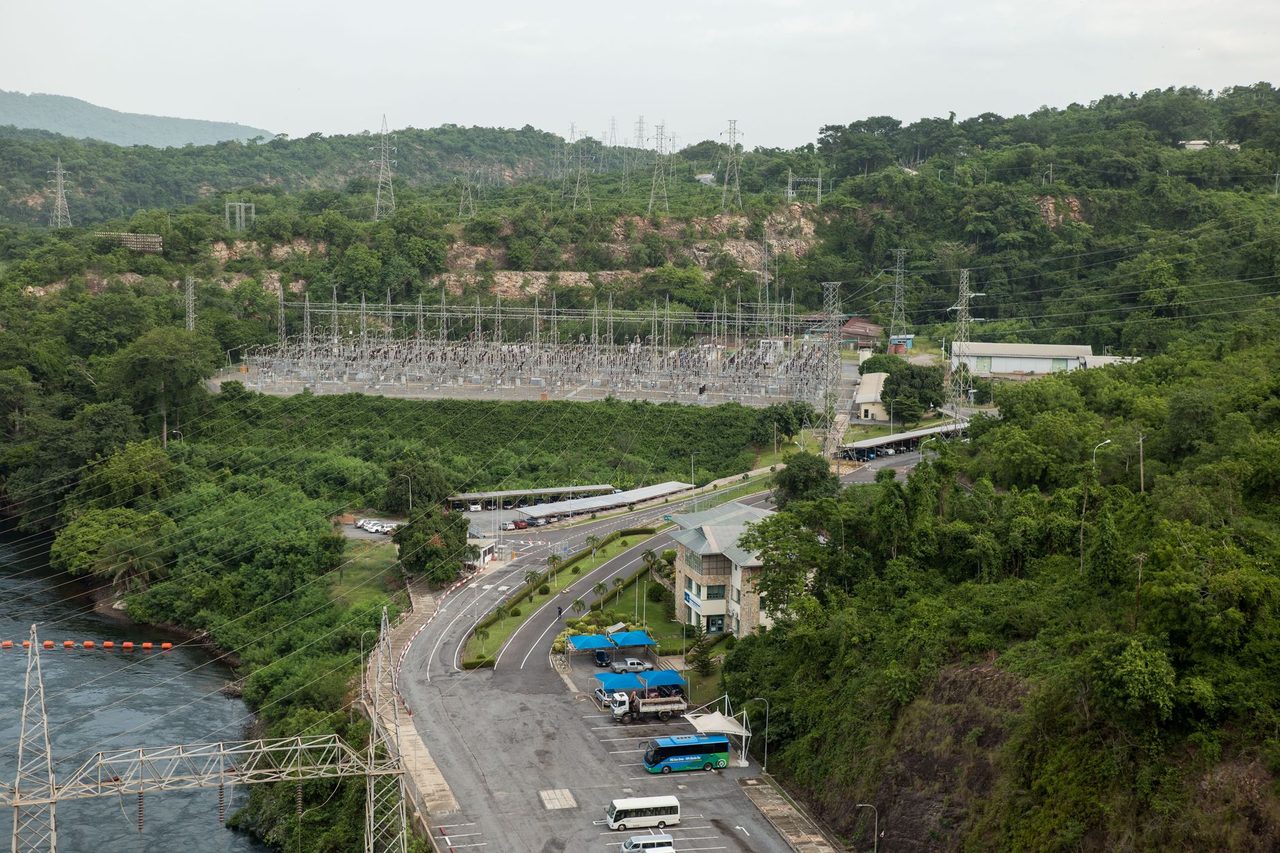
India Data Centre Power Quality 2026: Harmonics, PF, DG Sync and BESS Controls
By Sudarshan Karweer · sudarshan@growthifye.com · +91 84510 99371 (Call / WhatsApp) · 2026-09-12
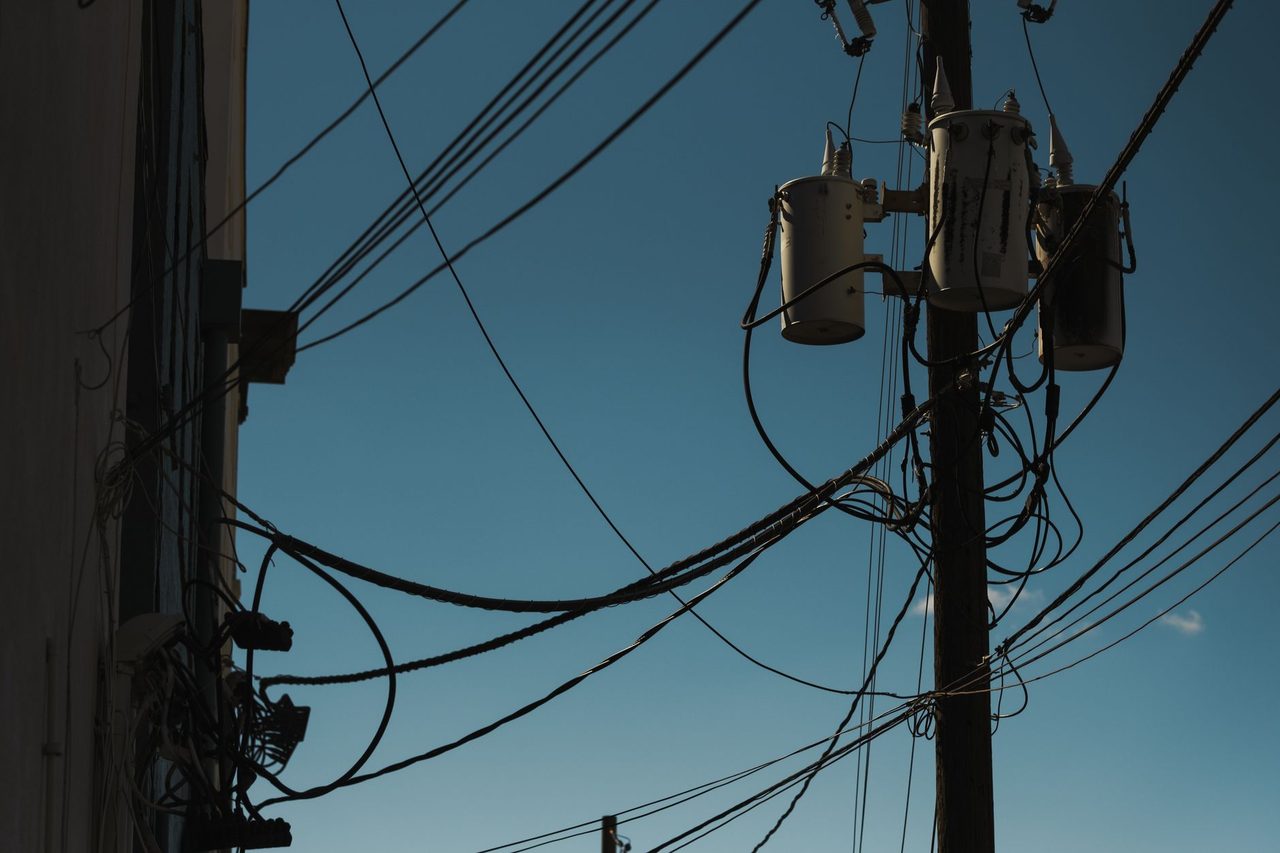
Photo: Connor Scott McManus on Pexels
India’s data centre sector is moving beyond first-order questions of tariff arbitrage and renewable procurement. In 2026, one of the most underpriced risks in data centre energy design is power quality: harmonics, low power factor, voltage fluctuation, DG synchronisation issues, transient events, and the interaction between UPS, rectifiers, chillers, variable-frequency drives, rooftop solar, and on-site BESS.
This topic sits adjacent to 24/7 clean power and reliability, but it is operationally distinct. A site can have an excellent renewable contracting strategy and still suffer repeated alarms, capacitor-bank trips, UPS stress, nuisance breaker operation, transformer overheating, and diesel generator instability if its electrical architecture is not designed for modern non-linear loads and inverter-heavy systems.
For Indian operators, colocation providers, hyperscale developers, EPC firms, lenders and DISCOM-facing teams, the commercial consequences are material. Poor power quality can trigger power factor penalties, increase transformer and cable losses, shorten asset life, inflate PUE, complicate grid approvals, and weaken uptime performance under utility disturbance conditions. In markets where annual uptime commitments often sit at 99.982% to 99.995% or better depending on tier and design philosophy, these issues are not secondary engineering details. They are board-level risk items.
Why power quality is becoming a frontline data centre issue in India
The 2026 Indian data centre load profile is more electrically complex than it was even three years ago.
- Higher rack densities are increasing pulse and harmonic characteristics on internal power systems
- UPS fleets increasingly use high-efficiency double-conversion architectures with sophisticated rectifiers and bypass logic
- Cooling systems rely more heavily on VFD-based equipment, CRAH/CRAC optimisation, magnetic-bearing chillers and dynamic controls
- Many campuses are adding solar, gas-based peakers in select cases, and especially BESS for ride-through, peak management, and renewable shaping
- Grid supply in major hubs is stronger than before, but short-duration sags, flicker, switching transients and feeder disturbances still matter
- Some sites are evaluating parallel utility incomers, STU-linked supply structures, or captive/open-access backed delivery, adding interface complexity
Traditional electrical design assumptions do not always hold when a facility combines non-linear IT load, large UPS capacity, capacitor banks, DGs, static transfer systems and grid-following or grid-forming inverters.
In practice, operators are seeing recurring issues in five areas:
- Current harmonics leading to transformer derating and overheating
- Displacement and true power factor gaps causing penalties or poor utilisation of sanctioned demand
- Resonance between capacitors and harmonic frequencies
- DG hunting, unstable load acceptance and poor synchronisation during source transfer events
- BESS/EMS control conflicts with UPS and DG logic during disturbances
Harmonics: the hidden tax on transformers, cables and uptime
Most large data centres are dominated by non-linear electronic loads. Even where modern UPS front ends have improved input performance, harmonic currents remain a serious design consideration, especially under part-load operation and mixed equipment vintages.
In Indian practice, the first reference point is usually IEEE 519 for harmonic control at the point of common coupling, but project teams must also consider utility interconnection requirements, OEM-specific UPS and DG limits, and internal design thresholds for transformers, bus ducts, APFC systems and metering.
The problem is not merely compliance. Harmonics create real losses.
- Transformer eddy-current losses rise materially under harmonic-rich loading
- Neutral conductors can see elevated currents under triplen harmonics in certain configurations
- Switchgear and cables run hotter for the same useful kW served
- Capacitor banks can fail early if not detuned correctly
- Sensitive loads can experience overheating, misoperation or reduced equipment life
A practical rule in Indian data centre engineering is to measure and model total harmonic distortion both for current and voltage, not just rely on nameplate assumptions. A site with THDi above expected levels may still appear stable during normal operation but can behave poorly during utility events, DG transitions or partial UPS bypass scenarios.
Typical mitigation measures include:
- 12-pulse or active-front-end UPS selection where appropriate
- Active harmonic filters for dynamic compensation
- Detuned harmonic filter reactors on APFC systems
- K-rated or suitably designed transformers depending on load mix
- Segregation of highly non-linear load blocks
- Periodic harmonic audits after each major capacity addition
For lenders and investors, this matters because harmonic remediation after commissioning is often far more expensive than designing correctly upfront. A retrofit involving filters, capacitor redesign, transformer thermal reassessment and protection setting review can run into several crores on a large campus, aside from outage coordination costs.
Power factor, reactive power and tariff leakage in 2026
Data centre operators often focus on energy charges in Rs/kWh, but reactive power and power factor management still affect annual cost stacks, especially under HT and EHT supply arrangements.
Across Indian states, PF incentive and penalty structures vary, but many tariffs continue to reward maintaining power factor close to unity and penalise poor performance below specified thresholds such as 0.90, 0.95 or utility-defined benchmarks. Reactive energy charges also appear in some supply structures. Even where penalties are modest, low PF consumes system capacity and can distort campus expansion economics.
The complexity in data centres is that apparent PF can deteriorate not only because of inductive load, but also because harmonic distortion. A facility may show acceptable displacement PF yet poor true PF once waveform distortion is considered. Standard APFC panels alone do not solve that problem.
2026 best practice is to treat PF as a dynamic control variable across three layers:
- Utility interface: maintain target PF at the billing point and avoid export/import reactive excursions outside grid-code or DISCOM limits
- Internal network: reduce avoidable reactive circulation across transformers and bus systems
- Asset level: coordinate chillers, VFDs, UPS rectifiers, capacitor banks and filters so one subsystem does not create instability in another
Indicatively, even a 1% to 2% avoidable electrical loss reduction from better PF and harmonic control can be meaningful. For a 50 MW data centre campus operating at an annual average 75% load factor, annual energy consumption is about 328.5 GWh. At an all-in power cost of Rs 7.0 to Rs 9.0 per kWh depending on source mix and state, that loss reduction alone can translate into roughly Rs 2.3 crore to Rs 5.9 crore per year.
That is before accounting for avoided penalties, deferred transformer augmentation and improved cooling efficiency due to lower heat losses.
DG synchronisation and source-transfer stability: where design intent often breaks down
India’s large data centres still rely on diesel generators as the core long-duration backup resource, even as BESS adoption rises. The trouble is not that DGs exist; it is that many sites underestimate synchronisation and transient performance in real operating sequences.
Common failure points include:
- Poor step-load acceptance during utility outage transfer
- n- Frequency and voltage instability when UPS, chillers and mechanical loads reconnect in the wrong sequence
- Reverse power and load-sharing issues across multiple DGs
- Nuisance tripping due to uncoordinated protection settings
- Incompatibility between DG governor response and BESS inverter control modes
- Hunting caused by rapidly changing load from UPS battery recharge or cooling restart
A design that passes FAT and basic commissioning can still behave poorly under actual field contingencies. For example, if UPS recharge logic restores too aggressively after a short outage, DG loading can jump sharply, reducing available headroom for cooling and causing frequency sag. If a BESS is configured to chase net-load fluctuations without proper deadbands and ramp limits, it may interact destructively with generator governors.
The solution is scenario-based electrical sequencing, not just equipment selection. Operators should test at least the following event chains:
- Utility sag without full outage
- Utility outage with UPS carry and DG start
- DG synchronisation with staggered cooling restart
- Return-to-grid transition under partial load
- BESS-assisted DG operation during ramping periods
- Single feeder loss in dual-source architectures
This is where Load & reliability engineering and Grid connectivity & redundancy become commercially relevant, not just technical labels. Source-transfer logic, protection coordination, relay settings, breaker timing, and restart sequencing must be aligned with IT criticality, UPS topology and mechanical systems.
How on-site BESS changes the power quality equation
On-site BESS is often discussed in India in the context of peak shaving, open-access shaping or backup support. But in 2026, its power-quality role is becoming equally important.
A well-integrated BESS can help with:
- Fast active power injection during short supply dips
- Smoothing sudden load ramps seen by DGs or the grid interface
- Voltage support in selected architectures, subject to inverter capability and interconnection rules
- Improved source transition performance
- Reduced stress on diesel systems during restart or recharge windows
- Better integration of rooftop or behind-the-meter solar where available
However, not all BESS deployments improve reliability. Poorly configured systems can create new failure modes.
Key design choices include:
- Grid-following versus grid-forming inverter behaviour
- Response speed and ramp-rate limits
- State-of-charge reservation for contingency versus economic dispatch
- Coordination with UPS battery autonomy and recharge priorities
- Black-start role, if any
- Reactive power support strategy and harmonic interaction
- Islanding logic and utility compliance requirements
In Indian data centre use cases, a common mistake is to assume BESS can be layered onto an existing UPS-DG architecture without rethinking controls. In reality, BESS should be modelled as part of the site-wide electrical stability stack. Its dispatch logic must be coordinated with the EMS, DG master controller, UPS settings and utility interconnection constraints.
For instance, a 10 MW / 20 MWh BESS on a 40 MW critical campus may provide excellent support for short-duration shape management and transfer smoothing, but if only 10% state-of-charge is available when a disturbance hits because the system was optimising arbitrage, the reliability value collapses. Dispatch policy therefore matters as much as battery size.
This is why On-site generation & BESS and Energy management systems must be planned together rather than procured in silos.
Compliance, metering and what lenders should diligence
For utilities, regulators and financing parties, power quality is also a compliance and bankability issue. Diligence should go beyond simple sanctioned load, DG count and UPS redundancy.
Questions worth asking in 2026 include:
- What is the measured and modelled THDv/THDi at the PCC and key internal buses?
- Have capacitor banks been detuned for expected harmonic spectrum?
- What transformer derating assumptions were used under non-linear load?
- How are DGs tested for actual site step-load and source-transfer sequences?
- Does the BESS have documented interoperability testing with UPS and DG controls?
- Is revenue-grade metering segregating active, reactive and harmonic performance adequately?
- Are PF penalties, reactive charges or technical losses visible in monthly MIS?
- Has the utility imposed any specific interconnection or flicker/harmonic constraints?
For large campuses, permanent power-quality meters at utility incomers, main LT sections, UPS inputs and major mechanical feeders are increasingly justified. Without granular data, teams tend to diagnose symptoms rather than root causes.
From a lender perspective, recurring electrical instability can affect EBITDA through higher opex, tenant SLA exposure, unplanned capex and delayed ramp-up of additional halls. As data centre underwriting becomes more sophisticated in India, electrical performance data should sit alongside lease-up, cooling design and land-title diligence.
A practical 2026 playbook for operators and developers
A workable power-quality strategy for Indian data centres should combine engineering studies, control integration and commercial governance.
Recommended actions:
- Conduct a harmonic and reactive power study before finalising UPS, APFC, transformer and filter specifications
- Validate source-transfer sequences using dynamic simulation, not only static single-line review
- Align DG, UPS and BESS control philosophies before procurement freeze
- Install permanent PQ metering at critical nodes with alarm thresholds tied to O&M workflows
- Review tariff orders for PF incentives, penalties and reactive billing treatment in the host state
- Include harmonic performance, step-load response and interoperability guarantees in vendor contracts
- Re-test after each material expansion phase because data halls rarely scale in perfectly linear fashion
- Link power-quality KPIs to PUE and reliability dashboards rather than leaving them inside electrical maintenance reports
For operators with existing pain points, an audit should cover at least 12 months of event logs, breaker trips, DG disturbance reports, UPS alarms, APFC failures, transformer temperatures and billing-point PF trends. In many cases, the answer is not one large retrofit but a package of smaller corrections: control logic changes, capacitor detuning, relay setting revisions, staged restart programming and targeted filtering.
The broader lesson is simple. In 2026, data centre energy performance in India is no longer just about securing enough megawatts at the right price and renewable profile. It is about making a high-density, inverter-rich, mission-critical electrical ecosystem behave predictably under every operating state.
That requires commercial teams, electrical designers, utility interface managers and O&M operators to work from a single reliability model.
If your campus is evaluating new utility interconnections, BESS integration, DG modernisation or expansion-phase electrical redesign, contact Growthifye’s advisory desk. We support Indian data centre operators with practical assessments spanning power quality, controls integration, reliability engineering and finance-ready implementation planning.
Explore Growthifye's related capabilities
This analysis connects directly to our advisory practice: Load & reliability engineering · 24/7 clean power contracting · Grid connectivity & redundancy · On-site generation & BESS.
About the author

Chief Executive Officer, Growthifye — With over 23 years in management consulting, Sudarshan has taken businesses from concept to scale — building and scaling new-age digital and energy businesses.
- 23+ years in management consulting
- EY alumnus
- Led large-scale BESS programmes, capital raises and advisory mandates
Want this analysis applied to your project?
Talk to our team