India Data Centre Grid Connectivity 2026: Redundancy, ISTS/STU Access and BESS
By Sudarshan Karweer · sudarshan@growthifye.com · +91 84510 99371 (Call / WhatsApp) · 2026-09-01
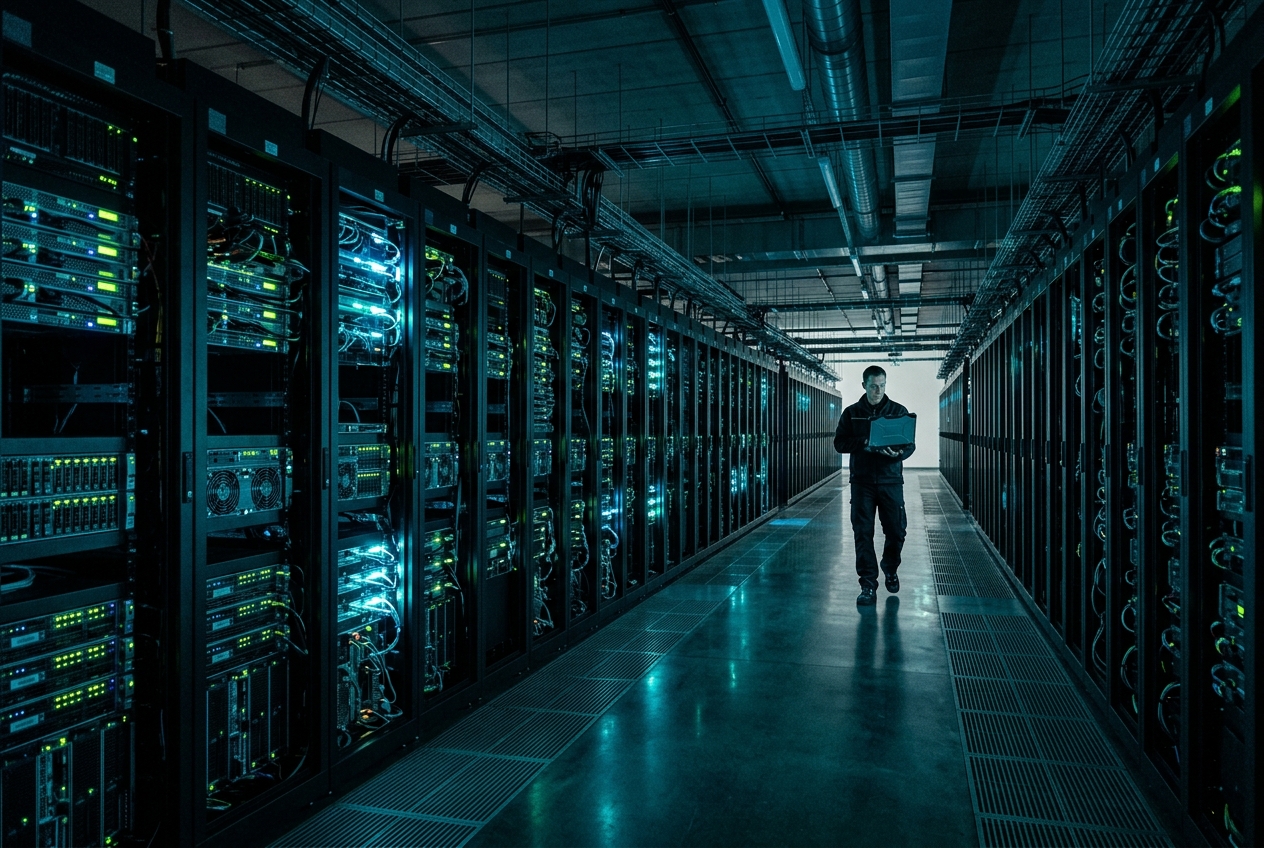
India’s data centre market is now colliding with a harder power question: not whether energy can be bought, but whether it can be physically delivered with the reliability, redundancy and approval certainty that hyperscale campuses require. In 2026, the most common project delays are no longer limited to land, building permits or IT fit-outs. They increasingly sit in bay allocation at substations, transmission evacuation, utility approvals, right-of-way for dedicated lines, and the mismatch between contracted renewable energy and actual grid delivery during stressed hours.
For operators targeting high uptime, lower diesel dependence and stronger 24/7 clean energy outcomes, grid connectivity has become a board-level workstream. This is especially true in India’s key data centre clusters such as Mumbai Metropolitan Region, Chennai, Hyderabad, Bengaluru, Pune and NCR, where utility conditions, land constraints and substation congestion differ sharply. A site with apparently attractive headline tariffs can still become commercially inferior if it requires a 24- to 36-month connectivity buildout, expensive N-1 line redundancy or repeated curtailment exposure.
This article focuses on a distinct but critical topic: how Indian data centres should structure connectivity architecture in 2026 across DISCOM, STU and ISTS interfaces, and where on-site BESS materially changes design, reliability and cost decisions.
Why grid connectivity is now the real gating item
A decade ago, power planning for many facilities was a downstream utility application. For modern data centres, especially AI-heavy campuses with concentrated MW blocks, that sequencing no longer works. Power access must be assessed before final land commitment because the grid-side critical path often exceeds building-side execution.
Several 2026 market realities explain this shift:
- Large single-campus loads are rising from 20-40 MW toward 80-150 MW phases, with future expansion options beyond 300 MW in some corridors.
- Utilities are becoming more cautious on firm supply commitments where urban receiving substations are already heavily loaded.
- Renewable procurement structures such as open access, group captive and third-party RTC supply still depend on actual evacuation capacity and scheduling pathways.
- Substation augmentation, line bays, breaker positions and protection studies can delay energisation even when headline policy support exists.
- Diesel minimisation goals are pushing operators to use BESS and gas-based backup selectively, which changes how much grid redundancy must be procured upfront.
In practice, the cheapest tariff is rarely the cheapest delivered power. The relevant metric in 2026 is delivered, compliant, redundant MW by energisation date.
Choosing between DISCOM supply, STU connectivity and ISTS-linked structures
Indian data centres typically evaluate three broad pathways, sometimes in combination.
1. DISCOM retail or high-tension supply
This remains the fastest route in many urban markets for initial energisation, particularly for first phases below roughly 20-40 MW depending on city and substation conditions. The advantages are procedural familiarity, simpler billing interfaces and lower contracting complexity.
However, key limitations include:
- Dependency on local distribution network resilience
- n- Limited flexibility for large future MW step-ups if receiving substations are constrained
- Tariff volatility through fuel surcharge adjustment, power purchase adjustment and category revisions
- Weaker control over renewable sourcing unless paired with separate open access or attribute strategies
- Potential restrictions on feeder redundancy if urban corridor congestion is high
For colocation facilities serving standard enterprise loads, DISCOM-led supply may still be sufficient in phase 1. For hyperscale or AI loads, it is usually only one layer of a broader architecture.
2. STU-connected high-load architecture
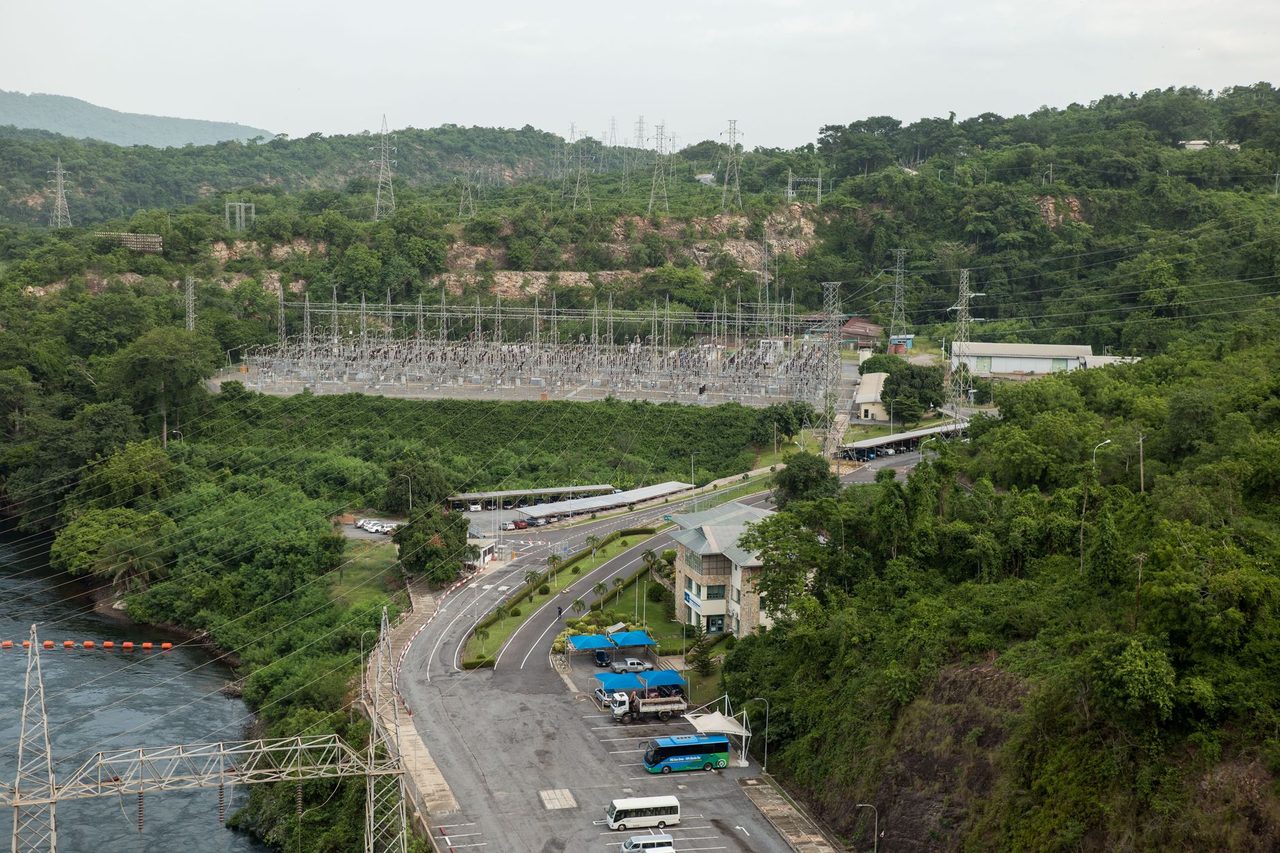
For larger campuses, direct or quasi-direct access through the state transmission system often becomes essential. This route can support dedicated high-voltage connectivity, better redundancy planning and smoother integration of open-access renewable supply.
In 2026, STU-linked structures are attractive where:
- The campus expects 50 MW+ contracted demand in early phases
- The operator wants two independent source paths from separate EHV substations
- Renewable procurement will rely on intra-state open access from solar, wind or hybrid plants
- Distribution-level congestion makes retail-only expansion unreliable
The trade-off is time. Transmission studies, bay allocation, dedicated line development, right-of-way and protection coordination can push timelines to 18-30 months, and longer where new transformation capacity is required.
3. ISTS-enabled renewable and delivery framework
ISTS is less about plugging a data centre directly into a national grid socket and more about how interstate renewable energy reaches the facility through contracted and wheeled structures. For operators with diversified renewable portfolios, ISTS access matters commercially even when the final physical draw sits at the state level.
This route becomes relevant when:
- The buyer wants access to wind-rich states and hybrid RE zones beyond the host state
- RTC or near-RTC supply is being built from geographically diversified assets
- The project needs to reduce concentration risk from one state’s policy or weather profile
- Lenders require stronger diversification of supply assets and counterparties
The constraint remains last-mile delivery. Even with interstate renewable sourcing, the campus still needs robust state-level intake and redundancy. ISTS is not a substitute for local connectivity design.
Redundancy design: what N, N+1 and 2N really mean on the grid side
Data centres often use reliability shorthand borrowed from electrical and mechanical design, but on the utility side these labels can be misleading unless translated into actual source-path engineering.
A practical 2026 framework is:
- N: one incoming utility source path, usually unacceptable for hyperscale production loads
- N+1: one primary path plus backup support through alternate feeder, BESS, UPS and generators
- 2N: two fully independent utility source paths with sufficient transformation and line separation, plus site-side backup systems
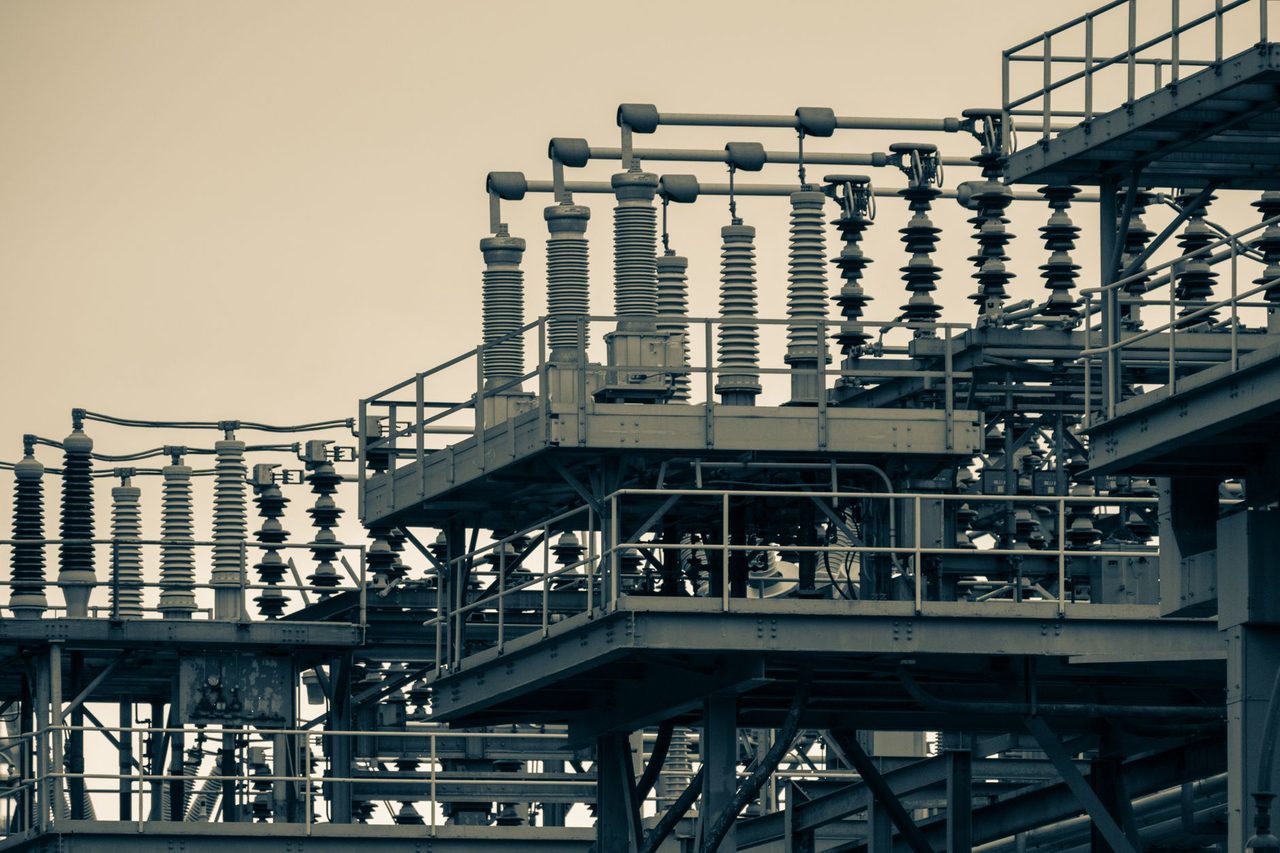
In India, true 2N utility architecture is expensive and sometimes physically impossible in dense urban pockets unless the site is chosen specifically for dual-substation access. What developers call 2N often turns out to be two feeders from the same upstream substation or from the same corridor, which does not protect against transformer outage, bus fault or upstream transmission event.
The right question is not whether two feeders exist, but whether there are two electrically and geographically credible source paths.
This is where Load & reliability engineering matters early. A 60 MW campus may discover that a supposed dual-feed arrangement still shares a common 220/110 kV transformation node, creating a hidden single point of failure. Correcting that after land acquisition is expensive and sometimes impossible.
For lenders and anchor customers, key diligence questions include:
- Are the two incoming paths sourced from separate EHV substations?
- Do they share towers, trench corridors or protection zones?
- Is the contracted import capacity firm on both paths or only on one?
- What are restoration times for transformer failure, line fault and bay outage?
- Which outages can be bridged by UPS and BESS without generator start?
Where BESS changes the economics of grid redundancy
In 2026, on-site BESS is no longer only a sustainability add-on. For data centres, it increasingly functions as a reliability asset, tariff management tool and redundancy deferral mechanism.
A well-designed battery system cannot replace long-duration backup for multi-hour grid outages, but it can materially reduce the cost of achieving resilience. Typical use cases include:
- Bridging utility transfer events and feeder changeovers
- Reducing generator starts during short interruptions and voltage events
- Managing demand spikes and contracted-demand exceedance risk
- Shaving time-of-day import during expensive evening blocks where tariffs justify dispatch
- Providing ride-through support while backup systems sequence
- Enabling better use of variable on-site solar where feasible
For many campuses, the most bankable near-term configuration is 15-60 minutes of site-level BESS support for critical blocks, not four hours of full-load battery backup. For example:
- A 40 MW critical load with 15 minutes of support requires roughly 10 MWh usable battery, before derating and reserve margins.
- A 60 MW critical load with 30 minutes of support requires roughly 30 MWh usable battery.
- Depending on chemistry, augmentation strategy, PCS sizing and fire-safety design, all-in project costs in 2026 can still vary widely, but many urban deployments are evaluating landed capex in the broad range of INR 4.5-6.5 crore per MW equivalent for short-duration power-heavy systems, or INR 2.8-4.2 crore per MWh for energy-heavy configurations.
These are not generic benchmarks; site integration, indoor versus outdoor placement, redundancy philosophy, fire code compliance and import content can move costs significantly.
The more important commercial insight is this: a battery may allow a site to avoid overbuilding one layer of grid redundancy if outage-bridging value is properly quantified. In several cases, the least-cost design is not maximum utility duplication. It is one strong primary path, one credible alternate path, and a battery sized for transfer continuity plus tariff optimisation.
This is where On-site generation & BESS should be evaluated against connectivity capex, not in isolation.
Tariffs, charges and approval risks that alter siting decisions
Connectivity decisions in India are tariff decisions. Two sites with similar land economics can diverge sharply once network charges, approval timelines and future augmentation costs are included.
Key 2026 considerations include:
- Cross-subsidy surcharge and additional surcharge exposure for open access consumers, where applicable under state rules
- STU transmission charges, wheeling charges and losses for intra-state renewable delivery
- ISTS charges and losses where interstate structures apply under prevailing waivers or transition rules
- Banking restrictions or limited settlement windows for renewable energy, especially relevant to hybrid portfolios
- Reactive power penalties, power factor conditions and harmonic compliance costs
- Security deposit, dedicated infrastructure contribution and bay construction obligations
- Demand charges and penalties linked to sanctioned load versus actual peak draw
State-specific variation remains high. Maharashtra, Tamil Nadu, Karnataka, Telangana and Uttar Pradesh each present different combinations of open-access viability, substation congestion and procedural ease. In some corridors, a slightly higher all-in tariff at a better-connected location produces a lower levelised delivered cost over ten years because it avoids capex-heavy dedicated transmission works and delayed revenue start.
For policymakers, this has a clear implication: if India wants data centre growth without excessive diesel fallback, utility approval pathways for dual-source high-reliability consumers need to become faster and more standardised.
A practical 2026 decision framework for developers and lenders
The best data centre energy strategies now start with power-system due diligence before final site lock-in. A workable decision sequence is:
- Map 5- and 10-year load ramp by critical and non-critical blocks
- Identify minimum energisation requirement for phase 1 and expansion thresholds for later phases
- Test DISCOM, STU and combined structures against actual substation and bay availability
- Evaluate whether renewable delivery will be intra-state, interstate or blended
- Model dual-path redundancy options including common-mode failure analysis
- Compare dedicated line capex with BESS-supported resilience pathways
- Stress-test all-in energy cost under time-of-day tariffs, open-access charges and curtailment events
- Build approval critical path including CEIG, utility studies, bay construction, land rights and line permits
Lenders should insist on this analysis because connectivity risk now directly affects DSCR, drawdown timing and customer ramp-up assumptions. RE developers serving data centres should also adapt offer structures to include delivery-path transparency, not just tariff quotes from remote renewable assets.
A robust investment case in 2026 is one where grid intake, renewable delivery and site-side flexibility are engineered together. Treating them as separate workstreams creates hidden reliability and cost gaps.
What the winning architecture looks like in 2026
There is no single template, but the strongest Indian data centre projects increasingly share six features:
- Early site selection based on real grid headroom, not only land and fibre
- Two credible source paths with documented upstream separation
- Renewable procurement designed around deliverability, not only PPA headline price
- Short-duration BESS integrated for transfer continuity, tariff management and diesel reduction
- Protection, harmonics and power-quality design aligned with UPS and IT critical loads
- Expansion-ready connectivity that avoids stranded augmentation later
In other words, the energy stack is converging. Grid connectivity & redundancy can no longer be separated from reliability engineering, renewable contracting or battery design. The market winners will be the operators who convert power from a compliance item into a structured infrastructure strategy.
For Indian data centres entering land acquisition, design freeze, lender diligence or renewable procurement in 2026, this is the right moment to re-test whether the proposed connectivity architecture is genuinely fit for a high-uptime, lower-carbon future.
If your team is assessing a new campus or upgrading an existing facility’s power strategy, contact Growthifye’s advisory desk. We help developers, operators and investors structure bankable connectivity, redundancy and clean-power solutions for India’s data centre market.
Explore Growthifye's related capabilities
This analysis connects directly to our advisory practice: Load & reliability engineering · 24/7 clean power contracting · Grid connectivity & redundancy · On-site generation & BESS.
About the author

Chief Executive Officer, Growthifye — With over 23 years in management consulting, Sudarshan has taken businesses from concept to scale — building and scaling new-age digital and energy businesses.
- 23+ years in management consulting
- EY alumnus
- Led large-scale BESS programmes, capital raises and advisory mandates
Want this analysis applied to your project?
Talk to our team