India Data Centre Energy Attribute Claims 2026: EACs, Hourly Matching and Audit
By Sudarshan Karweer · sudarshan@growthifye.com · +91 84510 99371 (Call / WhatsApp) · 2026-09-08

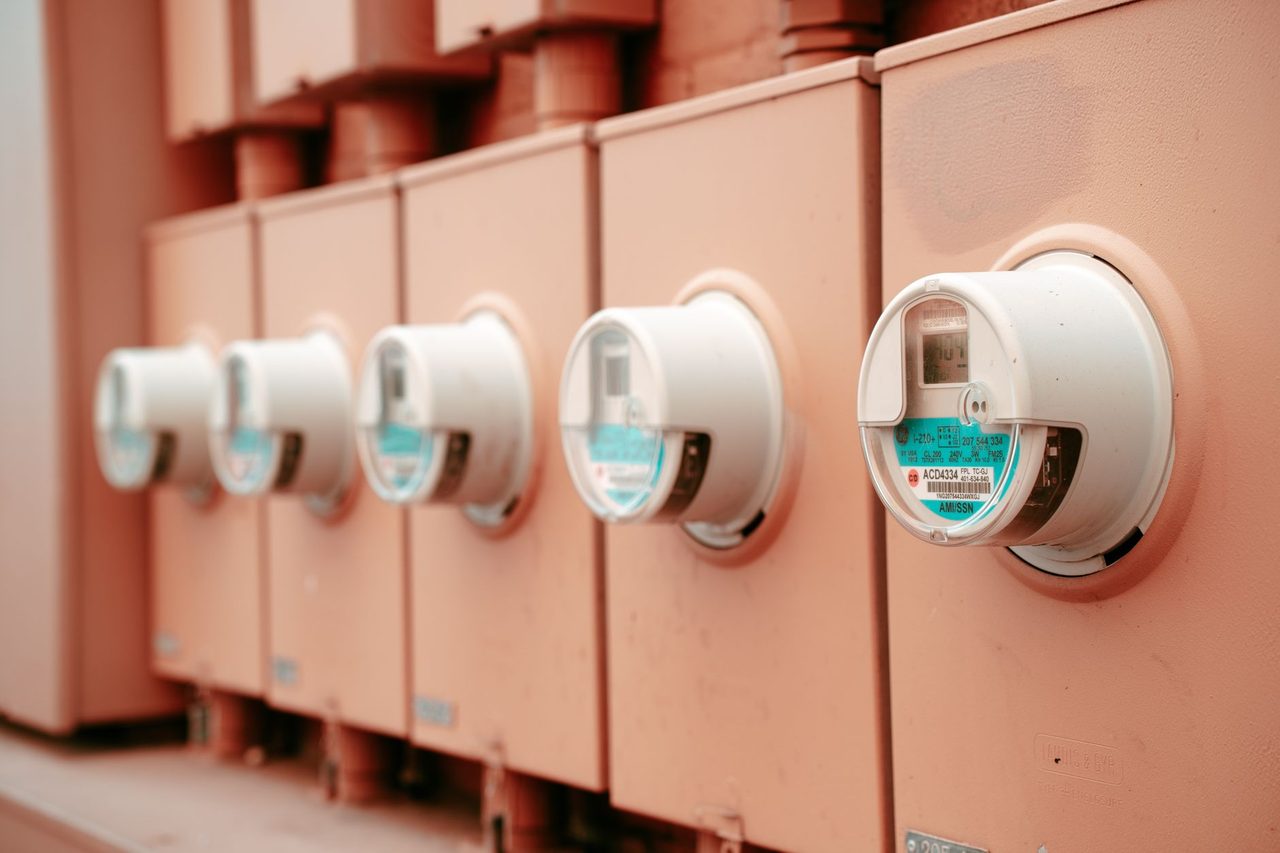
Photo: Elite Power Group on Pexels
India’s data centre sector is no longer judged only on contracted megawatts or annual renewable percentages. In 2026, hyperscalers, colocation operators, enterprise tenants, lenders and global customers are asking a stricter question: can a data centre prove, hour by hour, what portion of its electricity use was matched by clean generation, and can that claim withstand audit?
That is a different problem from captive structuring, open access economics, RTC supply design or PUE optimisation. It is an energy-attribute problem: who owns the environmental attributes associated with electricity, what exactly is being claimed, over what time boundary, with what metering and reconciliation logic, and under which contract clauses can those claims be defended.
For Indian operators, this issue is becoming commercially material. Customer RFPs increasingly ask for hourly or sub-hourly clean-energy matching trajectories, not just annual averages. International reporting frameworks are tightening language around market-based claims. Developers want clarity on whether attributes are retained, transferred or split. Lenders want assurance that sustainability-linked representations are measurable. Utilities and policymakers are also paying closer attention to how behind-the-meter generation, storage charging and open-access procurement are counted.
This article sets out a practical 2026 framework for data centre energy attribute claims in India: EACs and REC-like instruments, hourly matching architecture, treatment of storage, double-counting controls, audit requirements, and the contract mechanics needed for defensible disclosures.
Why annual renewable percentages are no longer enough
A conventional annual claim is simple in form: a data centre consumes X MWh in a year and procures Y MWh of renewable power or attributes in the same year, therefore it reports Y/X as its renewable share. In India, many operators still use annual accounting because it aligns with board reporting, utility bills and PPA settlements.
But annual matching can mask significant operational gaps.
- A facility may consume most of its power during evening and night hours when standalone solar output is zero.
- An annual surplus of daytime renewable procurement can still leave a large hourly fossil-heavy residual load.
- Curtailment, grid outages, backing-down instructions and deviation events may reduce actual delivered clean energy versus contracted quantities.
- BESS may shift energy across hours, but unless charging source and round-trip losses are properly tracked, the final claim can be overstated.
For data centre customers, especially global cloud and AI workloads with 24/7 service expectations, the distinction matters. A site claiming 90% annual renewable matching may still have only 45-60% hourly clean matching, depending on load shape, contracted portfolio and storage design.
This is why attribute quality is becoming a board-level issue. The commercial value is not just reputational. Better attribute accounting can influence:
- customer selection in colocation tenders
- financing narratives and covenant reporting
- portfolio valuation for developers and operators
- contract bankability where sustainability-linked offtake terms exist
- future carbon-cost exposure if policy moves toward granular disclosures
The Indian 2026 attribute landscape for data centres
India does not yet have a single universal hourly energy-attribute tracking system equivalent to a mature national hourly certificate platform. Instead, the practical landscape in 2026 is a combination of metered procurement pathways, contract rights, scheduling data, SLDC/RLDC records, utility billing, and certificate or attribute transfer language embedded in commercial agreements.
For data centres, the relevant sources of attribute evidence typically include:
- captive or group captive generation meter data
- open access scheduling and drawal records
- DISCOM invoices and time-of-day consumption data
- generator injection and settlement statements
- rooftop or on-site generation meter exports
- BESS SCADA showing charge/discharge intervals
- contract provisions on environmental attribute ownership
- third-party attestations and auditor reconciliation reports
Operators should be careful not to confuse three distinct concepts:
- physical electricity delivery
- financial hedging or settlement
- environmental attribute ownership
A project may physically inject renewable electricity into the grid, but if the attribute is sold elsewhere, the buyer should not make an exclusive clean-energy claim on that same MWh. Likewise, a buyer may have a financial arrangement referencing renewable generation without acquiring the underlying attributes required for market-based claims.
In Indian practice, this risk appears in several places:
- hybrid PPAs where attribute treatment is not explicitly stated
- captive structures with multiple consumers and ambiguous allocation
- third-party supply contracts that reserve non-power benefits to the generator
- rooftop leases where generation is consumed on site but attribute rights remain with the asset owner
- storage systems charged partly from grid power and partly from renewable sources without granular tagging
The first principle, therefore, is simple: no clean-energy claim should be made without a documented attribute chain from generator to data centre load.
What counts as a credible 24/7 claim in practice
A credible 24/7 clean-energy claim is not perfection. It is a transparent, auditable statement of hourly matched clean consumption against total load, supported by metered data and clearly disclosed assumptions.
In 2026, a practical hierarchy of claim quality for Indian data centres looks like this:
- Tier 1: annual renewable percentage based on aggregate procurement
- Tier 2: monthly or daily temporal matching with attribute ownership evidence
- Tier 3: hourly matching using metered generation, load and storage data
- Tier 4: hourly matching with locational and deliverability adjustments
- Tier 5: hourly matching plus outage, curtailment and residual-emission disclosure
Most Indian data centres today are between Tier 1 and Tier 3. Moving to Tier 4 or Tier 5 is harder because it requires stronger grid-region mapping, settlement granularity and clear treatment of congestion and curtailment.
For a realistic 2026 operating target, many facilities should aim for an hourly matching score and disclose it alongside annual renewable share. For example:
- Annual renewable share: 92%
- Hourly clean matching: 68%
- Peak-period clean matching, 18:00-24:00: 41%
- Unserved critical load during grid events: 0 MWh due to BESS and backup systems
- Storage round-trip loss adjustment applied: 11%
This type of disclosure is more useful to customers than a single headline renewable number.
From a systems standpoint, hourly matching requires:
- interval load data at 15-minute or 30-minute granularity, preferably 15-minute
- interval generation data for each contracted source
- settlement-quality timestamps aligned to a single clock standard
- storage charging and discharging telemetry
- logic for line losses, auxiliary loads and wheeling adjustments where relevant
- a documented residual-load calculation
This is where Growthifye’s Load & reliability engineering and Energy management systems capabilities become relevant. Many claim failures are not caused by poor procurement but by poor data architecture, missing interval telemetry and inconsistent reconciliation across utility, generator and on-site systems.
How to treat BESS without overstating clean supply
Storage is essential for data centre reliability and for improving hourly clean matching, but it is also the easiest place to overstate claims.
The common mistake is to treat every discharged MWh from a BESS as clean if the storage asset is connected to a site with some renewable procurement. That is not defensible.
A better method is source-tagged charging.
At each interval, the BESS charging energy should be allocated by source, such as:
- on-site solar
- contracted off-site renewable supply
- grid mix power
- diesel or gas-backed emergency charging, if any
Then the discharged energy claim in later intervals should reflect:
- the source composition of charged energy
- round-trip efficiency losses
- any standing losses
- a clear priority rule if mixed charging occurs
Example:
A 20 MW / 80 MWh BESS charges 50 MWh during the day.
- 30 MWh from on-site and open-access renewable sources
- 20 MWh from grid power during a low-tariff period
Assume 88% round-trip efficiency. Usable discharge is 44 MWh.
Claimable clean discharge should not exceed:
- 30 x 0.88 = 26.4 MWh clean-attributed discharge
The remaining:
- 17.6 MWh should be treated as non-clean or grid-mix attributed, depending on the accounting framework
This matters because many data centres use BESS both for reliability and tariff optimisation. If a battery is arbitraging time-of-day tariffs using grid charging overnight, that may still be commercially sensible, but the operator should not count the entire discharge as clean energy.
Contract and EMS logic should also define whether renewable energy is first allocated to direct load or to BESS charging. Different allocation rules can materially change reported hourly matching results.
Contract clauses that determine whether your claim survives diligence
Many attribute disputes originate not in operations but in drafting. Indian data centre energy contracts in 2026 should contain explicit language on at least six points.
- Environmental attribute definition: The contract should define attributes broadly enough to include present and future non-power environmental benefits, certificates, reporting claims and avoided-emission rights to the extent legally transferable.
- Exclusive transfer: The seller should confirm that transferred attributes are not sold, retired, claimed or assigned to any other party.
- Temporal allocation: The agreement should specify whether attributes transfer based on generated, scheduled, delivered or settled MWh, and at what interval granularity.
- Curtailment treatment: If renewable generation is curtailed or backed down, the contract should clarify whether undelivered energy carries any attribute transfer or only physically/settled energy does.
- Storage treatment: If BESS is part of the structure, the contract should define charging-source logic, loss allocation and discharge claim rules.
- Audit and data access: Buyers should have rights to interval data, meter certifications, scheduling records and independent verification support.
Without these clauses, operators often discover too late that:
- the generator retained attributes for resale or reporting
- the supply was renewable in a commercial sense but not exclusively claimable
- only net-settled energy, not gross generation, counted toward attribute transfer
- curtailment periods created a large unreported gap between expected and claimable clean supply
For colocated data centres, this issue becomes even more complex because the facility operator may procure power centrally while tenants seek site-specific or rack-level sustainability claims. In such cases, tenant SLAs and lease schedules should specify the claim boundary clearly:
- whole-campus claim
- building-level claim
- contracted IT-load claim
- pro-rata claim by occupied capacity
- premium product claim linked to dedicated clean-power allocation
Building an audit trail lenders and customers will accept
An energy-attribute claim is only as strong as its audit trail. In India, an effective 2026 assurance package for data centres should include the following record sets.
- Main incomer and feeder-level interval consumption data
- DG and gas-backup run-hour and fuel-consumption logs
- On-site solar and BESS interval meter data
- Open-access schedules, revisions and settlement statements
- Generator declarations and attribute transfer confirmations
- DISCOM bills with time-of-day breakup where available
- EMS reconciliation reports showing source-to-load matching
- Curtailment and outage event logs
- A documented methodology note approved internally
A practical annual audit process typically follows five steps.
- Step 1: lock the facility boundary and reporting period
- Step 2: validate meter hierarchy and timestamp alignment
- Step 3: reconcile total load against utility, captive and backup sources
- Step 4: calculate temporal matching and attribute ownership by interval
- Step 5: issue a claim statement with limitations and exceptions
The methodology note should disclose assumptions such as:
- treatment of transmission and distribution losses
- allocation of common-area loads
- handling of estimated or missing intervals
- whether backup generation is included in total load denominator
- how imported grid power is characterised when no clean attribute exists
- how battery losses are assigned
For large campuses above 50 MW IT load equivalent, it is increasingly worth implementing near-real-time dashboards rather than relying only on year-end spreadsheets. Customers are beginning to ask not just for annual attestations but for monthly evidence of progress toward hourly matching goals.
A practical roadmap for Indian data centres in 2026-2028
Most operators do not need to leap immediately to perfect hourly locational matching. They do need a staged roadmap that improves claim integrity each year.
Phase 1: clean up contracts and data rights
- Review all existing PPAs, rooftop agreements, captive documents and supply contracts
- Confirm who owns attributes in each instrument
- Add audit, exclusivity and temporal transfer language in new deals
- Map every meter and data source feeding the sustainability claim
Phase 2: establish interval-based accounting
- Move from monthly aggregation to 15-minute or hourly reconciliation
- Integrate utility, OA, on-site generation and BESS telemetry into one EMS view
- Publish internal scorecards for annual share versus hourly matching
- Quantify evening and monsoon deficits separately
Phase 3: optimise the portfolio for claim quality, not just tariff
- Add complementary wind or hybrid supply to reduce nighttime residual load
- Use storage primarily where it improves both reliability and temporal matching
- Revisit charging rules for BESS used in tariff arbitrage
- Align procurement with customer-specific claim needs
Phase 4: introduce external assurance
- Obtain periodic third-party verification of methodology and results
- Standardise disclosure language across customer proposals and lender materials
- Track exceptions, such as force majeure, curtailment or meter substitution
- Build tenant-facing reporting packs for premium colocation products
The economics of stronger attribute accounting are often better than expected. The incremental cost is typically in metering, software integration, audit support and legal drafting, not just in buying more power. For many campuses, these costs are modest relative to the revenue upside from enterprise and hyperscaler demand for credible clean-energy claims.
In parallel, policymakers and utilities should recognise that granular attribute systems can support better planning. More accurate temporal claims can reveal where evening ramps, transmission constraints and storage needs are most acute. Over time, this can improve tariff design, demand response programmes and clean-firming investments across the data centre corridor.
The key takeaway for operators, developers and lenders
In 2026, the competitive question for Indian data centres is no longer only how much renewable power is contracted. It is whether the facility can prove, with contractual and metered evidence, what clean energy served its load, in which hours, with what storage losses, and without double counting.
Operators that still rely on broad annual percentages and vague attribute language will face growing diligence friction. Those that invest now in auditable claim architecture can differentiate with customers, reduce reporting risk and prepare for more granular market standards.
That architecture sits at the intersection of contracts, telemetry, storage logic, procurement design and compliance discipline. It is not a marketing exercise. It is an infrastructure control system for sustainability claims.
If your team is reviewing data centre clean-power claims, tenant reporting frameworks, or the auditability of hourly matching and BESS attribution, contact Growthifye’s advisory desk. We help clients design practical, financeable solutions across 24/7 clean power contracting and Energy management systems for Indian data centre portfolios.
Explore Growthifye's related capabilities
This analysis connects directly to our advisory practice: Load & reliability engineering · 24/7 clean power contracting · Grid connectivity & redundancy · On-site generation & BESS.
About the author

Founder & CEO, Growthifye — engineering and financing India's clean-energy transition.
Want this analysis applied to your project?
Talk to our team