India Data Centre Captive Power Strategy 2026: Group Captive, OA and BESS
By Sudarshan Karweer · sudarshan@growthifye.com · +91 84510 99371 (Call / WhatsApp) · 2026-09-07
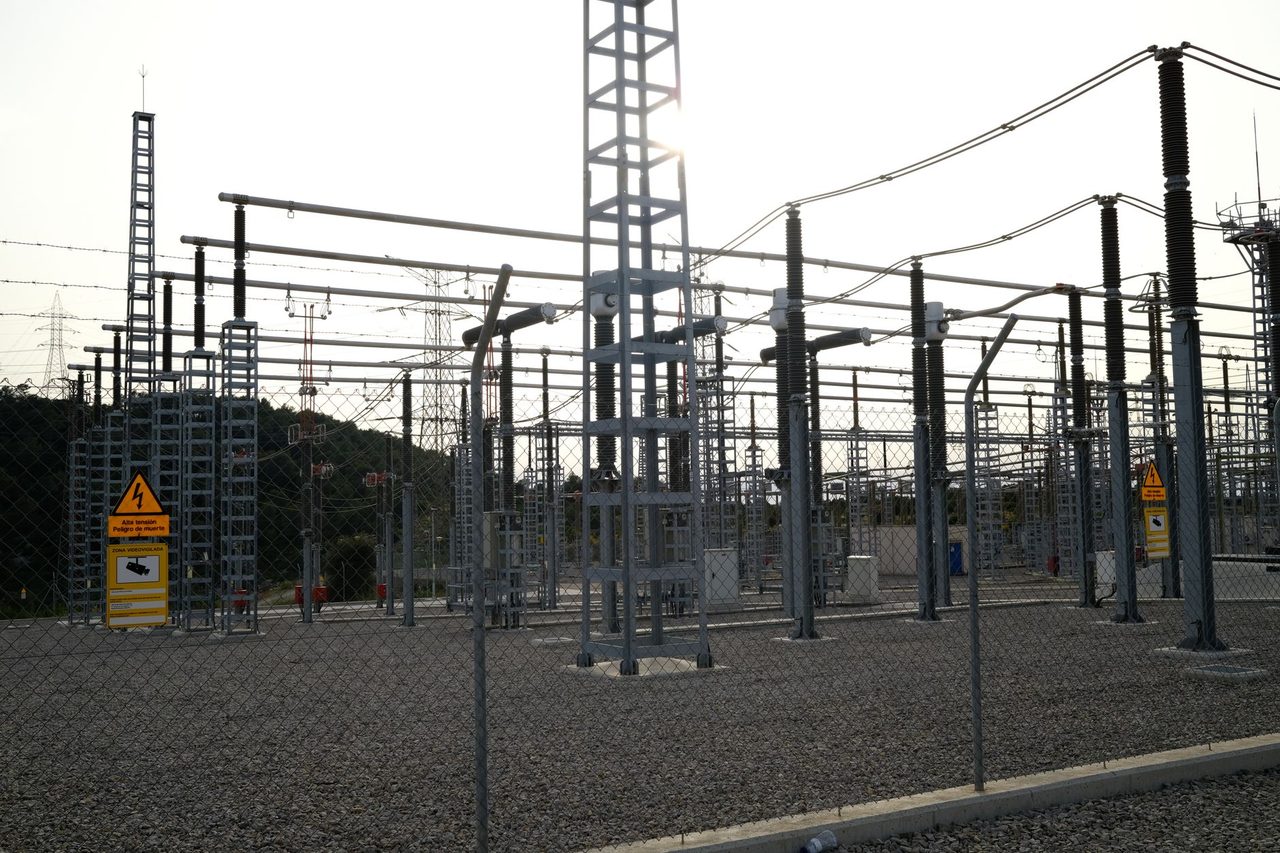
Photo: Enric Cruz López on Pexels
India’s data centre build-out is forcing a new conversation on power sourcing: not only how to buy renewable electricity, but how to secure legal access, predictable delivered cost, and operational resilience under state-specific rules. For many operators, the next frontier in 2026 is not another generic open-access PPA. It is the captive and group-captive route, often combined with solar-wind hybrids, third-party firming power, and on-site BESS.
This is a different decision from classic 24/7 clean-energy contracting. A captive structure changes the economics of cross-subsidy surcharge, affects project equity ownership, creates compliance obligations under electricity rules, and can materially alter lender risk perception. For hyperscale campuses, colocation operators and edge facilities in India, these choices now sit at the centre of capex planning, operating-cost forecasting and SLA design.
This article looks at how data centres should evaluate captive and group-captive power in 2026, with a practitioner focus on tariffs, policy treatment, contracting issues, reliability implications and bankability.
Why captive power is back on the data centre agenda
Indian data centres remain among the most power-intensive commercial loads in the country, with campus demand commonly ranging from 20 MW to more than 100 MW. Even a mid-sized facility operating at a 15-20 MW average load can consume 130-175 million units annually. At these volumes, a Rs 0.50-1.50/kWh mistake in power strategy has a major EBITDA effect.
Three 2026 realities are pushing operators to revisit captive routes:
- Utility HT tariffs for commercial and mixed-use categories remain elevated in several states, often in the Rs 7.5-10.5/kWh all-in range before considering standby and reliability investments.
- Open-access users in many states still face uncertainty around cross-subsidy surcharge, additional surcharge, banking treatment, and time-of-day settlement.
- Data centres increasingly want a higher share of renewable supply while preserving firm power and reducing exposure to annual policy changes.
Under a properly structured group-captive model, consumers can generally avoid cross-subsidy surcharge, subject to meeting legal tests around equity ownership and consumption. That can be a decisive advantage versus third-party open access. In practical terms, avoiding CSS of roughly Rs 1.0-3.5/kWh, depending on state and consumer category, can swing the case strongly in favour of captive supply.
But captive is not a free discount. It introduces shareholding discipline, offtake alignment risk, compliance overhead, and governance complexity. Data centres must treat it as a long-term energy platform, not just a tariff arbitrage product.
Captive and group-captive structures: what actually matters in 2026
The broad framework remains familiar: captive generating plants are governed by the Electricity Rules, with group captive typically requiring at least 26% ownership by captive users and at least 51% of aggregate power consumption by those captive users on an annual basis. In practice, this means data centre sponsors must focus on three issues from day one:
- Whether their load shape is stable enough to satisfy annual consumption thresholds
- Whether co-captive participants are creditworthy and operationally aligned
- Whether the equity structure is robust against future dilution, restructuring or investor exits
For data centres, annual consumption is usually not the problem. Load is relatively flat, utilisation is high, and ramp-up can be forecast with reasonable confidence, especially for pre-committed hyperscale campuses. The problem is often the transition period. During the first 12-24 months, if IT load build-out trails plan, the captive project may fail consumption tests unless there is a carefully designed co-user pool.
That is why many 2026 structures now include:
- One anchor data centre load taking the largest share
- One or more industrial co-users with predictable base demand
- Hybrid generation portfolios to improve annual CUF and scheduling flexibility
- Back-to-back arrangements for balancing and residual supply
A pure solar captive strategy is usually too narrow for serious data centre applications unless the objective is only daytime cost reduction. More common now are hybrid portfolios with solar plus wind, and increasingly a BESS layer for schedule management, ramp support and peak shaving.
Delivered cost stack: captive versus third-party open access
The right comparison is not PPA tariff versus DISCOM tariff. It is delivered power cost under realistic dispatch, losses, charges, balancing assumptions and standby needs.
A 2026 data centre evaluation should compare at least three cases:
- Base utility supply with no open access
- Third-party open access renewable or hybrid procurement
- Group-captive open access with optional BESS integration
Illustratively, a utility HT supply may land in the Rs 8.0-10.0/kWh range in several high-tariff states after fixed charges, demand charges and energy charges. A third-party open-access renewable product may show a generation tariff of Rs 3.2-4.5/kWh, but delivered cost can rise to Rs 5.5-7.5/kWh after wheeling, transmission, losses, SLDC charges, banking limitations, scheduling costs, and potentially CSS and additional surcharge.
A group-captive structure may bring the delivered figure down by roughly Rs 0.8-2.5/kWh versus third-party open access where CSS avoidance is available and compliance is preserved. However, that advantage must be adjusted for:
- Equity capital tied up in the SPV
- Lower flexibility if exits or ownership changes are needed
- Potential true-up exposure if annual captive criteria are missed
- Internal legal and accounting burden
For large campuses with 15 MW+ steady demand, the economics often still favour group captive if the plant is well sized and policy assumptions are conservative. For smaller edge data centres, especially under 5 MW average load, the transaction cost and compliance burden may outweigh the benefit unless they aggregate with other loads.
This is where Growthifye’s 24/7 clean power contracting and On-site generation & BESS capabilities become especially relevant: the cheapest structure on paper is often not the lowest-risk structure after schedule deviations, curtailment and backup requirements are priced in.
State policy variability can make or break the model
India still does not offer a single national commercial outcome for open access. The legal framework is central, but the economic reality is state-specific. That means a group-captive strategy that works well in Karnataka may not translate directly to Maharashtra, Tamil Nadu, Telangana, Uttar Pradesh or Haryana.
In 2026, data centre sponsors should underwrite at least the following state-level variables:
- Cross-subsidy surcharge trajectory for non-captive cases
- Additional surcharge applicability and revisions
- Banking availability, settlement period and banking charges
- Time-of-day treatment and peak-hour restrictions
- Open-access approval timelines and curtailment experience
- STU capacity, bay readiness and evacuation constraints
- Standby supply terms from the host DISCOM
For example, where banking is tightly restricted or settled unfavourably, oversizing solar to chase annual matching can become value-destructive. Conversely, where hybrid scheduling and night injection are easier to manage, wind-heavy or hybrid captive portfolios can materially reduce residual grid draw.
Many data centre buyers also underestimate evacuation and interconnection lead times. A 50 MW captive project with strong tariff economics is of little use if bay allocation, terminal equipment, protection coordination or open-access approval takes 9-15 months longer than the IT deployment schedule. Energy strategy must therefore be synchronised with campus commissioning.
Reliability architecture: captive power does not replace redundancy design
A common mistake is to treat captive renewable supply as a reliability solution by itself. It is not. It is an energy-cost and decarbonisation solution that must sit inside a layered reliability architecture.
Data centres still require deterministic uptime performance. That means the power design must separately address:
- Dual-source or N+1 utility intake strategy where feasible
- DG backup philosophy and fuel autonomy
- UPS topology and ride-through duration
- BESS dispatch hierarchy for outages versus tariff optimisation
- Black-start and resynchronisation logic
- Priority allocation between IT load, cooling load and non-critical auxiliaries
In practice, on-site BESS for data centres in 2026 is increasingly being evaluated at 30-120 minutes of selected-load support, not as a full multi-hour islanding resource for all load. Typical use cases include:
- Reducing short-duration grid-event exposure
- Smoothing changeover events and avoiding nuisance trips
- Peak-demand clipping under ToD tariffs
- Supporting captive/open-access schedule adherence
- Managing diesel runtime and start frequency
Indicative capex for utility-scale or behind-the-meter BESS remains highly configuration-specific in 2026, but many project models continue to test all-in installed costs around Rs 4.5-6.5 crore per MWh for high-spec stationary applications, with variation based on duration, PCS architecture, fire systems, thermal controls and EPC scope. For data centres, safety engineering and controls integration can push costs above generic C&I benchmarks.
That is why battery sizing should never be done using only arbitrage assumptions. The higher-value question is what outage modes, transition events and tariff events the battery is actually expected to solve.
Contracting and financing issues lenders now focus on
Lenders financing captive-linked generation for data centre offtake are asking sharper questions in 2026 than they were two years ago. They want to know not just whether the energy will be sold, but whether the captive status will survive, whether evacuation is executable, and whether offtake concentration is tolerable.
The key diligence themes include:
- Is the equity ownership and voting structure compliant and durable over time?
- Are annual captive-consumption thresholds realistic under ramp-up scenarios?
- What happens if one co-captive participant exits or reduces load?
- Is there a substitute offtaker mechanism?
- How are deemed-generation, curtailment and change-in-law treated?
- Is the residual grid supply contractually secured on acceptable terms?
- Are scheduling and balancing responsibilities clearly allocated?
For data centre sponsors, this means the energy workstream must involve legal, treasury, operations and site engineering teams early. A procurement-only approach often misses hidden exposures.
Another 2026 consideration is the treatment of data centre customer commitments. If colocation tenants are buying “renewable-backed” capacity or lower-carbon hosting products, the operator must ensure that the captive structure’s output, allocation methodology and fallback supply logic support those representations. Marketing claims built on annual RE percentages can break down quickly when hourly shortfalls, curtailment or regulatory restrictions hit actual delivery.
A practical decision framework for Indian data centre operators
No single route is universally superior. The right answer depends on load scale, state policy, commissioning schedule, credit appetite and uptime design.
A practical framework is:
- Use utility supply as the reliability baseline, not as the sole energy strategy
- Test group captive where steady demand exceeds roughly 10-15 MW and the project horizon is long enough to justify structuring effort
- Prefer hybrid renewable portfolios over stand-alone solar for flatter residual demand
- Add BESS only after defining reliability and tariff objectives clearly
- Stress-test policy changes, banking restrictions and load ramp risk before locking equity
- Align interconnection milestones with data hall energisation dates
- Maintain a documented fallback path for captive non-compliance or project delay
In several cases, the optimal answer in 2026 is a layered portfolio:
- Core utility connectivity for assured supply
- Group-captive hybrid procurement for a large share of annual energy
- Limited merchant or bilateral top-up contracts for residual shape gaps
- Behind-the-meter BESS for transition support, peak clipping and dispatch flexibility
- EMS-led optimisation across load, backup and tariff windows
That layered model can outperform both a utility-only strategy and an over-engineered RTC structure, especially where policy uncertainty remains high and uptime obligations are strict.
For Indian data centres, the strategic shift is clear: energy sourcing is now an infrastructure design decision, not just a procurement line item. Group captive can be a powerful lever for cost control and decarbonisation, but only when the legal structure, interconnection pathway, balancing plan and reliability architecture are engineered together.
If you are evaluating captive or group-captive supply for a new or operating data centre, contact Growthifye’s advisory desk. We help clients assess policy risk, delivered-cost economics, interconnection readiness, BESS use cases and bankable contract structures for 2026 deployments.
Explore Growthifye's related capabilities
This analysis connects directly to our advisory practice: Load & reliability engineering · 24/7 clean power contracting · Grid connectivity & redundancy · On-site generation & BESS.
About the author

Founder & CEO, Growthifye — engineering and financing India's clean-energy transition.
Want this analysis applied to your project?
Talk to our team