India Data Centre Captive Power 2026: Group Captive, Open Access and BESS
By Sudarshan Karweer · sudarshan@growthifye.com · +91 84510 99371 (Call / WhatsApp) · 2026-09-07
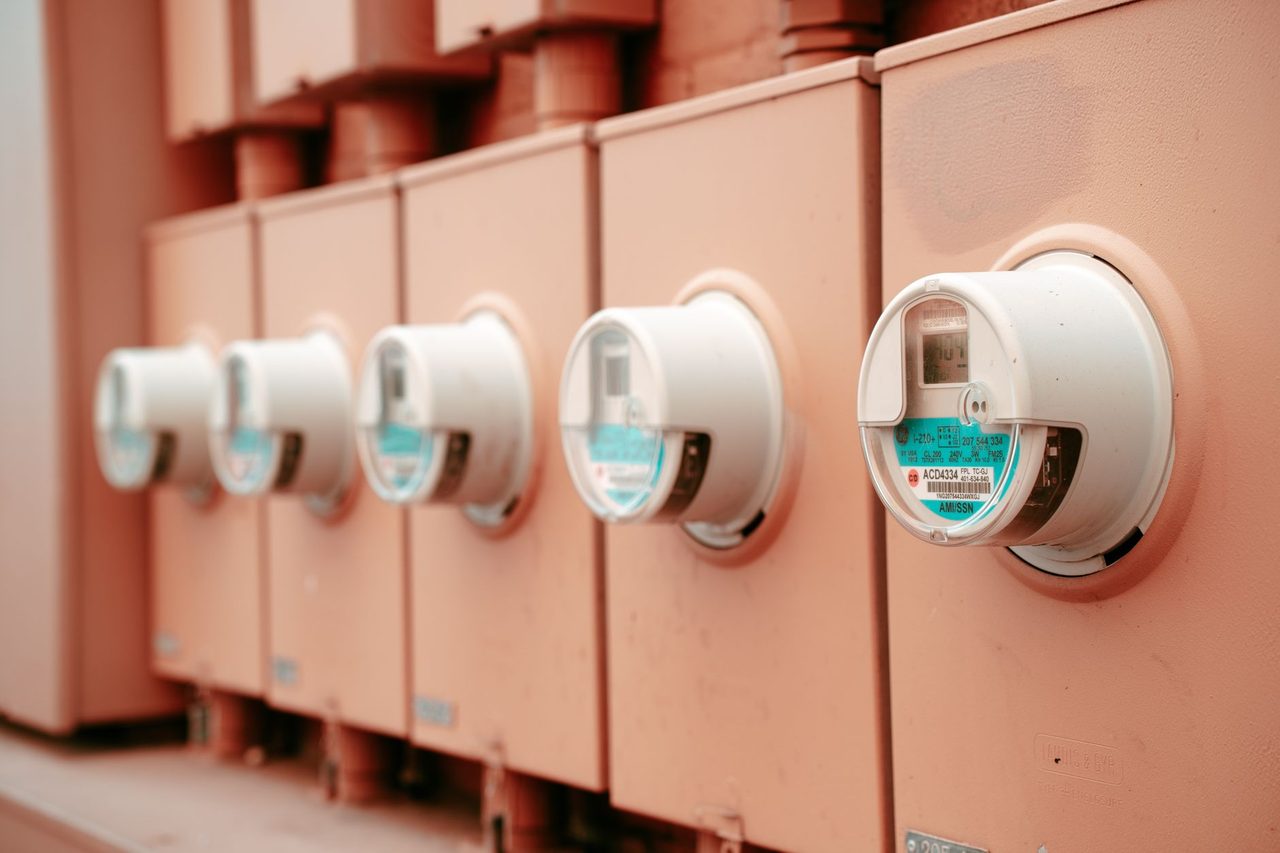
Photo: Connor Scott McManus on Pexels
India’s data-centre sector has spent the last two years talking about 24/7 CFE, RTC PPAs, PUE and dual-grid reliability. A related but distinct boardroom question in 2026 is now getting equal attention: should a data-centre operator move part of its portfolio to captive or group-captive renewable power instead of relying only on third-party open-access procurement?
For hyperscale campuses, colocation operators and large enterprise data centres, the answer is increasingly commercial rather than ideological. Captive structures can reduce delivered energy cost, improve control over contract design, and create a clearer path for co-optimising solar, wind, firming and battery dispatch. But they also introduce legal tests, shareholder obligations, scheduling realities, financing constraints and state-specific execution risk.
This article looks at captive and group-captive procurement specifically for Indian data-centre loads in 2026: when it works, where it breaks, how charges compare with third-party open access, and how on-site BESS and energy management change the economics.
Why captive is back on the table for data centres in 2026
The main trigger is cost pressure. Data-centre power buyers in Maharashtra, Tamil Nadu, Telangana, Karnataka, Uttar Pradesh and Haryana are facing a 2026 delivered-cost stack that still includes several familiar pain points:
- utility HT tariffs often in the range of Rs 7.0-10.5/kWh depending on voltage level, demand, ToD period and local levies
- open-access cost volatility due to wheeling, transmission, banking limits, scheduling and imbalance exposure
- uncertainty around cross-subsidy surcharge trajectories for third-party consumers in some states
- stricter internal expectations on carbon reporting, hourly clean-energy matching and resilience
- rising diesel replacement pressure for backup and black-start support
In that setting, captive and group-captive projects are attractive because they can reduce or eliminate cross-subsidy surcharge exposure where the legal tests are properly met. For a large 24x7 load, that difference alone can materially shift the levelised delivered cost versus third-party open access.
A second driver is control. Data-centre operators increasingly want a more engineered portfolio instead of a simple “buy renewable MWh” approach. A captive structure can be aligned with campus load shape, UPS strategy, diesel offset, and future BESS installation. That is particularly useful where operators are building 50 MW to 300 MW campuses in phases and expect non-linear ramp-up in IT load.
A third driver is investor and lender scrutiny. Energy cost certainty and uptime architecture now influence data-centre underwriting. A captive platform, if properly structured, can create a more bankable long-tenor supply arrangement than a short-form third-party OA contract with floating operational assumptions.
Captive and group-captive: what matters in practice
In India, practitioners know the broad legal framework, but execution failures still happen because the structure is treated as a paperwork exercise rather than an operating model.
For data centres, the most relevant route is usually group captive. In practical terms, the consumer or consumers must collectively hold at least 26% of the equity in the captive generating plant, and captive users must consume at least 51% of the electricity generated on an annual basis, proportionate to shareholding. Those tests are simple to state and easy to mismanage.
What matters operationally:
- shareholding has to be real, documented and maintained through the relevant period
- annual consumption tracking must be tightly monitored, especially where multiple captive users sit in the SPV
- if load ramp-up is delayed, the 51% consumption test can come under stress
- if generation exceeds planned captive drawal, compliance risk can emerge unless the portfolio is carefully allocated
- shareholder changes, campus restructuring or M&A events can disturb the captive position
For a data-centre buyer, this means the energy strategy cannot be separated from corporate structuring. Legal, finance, operations and power-market teams must all work off the same annual compliance model.
This is where detailed Load & reliability engineering becomes relevant. Captive sizing should reflect not only expected annual consumption but the usable hourly offtake profile, outage philosophy, redundancy architecture and the realistic pace of IT-load addition.
Cost comparison: group captive versus third-party open access in 2026
The reason buyers revisit captive is not theoretical savings but delivered tariff impact after all charges. While actual economics are state- and project-specific, a practical 2026 comparison often looks like this for utility-scale renewable power delivered to a data-centre consumer:
- plain utility HT supply: often around Rs 7.0-10.5/kWh delivered, with higher effective costs in peak periods depending on state tariff and demand structure
- third-party OA RE: often around Rs 4.5-7.5/kWh delivered after generation tariff, transmission, wheeling, losses, SLDC charges, banking treatment and applicable surcharge stack
- group captive OA RE: often around Rs 4.0-6.5/kWh delivered where CSS exemption and workable banking/scheduling assumptions hold
These are not headline PPA tariffs; they are delivered-cost ranges. The gap is driven by several variables:
- state transmission and wheeling charges
- loss factors across ISTS/STU/distribution network use
- banking availability, banking charges and settlement methodology
- ToD treatment and balancing energy cost
- cross-subsidy surcharge applicability
- additional surcharge treatment, where relevant
- forecasting, scheduling and deviation cost pass-through
- curtailment and deemed-generation provisions
For a 100 MW average-equivalent annualised data-centre energy portfolio, even a Rs 0.75-1.25/kWh saving versus third-party OA can translate into tens of crores per year. That is why CFOs and infrastructure funds care about structural details that seemed secondary a few years ago.
However, buyers should avoid one common mistake: using annual average savings to justify a structure intended to serve a 24x7 reliability-sensitive load. If the cheaper tariff comes with weaker shaping, heavier imbalance cost or tighter curtailment exposure, the realised cost may be higher once BESS dispatch, utility fallback and reliability measures are included.
The central challenge: data-centre load is 24x7, captive RE generation is not
A captive solar or wind asset does not automatically solve a data-centre’s hourly requirement. Most large campuses have a high and relatively stable base load, often with nighttime minima still substantial. Renewable captive projects therefore have to be evaluated on shape, not just annual units.
Three patterns are now common in 2026:
- solar-heavy captive for daytime offset plus grid supply at night
- wind-solar hybrid captive to improve hourly spread and reduce balancing cost
- hybrid captive plus BESS, with selective evening peak support, outage ride-through support, and tariff optimisation
For many campuses, the optimal design is not 100% captive supply. Instead, it is a portfolio split between:
- utility grid for firm backbone and fault-level support
- captive or group-captive renewable supply for bulk energy cost reduction
- on-site BESS for short-duration reliability, ToD arbitrage, diesel displacement and contingency management
- optional shortfall procurement through exchange or bilateral balancing arrangements
This is where 24/7 clean power contracting and On-site generation & BESS need to be evaluated together rather than as separate workstreams. A captive project that saves on energy but forces expensive balancing every evening may underperform a slightly costlier hybrid structure with better hourly alignment.
As a rule of thumb, 2-hour BESS in the 5-15% range of contracted demand can be useful for targeted reliability and peak support, but not as a substitute for full overnight renewable shaping. Four-hour BESS can improve dispatch flexibility materially, though capex and cycle economics must be tested carefully against tariff differentials and outage use cases. In 2026, front-of-meter and behind-the-meter BESS costs continue to be project-specific, but fully installed systems for high-quality data-centre applications still require disciplined dispatch modelling rather than generic vendor savings claims.
State-by-state reality: policy language is not enough
Data-centre executives often ask whether group captive is “allowed” in a state. That is the wrong first question. The better question is whether it is executable with acceptable timing and predictable delivered cost.
In practice, project outcomes depend on:
- STU and DISCOM processing timelines for open-access approval
- substation bay availability and evacuation readiness
- metering architecture and telemetry compliance
- banking rules, especially restrictions by month or settlement cycle
- treatment of infirm power and commissioning phasing
- curtailment behaviour in congested zones
- willingness of lenders to accept state-specific operational uncertainty
Maharashtra and Tamil Nadu remain large demand centres but require careful charge-stack and operational modelling. Karnataka and Telangana can be attractive for some load profiles but still need close attention to scheduling and distribution interface details. Uttar Pradesh and Haryana matter increasingly because of NCR-linked data-centre growth, yet connectivity and local charge assumptions must be validated site by site. There is no substitute for an actual approval-path and cost-stack diligence.
This is especially true for campuses planning phased expansion. A project that is compliant at 40 MW of data-centre load may fail the captive-consumption test or lose cost efficiency if the next campus phase slips by twelve months.
Financing, security package and contract architecture
Lenders like predictable offtake, but group captive introduces a dual character: the buyer is both shareholder and consumer. That can be positive if structured well, because it aligns incentives and improves visibility on long-term demand. It can also create complexity around default, dilution, exit rights and replacement of captive users.
The key financing questions in 2026 typically include:
- whether the captive SPV has sufficiently robust equity commitments from users
- how minimum offtake or deemed-offtake mechanics are drafted
- whether change-in-law and charge variation provisions are symmetrical and financeable
- how scheduling and deviation risk is allocated between generator, trader if any, and consumer
- how BESS, if included, is owned and monetised
- what happens if a captive user breaches the consumption threshold or exits the structure
Data-centre buyers should pay particular attention to step-in and substitution mechanics. If one captive participant under-consumes, can another participant absorb the shortfall without disturbing compliance? If the campus expansion plan changes, can shareholder proportions and contracted capacity be rebalanced cleanly? If not, the apparent captive savings may be fragile.
Security arrangements also deserve scrutiny. Developers and lenders may seek LC support, payment security, DSRA comfort, share pledges or restrictions on transfer. Data-centre operators must ensure these terms remain compatible with broader infrastructure financing and REIT-style asset strategies.
Designing the right captive model for a data-centre campus
A practical captive design process should begin with engineering and operations, not with a tariff quote. The wrong sequence is to secure a cheap RE supply number first and then discover that the load shape, redundancy philosophy and growth curve do not fit.
A better sequence is:
- establish campus load forecast by phase, including day-night profile and critical/non-critical segmentation
- define uptime architecture, utility redundancy and tolerated curtailment exposure
- model hourly demand against candidate solar, wind and hybrid generation profiles
- test BESS use cases separately for reliability, ToD arbitrage and diesel replacement
- quantify delivered cost under utility, third-party OA and group-captive cases
- map legal compliance requirements for captive shareholding and annual consumption
- align lender requirements, payment security and SPV governance before term-sheet stage
For example, a 60 MW initial campus with a path to 120 MW may find that a single oversized group-captive project creates early-year compliance stress. In such a case, a staged captive build or a hybrid procurement stack may be superior. Conversely, a mature 100 MW-plus steady-load campus may be an excellent candidate for a larger group-captive portfolio because its annual offtake is easier to forecast and allocate.
Operators should also integrate Energy management systems into the procurement design. Real-time visibility into utility drawal, captive injection, battery state of charge, DG support and ToD cost is essential if the strategy is to deliver the modelled savings. Without operational telemetry and dispatch discipline, the portfolio may drift into expensive balancing and compliance underperformance.
What boards should ask before approving a captive strategy
Before signing, data-centre boards and investment committees should ask a short set of hard questions:
- Is the comparison being made on delivered hourly cost or only on annual average energy cost?
- What is the downside case if banking weakens, curtailment rises or load ramp-up slows?
- Who monitors the 26% and 51% captive tests through the year?
- What is the backup plan if one captive participant exits or under-consumes?
- How much of the savings depend on aggressive assumptions about BESS cycling or balancing cost?
- Are utility connectivity and campus redundancy still adequate if captive supply underperforms?
If these questions do not have quantified answers, the procurement is not ready.
For Indian data centres in 2026, group captive is a powerful tool, but only when treated as an integrated infrastructure decision across tariff, law, dispatch, storage, metering, financing and uptime engineering. Done right, it can reduce delivered cost, improve control and create a stronger platform for round-the-clock clean energy. Done casually, it can produce compliance risk and operational complexity that erase the headline savings.
If your team is evaluating captive, group-captive or hybrid open-access power for a new or operating campus, contact Growthifye’s advisory desk. We help data-centre sponsors, developers and lenders structure bankable power strategies across procurement, storage, connectivity and reliability.
Explore Growthifye's related capabilities
This analysis connects directly to our advisory practice: Load & reliability engineering · 24/7 clean power contracting · Grid connectivity & redundancy · On-site generation & BESS.
About the author

Founder & CEO, Growthifye — engineering and financing India's clean-energy transition.
Want this analysis applied to your project?
Talk to our team