India Data Centre Energy Attribute Accounting 2026: EACs, Hourly Claims and Audit Readiness
By Sudarshan Karweer · sudarshan@growthifye.com · +91 84510 99371 (Call / WhatsApp) · 2026-09-08
Photo: Brett Sayles on Pexels
India’s data centre market is moving beyond annual renewable percentages toward auditable, hour-by-hour clean electricity claims. In 2026, hyperscalers, colocation operators, lenders, and enterprise customers increasingly ask a harder question: not whether a facility bought renewable electricity, but whether it can prove when that electricity was generated, how it was delivered, what losses and storage conversions occurred, and whether the environmental attribute claim is double counted anywhere in the chain.
That shift has major commercial implications. A data centre may have a competitive tariff through open access, a well-sized BESS, and robust redundancy, yet still struggle to support a 24/7 clean power claim if meter boundaries, settlement logic, certificate ownership, and storage accounting are weak. For operators in India, this is becoming a board-level issue because energy claims now affect customer contracts, financing diligence, ESG reporting, and procurement strategy.
This article focuses on a topic distinct from tariff design or captive structuring: energy attribute accounting for data centres in India in 2026. The core issue is how to build a defensible chain from generation meter to load meter, including open access delivery, banking or scheduling treatment, battery charging and discharge, residual grid consumption, and retirement of certificates or equivalent attributes. Done well, this reduces claim risk and improves procurement discipline. Done poorly, it creates exposure in customer SLAs, sustainability disclosures, and lender due diligence.
Why attribute accounting matters for Indian data centres in 2026
For most data centre operators, the first generation of renewable sourcing in India was annual and volumetric. If annual renewable procurement equalled annual electricity consumption, the site reported a high renewable share. That approach is now insufficient for at least four reasons.
- Customers increasingly ask for hourly or sub-hourly matching, especially for AI and cloud workloads with round-the-clock loads.
- Regulators and utilities are tightening metering, scheduling, and settlement discipline across open access and captive transactions.
- Battery storage is moving from backup-only to active shaping, which creates a need to track whether discharged electricity should inherit renewable attributes.
- International reporting frameworks and enterprise buyer questionnaires increasingly distinguish between annual matching and time-matched clean supply.
A practical example illustrates the problem. Consider a 100 MW IT load campus with PUE of 1.45. The average facility demand becomes roughly 145 MW inclusive of overheads, translating to about 3.48 million kWh per day. If the operator procures 1.27 billion kWh of renewable energy annually through a mix of solar-wind open access PPAs, the annual number may look clean. But if solar output dominates and the site consumes large evening and night loads from the grid, the hourly clean coverage could fall well below 60-70% unless wind, hydro, or storage is used to shape delivery.
That difference matters. A customer contract claiming “100% renewable powered racks” may not withstand scrutiny if the underlying evidence only supports annual offsetting rather than hourly matching. The commercial risk is not theoretical. Large customers increasingly ask for monthly or hourly matched data, curtailment logs, and details of storage dispatch. Lenders evaluating merchant risk in RTC structures also want visibility on shape risk and attribute transfer.
The building blocks of an auditable claim
To make a credible energy attribute claim, a data centre needs more than a PPA and a utility bill. It needs a consistent accounting architecture. In India, the building blocks typically include the following.
- Generator-side meter data: 15-minute or finer interval data from each contracted renewable asset.
- Delivery path definition: whether power is wheeled under intra-state or inter-state open access, captive/group captive, or utility supply.
- Loss-factor logic: treatment of transmission losses, wheeling losses, and transformation losses between injection and drawal.
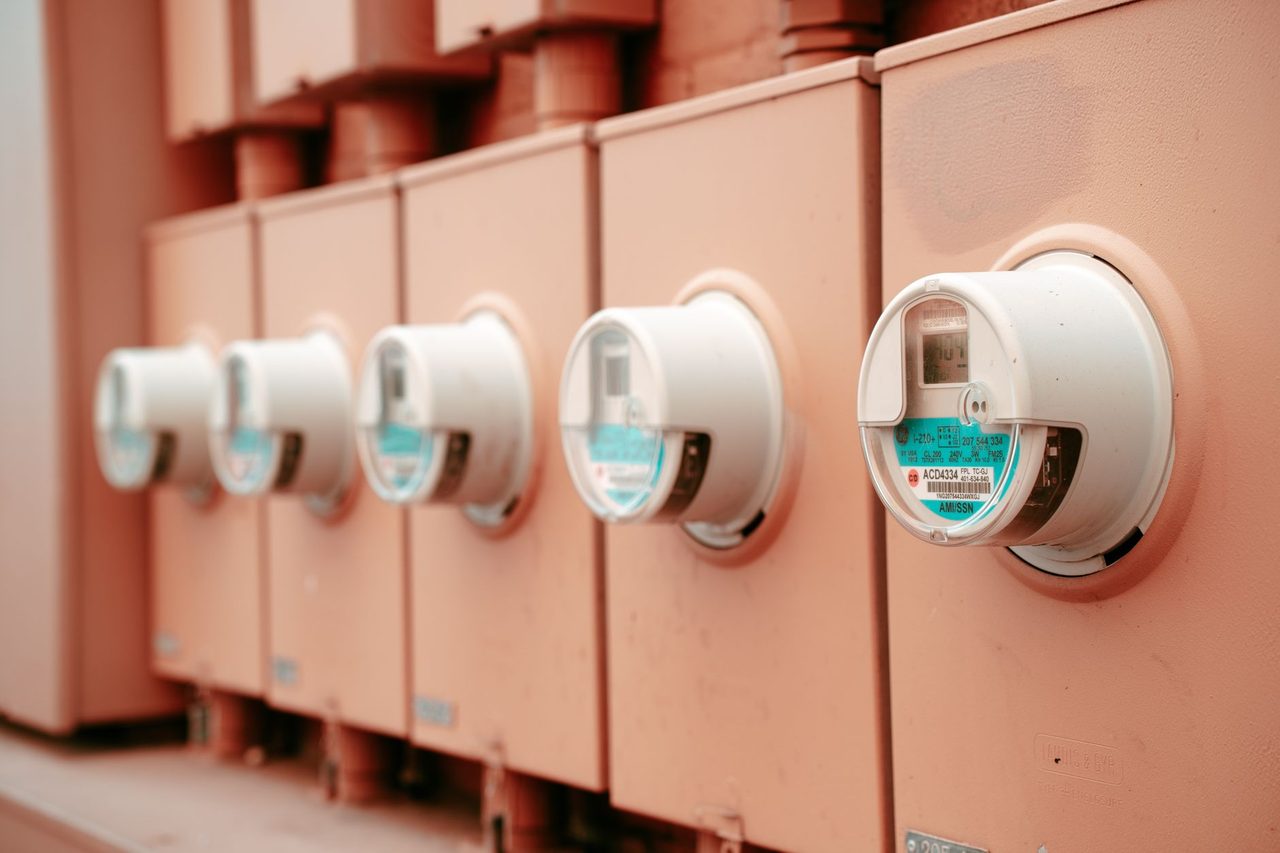
- Load-side meter data: main incomer, DG synchronization points if any, UPS/bypass interfaces where relevant, and BESS charge/discharge meters.
- Certificate or attribute ownership terms: explicit contract language on who owns environmental attributes associated with contracted generation.
- Residual mix treatment: how grid imports not matched by contracted clean generation are classified.
- Retirement ledger: internal or third-party record proving that attributes associated with claimed clean electricity are not sold or claimed elsewhere.
In practice, Indian data centres should insist on 15-minute interval data because state load dispatch and utility settlement systems are already anchored in block-based metering. Hourly claims built from 15-minute blocks are more defensible than monthly allocations. If a generator only provides aggregate daily or monthly data, the resulting claim quality is weak.
The accounting boundary also matters. Many facilities discuss renewable percentages at campus level but meter certain critical loads separately. If the public claim is made for the whole campus, attribute accounting must cover the whole campus load, not just a selected feeder. Conversely, if only one building or phase is covered by a specific renewable arrangement, the claim should be ring-fenced to that metered boundary.
EACs, contractual attributes, and double-counting risk in India
India does not yet have one universal corporate clean power accounting pathway for all market situations, so practitioners often work with a mix of contractual and certificate-based structures. That creates confusion.
At the highest level, there are three questions that should be answered in every transaction.
- Who legally owns the environmental attributes associated with the MWh generated?
- Can those attributes be transferred separately from the physical electricity?
- Has any part of the attribute already been used for another compliance, disclosure, or sale purpose?
For data centres, the largest risk is double counting. This can happen in several ways.
- The developer sells physical power under open access but retains or separately monetises the renewable attribute.
- The buyer claims hourly renewable use based on scheduled generation, while the same generation is used by another party in annual sustainability reporting.
- BESS output is counted as fresh renewable supply without accounting for storage losses or verifying that charge energy came from renewable generation in the claimed period.
- Banking or swap arrangements blur the timing of physical delivery and attribute timing.
Contract drafting should therefore specify attribute transfer with precision. The PPA, power sale agreement, or energy services agreement should define environmental attributes, renewable attributes, emissions attributes, and exclusivity of claims. It should also clarify whether curtailed energy retains attributes for the buyer if generation was available but undeliverable due to grid instruction, and whether replacement power purchased by the seller carries any equivalent attribute.
For many Indian data centres, the most bankable approach in 2026 is to pair physical delivery contracts with a dedicated retirement and reporting protocol rather than rely on generic annual renewable claims. This is especially important where the same portfolio serves multiple buyers or where storage is centrally dispatched across more than one site.
Hourly matching: from concept to settlement-ready methodology
Hourly matching sounds straightforward: compare clean generation with load each hour. In reality, at least six methodological choices must be fixed before reporting any percentage.
- Time granularity: 15-minute blocks rolled into hours, or direct hourly data.
- Geographic boundary: same state, same regional grid, or pan-India portfolio.
- Delivery basis: generation at busbar, post-loss injection, or delivered drawal equivalent.
- Curtailment treatment: count only delivered electricity, or also count contracted but curtailed renewable availability.
- BESS logic: renewable-only charging window, mixed charging, and round-trip loss treatment.
- Residual imports: whether unmatched load is assigned grid average emissions or a location-based factor.
A conservative methodology for Indian data centres should use delivered-equivalent renewable energy after applicable losses, matched against site load on an hourly basis. If a wind asset injects 100 MWh in a given hour and combined transmission and wheeling losses are 6%, then only 94 MWh should be available for matching at the site accounting boundary, subject to actual scheduling and settlement. If that energy is first charged into a battery with 88% round-trip efficiency and discharged later, the matched clean output should reflect only the net discharged MWh, not the gross charge.
This is where Energy management systems become critical. Without a single source of truth for interval meter data, battery telemetry, DG operation logs, and utility imports, the clean matching calculation becomes spreadsheet-heavy and vulnerable to audit challenge. A serious 24/7 programme should automate interval data capture, anomaly flagging, and monthly claim reports.
For a practical benchmark, many early-stage Indian data centre portfolios today can reach 55-75% hourly clean matching with a solar-wind mix and disciplined scheduling. Reaching 80-90% usually requires broader geographic diversity, higher wind share, storage dispatch, or flexible load management. Pushing beyond 90% on a sustained basis generally requires premium contracting and careful treatment of monsoon, low-wind weeks, and curtailment periods.
How BESS changes the claim, not just the reliability outcome
Battery energy storage is often justified on reliability, peak management, and demand-charge optimisation. But from an attribute-accounting perspective, BESS creates both value and complexity.
The value is obvious. A battery can move midday solar into evening demand, improve hourly clean matching, and reduce the need for expensive RTC replacement purchases. For a data centre with 40 MW / 160 MWh of on-site BESS, even one full renewable-shaped cycle per day can materially improve evening clean coverage.
The complexity lies in proving what charged the battery and when. Three situations must be distinguished.
- Renewable-dedicated charging: the battery charges only from metered renewable supply within specified windows. Claims are strongest here.
- Mixed charging with traceable hierarchy: the battery may charge from renewable, grid, and emergency generation, but software allocates discharge based on a documented first-in-first-out or tagged-energy methodology.
- Unsegregated charging: source tracing is weak, so discharged energy should not automatically inherit renewable attributes.
Most audit teams will favour either strict electrical segregation or digital tagging backed by interval metering. If the same BESS provides UPS support, peak shaving, and renewable shifting, separate operating modes and telemetry tags are needed. Otherwise, renewable discharge claims can be overstated.
In this area, On-site generation & BESS strategy should be integrated with commercial reporting from day one. Retrofitting attribute logic after commissioning is harder and often reveals meter gaps. Battery meters should capture gross charge, gross discharge, auxiliary consumption, state of charge, source feeder, and sink feeder at a minimum. If the battery also supports black start or islanding functions, event-based reports should isolate those periods from routine clean matching calculations.
Audit readiness: what customers, lenders, and boards now expect
In 2026, a data centre energy claim should be built as if it will be audited, even if no formal audit is yet mandated. Market expectations have risen quickly.
A practical audit-ready pack should include:
- Site single-line diagram showing all energy entry, storage, generation, and critical distribution points.
- Meter list with CT/PT ratios, accuracy class, data historian source, and time synchronisation method.
- Contract matrix covering utility supply, open access PPAs, captive agreements, battery O&M, and attribute clauses.
- Monthly interval-data archive with exception logs for meter outages and estimation periods.
- Loss-factor assumptions and evidence source, updated when wheeling or network configurations change.
- Curtailment register capturing instructed curtailment, deemed generation treatment if any, and replacement energy purchases.
- Attribute retirement ledger and internal approval workflow for external claims.
Boards and lenders also increasingly ask for claim hierarchy. For example, a site may report:
- Annual renewable procurement percentage.
- Hourly matched clean electricity percentage.
- Carbon-free electricity percentage by location-based methodology.
- Critical-load backup hours supported by BESS without diesel.
These are not interchangeable metrics. Presenting them separately improves credibility. It also helps commercial teams avoid over-claiming in customer proposals.
This is where Load & reliability engineering intersects with accounting. If redundancy schemes, ATS logic, UPS bypass events, and generator test runs are not integrated into the reporting model, the site may inadvertently classify diesel-backed intervals as clean or fail to explain anomalies in imported power. Operational reality and accounting logic must match.
A 2026 action plan for Indian data centre operators
Data centre operators do not need perfect systems on day one, but they do need a disciplined roadmap. A sensible 2026 action plan looks like this.
- Step 1: Define the claim. Annual renewable share, hourly matching, or a customer-specific clean supply product.
- Step 2: Fix the accounting boundary. Entire campus, building, hall, or dedicated customer cage.
- Step 3: Review contracts for attribute ownership, curtailment, replacement power, and storage treatment.
- Step 4: Upgrade metering to interval-grade coverage across source, storage, and load nodes.
- Step 5: Implement a data model that converts raw meter data into delivered-equivalent hourly matched reports.
- Step 6: Establish a monthly governance process involving operations, finance, legal, and customer-facing teams.
- Step 7: Conduct a mock audit before making public or contractual hourly clean claims.
Commercially, operators should budget for this capability rather than treat it as a reporting afterthought. For a large hyperscale campus, the cost of better meters, telemetry integration, software workflows, and external methodology review is small relative to total power cost. If delivered power costs are in the range of Rs 5.5-8.5/kWh depending on state, open access design, and shaping requirements, the incremental spend required for robust accounting is marginal compared with the value of defensible claims, customer confidence, and financing clarity.
India’s data centre sector is entering a phase where clean energy credibility matters as much as clean energy procurement. The winning platforms in 2026 will not just sign PPAs; they will prove delivery hour by hour, define exactly what their battery output represents, and maintain an audit trail that survives scrutiny from enterprise customers, lenders, and internal risk committees.
If your portfolio is designing a 24/7 clean supply programme, reviewing hourly claims, or upgrading metering and storage accounting, contact Growthifye’s advisory desk. We help data centres build bankable, audit-ready energy strategies spanning 24/7 clean power contracting, Energy management systems, and implementation-level reporting discipline.
Explore Growthifye's related capabilities
This analysis connects directly to our advisory practice: Load & reliability engineering · 24/7 clean power contracting · Grid connectivity & redundancy · On-site generation & BESS.
About the author

Founder & CEO, Growthifye — engineering and financing India's clean-energy transition.
Want this analysis applied to your project?
Talk to our team