India 2026 NGO Energy Access: Solar Water Supply, CSR Funding and MRV
By Sudarshan Karweer · sudarshan@growthifye.com · +91 84510 99371 (Call / WhatsApp) · 2026-09-18
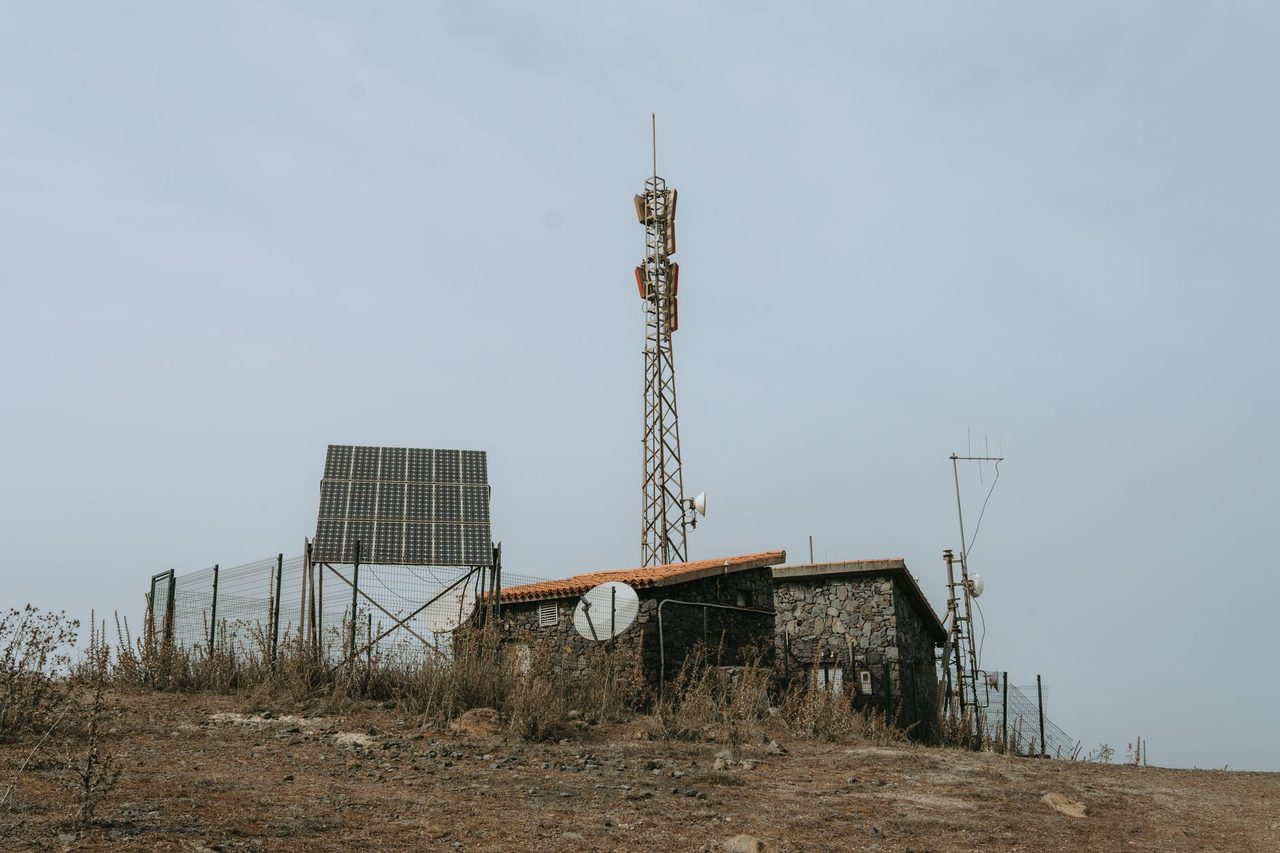
Photo: Iban Lopez Luna on Pexels
India’s rural energy-access conversation is widening beyond lighting, schools and health facilities. In 2026, one of the most practical and under-structured opportunities for NGOs, CSR foundations, developers and district authorities is solar-powered drinking water supply. For villages facing erratic feeders, high diesel dependence, weak groundwater management and high O&M failure rates, solar water systems can deliver immediate welfare gains while also creating measurable energy, emissions and resilience outcomes.
For practitioners, the attraction is straightforward. Rural piped water and decentralized drinking water systems have recurring energy needs, predictable daily load curves, visible public benefit and strong convergence potential with government water programmes, community institutions and philanthropy. Unlike standalone awareness projects, solar water systems can be engineered, financed, monitored and audited with clear performance baselines.
This makes the segment especially relevant for NGO energy-access portfolios focused on CSR funding, grants, community infrastructure and impact verification. It also creates an entry point for renewable-energy EPC firms, pump suppliers, remote-monitoring vendors, utilities and lenders who want to participate in community energy with better accountability.
Why solar rural water supply is a 2026 priority
India’s Jal Jeevan Mission has significantly expanded rural tap-water infrastructure, but field implementation still faces power-quality and operating-cost constraints. Many village water supply systems depend on grid power that is either unreliable during pumping windows or expensive once systems shift to metered supply categories. In remote pockets, diesel backup continues to be used for source pumping or storage filling, raising operating costs and increasing downtime when fuel logistics fail.
Solarization addresses a narrow but important problem: reliable daytime energy for pumping, treatment and storage. In village schemes where water demand can be met by daytime pumping into overhead tanks, solar power often aligns well with operational realities. This is especially true where the scheme already has storage capacity of 20,000 to 100,000 litres and can shift pumping to solar hours.
The use case is strongest in:
- Single-village schemes with borewell or surface-source pumping needs of 2 kW to 15 kW
- Habitations where feeder supply is below 8 to 12 hours per day or voltage is unstable
- Areas currently using diesel pumps of 3 HP to 10 HP
- Community institutions such as schools, anganwadis, panchayat campuses and health points connected to a shared water system
- Tribal, hilly or aspirational districts where service reliability matters more than short-term tariff arithmetic
In 2026, solar water systems also fit the priorities of many CSR committees because the intervention sits at the intersection of water, health, women’s time savings, clean energy and climate adaptation. That improves the ability to build blended budgets rather than treating the project as a pure energy asset.
Typical system designs and cost ranges in India
For NGOs and funders, the first mistake is to treat every solar water project as a standard PM-KUSUM agricultural pump analogue. Community drinking water systems have different hydraulic needs, water-quality constraints, storage profiles and social-accountability requirements.
A practical system architecture may include:
- Solar PV array sized between 3 kWp and 25 kWp depending on pump horsepower, dynamic head and daily demand
- VFD-compatible AC or DC pump set, often 3 HP to 15 HP
- Raw water pumping from borewell, infiltration well or surface source
- Storage tank or overhead reservoir sized for one day or partial-day autonomy
- Optional treatment unit such as iron removal, chlorination, UF or RO depending on source quality
- Smart controller, flow meter, energy meter and GSM/IoT data logger
- Distribution standposts or piped village network connection
- Lightning protection, fencing and theft mitigation
Indicative 2026 capex ranges seen in the market:
- 3 kWp to 5 kWp village drinking water pumping package: Rs 4 lakh to Rs 7 lakh
- 5 kWp to 10 kWp package with controls and storage integration: Rs 7 lakh to Rs 14 lakh
- 10 kWp to 25 kWp community water scheme with treatment interface and remote monitoring: Rs 14 lakh to Rs 35 lakh
- Water ATMs or treated drinking-water dispensing systems with solar integration: Rs 8 lakh to Rs 30 lakh depending on purification technology and dispensing setup
These numbers vary materially with bore depth, head, civil works, treatment requirements and distribution complexity. In hard-rock geologies or fluoride/iron-affected belts, treatment and source-development costs can exceed the solar component.
For comparison, diesel pumping can cost roughly Rs 18 to Rs 28 per kWh equivalent when fuel, transport, lubrication and local handling losses are included. Grid power may be cheaper on paper, often in the Rs 4.5 to Rs 7.5 per kWh range for public water supply or local utility categories, but actual service quality is the critical variable. In many villages, outages and low voltage create hidden costs through tanker purchases, operator overtime, pump burnout and service disruption.
Delivery models that actually work
In 2026, the most bankable NGO-led projects are not isolated donations of equipment. They are programme structures with defined asset ownership, O&M funding and escalation protocols.
Four delivery models are common:
- CSR-funded capex, panchayat-owned asset, local operator-managed O&M
- Grant-funded pilot with district convergence under Jal Jeevan Mission or state rural water supply departments
- NGO-designed programme implemented by EPC partner with annual maintenance contract of 3 to 5 years
- Community-energy partnership where a developer or social enterprise runs the system under a service agreement and receives annuity-style payments tied to uptime
The first model is the most common, but it also has the highest post-installation failure risk if O&M is not ring-fenced. A better structure is to provide capex support with a prepaid maintenance reserve or annual CSR-backed O&M commitment. For example, a 5 kWp to 10 kWp system may require annual O&M of Rs 25,000 to Rs 80,000 depending on site conditions, telemetry and treatment complexity. Without that, even minor failures in controllers, chlorination units or pump components can take the scheme offline for months.
This is where Growthifye capabilities such as Program design & theory of change and Compliance & governance become important. The intervention should not be framed as “install solar and exit.” It should define who pays for preventive maintenance, what uptime is expected, how water quality is tested, how user grievance logs are maintained and what district authority receives monthly performance data.
Policy and regulatory context in 2026
There is no single national scheme dedicated exclusively to NGO-financed solar drinking water, so practitioners need convergence thinking.
Relevant policy anchors in 2026 include:
- Jal Jeevan Mission for rural drinking water service delivery and infrastructure convergence
- Ministry of New and Renewable Energy support ecosystem for off-grid and decentralized solar applications through state nodal agencies and market development channels
- CSR eligibility under Schedule VII of the Companies Act, where safe drinking water, sanitation, environment sustainability and rural development all provide valid thematic windows
- State renewable-energy agency guidelines in some states for solar pumping, decentralized systems or institutional rooftop integration
- Panchayati Raj and district planning processes for village-level asset management and public-service oversight
Where the water system is connected to a grid-powered scheme, interconnection and metering arrangements must be reviewed carefully. Some sites are best designed as dedicated solar pumping assets without export. Others may benefit from hybridization with existing service connections. Net metering economics are often secondary here because the objective is daytime pumping reliability rather than maximizing energy export.
Developers should also pay attention to groundwater norms. In over-exploited blocks, adding pumping capacity without hydrogeological review can create long-term sustainability problems. Solarization must be paired with source sustainability measures, leak reduction and demand discipline. Otherwise, the project solves an electricity problem while worsening a water problem.
How to structure CSR and grant funding
For NGO energy-access projects, water has one major financing advantage: multiple impact categories can support the same system. A strong proposal can allocate outcomes across WASH, public health, women’s livelihoods, climate resilience and clean energy.
A practical funding stack may look like this:
- CSR grant for 60% to 100% of capex in low-income geographies
- Philanthropic support for hydrogeological assessment, community mobilization and water-quality baseline testing
- District or panchayat contribution for civil works, land, storage or distribution integration
- Annual O&M co-funding from CSR, user committees or local government budgets
- Performance-linked top-up funding based on uptime, litres delivered or reduction in diesel use
For larger portfolios, bundling 20 to 100 village systems into one programme improves procurement efficiency and monitoring quality. It also attracts more serious implementation partners and technology vendors. A portfolio approach can reduce per-site engineering and telemetry costs by 8% to 15% compared with one-off installs.
This is where CSR funding pipelines and Grant & philanthropic fundraising matter in practice. Many companies prefer district-level programmes with visible beneficiary counts and standardized reporting rather than scattered installations. NGOs that present a portfolio with technical templates, community safeguards, baseline data and three-year MRV plans are more likely to secure repeat funding.
MRV: what should be measured and reported
Impact claims around community energy are often vague. Solar water projects are suitable for rigorous measurement because both energy and service outcomes can be tracked.
At minimum, a 2026 MRV framework should capture:
- Installed solar capacity in kWp
- Pump rating in HP or kW
- Daily water pumped in litres or kilolitres
- Storage fill cycles per day
- System uptime as percentage of planned operating hours
- Grid electricity displaced in kWh, where relevant
- Diesel displaced in litres, where relevant
- Estimated emissions avoided using accepted grid or fuel emission factors
- Water quality parameters such as turbidity, residual chlorine, iron, fluoride or TDS depending on local risk
- Number of households served and functional tap points or standposts
- Service downtime incidents and mean time to repair
- Operator attendance and preventive maintenance logs
For ESG-sensitive corporates and impact funders, social indicators matter as much as technical metrics. These may include:
- Reduction in time spent collecting water, especially for women and girls
- Number of school or anganwadi days with uninterrupted water access
- Reduced tanker dependence during summer months
- Lower household expenditure on purchased water where relevant
- Community satisfaction and grievance closure rates
Remote monitoring has become cheaper. A basic telemetry package with flow, energy and status monitoring may add roughly Rs 20,000 to Rs 60,000 upfront and Rs 3,000 to Rs 12,000 annually in connectivity and platform costs. For a public-service asset, this is usually justified. It materially improves transparency for NGOs, funders and district officials.
Growthifye’s Impact measurement & MRV capability is particularly relevant in this segment because donors increasingly ask not just whether assets were installed, but whether water flowed, whether health risk reduced and whether the energy intervention remained functional after 12 to 36 months.
Key risks and how to de-risk projects
The failure modes in solar rural water are usually not module-related. They sit in civil, water, governance and operator issues.
Common risks include:
- Borewell yield decline or seasonal source failure
- Poor water quality rendering the source unusable without treatment
- Undersized storage leading to supply gaps despite adequate solar generation
- Theft, vandalism or fencing failure
- Pump-controller mismatch and weak commissioning quality
- Lack of chlorine dosing and unsafe water despite functioning pumping
- No local O&M budget after donor exit
- Disputes over water access, user charges or operator responsibility
Mitigation is practical, not theoretical:
- Conduct hydrogeological and source-quality assessment before final design
- Size tanks and pumping windows for seasonal variability
- Use standard design templates but customize for head and demand
- Include minimum three-year AMC in procurement
- Make telemetry and preventive-maintenance visits mandatory
- Define ownership and escalation in a tripartite agreement between NGO, panchayat and implementing partner
- Build village water committees with women’s representation and transparent logbooks
- Link final milestone payments to successful trial runs and first-quarter uptime
For lenders and developers assessing scale-up potential, the takeaway is clear: these assets are small individually but financeable in portfolios if design, procurement and monitoring are standardized.
What the opportunity means for developers, utilities and policymakers
For EPC firms and RE developers, solar water supply offers a route into public-purpose distributed energy beyond rooftop C&I. It is not a high-margin commodity sale. It is a service-heavy segment requiring field execution, controls integration and reporting discipline. But it creates durable relationships with CSR platforms, districts and implementing NGOs.
For utilities, village water solarization can reduce stress from unreliable pumping loads while improving public-service outcomes. In some geographies, coordination with DISCOMs around feeder constraints and backup supply can help optimize hybrid operations.
For policymakers, the next step in 2026 is not simply more installations. It is standardization of technical specifications, uptime reporting, water-quality integration and O&M provisioning. A failed water asset has much higher social cost than an underperforming streetlight project.
The most scalable pathway is convergence: rural water departments define service outcomes, NGOs mobilize communities and programme governance, CSR provides catalytic capital, and RE firms deliver robust design with long-term support. That combination can create replicable community-energy infrastructure with measurable public value.
Solar rural water supply is therefore not just a WASH intervention with a PV array attached. It is a serious energy-access category with clear demand, visible outcomes and a growing need for disciplined project development.
If your organisation is planning NGO-led community energy programmes around drinking water, solar pumping, CSR deployment or MRV architecture, contact Growthifye’s advisory desk to design a bankable and measurable implementation roadmap.
Explore Growthifye's related capabilities
This analysis connects directly to our advisory practice: Program design & theory of change · CSR funding pipelines · Grant & philanthropic fundraising · Compliance & governance.
About the author

Chief Executive Officer, Growthifye — With over 23 years in management consulting, Sudarshan has taken businesses from concept to scale — building and scaling new-age digital and energy businesses.
- 23+ years in management consulting
- EY alumnus
- Led large-scale BESS programmes, capital raises and advisory mandates
Want this analysis applied to your project?
Talk to our team