India 2026 NGO Energy Access: Solar Health Sub-Centres, CSR Grants and MRV
By Sudarshan Karweer · sudarshan@growthifye.com · +91 84510 99371 (Call / WhatsApp) · 2026-09-17
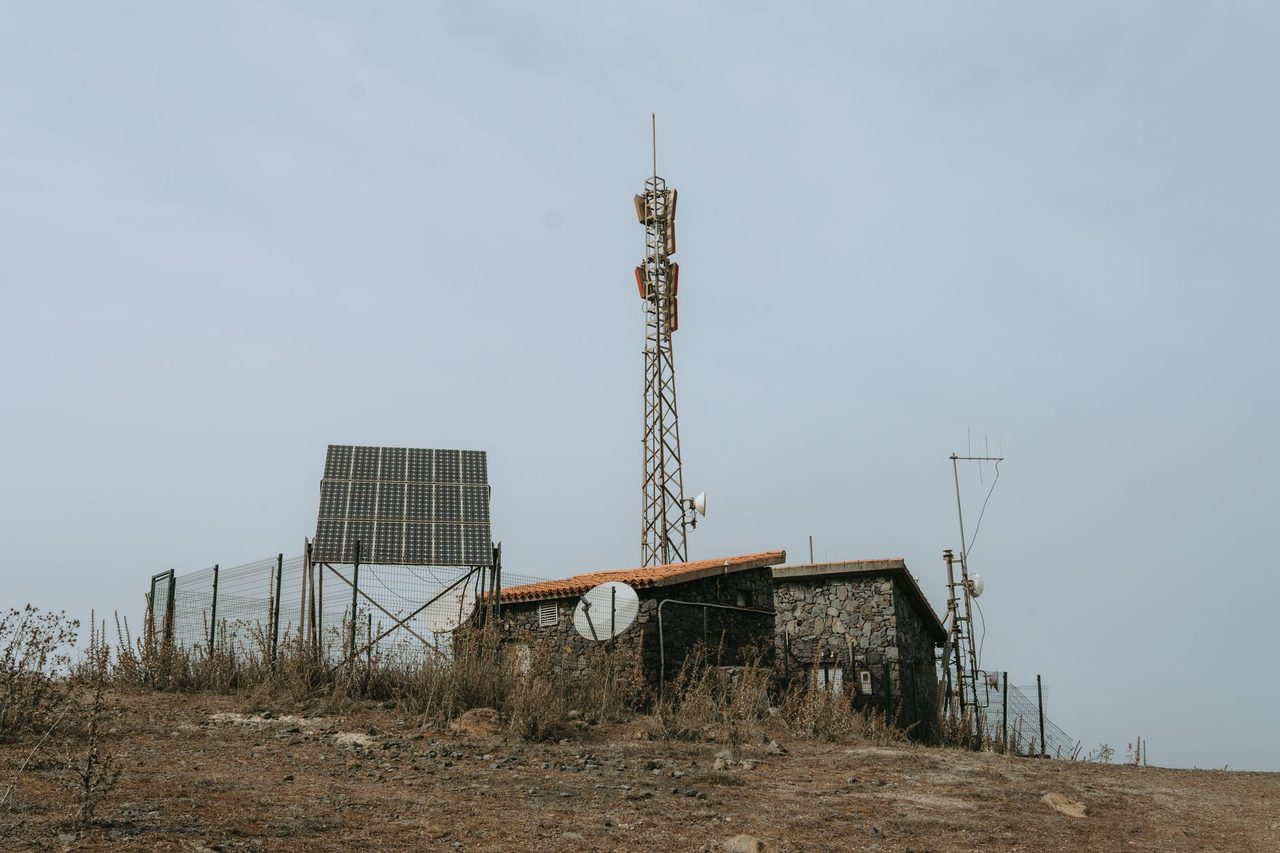
Photo: Liisbet Luup on Pexels
India’s rural energy-access market is moving beyond household electrification toward public-service reliability. In 2026, one of the most under-served but financeable segments is the health sub-centre and health and wellness centre ecosystem: last-mile facilities that need dependable daytime and evening power for vaccines, diagnostics, lighting, digital health devices, fans, communication equipment and basic clean-water services.
For NGOs, CSR teams, development partners, EPC contractors and district-level public-health agencies, solarising these facilities is no longer a soft-impact idea. It is an implementable energy-access asset class with measurable health, carbon and service-delivery outcomes. The model is especially relevant in weak-grid rural India, tribal districts, flood-prone geographies and aspirational districts where outages, low-voltage events and diesel dependence still affect frontline care.
This article outlines how to design, fund and verify solar energy systems for rural health sub-centres in India in 2026, with a practitioner focus on capex ranges, system design logic, procurement structure, grants, CSR alignment and impact measurement.
Why rural health sub-centres are a high-priority energy-access segment
India’s primary health architecture includes Sub-Centres, Ayushman Arogya Mandirs under the Health and Wellness Centre framework, Primary Health Centres and Community Health Centres. The smallest nodes often have the most fragile electricity supply. In many districts, these facilities face:
- 4 to 12 hours of daily outage during summer or monsoon periods
- voltage fluctuation that damages refrigerators, routers and diagnostic equipment
- diesel backup that is either unavailable, underfunded or too costly to operate routinely
- extended downtime for digital systems used for teleconsultation, beneficiary records and maternal-child health reporting
- poor lighting and ventilation that directly reduce service quality in evening hours
A health sub-centre typically does not need a large megawatt-scale intervention. It needs a right-sized, resilient, low-maintenance solar-plus-battery system designed around critical loads. That makes it well suited to NGO-led program aggregation and CSR-funded deployment.
Unlike household solar giveaways, a clinic-energy intervention has clearer institutional ownership, measurable utilisation and direct links to public outcomes such as immunisation continuity, maternal care access and reduced spoilage of temperature-sensitive supplies.
What the technical design looks like in 2026
The correct design depends on whether the target facility is a basic sub-centre, a Health and Wellness Centre, or a larger PHC outpost. In practice, most NGO and CSR deployments for this segment fall into the 2 kW to 10 kW range.
Typical connected loads include:
- LED lighting: 100 to 300 W
- ceiling or wall fans: 150 to 500 W aggregate
- laptop, printer, router and digital health equipment: 100 to 400 W
- vaccine or medicine refrigeration: 150 to 500 W average depending on unit type
- water purification or small pumping loads: 250 W to 1.5 kW if included
- diagnostic devices and point-of-care equipment: 200 to 1,000 W depending on service mix
A practical system archetype for a rural sub-centre in 2026 may be:
- 3 kW to 5 kW rooftop solar PV
- 5 kWh to 15 kWh lithium battery storage
- hybrid inverter with grid-interactive and islanding capability
- AC and DC segregation for critical circuits where useful
- remote monitoring gateway with daily uptime and generation data
- earthing, surge protection and theft-resistant mounting
Indicative all-in installed costs in 2026 for institutional rural systems, depending on state, logistics and battery sizing, are broadly:
- 3 kW solar + 5 kWh battery: Rs 4.2 lakh to Rs 5.8 lakh
- 5 kW solar + 10 kWh battery: Rs 6.5 lakh to Rs 8.8 lakh
- 7.5 kW solar + 15 kWh battery: Rs 9.5 lakh to Rs 12.5 lakh
These figures can move higher in hilly, insurgency-affected, island or flood-prone districts due to logistics, elevated structures and protection requirements. Annual O&M for a small institutional system is often budgeted at 1.5% to 3% of capex, excluding battery replacement reserves if a full lifecycle model is used.
Battery autonomy should be defined by service priority, not by an abstract backup target. In many projects, it is more cost-effective to guarantee 6 to 8 hours for critical loads than to attempt 24-hour full-load backup. Load prioritisation is essential:
- Tier 1: vaccine refrigeration, communication equipment, lights in treatment room, digital health equipment
- Tier 2: fans, water purification, office sockets
- Tier 3: non-essential convenience loads
This design discipline materially improves project economics.
Funding structures: CSR, grants and blended NGO programs
For this segment, full commercial financing is not always the first route because ticket sizes are small and public facilities often lack direct cash flows. Instead, the dominant 2026 model is blended social infrastructure funding, combining CSR, philanthropic grants and in some cases state convergence.
Three financing structures are working in India:
1. Pure CSR capex grant model
A corporate CSR programme funds 100% of the system capex for a portfolio of facilities in one or more districts. The NGO or advisory partner handles site selection, government permissions, procurement and post-installation monitoring.
Best use cases:
- 20 to 200 facilities aggregated in one program
- health-focused CSR mandates
- districts where rapid deployment matters more than financial recovery
Typical portfolio size:
- 25 sites x Rs 7 lakh average = Rs 1.75 crore
- 100 sites x Rs 6.5 lakh average = Rs 6.5 crore
The benefit is speed and simplicity. The weakness is that O&M is often under-provided unless ring-fenced for at least 3 to 5 years.
2. Grant plus district co-funding model
A foundation, multilateral-aligned donor or philanthropic pool covers 60% to 80% of capex, while district administration, health societies or allied public programmes cover the balance in cash or in-kind civil works.
This structure improves local ownership and can support integration with broader health infrastructure upgrades such as refrigeration, digital devices or water systems.
3. CSR endowment for capex plus O&M
This is increasingly the most bankable social-impact design. The sponsor provides capex and pre-funds 3 to 5 years of AMC, remote monitoring and battery reserve planning. For difficult rural assets, this creates much better uptime outcomes than one-time donation models.
For programme architects, this is where Growthifye’s Program design & theory of change and CSR funding pipelines capabilities become relevant. Donors increasingly ask not just what is being installed, but what service-delivery failure is being solved, over what timeline, with what evidence framework and ownership model.
Policy and institutional context in India in 2026
The operating context for these interventions sits across health, energy and CSR regulations rather than under a single dedicated scheme.
Relevant enabling factors in 2026 include:
- continued emphasis on strengthening Ayushman Arogya Mandir and primary-care delivery infrastructure
- Schedule VII CSR eligibility for healthcare, rural development and environmental sustainability-linked interventions, subject to company policy and legal review
- state-level renewable-energy promotion frameworks and net-metering or gross-metering policies where institutional grid interconnection is feasible
- district climate-resilience and disaster-preparedness agendas that justify backup energy for public health facilities
- digital health expansion, which raises the cost of power unreliability
Where rooftop net-metering is permitted for public or institutional premises, daytime self-consumption can reduce electricity draw and improve economics. However, many NGO-led projects in remote areas should be designed first for reliability, not export optimisation. In weak-grid contexts, solar without storage may underperform the mission objective.
Developers should also note that public-facility approvals can be slower than school or community-building deployments because health departments are more sensitive to equipment liability, refrigeration continuity and electrical safety. Early stakeholder mapping is critical:
- Chief Medical Officer or district health authority
- block medical officers
- facility in-charge
- district renewable-energy agency or discom interface where interconnection is needed
- CSR donor governance team
- local implementing NGO
Procurement, EPC and O&M structure that actually works
Many small social-energy projects fail not because the technology is wrong, but because portfolio execution is weak. Rural health facility solarisation should be treated as a distributed infrastructure programme with standardised documentation.
Recommended workflow:
- baseline energy audit and service-needs survey for each site
- structural and roof assessment
- grid-availability profiling over at least 7 to 14 days where possible
- load prioritisation matrix signed by facility stakeholders
- standard bill of quantities with limited custom deviation
- centralised technical specifications for modules, inverters, batteries, mounting, wiring and protections
- installation quality checklist and commissioning protocol
- remote-monitoring activation before handover
- O&M SLA with response-time commitments
By 2026, a strong EPC specification for this category should include at minimum:
- Tier-1 or equivalent bankable module supply with traceable warranties
- lithium battery chemistry and BMS suited to high ambient temperatures
- hybrid inverter with remote diagnostics
- surge protection and proper earthing due to lightning risk in many states
- lockable battery housing and tamper-resistant installation
- mobile-network or alternate telemetry for daily system data
For portfolios above 30 sites, central procurement can reduce capex by 5% to 12% versus fragmented local sourcing, while also improving warranty consistency. However, local service partnerships still matter for uptime. A hub-and-spoke maintenance model often works best: centralised procurement, regional technician coverage.
Impact measurement and MRV: what donors and lenders now expect
In 2026, simple installation counts are not enough. Serious CSR and grant providers increasingly want outcome-linked reporting. That means the energy system must be tied to health-service metrics, not just kilowatt-hours.
A practical Impact measurement & MRV framework for rural health solar projects should cover five layers:
1. Asset deployment metrics
- number of facilities electrified
- installed solar capacity in kW
- installed battery capacity in kWh
- commissioning date and operational status
2. Energy performance metrics
- daily and monthly solar generation in kWh
- battery throughput and autonomy events
- critical-load uptime
- grid outage ride-through performance
- system availability percentage
3. Economic metrics
- diesel litres displaced per month where applicable
- avoided diesel spend, often Rs 90 to Rs 105 per litre equivalent delivered in remote areas
- grid electricity savings, typically benchmarked against retail tariffs of Rs 6 to Rs 9.5 per kWh depending on state and customer category
- annual O&M cost per site
4. Environmental metrics
- tCO2e avoided from diesel displacement and reduced grid consumption
- local air-pollution reduction proxy where diesel gensets were previously used
5. Social and service-delivery metrics
- number of outpatient service hours supported during outages
- vaccine refrigeration continuity days
- evening service availability
- telemedicine session continuity
- staff-reported reduction in service disruption
- beneficiary footfall change, where causation can be reasonably assessed
A realistic portfolio example: 50 rural health sub-centres with 5 kW systems may install 250 kW total. At a conservative 4.2 to 4.8 kWh/kW/day average generation depending on state, annual output could reach roughly 3.8 to 4.4 lakh kWh. If a portion displaces diesel backup and outage-driven service loss, the social value is materially higher than pure energy savings would suggest.
MRV should not become too expensive relative to project size. For small portfolios, a lean digital-first model works:
- automated generation and battery data through remote monitoring
- quarterly photo verification
- semi-annual site surveys
- annual independent sample audit
- dashboard reporting to donor and district stakeholders
Key risks and how to mitigate them
This segment is attractive, but only if execution risks are handled early.
Risk 1: systems are oversized for actual critical loads
Mitigation: - do a real load audit - design critical and non-critical circuits separately - avoid donor-driven overspecification
Risk 2: no budget for battery replacement or O&M
Mitigation: - embed 3 to 5 year service agreements - create reserve planning in donor budget - specify uptime-linked vendor obligations
Risk 3: poor institutional ownership after installation
Mitigation: - sign tripartite handover documents with facility, district authority and implementer - nominate a local energy focal person - train staff on basic system checks
Risk 4: MRV focuses only on carbon and misses health outcomes
Mitigation: - align indicators to public-service continuity - capture baseline outage and service disruption data before commissioning
Risk 5: procurement fragmentation and warranty disputes
Mitigation: - standardise technical specs and documentation across all sites - maintain serial-number and warranty registry centrally
For funders, the strategic point is clear: rural health-energy assets are small enough for CSR portfolios, visible enough for stakeholder reporting, and measurable enough for outcome-based philanthropy. For developers and EPC players, they create a pipeline of distributed institutional systems that can be replicated across districts. For policymakers and utilities, they represent a practical reliability intervention in places where grid quality upgrades will take time.
In 2026, NGO energy access in India is increasingly about powering essential services rather than merely adding panels. Solar health sub-centres fit that shift well because they combine social need, operational clarity and credible MRV.
If your organisation is evaluating a district-wide health-energy programme, funding architecture or implementation model, contact Growthifye’s advisory desk to discuss site aggregation, donor structuring, EPC design and MRV support.
Explore Growthifye's related capabilities
This analysis connects directly to our advisory practice: Program design & theory of change · CSR funding pipelines · Grant & philanthropic fundraising · Compliance & governance.
About the author

Chief Executive Officer, Growthifye — With over 23 years in management consulting, Sudarshan has taken businesses from concept to scale — building and scaling new-age digital and energy businesses.
- 23+ years in management consulting
- EY alumnus
- Led large-scale BESS programmes, capital raises and advisory mandates
Want this analysis applied to your project?
Talk to our team