India 2026 NGO Energy Access: Solar Drinking Water Systems, CSR and MRV
By Sudarshan Karweer · sudarshan@growthifye.com · +91 84510 99371 (Call / WhatsApp) · 2026-09-07
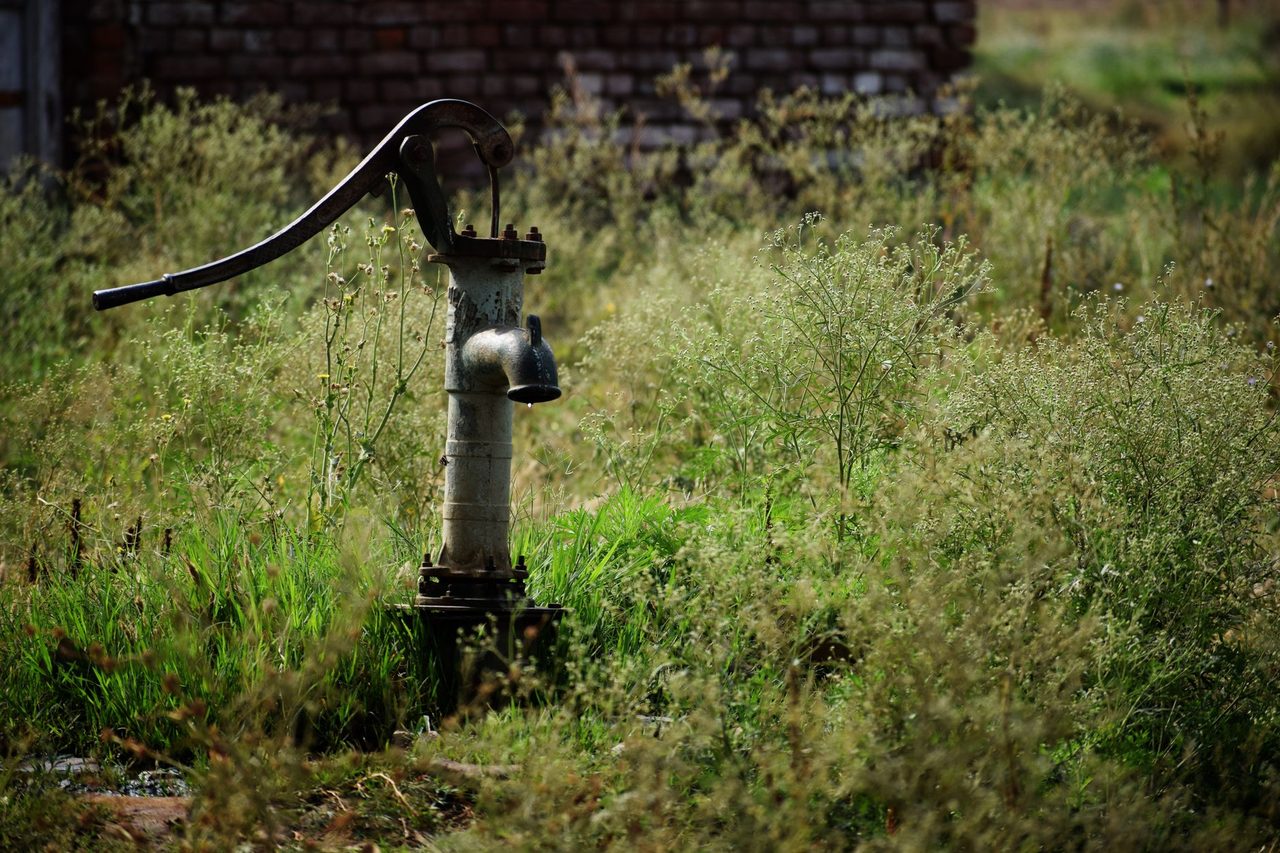
Photo: Saifee Art on Pexels
India’s rural energy-access conversation has moved beyond lighting and basic household electrification. In 2026, one of the strongest NGO-led intervention areas is solar-powered community drinking water systems: borewell pumping, treatment, storage, dispensing and village-level operations tied to public health, women’s time savings and local service delivery. For CSR teams, philanthropies, district administrations and implementation NGOs, this is now a practical energy-access asset class with measurable outcomes and replicable unit economics.
For Indian C&I donors, renewable developers, EPC players, lenders and policymakers, the attraction is straightforward. A solar drinking water system creates an essential service with visible social impact, productive daytime load, manageable technology risk and relatively clean monitoring architecture. Unlike many rural energy assets that struggle with diffuse end use, water systems can be metered at source, tracked at dispensing points and linked to health, access and financial indicators through structured Impact measurement & MRV.
This article looks at how the segment is shaping up in India in 2026, what a bankable project structure looks like, where policy alignment sits, what numbers matter and how NGOs can avoid the common failure modes.
Why solar drinking water is a high-priority NGO energy-access use case in 2026
Across India, drinking water stress is being shaped by groundwater depletion, erratic grid supply in some rural pockets, diesel dependence for pumping, fluoride and salinity issues in selected districts, and the ongoing need for localised treatment systems. Even where the Jal Jeevan Mission has expanded tap connectivity, village-level source reliability, pumping economics, potability and last-mile service quality still vary sharply.
That creates a specific opportunity set for NGOs and CSR programmes:
- Solarisation of borewell or raw-water pumping for drinking water schemes
- Hybrid solar-plus-grid systems for treatment units and dispensing kiosks
- Decentralised RO, ultrafiltration or iron/fluoride treatment where water quality requires it
- Community water ATMs for schools, anganwadis, tribal hostels and habitation clusters
- Solar-backed storage and dispensing for locations with poor daytime grid reliability
The reason this differs from other already-crowded NGO energy themes is that water sits at the intersection of energy access, health access and gender outcomes. A well-designed 5 kW to 20 kW solar water asset can reduce diesel or grid consumption, improve service hours, cut water-fetching time and enable a financially disciplined village institution to operate a pay-per-use or managed-service model.
For CSR funders, this is valuable because it supports Schedule VII-aligned themes such as safe drinking water, health, rural development and environment, while also creating a hard-energy asset with quantifiable avoided emissions and service metrics.
Typical project configurations and 2026 cost benchmarks
In practice, NGO-led solar drinking water systems in India fall into three broad configurations.
First, source pumping systems. These mainly power submersible or surface pumps lifting groundwater or surface water into raw-water storage. They may not include treatment, but they stabilise supply.
Second, pumping plus treatment systems. These combine solar power with purification equipment such as RO, UV, ultrafiltration, chlorination, iron-removal or fluoride-removal depending on feed-water conditions.
Third, complete community drinking water kiosks. These include source pumping, treatment, elevated or ground storage, dispensing points, smart cards or prepaid dispensing controls and local operator support.
Indicative 2026 capex ranges for NGO and CSR planning, excluding major civil complexity, are as follows:
- 3 kW to 5 kW solar pumping package for a small village water point: about Rs 3.0 lakh to Rs 5.5 lakh
- 5 kW to 10 kW solar pumping plus basic treatment and storage: about Rs 7 lakh to Rs 16 lakh
- 10 kW to 20 kW community water kiosk with treatment, storage, dispensing controls and remote monitoring: about Rs 15 lakh to Rs 35 lakh
- Larger multi-village or institution-cluster systems with advanced treatment: Rs 35 lakh upward depending on water chemistry, storage and civil scope
These numbers vary by module type, pump head, daily water requirement, treatment technology, battery inclusion, structural works and telemetry. In most community drinking water applications, battery storage is often avoidable if pumping is aligned with solar hours and water is stored in tanks. That keeps lifecycle cost lower than many other NGO energy-access assets.
For unit sizing, a practical anchor is daily water demand. If a village cluster of 1,000 people is targeted only for drinking and cooking water, planned demand may be in the range of 8 to 15 litres per capita per day for purified service, depending on local norms and whether the system complements or substitutes household collection. That means 8,000 to 15,000 litres per day. Once treatment recovery losses and storage strategy are factored in, the solar plant and pumping motor need to be sized for realistic hydraulic load, not headline population alone.
A common mistake is undersizing the system by estimating only nameplate pump demand and ignoring drawdown, seasonal variation in water table, treatment reject handling and future habitations added later by local pressure.
Tariffs, revenue models and O&M discipline
The commercial design of these systems matters as much as the engineering. Assets fail less because solar underperforms and more because no one owns operations after handover.
In 2026, the most durable models tend to use one of four revenue structures:
- Free public-service model funded entirely by CSR with ring-fenced O&M support for 3 to 5 years
- Low user-fee model charging roughly Rs 2 to Rs 5 per 20 litres in lower-income areas
- Cross-subsidised institutional model where schools, hostels or PHCs anchor baseline demand and households pay a modest fee
- Village entrepreneur or SHG-operated model under a service agreement with quality and uptime obligations
The Rs 2 to Rs 5 per 20-litre range remains common in many rural treated-water deployments, though local affordability, competing informal supply and transport costs can move tariffs higher. In fluoride, salinity or contamination-affected geographies, communities are often more willing to pay if source water is visibly unsafe and the alternative is tanker supply or long-distance procurement.
For O&M planning, annual costs can broadly include:
- Pump servicing and electrical maintenance
- Membrane or cartridge replacement in RO or filtration systems
- Water-quality testing at defined intervals
- Telemetry, SIM and remote-dashboard charges
- Operator honorarium or village-level management fee
- Minor civil and plumbing repair
A useful planning range for annual O&M is 4% to 8% of installed capex for simpler systems, and 7% to 12% for treatment-heavy or remote systems. If NGOs do not secure O&M funding upfront, service quality usually deteriorates by year two.
This is where Program design & theory of change becomes practical rather than cosmetic. If the intended outcome is reduced water-borne disease, women’s time savings and emissions reduction, then the delivery model must identify exactly who collects fees, who tests quality, who services pumps, who replaces consumables and what happens when collections fall short.
Policy alignment: where these projects fit in India’s 2026 landscape
Although rural drinking water is not framed primarily as an electricity-policy segment, solar water projects align with multiple public-policy channels in 2026.
The first is Jal Jeevan Mission, which continues to shape village water infrastructure and service expectations. NGO projects work best when they complement, not duplicate, existing village action plans or source infrastructure.
The second is the Ministry of New and Renewable Energy’s broader support ecosystem for standalone solar pumping, decentralised renewable applications and domestic manufacturing-linked supply chains. While many drinking-water systems may not directly draw a standard subsidy line, the market maturity and vendor ecosystem built under solar pumping programmes materially reduce execution risk.
The third is CSR under the Companies Act framework. Drinking water, preventive health and environmental sustainability are all well-recognised areas for corporate giving, making this a relatively straightforward thematic fit for CSR committees compared with more experimental energy-access pilots.
The fourth is state rural water supply departments and district administrations, which can enable site approvals, source integration, panchayat buy-in and convergence with habitation-level needs.
For developers and EPC firms, the key message is that this is not a utility-scale power play; it is a social infrastructure programme that requires alignment with governance protocols, water-quality regulation, community institutions and long-term service responsibilities.
MRV that lenders, donors and boards will accept
Many NGO energy-access programmes still report outputs that are too soft: number of villages covered, capacity installed, beneficiaries reached. That is not enough in 2026. Donors and boards increasingly ask whether the system is functioning, how much water is actually dispensed, whether diesel or grid use has fallen, whether women save time, and whether quality compliance is maintained.
A strong MRV stack for solar drinking water should track at least five metric groups.
First, technical performance:
- Solar generation in kWh
- Pump runtime and motor health
- Water pumped per day
- Treatment plant uptime
- Storage tank fill levels where feasible
Second, service delivery:
- Litres dispensed per day or per month
- Number of unique user households or cards
- Service hours and days of downtime
- Institutional users served such as schools or anganwadis
Third, water quality:
- TDS where relevant
- Microbial or residual chlorine indicators depending on treatment route
- Fluoride, iron, arsenic or salinity compliance where location-specific
- Scheduled lab test logs and exception closure records
Fourth, financial performance:
- User fee collections
- O&M expenditure
- Consumables replacement schedule
- Revenue gap versus budgeted operations
Fifth, social and environmental outcomes:
- Diesel displacement where applicable
- Grid electricity savings in kWh where replacing conventional pumping
- Estimated emissions reduction using applicable grid factors or diesel factors
- Household time saved in water collection
- Reported reduction in unsafe source usage
For CSR reporting, this level of evidence supports auditability and management confidence. For lenders or blended-finance providers evaluating scale-up, it begins to establish portfolio comparability. Growthifye’s work in CSR funding pipelines and Impact measurement & MRV is particularly relevant here because water-energy projects often fail at the interface between field data and funder reporting, not at equipment performance alone.
Risk factors and the most common project failure modes
Practitioners in this segment repeatedly see the same avoidable problems.
The first is poor hydrogeological assessment. A solar system cannot rescue a weak or seasonally collapsing source. Borewell yield, water table variation and raw-water quality must be validated before plant sizing.
The second is technology mismatch. RO is overused where simpler treatment would suffice, driving reject-water issues, membrane costs and needless complexity. Conversely, inadequate treatment in fluoride or iron belts creates reputational and health risk.
The third is no serious O&M counterparty. A panchayat resolution is not an O&M model. There must be a named operator, local spare-part pathway, service-level expectations and budget line.
The fourth is tariff denial. Many programmes assume that charging users undermines inclusion. In reality, zero-tariff systems often collapse unless long-term grant-backed maintenance is contractually secured. Even nominal fees can improve accountability.
The fifth is weak community onboarding. Villagers need clarity on water purpose, pricing, collection timings, quality assurance and grievance handling. Without this, utilisation remains below design assumptions.
The sixth is lack of remote diagnostics. In 2026, basic telemetry is no longer optional for multi-site portfolios. If a donor funds 25 village systems across two states, waiting for monthly field reports is not a credible asset-management approach.
A scalable delivery model for NGOs, corporates and EPC partners
For organisations looking to build this theme at district or state level, the most workable model is a standardised portfolio approach rather than isolated one-off projects.
A replicable structure usually includes:
- District-level water-stress and water-quality screening
- Site selection with source validation and community willingness assessment
- Standard design templates for 5 kW, 10 kW and 20 kW use cases
- Empanelled EPC and treatment vendors with performance clauses
- A three-to-five-year O&M and quality-testing package
- Digital monitoring dashboard with village-level service metrics
- Revenue and governance SOPs for SHGs, panchayats or local operators
- Quarterly review against uptime, dispensing, collections and quality indicators
For corporate donors, this portfolio method improves procurement transparency and reporting consistency. For renewable developers and EPC firms, it reduces design fragmentation and helps create bankable service data. For policymakers, it offers a route to targeted convergence in tribal, aspirational or water-quality-affected districts.
The strongest opportunities in 2026 are likely in regions where drinking water quality issues are acute, solar resource is strong and institutional delivery partners are present. Parts of Rajasthan, Maharashtra, Jharkhand, Odisha, Chhattisgarh, Telangana, Karnataka and select fluoride- or iron-affected belts elsewhere fit this profile, though state-specific groundwater, treatment and local-governance factors remain decisive.
Solar drinking water systems are not a substitute for full rural water reform. But as an NGO energy-access intervention, they offer a rare combination of technical simplicity, measurable social value and portfolio-scale replicability. For CSR committees looking beyond symbolic energy access, and for RE-sector firms seeking implementable community infrastructure, this is one of the most practical themes on the table in India in 2026.
If your organisation is evaluating village water-energy programmes, CSR deployment strategy, technical design, or monitoring architecture, contact Growthifye’s advisory desk to discuss site screening, delivery models and implementation support.
Explore Growthifye's related capabilities
This analysis connects directly to our advisory practice: Program design & theory of change · CSR funding pipelines · Grant & philanthropic fundraising · Compliance & governance.
About the author

Founder & CEO, Growthifye — engineering and financing India's clean-energy transition.
Want this analysis applied to your project?
Talk to our team