India 2026 NGO Energy Access: Solar Health Clinics, CSR Funding and MRV
By Sudarshan Karweer · sudarshan@growthifye.com · +91 84510 99371 (Call / WhatsApp) · 2026-09-05
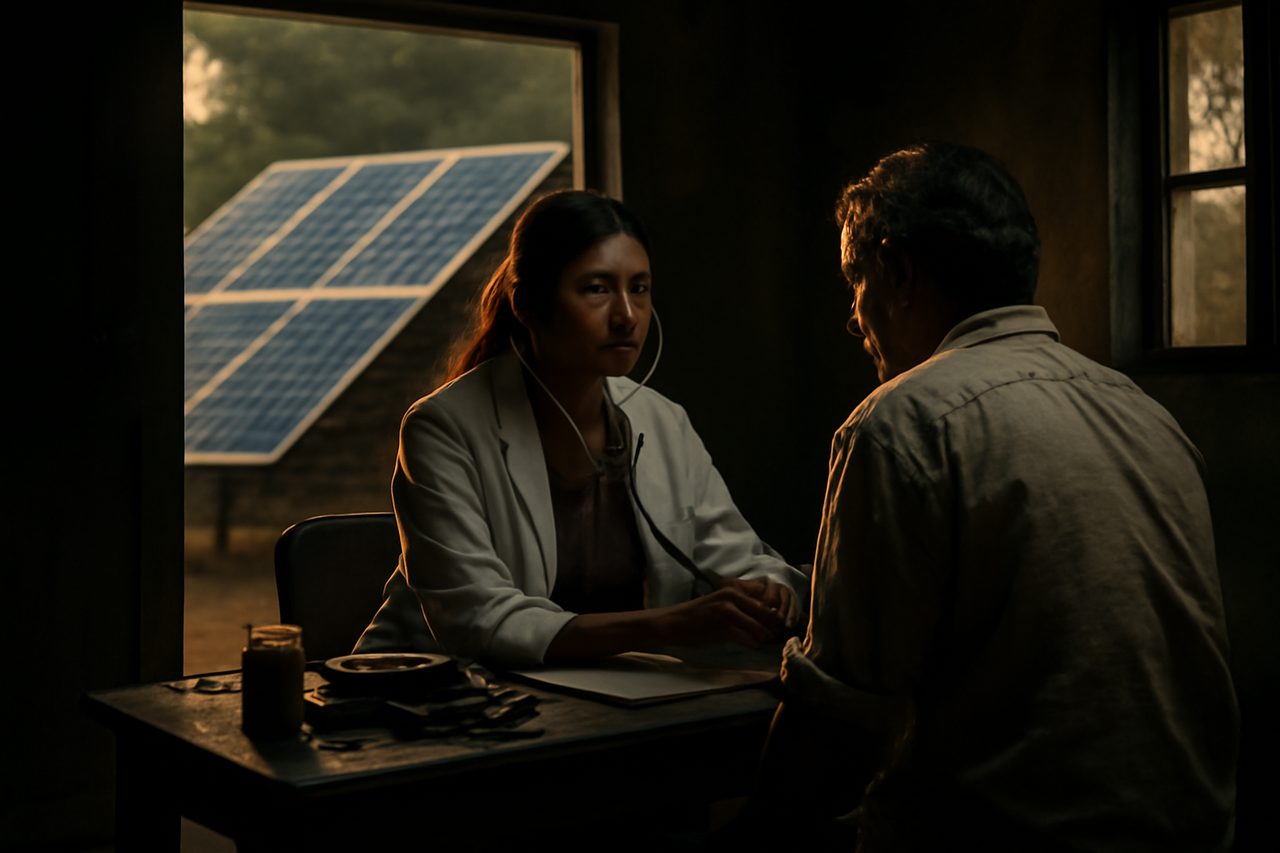
India’s energy-access conversation often focuses on households, irrigation and livelihoods, but one high-impact public-service load remains under-served: rural health facilities. Across primary health centres, sub-centres, health and wellness centres, tribal hostels with infirmary blocks, mobile clinics and NGO-run community health facilities, unreliable electricity still disrupts vaccine storage, diagnostics, maternal care and night-time service delivery. In 2026, this is no longer a niche donor topic. It is a serious program area for NGOs, CSR portfolios, development finance and distributed renewable-energy providers.
For Growthifye’s NGO energy-access practice, solarisation of rural health clinics is a distinct topic from mini-grids, clean cooking, telecom loads or cold-chain fisheries. It combines public-health outcomes with clear engineering logic, measurable service impacts and funder-friendly monitoring structures. For Indian C&I consumers funding CSR portfolios, RE developers entering social infrastructure, lenders evaluating blended structures and policymakers looking for last-mile service reliability, clinic solarisation is now commercially and developmentally relevant.
Why solar health clinics matter in 2026
India has improved village electrification and feeder availability, yet power quality at the facility level remains inconsistent. Outages, low voltage, single-phase constraints, diesel dependency and weak internal wiring continue to affect small and remote health assets. In many districts, the issue is not simply whether the village is electrified, but whether a clinic can reliably run cold storage, lights, fans, oxygen concentrators, laboratory equipment, IT devices and communications through the day and night.
The public-health consequences are direct:
- Vaccine refrigerators face temperature excursions during outages
- Labour rooms and emergency spaces lose lighting and fan backup
- Diagnostic devices such as hemoglobinometers, microscopes, centrifuges and point-of-care testing equipment remain under-utilised
- Digital health reporting, telemedicine and e-health records suffer downtime
- Staff retention becomes harder where working conditions are poor
- Diesel genset use raises recurring operating cost and local pollution
For NGOs and CSR teams, this creates an unusually strong energy-access case because outcomes are visible and measurable. A clinic with reliable renewable power can show service-hour gains, reduced diesel use, fewer cold-chain interruptions and better utilisation of equipment. That makes project design easier than in diffuse household-energy programs where attribution is often weaker.
Typical clinic load profiles and system sizing logic
A common mistake in NGO-funded energy projects is under-sizing systems by focusing only on panel capacity. Health-facility projects must begin with a load-service hierarchy and operational profile. In practice, clinics should segment loads into three tiers:
- Critical loads: vaccine refrigeration, emergency lighting, communications, select diagnostics, router, laptop, labour room lighting, oxygen concentrator where relevant
- Essential daytime loads: fans, computers, printer, steriliser, small water pump, consultation-room lighting
- Deferrable or non-core loads: staff quarters, residential appliances, electric cooking, large space cooling unless separately justified
In 2026, a small sub-centre or health and wellness centre may require a 2 kW to 5 kW rooftop solar system with 5 kWh to 15 kWh usable battery storage depending on service profile. A larger primary health centre can need 8 kW to 20 kW solar with 20 kWh to 60 kWh storage, especially where vaccine refrigeration, diagnostics and evening outpatient loads are meaningful.
Indicative 2026 benchmarks seen in the Indian market for NGO or institutional deployments are as follows:
- Small clinic solar rooftop CAPEX: roughly Rs 55,000 to Rs 72,000 per kW for quality institutional systems, before storage
- LFP battery systems: roughly Rs 14,000 to Rs 22,000 per usable kWh depending on BMS, enclosure, temperature controls and warranty terms
- Hybrid inverter and controls premium: often 12% to 20% above simple grid-tied configurations
- Annual O&M for small distributed institutional assets: about 1.5% to 3% of project CAPEX depending on geography and uptime obligations
These are practical planning ranges, not tender prices. Mountainous terrain, tribal districts, island territories and conflict-sensitive regions can see materially higher logistics and O&M costs.
Engineering should target service continuity, not just annual energy yield. For many clinics, the right design objective is 6 to 12 hours of backup for critical loads plus daytime solar coverage for essential loads. Battery autonomy assumptions should reflect actual outage patterns. If evening outages are routine, undersized storage can leave the facility no better off than before.
Funding structures: CSR, grants and blended delivery
Solar health clinics fit well within Schedule VII-aligned CSR themes such as healthcare, rural development, environmental sustainability and support for vulnerable communities. In 2026, many Indian corporates are looking for CSR projects that generate both visible community benefit and measurable emissions or diesel-displacement impact. Health-facility solarisation offers both.
Three common financing pathways are emerging:
- Capex grant model: CSR or philanthropy pays full upfront cost; NGO or institution hosts the system; local technician network handles O&M
- Co-funding model: donor covers solar and storage core package; host institution or district program funds wiring, roof strengthening, civil works and security
- Performance-linked support model: funder disburses in tranches based on commissioning, uptime, cold-chain performance and verified utilisation
Where government facilities are involved, approvals, asset ownership and handover terms must be crystal clear. A technically sound installation can still fail institutionally if no one owns battery replacement, insurance or inverter servicing after year three or five.
This is where Program design & theory of change becomes critical. The intervention is not merely hardware donation. It is a service-reliability program tied to maternal health, immunisation continuity, data reporting and staff productivity. Good program architecture identifies who benefits, who maintains, who pays over time and what evidence will prove success.
For NGOs scaling across multiple districts, CSR funding pipelines also matter. A single 3 kW clinic may be too small to interest a major corporate, but a portfolio of 50 to 200 facilities with standardised design, district clustering and MRV can attract larger annual CSR allocations. Portfolio framing also reduces procurement cost and simplifies vendor management.
Policy and regulatory context to watch in India
In 2026, clinic solarisation sits at the intersection of distributed renewable-energy policy, health-system infrastructure and state-level electricity regulation. While there is no single national policy dedicated to NGO-led clinic solarisation, several frameworks shape feasibility:
- PM Surya Ghar affects rooftop-solar market maturity and supply-chain availability, though direct subsidy fit for institutional rural clinics may vary by ownership category
- State net-metering and gross-metering regulations influence economics for larger public or trust-run facilities, especially if daytime exports are possible
- Health-system strengthening under Ayushman Bharat and Health and Wellness Centre expansion increases productive electricity demand at the last mile
- SDG-linked state planning and aspirational district priorities improve donor alignment for remote health assets
- Corporate CSR compliance expectations increase the need for clean documentation, beneficiary traceability and outcome reporting
For public-facing facilities, developers must also review local DISCOM interconnection norms, sanction load, earthing requirements, building safety and whether export is technically feasible or contractually useful. In many weak-grid rural contexts, self-consumption plus battery backup delivers more value than chasing export credits.
Tariff context is also relevant. Small institutional consumers in several states may face blended tariffs in the Rs 6.5 to Rs 9.5 per kWh range, while diesel-generated backup can effectively cost Rs 18 to Rs 30 per kWh once transport, maintenance and low loading are included. Even where grant funding covers CAPEX, avoided diesel and reduced equipment loss materially improve lifecycle economics.
Designing MRV that funders and operators trust
Health-energy projects are often oversold with vague claims. Serious programs need disciplined Impact measurement & MRV from day one. In 2026, funders increasingly expect project teams to move beyond installed-capacity reporting.
A practical MRV stack for solar health clinics should include:
- Asset-level data: solar generation, battery state of charge, inverter uptime, outage coverage hours, fault logs
- Service-level data: vaccine refrigerator availability, cold-chain excursion incidents, evening service hours, diagnostic equipment run-time
- Financial data: diesel reduction, avoided electricity purchases where relevant, O&M cost adherence, battery degradation trends
- Community-impact data: outpatient footfall changes, institutional delivery support hours, staff retention indicators, telemedicine session continuity where applicable
The key is to distinguish contribution from attribution. A solar system alone may not raise immunisation rates if staffing or medicine supply is weak. But it can credibly improve cold-chain reliability and service availability. Funders appreciate MRV that is honest, bounded and operationally useful.
In practice, portfolio dashboards should report a few robust KPIs rather than dozens of weak ones. For example:
- Monthly solar generation per site
- Critical-load uptime during grid outages
- Diesel litres avoided
- Number of facilities maintaining continuous vaccine refrigeration threshold compliance
- Number of evening service hours enabled
- Number of fault tickets resolved within SLA
Remote monitoring is essential, but not sufficient. Many rural systems show healthy generation data even while internal circuits, batteries or refrigerator plugs are mismanaged onsite. Periodic physical verification, user training and logbook reconciliation remain necessary.
Delivery risks that determine success or failure
The hardest problems in clinic solarisation are rarely module-related. They are operational and institutional.
First, load creep is common. Once a system is installed, staff may connect kettles, heaters, residential loads or additional appliances not included in design. Without load discipline, battery life and uptime suffer. Clear load segregation and labelled circuits are therefore non-negotiable.
Second, battery-room conditions matter. High temperatures, poor ventilation, dust ingress and rodent damage reduce performance. LFP technology is now standard for many institutional projects because of safety and cycle-life advantages, but enclosure quality and thermal management still matter.
Third, theft and vandalism risk can be significant in isolated locations. Module mounting height, fastener choice, fencing, local committee engagement and insurance coverage should be built into project budgets.
Fourth, clinical stakeholders must be involved from the start. Engineers often design around peak wattage, while health workers care about whether the vaccine fridge, delivery-room light and internet modem stay on when needed. The user interview is as important as the site survey.
Fifth, after-sales service determines reputation. A 48-hour response time may be acceptable for a livelihood kiosk; it is often too slow for a clinic refrigerator fault. Portfolio-based maintenance contracts with district-level service partners are preferable to ad hoc local fixes.
This is why Corporate & utility partnerships can be especially useful. Utilities may help with supply-quality data, connection regularisation or transformer-side issues, while corporate partners can support scale, vendor prequalification and standard reporting frameworks.
A workable program model for NGOs and CSR sponsors
For organisations entering this segment in 2026, a practical rollout model is to start with a district-cluster portfolio rather than scattered one-off installations.
A sound program sequence looks like this:
- Select 25 to 100 clinics in one or two geographies with similar operating conditions
- Conduct electrical audits, roof checks and facility-service mapping
- Categorise sites into standard system sizes such as 3 kW, 5 kW, 10 kW and 15 kW packages
- Ring-fence critical circuits and integrate surge protection, earthing and safe distribution upgrades
- Procure with clear technical specs on module quality, battery warranty, remote monitoring and service SLAs
- Train facility staff and district coordinators on use protocols and escalation steps
- Establish quarterly MRV review with donor, NGO and implementation partner
Indicatively, a 50-site program averaging 5 kW solar plus 12 kWh storage per clinic could involve total installed investment in the low single-digit crore range depending on geography, civil works and monitoring sophistication. For CSR decision-makers, that is large enough to matter, yet small enough to execute within annual planning cycles.
The strongest proposals combine engineering realism with governance discipline. They clarify procurement method, ownership transfer, maintenance reserve, insurance, data rights, cyber-security for remote monitoring and replacement planning for batteries and inverters. In other words, they treat the project as critical social infrastructure, not a donation photo-op.
Why this segment will scale now
Three factors make solar health clinics more scalable in 2026 than they were a few years ago. First, battery economics and product reliability are better. Second, funders increasingly want measurable, asset-backed social impact. Third, rural healthcare delivery is more digitised and electricity-dependent than before, which makes reliability improvements easier to value.
For developers, this is a credible adjacent market to C&I rooftop and microgrid work. For lenders and philanthropic capital providers, it offers replicable portfolio logic with visible public benefit. For policymakers, it supports healthcare resilience without waiting for every last feeder-quality issue to be solved. And for NGOs, it creates a platform where clean energy directly strengthens service delivery.
The opportunity is not just to install panels on roofs. It is to build reliable power architecture for rural health outcomes with disciplined design, procurement and evidence.
If your organisation is evaluating solarisation of health clinics, vaccine points, tribal health facilities or NGO-run care centres, contact Growthifye’s advisory desk. We can support program structuring, technical due diligence, CSR alignment, funding strategy and MRV design for bankable, field-ready deployment.
Explore Growthifye's related capabilities
This analysis connects directly to our advisory practice: Program design & theory of change · CSR funding pipelines · Grant & philanthropic fundraising · Compliance & governance.
About the author

Founder & CEO, Growthifye — engineering and financing India's clean-energy transition.
Want this analysis applied to your project?
Talk to our team