India 2026 NGO Energy Access Blended Finance and DRE Portfolio Structuring
By Sudarshan Karweer · sudarshan@growthifye.com · +91 84510 99371 (Call / WhatsApp) · 2026-08-25

India’s NGO-led energy access market is entering a more disciplined phase in 2026. The easy narrative of “last-mile impact” is no longer enough for funders, lenders, CSR teams or state agencies. What matters now is whether distributed renewable energy and clean cooking programmes can be structured as investable portfolios with measurable outcomes, predictable cash flows and verifiable delivery risk controls.
For NGOs, this changes the operating model. A single village solar installation, a clean cooking campaign or a livelihood electrification initiative may create meaningful impact, but funding decisions in 2026 increasingly depend on aggregation, standardisation and evidence. Corporate CSR teams want a clear pathway from grant deployment to household and enterprise outcomes. Development finance providers want stronger utilisation discipline and auditable monitoring, reporting and verification (MRV). Lenders want ring-fenced receivables, default protections and realistic tariff assumptions. State nodal agencies want alignment with existing subsidy frameworks and service-quality obligations.
This is where blended finance and DRE portfolio structuring become central to NGO energy access in India. Rather than treating each intervention as a standalone project, NGOs can bundle rural solar, mini-grid, solar irrigation, productive-use loads, community institutions and clean cooking assets into programmatic portfolios. Done well, this reduces transaction cost per beneficiary, improves procurement economics, broadens the funding stack and creates a stronger case for follow-on capital.
This article sets out how that structuring works in India in 2026, what numbers practitioners should use as reference points, and where execution risk typically appears.
Why portfolio structuring matters in India’s 2026 NGO energy access market
The biggest bottleneck in NGO energy access is not technology cost alone. It is the mismatch between small-ticket field deployment and the due diligence expectations of serious capital providers. A CSR team may be comfortable approving Rs 1 crore to Rs 5 crore annual programmes, but it still expects baseline data, governance controls and measurable social outcomes. A lender or impact investor reviewing a Rs 10 crore to Rs 25 crore DRE platform will want cash-flow visibility, repayment sequencing and asset-performance assurance.
Portfolio structuring solves three practical problems:
- It aggregates small projects into a ticket size that justifies transaction costs.
- It mixes grants, concessional debt and user contributions according to project type.
- It creates standard operating metrics across geographies and technologies.
In rural India, household demand remains too low in many villages to support fully commercial financing for basic lighting-only systems. But when NGOs combine household systems with higher-load community assets such as schools, health centres, dairy chilling, irrigation pumping, sewing clusters, flour mills or micro-enterprises, the blended revenue profile improves.
A mini-grid serving 150 to 300 connections with productive load can often support a better collection ratio than a purely residential system. Similarly, an NGO programme that combines improved biomass stoves, LPG access support, electric cooking pilots and women-led energy enterprises can produce stronger adoption outcomes than a single-device distribution model.
For funders in 2026, the question is no longer “Is the intervention impactful?” It is “Can this be replicated at scale with reliable unit economics and verifiable outcomes?”
The most bankable NGO energy access portfolio models
In India, not all energy access assets fit the same capital stack. Practitioners should separate portfolios into at least four categories.
- Solar home systems and solar DC appliance portfolios
- Village or hamlet mini-grids
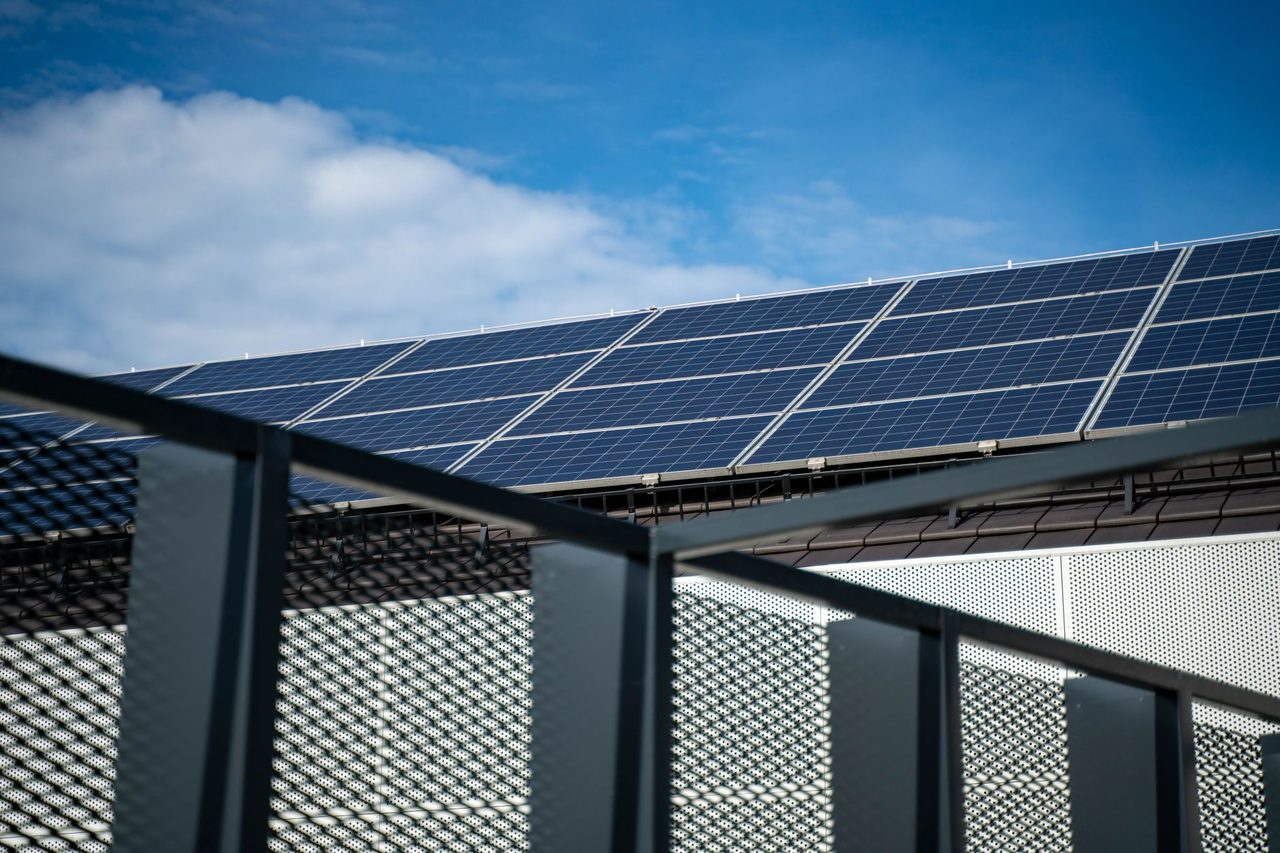
- Institutional and community rooftop solar assets
- Clean cooking and thermal energy access programmes
Solar home systems remain useful in remote geographies where grid supply quality is poor or service reliability is low. In 2026, basic Tier 1-Tier 2 household packages in NGO channels may still range from roughly Rs 12,000 to Rs 35,000 per household depending on battery chemistry, appliance bundle and after-sales scope. These systems generally require a high grant or CSR share unless there is a strong livelihood-linked customer segment.
Mini-grids can be more financeable when demand is anchored. Typical capital expenditure for solar-battery village mini-grids varies widely by design, but many practical deployments still land in the broad range of Rs 1.2 lakh to Rs 2.5 lakh per kW when storage, distribution network, metering, civil works and remote monitoring are included. The lower end is possible where land, shelter and distribution infrastructure are already available; the higher end is common in difficult terrains and smaller systems.
Institutional and community rooftop systems for schools, PHCs, hostels, panchayat buildings and livelihood centres may be easier to underwrite because demand is concentrated, load profiles are measurable and service obligations can be formalised through MoUs. Benchmarks for small institutional rooftop solar in rural districts can still vary from about Rs 42,000 to Rs 58,000 per kW in 2026 depending on module type, structure, inverter specification, location and backup configuration. Where batteries are added for resilience, capex rises materially.
Clean cooking portfolios need the most careful segmentation. Improved biomass, pellet-based cooking, LPG support, biogas and electric cooking each have different affordability and behaviour risks. Capital cost is only one part of the equation; fuel supply and sustained usage matter more. NGOs that treat cookstove distribution as a one-time hardware programme continue to face weak sustained adoption.
The bankable model is usually a layered portfolio:
- Grants or CSR for community mobilisation, demand generation and first-loss support
- Concessional or structured debt for productive-use and institutional solar assets
- Household co-payments for higher ownership and lower abandonment
- Outcome-linked disbursements tied to verified usage, uptime or emissions indicators
Funding stack design: grants, CSR, debt and outcome capital
The strongest NGO energy access structures in 2026 use differentiated funding rather than trying to finance everything through one source.
CSR capital remains important because it can absorb early-stage market-building activities that lenders will not fund. This includes village energy planning, women’s self-help group mobilisation, entrepreneurship training, field verification, inclusion of vulnerable households and early O&M support. In practice, CSR money often works best when it is explicitly allocated to non-recoverable public-good functions and catalytic first-loss layers.
Grant capital from philanthropic or development partners should be used strategically, not as a blanket subsidy. The best use cases include:
- Piloting new delivery models in underserved geographies
- De-risking customer acquisition in tribal, hilly or aspirational districts
- Funding digital MRV systems and baseline surveys
- Supporting appliance financing for productive-use enterprises
Debt should generally be reserved for asset classes with visible receivables or contracted service payments. Examples include:
- Institutional solar with signed service agreements
- Mini-grids with metering and collection history
- Anchor loads such as telecom, dairy, cold storage or water supply
- Productive-use clusters with equipment financing and cash-flow records
For portfolio-level financial design, practitioners should work with a target debt service coverage ratio that reflects field risk, not urban infrastructure assumptions. For smaller rural energy portfolios, many lenders will be more comfortable above 1.2x to 1.35x projected DSCR after applying stress assumptions on collections and downtime. Collection efficiency assumptions should be conservative. If field teams are underwriting 95%+ steady-state collections without evidence, the model likely needs revision.
Outcome-linked capital can further improve alignment. In 2026, more funders are willing to release milestone-based payments against verified energy access indicators such as:
- Number of active household connections after 12 months
- Hours of daily service availability
- Number of women-led enterprises electrified
- Institutional uptime for schools or clinics
- Reduction in traditional biomass use
- Verified income uplift in productive-use beneficiaries
This structure encourages NGOs and delivery partners to focus not only on installation numbers but also on sustained operation.
Tariffs, affordability and revenue assumptions that stand up in diligence
Tariff realism is one of the first areas where weak proposals fail. In many energy access programmes, the model either overestimates what rural users can pay or underestimates O&M cost.
For village mini-grids, tariffs vary sharply by state, grid proximity, backup provision and load category. In practical 2026 NGO-linked deployments, residential tariffs can still fall anywhere from Rs 18 to Rs 35 per kWh equivalent in smaller off-grid systems, while productive and commercial users may support different slabs if service quality and uptime are materially better than alternatives. In some cases, monthly service packages rather than pure kWh tariffs are easier to administer for low-usage households.
Practitioners should remember that comparison against DISCOM retail tariffs is not sufficient. Energy access customers often compare against the full cost of kerosene, diesel, battery charging, appliance downtime and unreliable supply. Even so, willingness to pay is highly elastic unless service is dependable and linked to income generation.
For institutional solar, energy service charges under NGO-community models need to remain below the avoided cost of diesel or poor-quality backup power while being administratively simple. If a rural health centre spends the equivalent of Rs 22 to Rs 30 per kWh on diesel-backed electricity, a resilient solar-battery service model can still make financial and welfare sense even if levelised energy cost is above standard grid tariffs.
For clean cooking, tariff thinking must include the recurring cost of fuel or electricity, not only device capex. Electric cooking pilots remain sensitive to feeder reliability, connection quality and appliance compatibility. NGOs should be cautious about assuming continuous high usage unless households have adequate supply windows and clear cost savings. LPG-linked programmes still depend on refill behaviour; improved biomass and pellet models depend on reliable distribution and fuel quality.
As a rule, due diligence models in 2026 should include at least three scenarios:
- Base case with conservative uptake and collection assumptions
- Stress case with delayed adoption, higher downtime and lower productive load
- Upside case with additional appliance financing or anchor loads
Any proposal that only presents a single optimistic revenue path will struggle with serious capital providers.
Policy and regulatory alignment NGOs must build into project design
NGO energy access cannot operate as though policy is separate from project delivery. In India, state-level implementation realities matter as much as central schemes.
Relevant alignment points in 2026 include PM Surya Ghar implementation spillovers, state rooftop and feeder-level solar programmes, livelihood-linked rural development initiatives, clean cooking support channels, women’s self-help group federations, and district-level convergence with health, education and agriculture departments. While household subsidy windows may not always directly fit NGO portfolios, they affect beneficiary expectations and co-payment behaviour.
For mini-grids and community systems, practitioners should assess:
- Whether the village is grid-connected but poorly served, or truly remote
- What happens when central grid quality improves
- Whether tariff collection can continue post-grid arrival
- Whether systems can transition to backup, franchise or parallel productive-use service models
Grid encroachment risk remains one of the biggest medium-term issues in mini-grid finance. The practical answer is not to avoid mini-grids altogether, but to design for transition. Systems should be engineered and contracted so that they can evolve into:
- Daytime productive-use supply
- Resilience backup for institutions
- Community battery and critical-load service
- Agriculture or water service support
On the clean cooking side, NGOs must also track state distribution channels, safety compliance and sustained-use verification. Funders have become less willing to count devices distributed as a proxy for clean cooking access. Usage, refill continuity, kitchen air-quality improvement and household retention are increasingly important.
MRV, data systems and operational controls investors now expect
By 2026, MRV is no longer a post-project reporting task. It is part of investability. A credible NGO platform must collect operational, financial and impact data from day one.
For rural solar and mini-grid portfolios, minimum MRV architecture should usually include:
- GPS-tagged asset registry
- Consumer and institution baseline profiles
- Remote monitoring for generation, battery status and uptime
- Metering or service logs for consumption and collections
- Ticketing system for service response and maintenance
- Periodic beneficiary verification and usage audits
For clean cooking, data requirements should include:
- Household onboarding and baseline fuel-use profile
- Device installation records
- Follow-up usage surveys at defined intervals
- Fuel refill or supply-chain tracking where relevant
- Women’s time-use or health proxy indicators where programme design supports it
Investors and CSR committees increasingly ask for cost-per-outcome metrics rather than only total beneficiary counts. Useful metrics include:
- Capex per active connection after 12 months
- Opex per village served
- Collection efficiency by consumer segment
- System uptime percentage
- Productive-use revenue share
- Cost per ton of biomass use reduced
- Cost per institution with resilience-grade power access
Field operations also need tighter controls than many NGOs historically used. Common failure points include weak installer supervision, spare-parts delays, poor beneficiary onboarding, unrealistic tariff communication and inadequate after-sales staffing. These operational failures directly become financing risks.
A practical rule is that every 500 to 1,000 active rural energy customers should have an adequately trained service network with response SLAs, spare inventory planning and escalation procedures. Capital providers may not prescribe the exact model, but they will test whether the O&M design is credible.
What a scalable 2026 NGO energy access strategy should look like
The next wave of NGO energy access in India will not be won by the organisation with the most pilot projects. It will be won by the platform that can convert social programmes into disciplined delivery portfolios without losing community trust.
That means:
- Choosing geographies where energy access can be linked to livelihoods and institutions
- Bundling assets to create efficient procurement and financing scale
- Separating grant-funded public-good activities from debt-funded cash-flow assets
- Using conservative tariffs and collection assumptions
- Designing for grid transition and service continuity
- Building MRV into operations rather than reporting after the fact
For Indian C&I buyers, developers, lenders, utilities and policymakers, NGO-led energy access is increasingly relevant not as charity but as part of the wider distributed energy ecosystem. Rural demand creation, community energy infrastructure, clean cooking transition and livelihood electrification all influence future load growth, social licence and local economic resilience.
The firms that will shape this market in 2026 are those that understand both field realities and capital discipline. NGOs need structuring support. Corporates need credible implementation partners. Lenders need data-backed risk frameworks. Utilities and policymakers need delivery models that complement public systems rather than compete blindly with them.
If your organisation is evaluating NGO energy access programmes, CSR-linked rural solar portfolios, clean cooking strategies, impact MRV systems or blended-finance structures in India, contact Growthifye’s advisory desk to discuss project design, diligence support, engineering and capital strategy.
About the author

Chief Executive Officer, Growthifye — With over 23 years in management consulting, Sudarshan has taken businesses from concept to scale — building and scaling new-age digital and energy businesses.
- 23+ years in management consulting
- EY alumnus
- Led large-scale BESS programmes, capital raises and advisory mandates
Want this analysis applied to your project?
Talk to our team