FLISR for Indian DISCOMs 2026: Reliability, AT&C Loss Reduction and RDSS Fit
By Sudarshan Karweer · sudarshan@growthifye.com · +91 84510 99371 (Call / WhatsApp) · 2026-09-01

India’s distribution utilities have already spent much of the last cycle discussing AMI, MDMS, OMS and substation upgrades. In 2026, the more useful question is narrower and more operational: which automation layer produces measurable reliability gains on 11 kV and 33 kV feeders without waiting for a full network overhaul? For many urban and semi-urban circles, the answer is FLISR.
Fault Location, Isolation and Service Restoration is not a new global concept, but its Indian business case has sharpened because the sector now has better feeder visibility, stronger RDSS-linked capex pipelines, expanding underground cable pockets, and rising pressure from C&I consumers who are less tolerant of restoration delays. At the same time, open-access growth, rooftop solar, captive plants, BESS pilots and EV charging clusters are making manual switching practices increasingly inadequate.
This article explains how FLISR fits Indian DISCOM priorities in 2026, what technical architecture works in local conditions, what benefits are realistic, how to structure procurement, and how to avoid the common mistake of buying field devices without a usable control philosophy.
Why FLISR matters now in India
Indian DISCOMs have historically approached reliability in three layers:
- substation strengthening
- n- feeder bifurcation and conductor augmentation
- metering and energy accounting
Those investments remain necessary, but they do not by themselves solve the restoration problem after a permanent fault. In many towns and peri-urban systems, a single fault on an 11 kV feeder can interrupt large downstream load blocks until operators identify the section, coordinate switching, obtain field confirmation, and manually restore healthy segments. Even where ring-main structures exist, restoration often depends on phone calls, local judgement and switching records that are not digitally enforced.
The cost of that delay is rising.
For C&I consumers, a 30- to 90-minute avoidable interruption can mean process trips, diesel genset starts, production scrap and power-quality complaints. For DISCOMs, the consequences include poorer SAIDI and SAIFI outcomes, avoidable energy not served, increased complaint load, and reputational damage in high-value industrial areas. For regulators and policymakers, poor restoration performance undermines the value of larger digitalisation programmes funded under RDSS and state capex plans.
FLISR directly addresses this gap. It automates three things:
- faulted section identification using feeder topology and device status
- isolation of the faulted section through coordinated switching
- restoration of unaffected downstream areas from alternate sources where network conditions permit
In practical Indian terms, FLISR is often the first visible step from remote monitoring to remote operations.
What a workable FLISR architecture looks like
A usable FLISR deployment is not just a set of reclosers. It is a coordinated stack spanning field devices, communications, network model and control applications.
At minimum, a DISCOM needs:
- motorised reclosers, load break switches or RMUs at planned sectionalising points
- fault passage indicators or relay intelligence to support localisation
- reliable status and control telemetry from field devices
- a live feeder topology model in SCADA or ADMS
- switching logic, interlocking rules and source-availability checks
- operator workflows for manual override, audit trail and event replay
In dense urban areas with underground networks, ring main units with remote terminal capability are often the preferred field device base. In overhead 11 kV corridors, auto-reclosers and sectionaliser combinations can be more economical. Mixed architectures are common in Indian circles where old city cores, industrial estates and rural-urban transition feeders coexist.
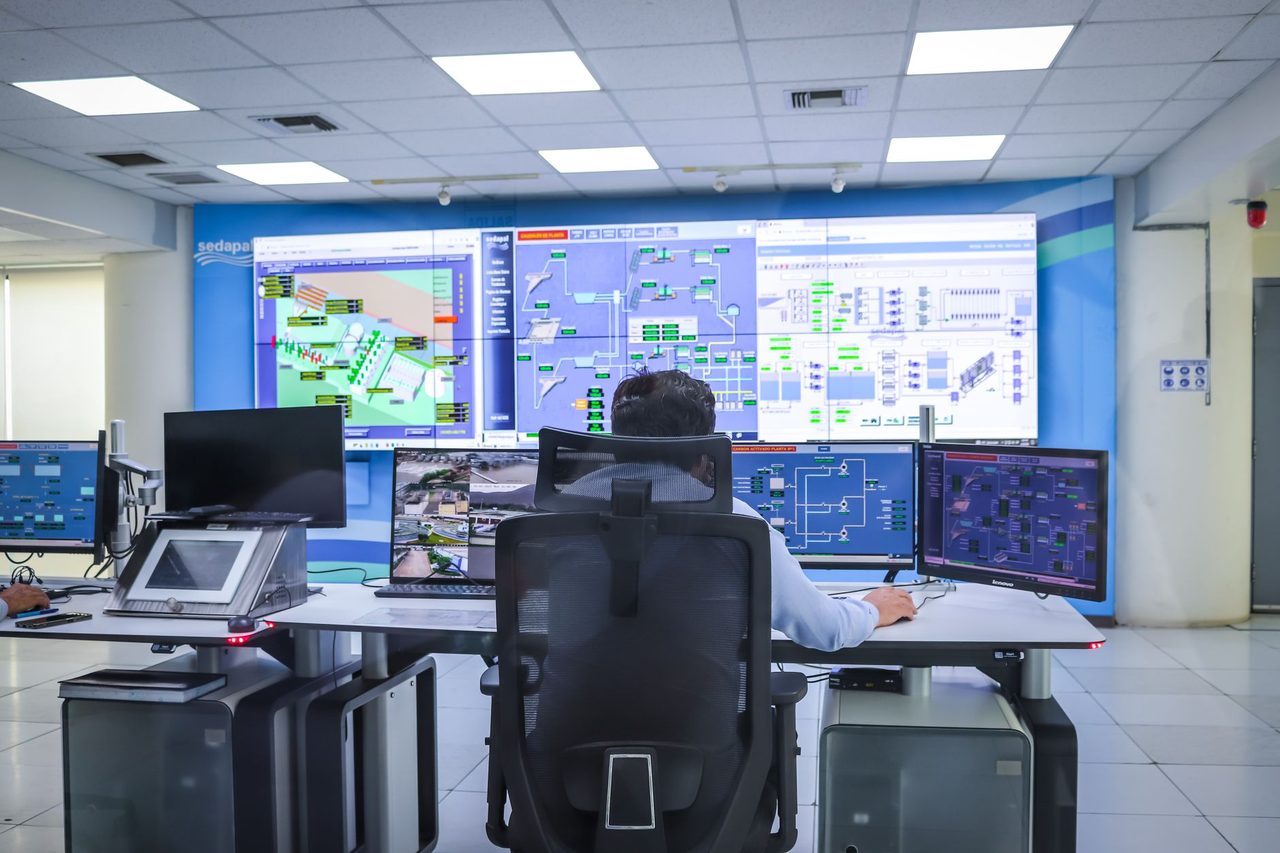
This is where SCADA / ADMS integration becomes central. Without a trustworthy topology engine and switching application, remote devices remain visibility assets rather than restoration assets. Utilities that have only basic SCADA point monitoring often discover that FLISR performance depends heavily on data quality: switch nomenclature, feeder connectivity, normal open point definitions, transformer capacity constraints and source availability must all be current.
For substations feeding high-value urban rings, utilities may also need cleaner bay-level signals and event timing from IEC 61850 substation automation environments. That becomes especially important where restoration paths cross multiple outgoing feeders and source constraints must be validated before switching.
Where the Indian business case is strongest in 2026
Not every feeder justifies FLISR first. The strongest use cases typically combine high interruption cost, clear alternate restoration paths and manageable communications availability.
Priority categories include:
- urban 11 kV ring feeders serving commercial districts
- industrial feeders and mixed-load corridors with high billed energy density
- underground cable networks with frequent section faults but good switching options
- high-load municipal zones with hospitals, water infrastructure and public services
- circles already equipped with SCADA and remote-controlled field devices but lacking automation logic
By contrast, long rural radial feeders with weak back-feeding options may benefit more initially from feeder metering, DT monitoring, basic automation and protection coordination before full FLISR logic is attempted.
A useful screening metric is billed energy per feeder kilometre combined with average interruption minutes and number of restorable load blocks. Feeders with high revenue density and at least one viable back-feed route usually deliver the fastest returns.
In 2026, several state utilities are also evaluating FLISR where smart metering and loss analytics have already identified feeders with acceptable commercial baselines but poor supply continuity. In such cases, the reliability uplift becomes easier to defend to management and lenders because the feeder already has measurable energy accounting.
Quantifying benefits: reliability, loss and operating discipline
The most credible FLISR proposal does not oversell. It distinguishes direct benefits from secondary benefits.
Direct benefits usually include:
- lower fault-to-restoration time for healthy sections
- reduction in consumer interruption duration
- lower energy not served on partially restorable feeders
- reduced field travel and manual switching time
- better operator safety through controlled switching sequences
In Indian deployments, a well-designed FLISR scheme on suitable urban feeders can reduce restoration time for unaffected sections from 30-120 minutes to 2-10 minutes, depending on communications quality and network complexity. At the system level, circle-wide SAIDI improvements depend on feeder mix, but reliability gains on targeted feeders are often material even when only 10-20% of the network is initially automated.
The loss-reduction case is more nuanced but still real.
FLISR does not directly eliminate theft. However, it can support AT&C loss reduction in four practical ways:
- faster restoration reduces unbilled outage disputes and field-level ambiguity
- disciplined switching improves feeder energy accounting and topology accuracy
- reduced fault duration lowers technical stress and repeated fault heating on weak sections
- automated event logs expose abnormal switching patterns and feeder segmentation issues
For high-loss urban networks, the bigger financial gain may come from protecting high-paying demand from long outages rather than from headline percentage-point loss reduction. A DISCOM selling to commercial and industrial consumers at effective tariffs often in the range of Rs 7-10 per kWh has a clear revenue interest in avoiding prolonged interruptions on premium-load pockets. Even a modest reduction in energy not served on these feeders can support the capex case.
There are also indirect benefits for network planning. FLISR event histories help utilities identify recurrent fault sections, weak protection settings, overloaded tie paths and insufficient switching density. Over 12-24 months, this data can improve capex prioritisation better than anecdotal maintenance reporting.
How FLISR fits with RDSS and utility digital roadmaps
RDSS has already pushed utilities toward feeder visibility, consumer metering, system strengthening and measurable outcomes. In 2026, FLISR should be viewed as a bridging layer between physical strengthening and digital operations rather than as a standalone gadget procurement.
Its RDSS relevance is strongest where utilities can show:
- measurable reliability improvement on targeted feeders
- improved operational control over remotely monitored assets
- stronger outage response and reduced restoration time
- better use of existing SCADA investments
- support for urban modernisation and consumer service benchmarks
The strategic mistake is to issue tenders for field devices only, with vague references to future automation. That often leaves DISCOMs with remotely visible switches but no validated restoration logic, no topology maintenance discipline and no accountability for operational outcomes.
A better path is phased and use-case driven:
- Phase 1: feeder selection, network study, switching philosophy and communications audit
- Phase 2: installation of motorised field devices at restoration-critical points
- Phase 3: topology model clean-up, control integration and FLISR logic testing
- Phase 4: operator training, simulation drills and staged go-live
- Phase 5: KPI-based expansion to additional feeders and zones
This approach also improves lender confidence. Financiers and state agencies are more comfortable with digital grid capex when the deployment sequence, measurable outcomes and acceptance criteria are explicit.
Procurement and implementation lessons from the field
The biggest implementation failures in utility automation are usually not due to algorithms. They result from weak specifications, poor communications assumptions and inadequate commissioning discipline.
Indian DISCOMs procuring FLISR should insist on Vendor-neutral specifications that clearly define:
- feeder categories and intended automation logic per category
- restoration constraints, including source loading and transformer margins
- communications latency and availability thresholds
- interoperability with SCADA, ADMS, GIS, OMS and relay systems where applicable
- event timestamping, sequence-of-events logging and cybersecurity controls
- role-based control permissions and operator override procedures
- simulation and site acceptance test requirements
Communications deserves special attention. A feeder cannot self-heal on paper if telecom uptime is weak, field RTUs are unstable or control latency is unpredictable. In India, mixed communications stacks are common: fibre in substations, RF or cellular in field devices, and legacy protocols in older assets. That is manageable, but only if architecture and fail-safe behaviour are designed up front.
Utilities should also be realistic about network models. If GIS and SCADA connectivity data disagree, FLISR logic will be mistrusted by operators. Before go-live, the utility should validate:
- normal feeder topology
- normally open point definitions
- tie feeder thermal capacity
- protection coordination after alternate-feed scenarios
- transformer and cable constraints in restoration paths
Commissioning should not stop at device energisation. FAT to SAT discipline matters because many failure modes appear only when topology changes, fault simulations and operator interventions are tested end to end.
Costs, KPIs and what lenders should look for
By 2026, Indian utilities and financing stakeholders are less interested in abstract smart-grid language and more interested in feeder economics.
Costs vary widely by network type, switching density and communications readiness. A simple overhead-feeder automation package with selected motorised switches, RTUs, integration and application logic may be justified on a focused feeder cluster at a few crore rupees, while dense urban underground networks with multiple RMUs, control upgrades and ADMS integration can be significantly higher. The key is not the absolute capex number but the rupees spent per restorable load block and per avoided interruption minute on high-value consumers.
Meaningful KPIs include:
- average restoration time for unaffected sections after permanent faults
- number of consumers or MW restored within 5 or 10 minutes
- feeder-level SAIDI and SAIFI improvement on targeted circuits
- energy not served avoided on automated feeders
- successful automated switching sequence rate
- communications availability for controlled field devices
- operator intervention rate per FLISR event
- repeat-fault incidence on restored circuits
Lenders and policymakers should ask straightforward questions:
- Are target feeders revenue-dense and operationally suitable?
- Is there a real alternate source path, or only theoretical restoration?
- Has the utility budgeted for communications, integration and training, not just hardware?
- Are baseline reliability metrics available and credible?
- Is expansion logic defined after the pilot cluster?
If these questions do not have clear answers, the project is still a concept, not an investment-ready automation programme.
The 2026 outlook: from pilot automation to operational reliability
The next stage of Indian distribution modernisation will be judged less by the number of connected devices and more by whether utilities can operate the network with speed, discipline and evidence. FLISR sits at that transition point.
For C&I consumers, it promises fewer prolonged feeder interruptions and better continuity on grid-supplied power. For RE developers and DER operators, it creates a more controllable distribution environment where switching states and restoration paths are less opaque. For policymakers, it offers a practical way to convert digital capex into service-quality outcomes. For DISCOMs, it is one of the clearest pathways from remote visibility to measurable operational performance.
The strongest Indian deployments in 2026 will not be those that automate the most feeders on day one. They will be the ones that select the right feeders, engineer the switching logic properly, integrate controls cleanly and measure outcomes rigorously. Utilities that align FLISR & self-healing networks with SCADA / ADMS integration, enforce data discipline and procure for performance rather than device count will be best placed to scale.
Growthifye supports utilities, developers and financing stakeholders with technical due diligence, automation architecture, procurement strategy, interoperability review and implementation oversight across utility digitalisation programmes.
If you are planning a feeder automation, RDSS modernisation or self-healing network programme, contact Growthifye’s advisory desk for a practical assessment of technical fit, bankability and rollout priorities.
Explore Growthifye's related capabilities
This analysis connects directly to our advisory practice: IEC 61850 substation automation · FLISR & self-healing networks · DER management systems · SCADA / ADMS integration.
About the author

Chief Executive Officer, Growthifye — With over 23 years in management consulting, Sudarshan has taken businesses from concept to scale — building and scaling new-age digital and energy businesses.
- 23+ years in management consulting
- EY alumnus
- Led large-scale BESS programmes, capital raises and advisory mandates
Want this analysis applied to your project?
Talk to our team