FLISR for Indian DISCOMs 2026: Outage Reduction, RDSS Fit and ROI
By Sudarshan Karweer · sudarshan@growthifye.com · +91 84510 99371 (Call / WhatsApp) · 2026-09-13

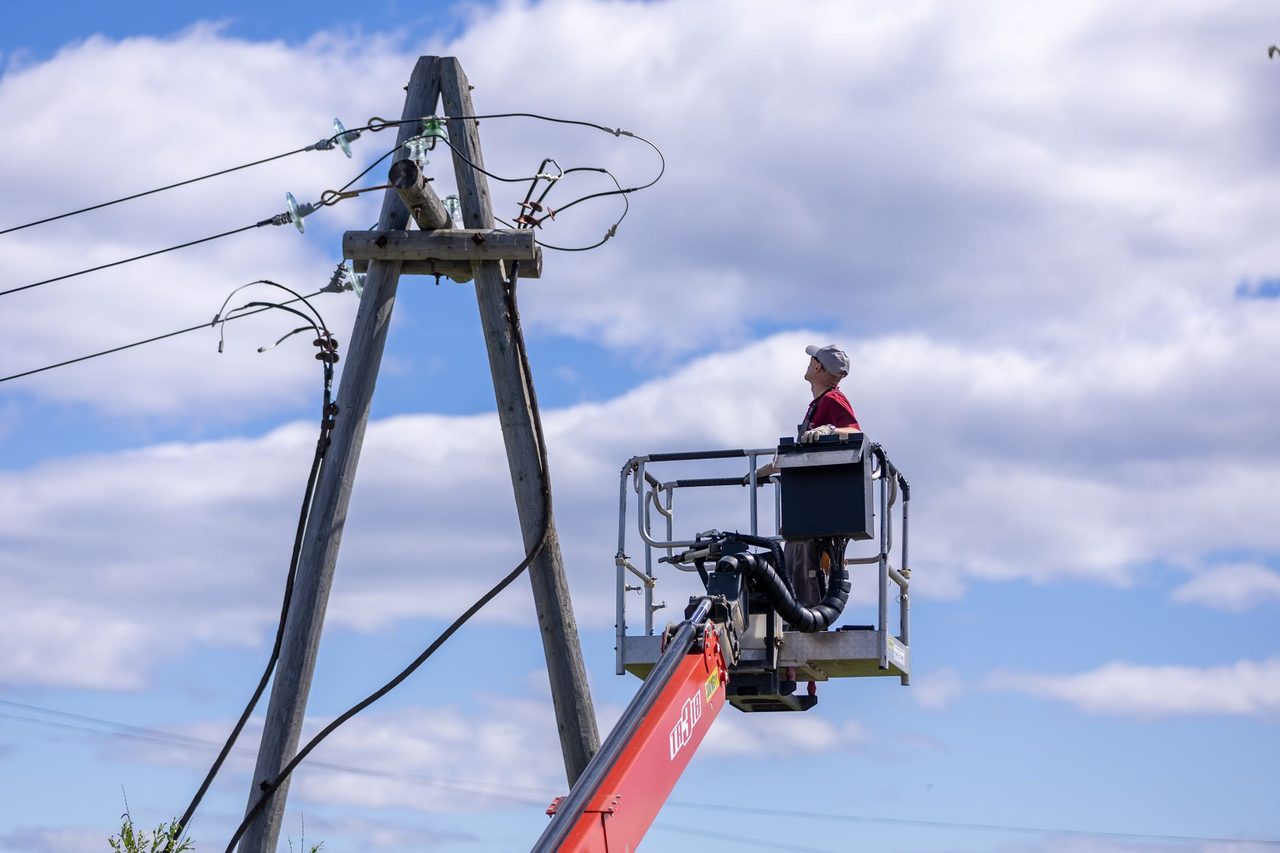
Photo: cottonbro studio on Pexels
India’s power-distribution conversation in 2026 is no longer only about billing efficiency or smart meter roll-outs. Reliability has moved to the centre of utility digitalisation, especially in urban circles, industrial feeders and high-value mixed-load networks where every minute of outage has visible revenue, consumer and political consequences. In that context, fault location, isolation and service restoration, or FLISR, is emerging as one of the most practical automation investments available to Indian DISCOMs.
For C&I consumers, FLISR matters because it directly affects process uptime, diesel back-up dependence, power-quality exposure and contractual delivery risk. For utilities, it offers a measurable path to lower interruption duration, better field-crew productivity, improved regulator-facing performance and stronger returns on existing SCADA, feeder automation and RDSS-funded digital assets. For lenders and policymakers, FLISR provides a cleaner reliability narrative than generic “smart grid” spending because its operating outcomes can be tracked at feeder level.
This article looks at where FLISR fits in the Indian distribution context in 2026, what architecture is needed, where the economics work, what regulators and utilities should watch during procurement, and how to avoid the common trap of buying automation hardware without an operable restoration scheme.
Why FLISR has become timely for India in 2026
India’s distribution utilities have spent the last few years accelerating smart metering, GIS clean-up, substation automation, feeder monitoring and SCADA expansion under RDSS and state capex programmes. The next issue is whether those assets can convert into visible reliability gains.
Many DISCOMs today still run medium-voltage restoration using phone-based complaint escalation, local patrol teams and manual switching. Even where remote terminal units, ring main units and sectionalizers exist, restoration logic is often operator-led rather than system-led. The result is predictable:
- Faults take longer than necessary to locate
- Healthy downstream sections remain de-energised until field confirmation arrives
- O&M teams spend time patrolling instead of restoring
- Industrial consumers face unnecessary outage duration even when alternate supply paths exist
- Utilities underuse existing SCADA and communication infrastructure
FLISR addresses exactly this gap. It uses network topology, fault indications, switch status, source availability and configured operating rules to identify the likely faulted section, isolate it and restore supply to unaffected customers through alternate switching paths. In practical terms, it converts a broad feeder outage into a short interruption for most consumers and a sustained outage only for the actually faulted segment.
This is particularly relevant in India because many urban and semi-urban 11 kV networks already have partial ring structures, tie points or back-feeding capability but do not use them consistently. Where these network characteristics exist, FLISR can create reliability gains without waiting for a full network rebuild.
What FLISR actually delivers on Indian feeders
The value of FLISR should not be framed as abstract automation. It should be tied to feeder outcomes.
A well-engineered FLISR deployment can deliver the following benefits:
- Restoration time reduction from 45-120 minutes in manual operations to 1-5 minutes for auto-restorable faults, depending on communications and switching assets
- SAIDI improvement on targeted feeders often in the range of 15-35% after tuning, and higher in heavily meshed urban networks
- SAIFI improvement where temporary and sectionalized interruptions can be managed more precisely
- Lower diesel genset run-hours for C&I consumers due to faster restoration
- Reduced truck rolls and patrol kilometres for O&M teams
- Better use of tie feeders and standby capacity
- Faster fault-zone identification, which cuts field isolation errors
- Improved consumer experience in high-revenue circles, industrial estates, hospitals, metros, airports and data-sensitive commercial loads
Indian utilities should, however, avoid overpromising. FLISR is not a magic layer that fixes poor network design, overloaded feeders, bad GIS, absent telecom or non-functional field devices. It works when the feeder has sufficient sectionalizing capability, reliable status visibility and a credible source of topology truth.
In India, the strongest near-term FLISR cases are typically found in:
- Urban 11 kV ring-main networks
- Industrial feeders with alternate supply arrangements
- Smart-city zones with existing SCADA and fibre or RF communications
- High consumer-density areas where outage minutes carry visible commercial impact
- Circles where regulator scrutiny on reliability is increasing
Architecture: what an Indian FLISR stack needs
A practical FLISR programme sits between field hardware and utility operations. It is not only a software purchase.
At minimum, a robust stack includes:
- Feeder-level network model with accurate switch, source and normally open point data
- SCADA or distribution management visibility for breaker and switch status
- Remote-operable field devices such as RMUs, reclosers, sectionalizers or motorized switches
- Reliable communications, usually fibre, 4G/5G, RF or hybrid
- Protection coordination aligned with automation logic
- Switching rules and safety interlocks
- Control-room operating procedures and override governance
- Event logging for audit and post-fault analysis
Where utilities already have SCADA but limited feeder automation, FLISR can begin as operator-assisted restoration before moving to full closed-loop automation. This staged approach is often more suitable for Indian conditions because field asset quality varies by circle.
The integration layer also matters. Utilities should think in terms of SCADA / ADMS integration rather than isolated automation islands. If outage management, topology processing and switching logic remain fragmented across vendors, the utility may end up with a demonstration project that cannot scale.
This is why Vendor-neutral specifications are important during procurement. Many Indian utilities are now aware that feeder automation, switchgear, communication gateways and central software can lock the DISCOM into proprietary expansion paths. Neutral protocol requirements, interoperability testing and clear cyber controls should be built in from the tender stage.
FLISR economics: where the ROI comes from
In 2026, utility boards and lenders are asking a harder question than “Is FLISR modern?” They are asking “What is the payback on a feeder or circle basis?”
The answer depends on how benefits are counted. The strongest FLISR economics usually come from a combination of operational savings and avoided outage cost rather than from a single line item.
Typical value buckets include:
- Lower outage duration for billed energy consumers, especially C&I loads
- Reduced field crew dispatch and overtime
- Fewer consumer complaints and lower escalation burden
- Better regulator-facing reliability metrics
- Lower technical stress on equipment through faster fault isolation
- Avoided revenue loss from long interruptions on high-paying feeders
- Better support for time-sensitive urban services and strategic loads
A simple illustration for a high-value urban feeder helps. Assume an 11 kV feeder with 12 MW average load, of which 5 MW is C&I or high-revenue commercial demand. If FLISR reduces outage duration by 300 minutes per month across fault events for 70% of connected load that can be back-fed, the restored energy impact is material.
At an average realization of Rs 7.0-8.5/kWh for higher-paying consumer categories, even partial recovery of interrupted supply translates into visible monthly revenue preservation. On top of that, reduced diesel dependence among C&I users creates an indirect but important customer-value argument, especially when genset-based delivered power can cost Rs 18-30/kWh depending on diesel price, loading and maintenance.
Capex varies widely. For Indian feeder-automation projects in 2026, all-in investments can range from roughly Rs 25 lakh to over Rs 1.5 crore per feeder-equivalent depending on existing switchgear, communication availability, the number of motorized nodes and central software allocation. This is why feeder targeting matters more than broad rollout rhetoric.
The best ROI zones are not all feeders. They are feeders with:
- High annual outage minutes
- Alternate restoration paths already available or economically creatable
- Dense high-value consumer mix
- Existing or easy-to-build telecom backhaul
- Reasonable asset health and accurate topology
In such cases, payback can be defensible within 2-5 years when both utility and consumer-side reliability value are acknowledged. For weak rural radial feeders without switching flexibility, FLISR may not be the first automation priority; there, basic visibility, DT metering, conductor strengthening or sectionalizing may deliver better returns.
RDSS alignment and policy relevance
The Revamped Distribution Sector Scheme has already pushed the sector toward measurable outcomes in metering, strengthening and IT-OT modernisation. In 2026, the more mature utilities are shifting from asset creation to outcome extraction. FLISR fits this second phase.
It aligns with RDSS-era objectives in several ways:
- Improves quality and reliability of supply on modernized feeders
- Helps monetise SCADA, GIS and communication investments already made
- Supports AT&C loss programmes indirectly by improving operational discipline and feeder visibility
- Strengthens utility credibility with regulators and state governments on service delivery
- Builds operational readiness for future distributed-energy complexity
FLISR also has implications beyond traditional outage management. As more rooftop solar, feeder-level BESS and flexible loads connect to the distribution system, utilities need faster visibility into post-fault restoration constraints. A feeder that once had straightforward one-way power flow may now need restoration logic that considers reverse power, voltage profile and local generation conditions.
That is where FLISR starts connecting strategically with DER management systems and advanced control-room operations. Utilities do not need to deploy every advanced application at once, but they should ensure that today’s feeder automation does not block tomorrow’s distributed-grid use cases.
Implementation risks Indian utilities should watch closely
A large share of feeder-automation underperformance comes from execution gaps rather than from flawed concept. In India, five issues show up repeatedly.
First, poor network-data quality. If GIS, single-line diagrams, field naming and actual switch positions do not match, automation logic becomes unreliable. A pre-deployment network validation exercise is not optional.
Second, inadequate motorized switching points. Some utilities buy central software before ensuring enough remotely controllable sectionalizing assets exist. FLISR without field controllability is mostly a dashboard.
Third, weak communications. Restoration logic is only as fast as the telemetry path. Urban fibre plus cellular redundancy is increasingly common in successful deployments.
Fourth, protection and automation misalignment. Relay settings, recloser curves and switch sequencing must be coordinated. Otherwise nuisance operations or restoration failures can occur.
Fifth, unclear control-room accountability. Operators need clear rules on when auto-restoration is enabled, when manual approval is required and how switching logs are audited.
This is also where FAT to SAT discipline becomes critical. Utilities should not accept a generic factory demonstration as proof of field readiness. Site acceptance must test real feeder scenarios, communications loss, lockout conditions, alternate source constraints and operator override workflows.
Procurement and deployment strategy for 2026
For Indian DISCOMs planning FLISR in 2026, the smartest path is usually phased and feeder-selective.
A practical deployment model looks like this:
- Identify 20-50 candidate feeders using outage history, consumer mix and topology data
- Rank them by restoration potential, not only by fault count
- Confirm alternate supply paths and switch asset condition in the field
- Clean GIS and SCADA point mapping before central application rollout
- Start with 5-10 feeders in one circle for operational tuning
- Measure pre- and post-deployment SAIDI, restoration minutes, truck rolls and complaint volume
- Expand using a standard design template and interoperable specifications
Tender documents should ask vendors to commit to measurable service outcomes, not just device counts. At minimum, utilities should define:
- Maximum fault detection and restoration logic execution time
- Communication uptime assumptions
- Interoperability with existing SCADA, OMS, GIS and substation systems
- Cybersecurity segmentation and logging requirements
- Operator training and simulation requirements
- Performance reporting formats at feeder and circle level
For large consumers and RE developers, there is also a strategic angle. If your plant, industrial park, logistics hub or commercial campus sits on a weak but back-feed-capable urban feeder, utility dialogue on FLISR can be commercially meaningful. Reliability improvements may matter as much as tariff negotiations, especially where genset use, process trips or data-centre downtime carry disproportionate cost.
For lenders, FLISR is one of the easier distribution automation use cases to diligence because feeder-level baseline and post-implementation metrics can be compared directly. The project is strongest when linked to a defined set of feeders, documented outage history, actual switching flexibility and ring-fenced KPI tracking.
The bottom line
FLISR is not the most discussed acronym in India’s power digitalisation market, but in 2026 it may be one of the highest-conviction reliability investments for the right feeders. It sits at the intersection of RDSS asset utilisation, consumer service quality, control-room modernisation and practical utility economics.
For Indian DISCOMs, the key is to stop treating feeder automation as a hardware procurement exercise. The real value comes from operational design: accurate network models, switchable field assets, reliable telecom, protection coordination and disciplined SCADA / ADMS integration. When those pieces are in place, FLISR & self-healing networks can materially reduce outage duration and turn existing digital infrastructure into visible service outcomes.
For C&I consumers, developers and financiers, FLISR is worth watching because it offers a concrete indicator of which utilities are moving from digitisation claims to reliability delivery.
If your organisation is evaluating feeder automation, utility digitalisation strategy, reliability improvement business cases or procurement structuring, contact Growthifye’s advisory desk. Our team supports utilities, developers and investors across technical due diligence, Vendor-neutral specifications, implementation strategy and performance-focused automation roadmaps.
Explore Growthifye's related capabilities
This analysis connects directly to our advisory practice: IEC 61850 substation automation · FLISR & self-healing networks · DER management systems · SCADA / ADMS integration.
About the author

Chief Executive Officer, Growthifye — With over 23 years in management consulting, Sudarshan has taken businesses from concept to scale — building and scaling new-age digital and energy businesses.
- 23+ years in management consulting
- EY alumnus
- Led large-scale BESS programmes, capital raises and advisory mandates
Want this analysis applied to your project?
Talk to our team