Enterprise AMI for Indian DISCOMs 2026: HES, Prepaid Billing and RDSS ROI
By Sudarshan Karweer · sudarshan@growthifye.com · +91 84510 99371 (Call / WhatsApp) · 2026-09-09
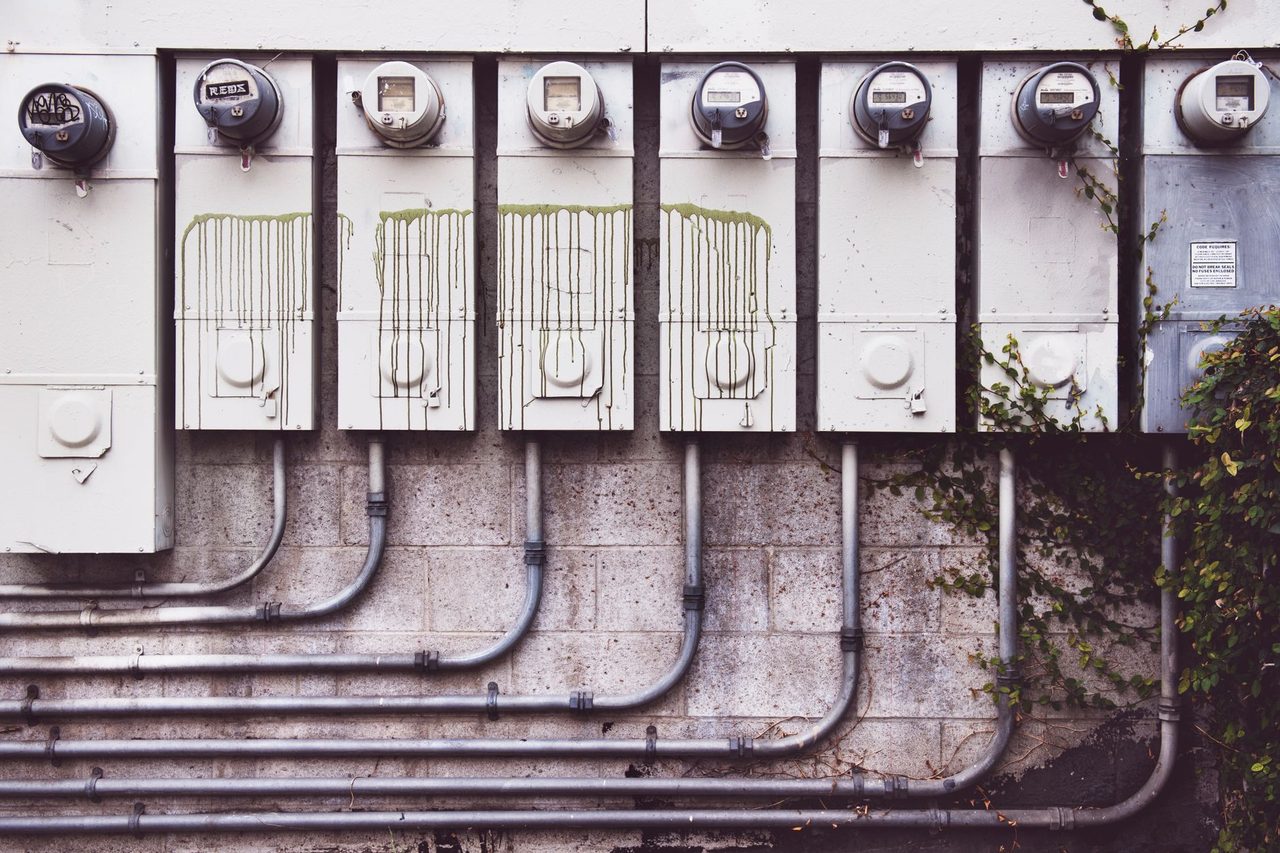
Photo: Tim Mossholder on Pexels
India’s power-distribution digitalisation story in 2026 is moving from pilot-led procurement to enterprise-scale execution. For DISCOMs, the question is no longer whether to deploy smart meters, but how to build an Advanced Metering Infrastructure (AMI) stack that can survive 50 lakh to 2 crore meter scale, support prepaid and postpaid consumers, integrate with legacy billing and collection systems, and deliver measurable AT&C-loss reduction under the Revamped Distribution Sector Scheme (RDSS).
For lenders, regulators, RE developers and large commercial and industrial consumers, AMI quality matters because billing certainty, outage visibility, demand data and collection discipline all influence counterparty risk. A poor AMI rollout creates meter reads but not revenue. A well-designed AMI programme improves billing efficiency, cash flows, tamper detection, transformer loading visibility and network planning.
This article focuses on an angle different from smart-meter analytics and MDM-centric discussions: the enterprise AMI operating model for Indian DISCOMs in 2026, especially head-end system (HES) design, telecom architecture, prepaid billing readiness, field execution discipline and revenue realisation.
Why AMI architecture now matters more than meter procurement
By 2026, smart metering in India is no longer an isolated metering project. It is a core utility IT-OT programme linked to RDSS reform milestones, billing efficiency, subsidy targeting and service quality. Many state utilities have discovered that a meter specification alone does not guarantee programme outcomes.
At scale, AMI performance depends on five tightly linked layers:
- Smart meters and communication modules
- Telecom network design, including RF mesh, cellular or hybrid architecture
- HES for command, control and meter communication
- Meter data processing and exchange with billing, CRM, outage and collection systems
- Business-process redesign for prepaid recharge, remote connect-disconnect, tamper response and exception handling
In several Indian deployments, communication success rates above 90% at commissioning have fallen in live operation because SIM governance, RF network densification, firmware management, event filtering and exception workflows were not properly designed. The result is estimated reads creeping back in, delayed bill generation and weak recovery of investment.
For a DISCOM serving 30 lakh consumers, even a 2% increase in billing efficiency can be material. If average monthly billed revenue per consumer is Rs 1,250, a 2% uplift on only 20 lakh effectively active consumers implies roughly Rs 50 crore of additional annual billing impact. If improved collections add another 1-2 percentage points, the cash-flow effect becomes even more significant.
RDSS in 2026: what utilities and financiers should actually track
Under RDSS, smart metering remains central to reducing AT&C losses and improving operational efficiency. But in 2026, sophisticated stakeholders are moving beyond installation counts. They are tracking whether the AMI programme is producing operational outputs that translate into audited utility outcomes.
The most relevant metrics are:
- Meter communication success rate by day, feeder and consumer category
- Billing on actual smart reads versus estimated or manual reads
- Prepaid recharge success rate and recharge-channel availability
- Remote connect-disconnect success rate and execution turnaround time
- Tamper-event closure cycle time
- Reduction in zero-consumption and low-consumption anomalies
- Improvement in collection efficiency in urban, government and high-arrear categories
- Transformer and feeder energy-balance visibility
- Reduction in consumer complaints related to billing accuracy
For lenders evaluating payment security or utility performance, these indicators are often more meaningful than gross meter-installation numbers. A DISCOM may report 10 lakh deployed smart meters, but if only 72-78% of devices are consistently communicating, or if billing integration fails for a significant share of accounts, the financial case weakens.
A robust advisory and implementation framework should therefore test not just device compliance, but enterprise readiness across procurement, systems integration, field-service management and revenue operations. This is where Vendor-neutral specifications and FAT to SAT discipline can materially reduce long-term programme risk.
HES design: the most underrated success factor in large AMI rollouts
In many Indian tenders, the HES is treated as a software box sitting between the meter and downstream systems. In reality, HES design determines whether a utility can command millions of endpoints reliably, securely and economically.
An enterprise HES in 2026 should be assessed on the following dimensions:
- Multi-vendor interoperability for meter and communication ecosystems
- High transaction throughput during billing peaks and event bursts
- Secure firmware and key-management capability
- Support for prepaid and postpaid account modes
- Near-real-time alarm/event handling for tamper, outage and restoration
- API readiness for billing, CRM, outage-management and analytics systems
- Device lifecycle management, including module replacement and migration
- Disaster recovery and business continuity performance
Consider a DISCOM with 50 lakh endpoints where each meter sends interval data, events, load profile records and on-demand reads. Even modest payload assumptions can create very large daily transaction volumes. Without proper event prioritisation and polling logic, the HES can become congested, delaying billing cycles and operational commands.
Utilities should insist on practical performance testing rather than brochure claims. Questions that matter include:
- What is the sustained daily transaction capacity under real Indian field conditions?
- How does the platform handle telecom latency and intermittent connectivity?
- Can the HES segregate critical commands from non-critical data pulls?
- How many failed commands can it auto-retry without causing network overload?
- What is the measured time for reconnect/disconnect command closure?
A weak HES often produces hidden commercial losses. If remote disconnection for chronic non-payment takes hours or days instead of minutes, collection discipline erodes. If prepaid balance updates are delayed, consumer trust falls. If event storms from tamper or voltage incidents are not filtered intelligently, operations teams miss priority cases.
Prepaid smart metering: where the revenue case is strongest
Among all AMI use cases, prepaid metering remains one of the clearest paths to cash-flow improvement for many Indian DISCOMs in 2026. This is particularly relevant for government connections, temporary supply, rental occupancy, high-default urban pockets and selected rural categories where collection inefficiency remains persistent.
The value drivers are straightforward:
- Advance cash collection improves working-capital position
- Arrear build-up reduces significantly
- Disconnection and reconnection become system-driven rather than field-driven
- Bill-dispute volume can reduce if consumption visibility improves through apps or alerts
- Temporary and seasonal consumers can be served with lower collection risk
Suppose a DISCOM has 5 lakh consumers with average monthly billing of Rs 900 and chronic collection efficiency of 82%. That implies annual billed value of around Rs 540 crore and a revenue realisation of about Rs 443 crore, leaving a gap of nearly Rs 97 crore before considering technical losses and timing effects. If a prepaid conversion strategy raises realised collection to 96-98% for a large part of this segment, the utility can unlock substantial annual cash improvement.
However, prepaid AMI fails when utilities underestimate process integration. The critical components are:
- Recharge platforms with UPI, wallets, Bharat Bill Payment System compatibility and retailer support
- Real-time or near-real-time balance synchronisation
- Emergency credit rules and transparent consumer communication
- Tariff engine alignment with state regulations, fixed charges and subsidies
- Exception handling for telecom failure, meter replacement and disputed balances
Tariff complexity in India makes this important. Many domestic consumers are billed under slab tariffs with fixed charges, fuel and power purchase adjustment mechanisms, electricity duty, and state-specific subsidy treatment. A prepaid engine must be auditable and regulator-ready. If deductions are opaque, consumer complaints rise and political resistance can follow.
Telecom and field execution: where many AMI business cases slip
India’s metering geography is too diverse for one-size-fits-all telecom design. Dense urban pockets, basement meter rooms, high-rise residential clusters, industrial feeders, peri-urban colonies and dispersed rural settlements create very different communication environments.
In 2026, the best-performing AMI deployments are using segmentation rather than standardisation for its own sake. A utility may use:
- Cellular for rapid deployment in urban and semi-urban areas
- RF mesh in dense localities where network economics improve at scale
- Hybrid architecture for difficult zones and phased optimisation
- External antenna and communication redesign for basement or enclosed installations
Telecom governance is now as important as meter installation. Utilities and AMISPs should monitor:
- Signal strength and communication uptime by location cluster
- SIM inventory, activation and misuse control
- Data-plan optimisation and recurring telecom cost per meter
- Last-gasp and first-breath event reliability for outage analytics
- Command success rate by telecom type
Field quality is equally important. Poor CT polarity, wrong consumer indexing, meter-terminal issues, unsafe enclosures and phase mismatch can corrupt data from day one. Once bad data enters enterprise systems, downstream reconciliation costs multiply.
For this reason, FAT to SAT governance should not end with meter accuracy and basic communications. It should extend to consumer indexing, GIS tagging where applicable, integration test scripts, recharge testing, event validation and billing-cycle dry runs. This also becomes highly relevant when AMI must later support SCADA / ADMS integration for outage correlation or feeder-level visibility.
AMI’s role in AT&C loss reduction: what actually works
The biggest mistake in smart-meter programmes is assuming that meters alone reduce AT&C loss. Meters create visibility; management action creates results.
AMI contributes most effectively to AT&C reduction when utilities use it in specific workflows:
- Daily identification of zero-consumption but active-status consumers
- Comparison of feeder input with billed consumption at consumer and DT level
- Detection of meter bypass, terminal-open and neutral-disturbance event patterns
- Monitoring of high-loss pockets by subdivision and franchise area
- Identification of government and municipal accounts with delayed payment or abnormal usage
- Prioritisation of inspection teams based on event severity and revenue at risk
A useful operational rule is to link analytics directly to field closure. If tamper alerts are generated but inspected after 20-30 days, deterrence is weak. If high-value commercial consumers showing sudden load suppression are addressed within 48 hours, impact is visible.
For many urban utilities, the commercial gain comes not only from theft detection but from billing regularisation. These include locked premises, inaccessible meters, disputed reads, delayed final bills and disconnected-yet-live anomalies. AMI reduces friction in each of these categories.
There is also a network benefit. Better consumer interval data improves load research, transformer overloading detection and procurement planning. As rooftop solar, EV charging and behind-the-meter storage rise, interval data quality becomes essential for local-network investment decisions. That makes AMI a foundational layer for future DER management systems, even if the immediate business case is revenue-led.
What C&I consumers, RE developers and policymakers should watch
For C&I buyers and open-access market participants, a digitalised DISCOM can be a better counterparty. Faster meter data availability improves energy accounting, demand reconciliation and dispute resolution. More transparent outage and voltage information can also support better operational planning for industrial consumers.
RE developers should pay attention because utility data maturity increasingly affects interconnection timelines, curtailment visibility and local network assessment. As distributed generation scales, the quality of metering and settlement systems influences the speed at which new commercial models become workable.
Policymakers and regulators, meanwhile, should push the market toward outcome-based monitoring. In 2026, the next level of reform is not just meter sanctioning but meter utilisation. Key regulatory questions include:
- What share of bills are generated from valid smart reads?
- What collection improvement is attributable to prepaid and remote disconnection capability?
- Has AT&C loss reduction occurred in the exact geographies where AMI was deployed?
- Are subsidy and government-payment flows becoming more transparent with smart-metering data?
- Are consumer grievance levels declining after AMI go-live?
A mature AMI programme should also align with broader utility digitalisation. Over time, AMI data becomes more valuable when linked to outage systems, call-centre workflows, field-force management and SCADA / ADMS integration. That is when a DISCOM begins to move from isolated digitisation to enterprise operational control.
How to build a bankable AMI programme in 2026
For Indian DISCOMs and their financing partners, a bankable AMI roadmap in 2026 should include:
- Consumer segmentation before technology selection
- Clear prepaid and postpaid operating model design
- HES sizing based on realistic transaction volumes, not minimal assumptions
- Integration architecture with billing, CRM, collection and outage systems
- Telecom cost and performance modelling over the full contract term
- Field quality-control protocols tied to payment milestones
- KPI-linked governance for communication rate, actual billing rate and collection uplift
- Cyber and key-management controls embedded from day one
- Change-management plans for utility staff, vendors and consumers
This requires a combination of advisory, engineering and execution oversight rather than a pure procurement lens. Utilities that treat AMI as an enterprise transformation project are more likely to achieve sustainable RDSS outcomes than those that view it only as a meter installation package.
For stakeholders across the sector, the takeaway is simple: in 2026, AMI value in India is being determined less by the meter on the wall and more by the operating architecture behind it. HES reliability, billing integration, prepaid workflow design, telecom discipline and loss-reduction action loops are what separate high-visibility projects from high-performing ones.
If your organisation is evaluating AMI strategy, RDSS execution, prepaid smart-metering design or utility digitalisation architecture, contact Growthifye’s advisory desk for a practical discussion on programme structuring, technical due diligence and implementation oversight.
Explore Growthifye's related capabilities
This analysis connects directly to our advisory practice: IEC 61850 substation automation · FLISR & self-healing networks · DER management systems · SCADA / ADMS integration.
About the author

Chief Executive Officer, Growthifye — With over 23 years in management consulting, Sudarshan has taken businesses from concept to scale — building and scaling new-age digital and energy businesses.
- 23+ years in management consulting
- EY alumnus
- Led large-scale BESS programmes, capital raises and advisory mandates
Want this analysis applied to your project?
Talk to our team