DERMS for Indian DISCOMs 2026: Rooftop Solar, BESS and Grid Flexibility ROI
By Sudarshan Karweer · sudarshan@growthifye.com · +91 84510 99371 (Call / WhatsApp) · 2026-09-12

India’s distribution grid is entering a new operating reality. The issue is no longer only metering scale, billing efficiency or outage visibility. In 2026, a growing number of urban and semi-urban feeders are seeing midday reverse power flow from rooftop solar, evening demand spikes from EV charging, voltage excursions at tail-end consumers, and a more complicated dispatch problem once battery energy storage systems (BESS), open-access consumers and behind-the-meter generation enter the same network.
For DISCOMs, this changes the digitalisation agenda. AMI, MDM, GIS, SCADA and ADMS remain foundational, but they do not by themselves orchestrate thousands of distributed energy resources in near real time. That is where a distributed energy resource management system, or DERMS, becomes relevant.
This article examines how DERMS fits Indian DISCOMs in 2026, which use cases justify investment, what the technical stack looks like, and how utilities, lenders, regulators and C&I consumers should evaluate the business case.
Why DERMS is becoming relevant in India now
India’s distribution system was designed for one-way power flow. Generation sat upstream, demand sat downstream, and control was concentrated at substations and load dispatch centres. That model is under pressure for five reasons.
- Rooftop solar penetration is rising in commercial, institutional and residential segments, especially after stronger policy push on distributed solar and prosumer participation.
- C&I consumers are combining rooftop PV, diesel offset strategies, behind-the-meter batteries and energy management systems to manage tariffs and reliability.
- Public and fleet EV charging loads are becoming material on urban 11 kV feeders and selected LT pockets.
- Utilities are under pressure to improve supply quality, reduce technical losses and support cleaner power procurement without uncontrolled local grid impacts.
- Regulators increasingly expect digital visibility and measurable performance improvement under schemes such as RDSS, while state-level renewable integration challenges are becoming more granular at feeder level.
A feeder with 20 MW peak load and 5 to 7 MW distributed rooftop export at noon behaves very differently from a conventional demand-only feeder. Voltage rise at the far end, transformer loading variability, protection coordination problems, and inaccurate planning assumptions become common. If the same feeder also serves EV charging hubs and commercial BESS, the net load shape can swing sharply within 15-minute blocks.
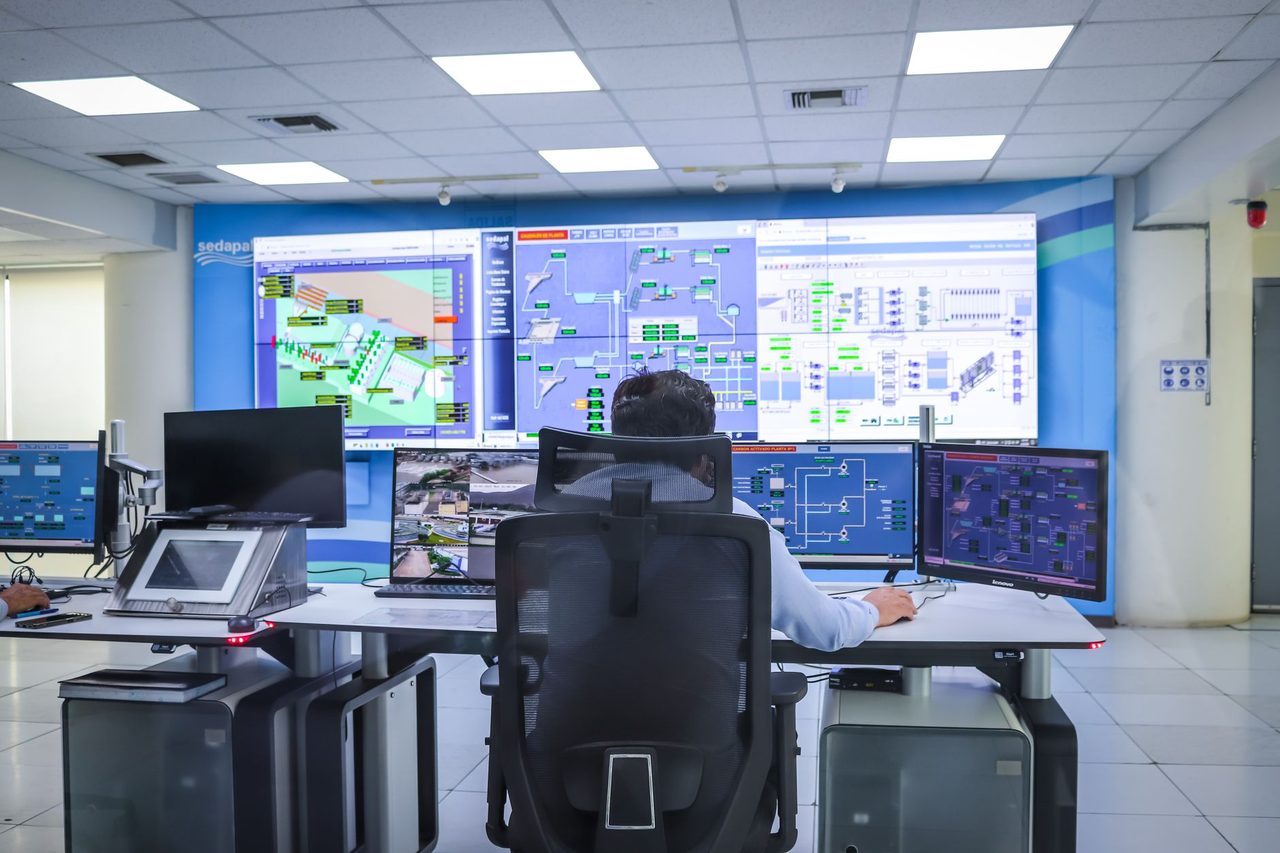
Traditional SCADA usually sees substation-level conditions. AMI may provide interval data, but often with latency and not necessarily the control path required for distributed asset dispatch. ADMS improves network operations, but without DER orchestration logic and integrations it may still treat distributed resources as passive anomalies rather than controllable flexibility.
DERMS is the layer that helps utilities move from visibility to active coordination.
What DERMS actually does for a DISCOM
DERMS is often described too abstractly. In practical Indian utility terms, it performs five operating functions.
- It creates a register and operating model for distributed resources connected to the network: rooftop PV, BESS, controllable EV charging, backup generation, demand response capable loads and other flexible assets.
- It estimates and forecasts their effect on feeder loading, voltage profiles and net demand.
- It sends control or dispatch signals, directly or through aggregators, to modify export, import, charging, discharging or reactive power behaviour where contracts and technology permit.
- It coordinates these decisions with network systems such as SCADA / ADMS integration, outage management and protection constraints.
- It gives planning teams hosting-capacity insights so they can decide where more rooftop solar or EV infrastructure can be accommodated without expensive reinforcement.
A useful way to think about DERMS is that AMI tells you what happened, SCADA tells you what is happening at critical nodes, ADMS helps optimise network operations, and DERMS manages the flexible edge of the grid.
In India, DERMS is not yet a universal need across all DISCOMs. But for utilities serving high-density urban commercial pockets, industrial corridors, premium consumers, airports, campuses, IT parks and high-rooftop-solar municipal areas, the case is becoming strong.
Priority use cases in 2026 for Indian DISCOMs
Not every DERMS business case starts with the same objective. In India, the highest-value use cases are generally the following.
Rooftop solar hosting capacity and voltage management
Many DISCOMs still process rooftop approvals with limited feeder-level dynamic assessment. Static norms can become either too conservative, slowing consumer adoption, or too loose, creating voltage and reverse-flow problems.
DERMS can ingest network topology, transformer ratings, historical load curves, PV production profiles and operational limits to estimate real hosting capacity feeder by feeder. This allows utilities to:
- approve more rooftop PV where capacity exists
- flag pockets needing conductor augmentation or transformer balancing
- apply smart inverter settings such as Volt/VAR or export caps where regulations allow
- reduce manual engineering time for interconnection review
For a metro feeder where voltage complaints rise beyond 253 V equivalent at LT consumer end during midday solar peaks, DERMS-enabled inverter coordination may avoid or defer immediate capex. Even a 6 to 12 month deferment of local network strengthening can materially improve project economics for the utility.
EV charging load orchestration
Fast-charging clusters can create evening and late-night peaks on already stressed urban feeders. Unmanaged charging raises transformer loading, increases technical losses and can worsen contract demand management for upstream systems.
DERMS can support managed charging strategies such as:
- time-window incentives
- charging power throttling during local congestion
- coordination with BESS or solar-plus-storage sites
- feeder-aware charging schedules for public charging networks
For DISCOMs, this matters because peak coincidence drives losses and capex. A 2 to 3 MW charging cluster connected to the wrong 11 kV feeder can trigger avoidable reinforcement if not digitally coordinated.
BESS dispatch for local network support
Battery systems are no longer only a transmission-scale or merchant-market topic. Behind-the-meter and front-of-the-meter BESS can support feeder balancing, peak shaving and outage resilience.
A DERMS platform can identify when local discharge reduces overloaded transformer periods, supports voltage, or reduces expensive upstream power draw during peak tariff windows. In some states where time-of-day tariffs are expanding and power purchase costs vary materially by time block, this creates quantifiable value.
For example, if a utility faces evening marginal supply costs of Rs 7 to Rs 9 per kWh and can use contracted distributed flexibility to reduce local peaks by even 2 to 4 MW across constrained zones, the avoided cost can add up quickly over a summer season.
Demand response for high-value C&I consumers
Large commercial campuses, data centres, malls, cold chains and industrial consumers increasingly have controllable loads, captive backup assets, EMS platforms and in some cases batteries or rooftop PV. DERMS allows DISCOMs to treat these resources as grid support capacity rather than just tariff-paying endpoints.
This is particularly relevant where:
- feeders are capacity-constrained for limited hours only
- utilities want lower-cost alternatives to urgent reinforcement
- regulators are open to pilots on flexibility procurement
- C&I consumers seek incentives for participation
The commercial architecture matters here, but the technical platform begins with DERMS.
Outage restoration and microgrid coordination
In selected industrial estates, institutional campuses or remote high-value consumer clusters, distributed resources can play a role during contingency events. While this overlaps with advanced ADMS and outage management, DERMS can help identify available local supply or flexible demand during restoration.
Where a utility is also implementing FLISR & self-healing networks, DER-aware restoration logic can improve service continuity beyond simple switching operations.
Where DERMS fits in the utility digital stack
Indian DISCOMs should avoid treating DERMS as a standalone software purchase. It only works when mapped into the broader utility architecture.
A practical stack looks like this:
- GIS and asset registry for network model accuracy
- SCADA for substation and field visibility
- ADMS for switching, outage management, Volt/VAR and network optimisation
- AMI and MDM for interval consumption and prosumer data
- DERMS for distributed asset registry, forecasting, control and flexibility orchestration
- billing and settlement systems for compensation or tariff settlement where flexibility programs exist
- cybersecurity, identity and communication layers for secure command and telemetry exchange
This is why Vendor-neutral specifications matter. Utilities should define use cases, latency requirements, communication protocols, device interoperability and cyber controls before procurement. A DERMS that cannot talk cleanly to AMI, inverter gateways, EV charging management platforms, BESS controllers and ADMS will become an expensive dashboard.
In substation-heavy urban environments, integration with IEC 61850 substation automation also becomes relevant, particularly where feeder-level operational decisions must respect protection states, switch positions and transformer constraints in real time.
The business case: what ROI should DISCOMs actually test
DERMS should not be justified on generic smart-grid language. Indian utilities need measurable benefit buckets and zone-specific deployment logic.
The most relevant ROI lines are usually:
- avoided or deferred capex on feeders, transformers and local reinforcement
- reduced technical losses through better voltage and loading management
- fewer voltage complaints and improved supply quality metrics
- improved rooftop interconnection turnaround with lower engineering overhead
- lower peak procurement costs through distributed flexibility
- reduced curtailment or export restrictions where controllable DER can be optimised instead
- better planning accuracy for renewable and EV growth pockets
A simple example illustrates the logic. Suppose an urban division has 40 feeders, of which 8 show fast-rising prosumer penetration and 3 are seeing material EV charging growth. If DERMS-led flexibility avoids just Rs 8 crore to Rs 15 crore of near-term reinforcement over two years, while also reducing technical losses by 0.3% to 0.6% on those feeders and cutting complaint volumes, the business case can become credible even before scaling statewide.
The ROI threshold depends on feeder density, DER concentration and the cost of conventional network augmentation. For low-DER rural feeders, DERMS may not be justified today. For city-centre commercial feeders with volatile net load patterns, it often is.
Key implementation challenges in India
The technology is not the only hurdle. Execution complexity is real.
First, DER visibility is incomplete. Many utilities still lack clean feeder-to-transformer-to-consumer mapping, and prosumer data may sit in disconnected systems.
Second, control rights are not automatic. A utility cannot simply dispatch private assets unless contracts, standards and regulatory frameworks permit it.
Third, device heterogeneity is significant. Inverters, chargers, batteries and gateways from multiple OEMs may not support common protocols or consistent telemetry quality.
Fourth, data latency matters. Fifteen-minute billing data is useful for analytics, but some operational use cases require much faster telemetry and command response.
Fifth, cybersecurity and operational accountability must be tightly managed. Every edge device that can receive a control signal expands the attack surface and the operational risk envelope.
This is why implementation should begin with clearly bounded pilots. Good pilots are not generic citywide rollouts. They focus on one or two high-value use cases, a manageable set of feeders, a known set of DER categories, and well-defined success metrics.
A sensible first phase might cover:
- 5 to 15 feeders in an urban circle
- rooftop solar heavy segments such as malls, hospitals, schools, offices and group housing
- one EV charging cluster category
- selected BESS or demand-response capable C&I consumers
- integrations with existing AMI, GIS and ADMS where available
Utilities should insist on FAT to SAT discipline, not only for the software platform but also for device onboarding, telemetry quality, command execution, fail-safe behaviour and operator workflows.
What C&I consumers, developers and lenders should watch
DERMS is not only a DISCOM topic. It affects several market participants.
For C&I consumers, DERMS can shape future interconnection norms, export limits, flexibility incentives and managed charging frameworks. Businesses planning rooftop solar, EV fleets, battery systems or integrated energy management should expect more utility interaction at the edge of the network.
For renewable developers and system integrators, bankable project design will increasingly require attention to interoperability, controllability and communications readiness, not just installed capacity and module yield.
For lenders, DER-aware distribution digitalisation improves the operating context for behind-the-meter and local grid-support assets. Projects connected to constrained urban feeders will increasingly depend on the utility’s digital maturity and operating rules.
For policymakers, DERMS offers a path to reconcile faster distributed renewable adoption with grid stability. But that requires standards, cost-recovery clarity, interoperability frameworks and pilot-to-scale roadmaps rather than isolated software procurement.
The practical takeaway for 2026
Indian DISCOMs do not need DERMS everywhere. They need it where distributed energy is already stressing conventional operating models. The right trigger is not fashion; it is feeder-level complexity.
Where rooftop solar exports, EV charging growth, voltage excursions, local congestion and flexibility-capable C&I consumers are all appearing together, DERMS becomes the logical next layer after AMI and ADMS. The winning strategy is not to buy the biggest platform. It is to define the operating problem precisely, integrate the stack properly, and prove measurable value on the feeders that matter most.
For utilities planning the next phase of digitalisation, the question in 2026 is no longer whether distributed resources will affect distribution operations. They already do. The real question is whether the utility will manage them actively or continue reacting to them after reliability, power quality and capex pressures show up on the ground.
If your organisation is evaluating DER orchestration, utility digital architecture or pilot-to-scale design for distributed flexibility, contact Growthifye’s advisory desk to discuss a practical roadmap for DER management systems, SCADA / ADMS integration and utility-grade implementation.
Explore Growthifye's related capabilities
This analysis connects directly to our advisory practice: IEC 61850 substation automation · FLISR & self-healing networks · DER management systems · SCADA / ADMS integration.
About the author

Chief Executive Officer, Growthifye — With over 23 years in management consulting, Sudarshan has taken businesses from concept to scale — building and scaling new-age digital and energy businesses.
- 23+ years in management consulting
- EY alumnus
- Led large-scale BESS programmes, capital raises and advisory mandates
Want this analysis applied to your project?
Talk to our team