DERMS for Indian DISCOMs 2026: Managing Rooftop Solar, BESS and EV Load
By Sudarshan Karweer · sudarshan@growthifye.com · +91 84510 99371 (Call / WhatsApp) · 2026-09-01

India’s distribution grid is changing faster at the edge than in the control room. Rooftop solar on urban feeders, behind-the-meter battery energy storage in C&I campuses, EV charging clusters, open-access consumers with flexible demand, and prosumers exporting midday surplus are all changing how distribution networks behave hour by hour.
In 2026, many Indian DISCOMs have already invested in AMI, feeder meters, DT monitoring, SCADA extensions and RDSS-funded control-centre modernisation. Yet a major operational gap remains: most utility systems still see distributed energy resources as exceptions rather than as dispatchable, monitorable grid assets. That is where DERMS becomes relevant.
A distributed energy resource management system, or DERMS, gives a DISCOM the ability to monitor, forecast, control and optimise distributed resources across feeders, substations and consumer nodes. In the Indian context, DERMS is no longer just a future-facing software layer for high-renewable states. It is becoming a practical tool for solving immediate distribution problems: reverse power flow, voltage rise, transformer overloading, poor hosting visibility, solar curtailment disputes, EV charging peaks and rising power-quality complaints.
For C&I consumers, RE developers, lenders and policymakers, understanding DERMS matters because distribution constraints increasingly affect project bankability, connection timelines and delivered savings. A rooftop or open-access strategy that looks attractive on paper can lose value if local feeders face export restrictions, voltage instability or delayed approvals. Likewise, a DISCOM that cannot manage edge resources efficiently risks higher balancing costs, weaker reliability metrics and avoidable capex on network augmentation.
Why DERMS is now a 2026 priority for Indian DISCOMs
Three market shifts are converging.
First, rooftop solar penetration is materially higher on selected urban and industrial feeders than state-level averages suggest. On some 11 kV feeders serving institutional campuses, gated communities, MSME belts or commercial complexes, daytime net demand has fallen sharply while export spikes have risen. This produces operational conditions that legacy distribution planning assumptions did not anticipate.
Second, EV charging is no longer a uniform future load. In practice, charging demand is clustering in bus depots, fleet yards, residential towers, corporate campuses and highway corridors. A 1 MW to 5 MW charging node can materially alter feeder loading, transformer temperatures and evening ramp requirements. Without active coordination, the result is local congestion rather than systemwide efficiency.
Third, battery storage is entering the distribution edge in multiple forms: consumer-owned batteries for demand-charge management, hybrid rooftop-plus-storage systems, campus microgrids and pilot utility storage assets. These create flexibility, but only if utilities can see and signal them.
The old answer to all these issues was network reinforcement: larger transformers, more cabling, new feeders, capacitor additions and conservative connection approvals. That approach remains necessary in many locations, but it is expensive and often slow. In dense urban areas, network augmentation can take 12 to 24 months and face right-of-way constraints. DERMS offers a complementary route: use visibility and controllability to raise hosting capacity and defer selected capex where operationally justified.
What DERMS actually does on an Indian distribution network
DERMS is often misunderstood as a generic dashboard. In reality, a useful DERMS stack combines data ingestion, grid analytics, forecasting, control logic and operator workflows.
For an Indian DISCOM, the most practical DERMS functions in 2026 are:
- Real-time and near-real-time visibility of rooftop solar, BESS, EV chargers and controllable loads at feeder and transformer level
- Forecasting of DER generation and flexible demand using weather, historical interval data and network topology
- Detection of reverse power flow risk, local voltage excursions and thermal overload conditions
- Hosting-capacity assessment for new interconnection requests
- Dispatch or signalling of flexible resources to reduce peaks, absorb solar surplus or manage network constraints
- Coordination with outage and switching systems so distributed assets respond safely during faults and restoration
- Consumer and aggregator programme management for demand response, managed EV charging and export control
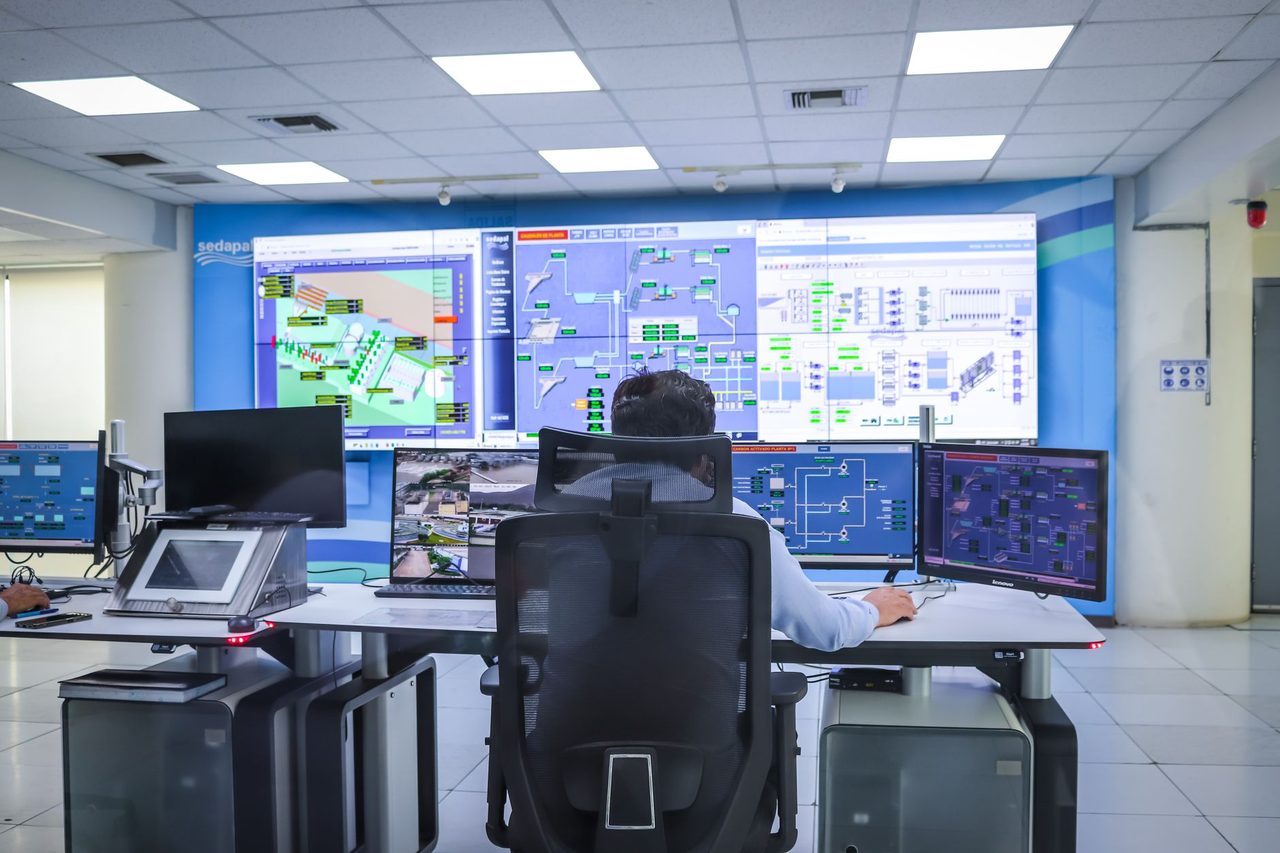
A well-designed implementation typically sits above existing field and enterprise systems rather than replacing them. It draws from AMI, MDMS, GIS, SCADA, outage systems, feeder meters, DT sensors and weather feeds. It may also connect to inverter gateways, EV charging management systems, battery controllers and prosumer portals.
For utilities already pursuing SCADA / ADMS integration, DERMS can be introduced as a phased capability rather than as a standalone monolith. That matters in India because budgets are constrained and interoperability across vendors is a persistent issue.
Indian use cases with clear operational and financial value
The strongest DERMS business case in India comes from targeted, feeder-specific pain points rather than broad digital transformation language.
1) Managing rooftop solar export on high-penetration feeders
On several urban feeders, rooftop adoption has led to midday backfeed toward the substation. This can cause voltage rise at line ends, nuisance tripping and disputes over injection limits. DERMS helps by forecasting export, identifying vulnerable nodes and applying controls such as inverter setpoint adjustments, dynamic export limits or battery charging signals where programme design permits.
If a DISCOM can defer even one 11 kV feeder augmentation or one overloaded DT replacement programme through better operational control, the avoided capex can be meaningful. Depending on city, cable type and civil conditions, feeder strengthening may cost several crore rupees. Even where DERMS only defers capex by 18 to 24 months, the financial value can justify a focused deployment.
2) Managed EV charging instead of unmanaged evening peaks
Commercial charging and depot electrification create concentrated evening demand. A depot with 50 to 100 chargers can add several MWh of load within a short window. DERMS enables time-based and network-aware charging control, reducing simultaneous demand when feeder loading is already high.
This is especially relevant where ToD tariffs already exist. If charging is shifted from peak windows to late-night or solar-rich daytime periods, both the consumer and the grid can benefit. For a large C&I charging operator paying demand charges plus energy charges in the range commonly seen across states, even a 10% to 15% reduction in coincident peak can materially improve site economics.
3) Using BESS and flexible loads for local network support
Many C&I consumers are installing batteries to manage power quality, backup and tariff optimisation. Today, these batteries are usually optimised only for site economics. DERMS opens the possibility of coordinated operation under utility or aggregator programmes, subject to regulation and commercial design. A feeder facing a 2 MW evening overload may not need immediate reinforcement if 1 MW to 1.5 MW of flexible local support can be called reliably during constrained hours.
4) Better integration of open-access and prosumer behaviour
As open-access structures mature and more C&I consumers combine rooftop, third-party supply and storage, load shapes become less predictable. A plant may import heavily in one block, export rooftop surplus in another and charge a battery before peak tariffs. DERMS helps the DISCOM understand these hybrid behaviours, improving load forecasting, power procurement planning and network operation.
5) Power-quality improvement and complaint reduction
DER growth can worsen local voltage flicker, phase imbalance and harmonic interactions, especially where charger density rises. DERMS is not a substitute for power-quality instrumentation, but it can correlate PQ issues with distributed resource behaviour and trigger corrective actions faster. For DISCOMs facing rising complaint volumes from premium urban consumers, this matters commercially and politically.
Architecture and interoperability: what utilities should insist on
The technology challenge in India is not whether DERMS software exists. It is whether it can work across mixed vendor estates, variable communications quality and fragmented data models.
A practical procurement approach should prioritise Vendor-neutral specifications. DISCOMs should avoid architectures that lock control functions to one AMI vendor, one inverter OEM or one charging platform. Interoperability should be tested across:
- AMI/MDMS interval data feeds
- GIS and network model synchronisation
- SCADA telemetry and control points
- Substation and feeder event data
- Inverter and battery communications
- EV charging management interfaces
- Consumer and aggregator enrolment workflows
Standards matter here. While DERMS itself spans multiple application layers, distribution utilities should align field and substation digitalisation with broader interoperability objectives such as IEC 61850 substation automation where relevant, along with secure northbound integrations to control-centre applications.
Utilities should also insist on performance commitments tied to FAT to SAT, not just software delivery. For example:
- Time to ingest and validate interval data from AMI and feeder devices
- Accuracy thresholds for feeder-level DER forecasts
- Alarm quality and false-positive limits for overload or reverse-flow detection
- Response time for dispatch or curtailment signals
- Control success rates across enrolled devices
- Operator workflow completion metrics during outages or constrained conditions
Cybersecurity and consent architecture cannot be afterthoughts. Any DERMS handling controllable consumer assets must define role-based access, command logging, device authentication, certificate management and fallback modes in case communications fail.
The economics: where the ROI comes from
In India, DERMS should not be sold as a generic innovation platform. Its ROI must be built from measurable operational benefits.
The most common value buckets are:
- Deferred network capex on feeders or DTs with local congestion or reverse flow issues
- Reduced technical losses through improved voltage and reactive power management
- Lower outage impact when DER visibility supports safer restoration planning
- Better power procurement and scheduling through improved net-load forecasting
- Reduced curtailment disputes and faster interconnection processing for DER projects
- Improved utilisation of existing network assets before reinforcement
A realistic business case should be feeder-cluster based. Start with 25 to 100 feeders where DER penetration, EV load growth or complaint intensity is already high. Quantify current overload hours, voltage excursions, transformer failure rates, complaint trends, solar export restrictions and planned capex. Then compare a DERMS-led flexibility approach against a pure wires investment path.
For example, if a utility is planning Rs 15 crore to Rs 40 crore of reinforcement across a targeted urban cluster over two years, and DERMS plus device integration can defer 20% to 30% of that capex while also improving reliability, the software and integration spend becomes easier to justify. Even if direct avoided capex is modest, faster rooftop and EV interconnection can support broader policy goals and reduce friction with high-value consumers.
For lenders and investors, the takeaway is important: distributed energy economics increasingly depend on local network intelligence. Projects in states or circles with better digital grid management may show lower curtailment risk and smoother approvals than projects in networks with weak visibility.
Implementation roadmap for Indian DISCOMs
The best DERMS programmes in India will likely be phased, not enterprise-wide from day one.
Phase 1: Feeder selection and data readiness
Identify high-priority feeders based on rooftop density, EV pipeline, DT loading, power-quality complaints and planned reinforcement costs. Validate the quality of AMI, feeder metering, GIS and SCADA data. If topology models are weak, fix that first.
Phase 2: Visibility and forecasting
Stand up DER registration, telemetry ingestion, feeder analytics and forecasting. At this stage, the utility should be able to answer basic questions reliably: how much rooftop is connected on this feeder, where are the EV clusters, when does reverse flow occur, and how often are DTs stressed?
Phase 3: Advisory control and operator workflows
Introduce operator recommendations for managed charging, export control, battery dispatch suggestions or switching coordination. Keep humans in the loop initially.
Phase 4: Closed-loop control for selected resources
Only after data quality and operational confidence improve should the DISCOM move to automated controls for enrolled DER categories. This is where capabilities such as FLISR & self-healing networks and DER management systems can become more tightly coordinated on selected feeders.
Phase 5: Market and programme design
Create commercial frameworks for flexible demand, charging orchestration or battery participation where regulations allow. Without commercial incentives, controllability will remain limited.
What policymakers, C&I consumers and developers should watch
DERMS adoption is not just a utility IT issue. It has implications for grid codes, interconnection processes, tariff design and dispute reduction.
Policymakers should watch for three things in 2026:
- Whether RDSS-era digital infrastructure is being extended into actionable DER operations rather than stopping at data collection
- Whether states are aligning rooftop, EV and storage policies with distribution-level visibility and control requirements
- Whether interconnection approvals can become faster and more transparent using hosting-capacity analytics
C&I consumers and developers should ask DISCOMs practical questions early in project development:
- What is the hosting situation on the target feeder?
- Are export limits static or dynamic?
- Is managed charging or storage coordination likely to become a condition for large new connections?
- What telemetry, communication and control requirements will apply?
Those answers increasingly affect project timelines, capex assumptions and annual savings.
India’s distribution sector does not need DERMS everywhere at once. But on feeders where rooftop solar, EV charging and storage are already changing network physics, DERMS is becoming operationally necessary. The winners will be DISCOMs that treat it not as a software label but as a grid-management capability tied to interoperability, measurable feeder outcomes and disciplined rollout.
If your organisation is evaluating DER integration, utility digitalisation or a feeder-level flexibility strategy, contact Growthifye’s advisory desk to discuss roadmap design, specifications, vendor evaluation and implementation support.
Explore Growthifye's related capabilities
This analysis connects directly to our advisory practice: IEC 61850 substation automation · FLISR & self-healing networks · DER management systems · SCADA / ADMS integration.
About the author

Chief Executive Officer, Growthifye — With over 23 years in management consulting, Sudarshan has taken businesses from concept to scale — building and scaling new-age digital and energy businesses.
- 23+ years in management consulting
- EY alumnus
- Led large-scale BESS programmes, capital raises and advisory mandates
Want this analysis applied to your project?
Talk to our team