Battery Take-Back Networks in India 2026: Collection Economics, EPR and Scale
By Sudarshan Karweer · sudarshan@growthifye.com · +91 84510 99371 (Call / WhatsApp) · 2026-09-13
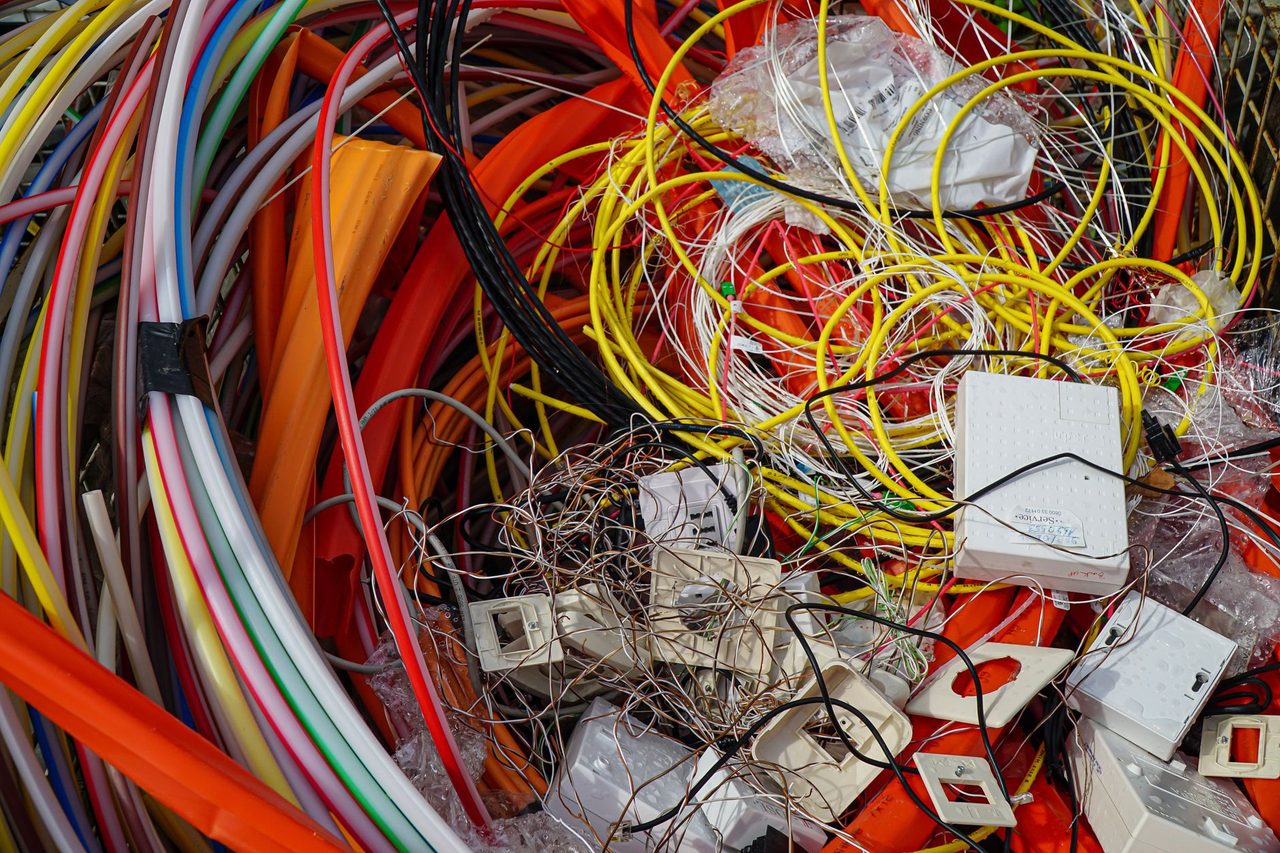
Photo: mohamed abdelghaffar on Pexels
India’s battery circularity story in 2026 is no longer just about recycling capacity. The bigger constraint is upstream: who controls end-of-life volumes, at what collection cost, with what traceability, and under which contracts. For recyclers, OEMs, fleet operators, lenders and policymakers, the most bankable battery platform is increasingly not the one with the biggest shredder or hydromet line, but the one with the strongest take-back network.
This matters because India now has a clear direction of travel on battery compliance under the Battery Waste Management Rules, 2022, alongside a maturing EV market, growing telecom and UPS replacement cycles, and rising retirement volumes from consumer electronics. Yet scrap supply remains fragmented. Material moves through kabadi channels, informal aggregators, refurbishers, service networks, dismantlers and regional traders before it ever reaches a compliant recycler. That leakage affects EPR performance, recovery yields, worker safety and lender confidence.
For market participants evaluating battery recycling, collection infrastructure is now a standalone investment thesis. The economics sit at the intersection of EPR liability, reverse logistics, digital traceability, storage safety, working capital and regional scrap density. In practical terms, if India wants a circular battery industry with predictable feedstock for compliant recycling and second-life deployment, it needs investable take-back systems.
Why take-back networks are the real bottleneck in 2026
Across India, announced battery recycling capacity now materially exceeds the volume that is reliably available through formal channels. Collection, not processing, is the bottleneck. This mismatch is visible across chemistries:
- Consumer electronics batteries are numerous but dispersed, low-ticket and expensive to aggregate.
- Lead-acid collection is mature but increasingly contested and already optimized by incumbents.
- EV lithium-ion packs are higher value but remain unevenly distributed by state, OEM, fleet type and warranty pathway.
- Industrial and telecom batteries move in larger lots but are often captured through closed commercial arrangements.
For a recycler, the headline plant throughput target may be 5,000-20,000 tonnes per annum in the first phase, but the collection network often ramps much more slowly. Many projects discover that the practical first-year formal throughput is constrained by vendor onboarding, transport permits, packaging compliance, collection-center setup and data capture, not by metallurgical design.
That is why lenders increasingly ask different questions in 2026:
- What share of feedstock is tied up under take-back agreements rather than spot procurement?
- What is the weighted average sourcing radius by battery type?
- How much feedstock comes from B2B channels versus consumer aggregation?
- What proportion is EPR-linked and therefore traceable to obligated producers?
- What is the expected landed cost per kilogram at plant gate after logistics, handling and shrinkage?
These are not minor operating questions. They directly affect plant utilization, gross margin volatility and compliance quality.
The economics of battery collection in India
Collection economics vary sharply by chemistry, pack format and source channel. A useful way to think about it is not just purchase price of scrap, but fully loaded landed cost.
A formal take-back cost stack usually includes:
- Scrap procurement payout or incentive to source partner
- Primary aggregation cost at dealer, service center, fleet depot or collection point
- Sorting, testing and safe storage
- Packaging and UN-compliant or equivalent hazardous transport handling, where applicable
- Intercity freight
- Insurance, shrinkage and fire-risk controls
- ERP or portal-based traceability administration
- Working capital cost until material is processed and recovered
In 2026, for small-format portable lithium-ion batteries collected through diffuse channels, fully loaded aggregation and logistics can add INR 20-45/kg before processing. For larger EV modules and packs, the rupee-per-kg logistics may look lower, but safe handling, discharge, dismantling and transport complexity can push total pre-processing costs materially higher on a per-unit basis. For organized B2B channels such as telecom, data center UPS or e-rickshaw fleet replacement, take-back costs are lower because collection density is better and lot sizes are larger.
A practical benchmark many developers now use is collection density per route. If one route or regional cluster cannot consistently aggregate viable tonnage each month, formal collection quickly becomes margin-dilutive. This is why scale alone does not guarantee profitability. Network design does.
Typical drivers of lower collection cost include:
- Clustered fleets in NCR, Maharashtra, Karnataka, Tamil Nadu, Gujarat and Telangana
- OEM-authorized service networks with predictable battery returns
- Distribution-linked pickup points for inverter, storage or mobility dealers
- Large institutional discard streams such as telecom towers, warehouses and industrial backup systems
- Co-located dismantling and consolidation hubs near major consumption centers
Typical drivers of higher collection cost include:
- Rural or semi-urban dispersion
- Mixed chemistry lots with poor labeling
- Consumer-facing collection without retailer incentives
- Multiple intermediaries taking margin before handoff to recycler
- Long-haul movement to a single distant processing plant
This is where Reverse logistics becomes a strategic capability rather than a support function. Companies that model route density, depot economics, safety protocols and chain-of-custody data in advance are materially more bankable.
EPR is reshaping contracts and channel control
India’s EPR framework is steadily shifting bargaining power toward participants who can prove traceable collection and compliant recycling. In 2026, producers and importers are more focused on where credits or compliance evidence come from, how auditable the material trail is, and whether collection partnerships can withstand scrutiny.
That changes contracting behavior in at least four ways.
First, OEMs and battery importers are signing structured agreements with recyclers and collection partners rather than relying only on opportunistic scrap sales. These contracts may include minimum tonnage commitments, regional exclusivity, service-level agreements for pickup, and digital documentation protocols.
Second, dealerships, service networks and swap operators are emerging as high-value nodes in the take-back chain. They sit at the interface of customer returns, warranty replacements and residual asset flows. If they are not embedded into the formal network, leakage into informal channels remains high.
Third, fleet operators are becoming preferred counterparties because their retired batteries come in bulk and with better documentation. E-bus fleets, 2W and 3W platform operators, intralogistics fleets and captive delivery operators can support lower collection costs and better State of Health visibility.
Fourth, financial institutions now treat EPR-linked feedstock arrangements as part of revenue security. For a recycler, long-term volume visibility can be as important as recovery efficiency. For an OEM, credible EPR compliance can reduce future enforcement and reputational risk.
In this context, EPR compliance is not merely a legal checkbox. It is a commercial architecture for channel control.
Designing a bankable take-back network
A bankable collection platform in India typically combines three layers: anchor volumes, regional aggregation and digital traceability.
Anchor volumes are the base-load feedstock. These usually come from:
- OEM and importer take-back programs
- EV fleet replacements
- Telecom and UPS battery retirements
- Industrial battery contracts
- Service-center and dealer returns
Regional aggregation converts fragmented returns into dispatchable lots. In practice, most scalable models use a hub-and-spoke structure:
- Micro collection points at dealerships, workshops, retail partners or municipal tie-ups
- District or city-level consolidation hubs with trained handling staff
- State or regional aggregation centers for sorting, testing and palletization
- Final dispatch to dismantling, second-life evaluation or recycling plant
Digital traceability ties the system together. At a minimum in 2026, serious operators are implementing batch tagging, source attribution, chemistry mapping, weight reconciliation and movement logs. More sophisticated networks integrate SOH records, serial number mapping, warranty status and dismantling outcomes.
The purpose is not only compliance. Traceability improves commercial sorting. A battery pack with residual utility may be diverted toward Second-life battery applications instead of immediate material recovery, while damaged or deeply degraded packs go to recycling. That sorting decision can significantly change value realization.
For project developers and investors, core diligence questions should include:
- How many collection points are contracted and active today, not just proposed?
- What share of volumes come from signed annual agreements?
- What are route-level pickup costs by state and source type?
- What percentage of incoming material is correctly classified on first receipt?
- What are average dwell times at collection and aggregation hubs?
- What is the fire safety protocol and insurance structure at each node?
- How much working capital is locked in transit and storage?
Without credible answers, plant-level IRR claims are often overstated.
State-level realities: where scale is likely to emerge first
India’s battery take-back economics are not uniform. Early scale is concentrated where EV adoption, industrial load centers, logistics infrastructure and recycler presence overlap.
The leading states for formal take-back growth in 2026 are likely to remain:
- Maharashtra: strong urban demand centers, 2W/3W EV adoption, warehousing and industrial loads
- Karnataka: Bengaluru-driven electronics and mobility ecosystem, organized service networks
- Tamil Nadu: manufacturing base, mobility supply chain and logistics connectivity
- Gujarat: industrial batteries, manufacturing and port-linked trade ecosystem
- Delhi-NCR: high vehicle density, e-commerce fleets, electronics discard volumes
- Telangana: urban fleet growth and industrial clustering
This does not mean other states are unattractive. It means first-wave formal networks typically need high-volume anchor corridors to achieve viable collection economics. Expansion into lower-density geographies usually follows once route planning, SOPs and channel incentives are proven.
A common mistake is assuming national collection from day one. In reality, profitable scale is usually corridor-based first, national later.
What policymakers and utilities should focus on
If India wants higher formal recovery and safer battery handling, policy attention should move beyond plant announcements to collection architecture. Several interventions can improve outcomes quickly:
- Standardized guidance on storage, handling and movement of end-of-life lithium batteries across states
- Incentivized retailer and dealer take-back participation
- Better integration of municipal e-waste systems with battery segregation channels
- Digitized reporting interfaces that reduce compliance friction for small aggregators
- Training and certification pathways for dismantling and safe pack handling
- Enforcement against unsafe informal processing, especially where fire and contamination risks are high
Utilities and DISCOM-linked public programs also have a role in stationary storage and distributed energy ecosystems. As batteries from rooftop backup, behind-the-meter systems and community storage installations age, the need for organized retrieval and redeployment will grow. Planning collection pathways now is cheaper than trying to formalize leakage later.
There is also a financing angle. Take-back infrastructure is often viewed as operational overhead, but it behaves more like strategic infrastructure. Collection hubs, packaging systems, traceability software, testing tools and safety systems all support predictable throughput. For lenders, that can justify a different risk assessment than a pure merchant scrap procurement model.
The strategic takeaway for 2026
The next phase of India’s battery circularity market will be won by companies that integrate compliance, sourcing and logistics into one commercial system. Recycling yields still matter. Metallurgy still matters. But the strongest margin defense increasingly lies in control of end-of-life flows.
For OEMs, the priority is securing compliant return channels before volumes rise further. For recyclers, the priority is replacing spot dependency with structured take-back partnerships. For fleet owners, there is now real value in disciplined retirement, documentation and disposition strategy. For lenders, take-back quality should be underwritten alongside processing technology.
This is also the right time for End-of-life fleet audits. Many companies still do not know where their future retired battery volumes will emerge, what fraction may be suitable for refurbishment or second life, and what collection model will minimize compliance cost. That lack of visibility can become expensive as EPR enforcement strengthens and residual value becomes more contested.
In short, India does not just need more battery recycling plants. It needs denser, safer and more auditable take-back networks. The participants that build those networks now will shape feedstock access, EPR economics and circular value capture for the rest of the decade.
If your business is evaluating battery take-back, recycler tie-ups, fleet retirement strategy or EPR-linked circularity planning, contact Growthifye’s advisory desk. We help clients structure collection models, traceability systems and bankable circularity roadmaps across India.
Explore Growthifye's related capabilities
This analysis connects directly to our advisory practice: End-of-life fleet audits · Second-life battery applications · Module & battery recycling · EPR compliance.
About the author

Chief Executive Officer, Growthifye — With over 23 years in management consulting, Sudarshan has taken businesses from concept to scale — building and scaling new-age digital and energy businesses.
- 23+ years in management consulting
- EY alumnus
- Led large-scale BESS programmes, capital raises and advisory mandates
Want this analysis applied to your project?
Talk to our team