
AMI Head-End and Data Integration for Indian DISCOMs 2026: Interoperability and ROI
By Sudarshan Karweer · sudarshan@growthifye.com · +91 84510 99371 (Call / WhatsApp) · 2026-08-30
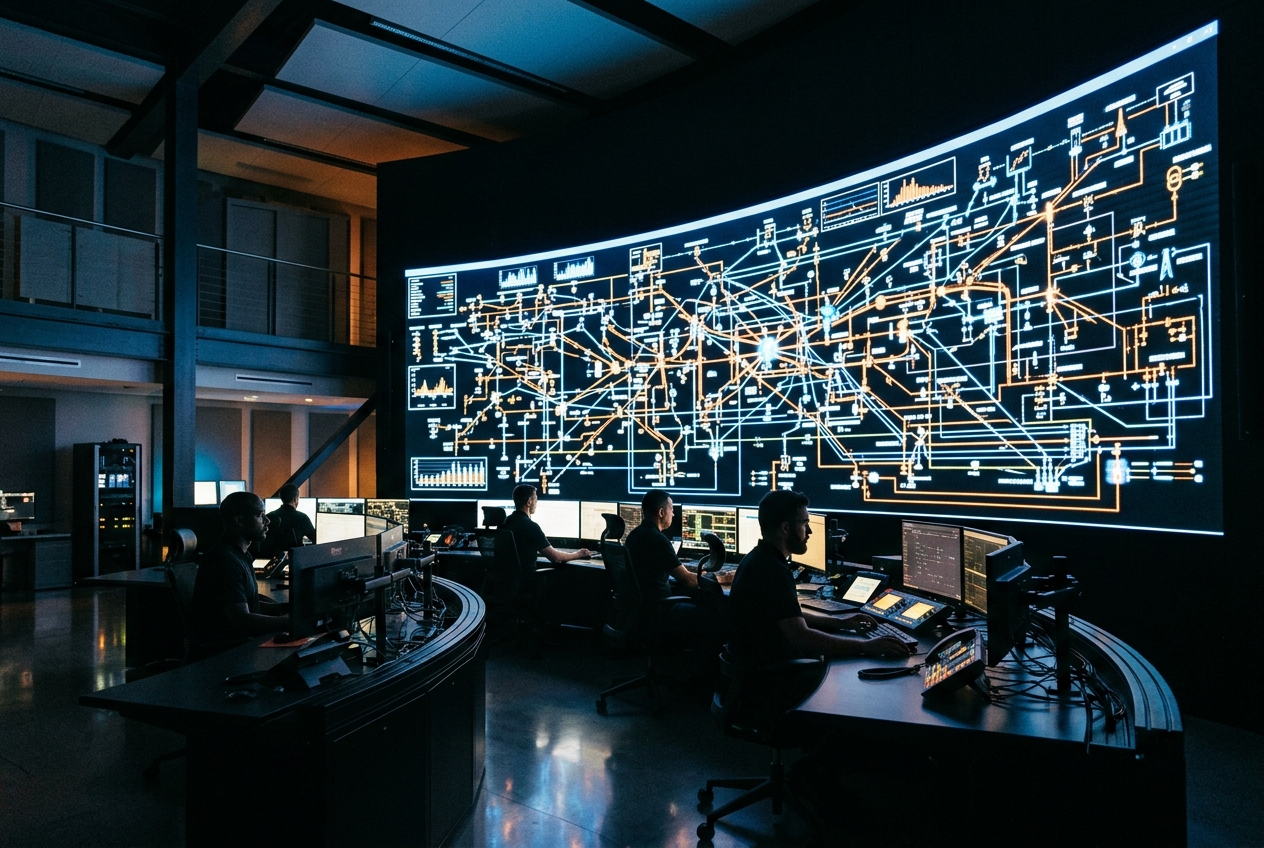
Photo: Calvin Seng on Pexels
India’s smart-metering conversation has moved beyond meter rollout. In 2026, the harder and more valuable problem for DISCOMs is integrating AMI head-end systems, meter communication networks, MDM, billing, outage workflows, prepaid collections and utility operations into one reliable digital stack.
That integration layer now matters as much as meter count. Many utilities have proven that installing smart meters can improve billing efficiency, tamper visibility and remote operations. Yet the financial outcome under RDSS depends on whether interval data, event data, alarms and remote-connect commands flow correctly across systems and translate into lower AT&C losses, faster collections, fewer site visits and better power-supply quality.
For Indian C&I consumers, renewable developers, lenders and policymakers, this is not a back-office issue. It affects payment security, outage transparency, open-access settlement readiness, rooftop solar accommodation, feeder-level energy accounting and the bankability of utility modernisation programmes.
This article looks at a specific 2026 priority that is different from broader smart-metering or MDM discussions: how Indian DISCOMs should design AMI head-end and enterprise data integration for interoperability, measurable ROI and future readiness.
Why the integration layer is now the real AMI bottleneck
Most large AMI programmes in India now include a standard chain: smart meters, communication network, head-end system (HES), meter data management (MDM), billing/CRM, collection systems and utility analytics. But in practice, integration gaps create value leakage in four places.
- Meter reads arrive, but validation-estimation-editing rules do not align with billing cut-off dates.
- Remote disconnection and reconnection commands are available in the HES, but field and customer-service workflows are not redesigned around them.
- Event and tamper alarms are captured, but they do not feed investigation queues with geographic, feeder and consumer-category context.
- Consumption data exists, but it is not stitched to feeder input, DT metering and collection records for actionable loss segmentation.
This is why two DISCOMs with similar meter installation numbers can show very different outcomes. One may achieve 3-6 percentage-point improvement in billing efficiency and collection improvement in high-loss urban divisions. Another may simply accumulate data while collections and complaint resolution remain largely unchanged.
In 2026, the integration bottleneck is becoming more visible because meter populations are crossing thresholds where manual exception handling no longer works. At 1 million to 5 million endpoints, integration quality drives whether daily operations remain stable.
What a robust AMI integration architecture looks like in 2026
A utility-grade architecture should not treat the head-end system as a silo. The HES is the command, communication and event-ingestion layer between field devices and enterprise applications. Its role is operational, but its design choices directly influence cost, vendor lock-in and scalability.
A practical architecture for Indian DISCOMs now includes the following layers:
- Device layer: single-phase, three-phase, DT and feeder meters; modem modules; communication accessories.
- Communication layer: RF mesh, cellular, NB-IoT or hybrid architecture depending on density and terrain.
- HES layer: device communication, command management, firmware management, alarm/event ingestion, read scheduling, exception handling.
- MDM layer: validation, estimation, editing, profiling, settlement-ready interval storage, standardised consumption outputs.
- Enterprise integration layer: APIs, message queues, integration bus and event-driven connectors to billing, CRM, outage, collections and analytics.
- Operational analytics layer: dashboards for meter health, read performance, tamper incidents, remote service orders, prepaid balances and loss segmentation.
For Indian utilities, one major lesson from early deployments is that custom point-to-point integrations create fragility. When a billing system changes, when a new prepaid module is added, or when a second meter vendor is introduced, custom connectors often break. That raises OPEX, delays billing and undermines utility trust in the AMI stack.
The stronger model is API-led and standards-oriented. Even where perfect interoperability is not possible, DISCOMs should insist on common interface definitions, event taxonomies and role-based data access. This is where Vendor-neutral specifications materially improve outcomes. They reduce dependence on any one meter OEM or platform integrator and make future system upgrades more manageable.
Interoperability: the difference between scale and vendor lock-in
Interoperability is often discussed in procurement documents but weakly enforced during implementation. In 2026, that is no longer acceptable because AMI programmes are increasingly linked to broader utility automation and data-platform plans.
A DISCOM should evaluate interoperability across six dimensions.
- Multi-vendor meter onboarding: can the HES reliably manage meters from more than one OEM without degraded performance?
- Protocol adaptation: how are DLMS/COSEM variants, communication stacks and firmware differences normalised?
- Northbound interfaces: does the HES expose secure APIs for MDM, billing, CRM and analytics?
- Event standardisation: are outage indicators, tamper events, neutral disturbance, power quality and connect/disconnect statuses mapped consistently?
- Time synchronisation and interval integrity: can 15-minute or 30-minute interval data be trusted for downstream analytics and settlement use cases?
- Device lifecycle control: can keys, firmware, certificates and command rights be managed at scale?
For lenders and policymakers, interoperability has direct financing implications. Programmes with poor integration discipline can produce hidden liabilities: repeated change requests, low command success rates, prolonged acceptance testing and unplanned middleware costs. These do not always appear in headline capex, but they affect project viability and DISCOM cash flow.
For C&I consumers, interoperability matters because billing precision, outage communication, prepaid visibility and future time-of-day settlement features all depend on high-quality data flows. As India deepens market-based dispatch, open-access participation and distributed energy integration, poor utility data architecture will become a commercial constraint.
Where AMI integration creates measurable ROI for Indian DISCOMs
The business case should be built around cash flow and controllable operating metrics, not generic digitisation language. In 2026, the most defensible ROI drivers are the following.
1) Billing efficiency and billing cycle compression
AMI integration can materially reduce missed reads, estimated bills and delayed bill generation. In many urban and peri-urban circles, that can reduce billing exceptions by 20-50% once meter communication performance stabilises above programme thresholds. Even a 2- to 5-day reduction in billing cycle time improves working capital when applied across large consumer bases.
2) Collection efficiency and prepaid performance
When HES, prepaid platform and billing systems are tightly integrated, low-balance alerts, recharge posting and remote connect/disconnect become operationally reliable. This reduces field visits and revenue slippage. Utilities with high government-consumer exposure and mixed urban portfolios can especially benefit if arrears follow-up is digitally prioritised.
3) Tamper and theft analytics with actionability
Tamper events alone do not improve collections. Integration with consumer indexing, feeder mapping, inspection workflow and recovery tracking does. The practical ROI comes when event clusters are ranked by revenue at risk and linked to field enforcement. In high-loss pockets, AMI-led theft interventions can deliver targeted gains faster than blanket campaigns.
4) AT&C loss segmentation at feeder and transformer level
The real advantage emerges when consumer meter data is joined with feeder and DT metering. Utilities can then distinguish technical-loss zones from commercial-loss zones and focus capex accordingly. This is especially useful in RDSS-aligned investment planning, where data-backed prioritisation is increasingly expected.
5) OPEX reduction in field service and complaint handling
Remote reads, remote reconnects, last-gasp events and meter health diagnostics can reduce truck rolls and improve complaint triage. The savings vary by geography, but in dense service areas the reduction in avoidable site visits can be material.
6) Better outage intelligence and future automation readiness
Although AMI is not a substitute for a full outage platform, last-gasp and restoration pings can improve visibility, especially where grid telemetry remains partial. This becomes more valuable when AMI is connected with SCADA / ADMS integration and broader network operations.
Procurement mistakes Indian utilities should avoid
A large share of integration problems begins in the RFP and contract structure. The 2026 best practice is to treat data architecture, interface testing and system performance guarantees as core scope items, not annexures.
Common mistakes include:
- Selecting meter and communication vendors without defining enterprise integration ownership.
- Allowing proprietary data models that make migration expensive.
- Under-specifying API performance, uptime and cybersecurity controls.
- Treating MDM and billing integration as a one-time implementation rather than a continuously governed process.
- Failing to define event codes, consumer master synchronisation and feeder/DT mapping rules early.
- Delaying user acceptance around remote operations, command success and exception workflows.
DISCOMs should insist on measurable technical and business KPIs during FAT to SAT. Examples include:
- Daily read success by consumer segment and communication technology
- Billing data availability before cut-off windows
- Remote connect/disconnect command success rate
- Event ingestion latency for critical tamper and outage-related signals
- Time to reconcile consumer master mismatches
- Percentage of meters geo-tagged and feeder/DT mapped correctly
- Reduction in estimated bills and manual interventions
These metrics should be reviewed division-wise, not just at utility aggregate level. Aggregate dashboards can hide poorly performing pockets that continue to drag collections and consumer satisfaction.
How AMI integration links to DER, grid edge and future utility modernisation
A 2026 AMI architecture should not be designed only for billing. It should be ready for rooftop solar growth, behind-the-meter storage, EV charging clusters and more dynamic distribution operations.
That does not mean every DISCOM needs a full advanced flexibility stack immediately. It does mean the utility should preserve data quality, interoperability and control pathways that allow future integration with DER management systems and grid-edge analytics.
Consider the pressure points already emerging in Indian distribution networks:
- Rooftop solar export visibility at low-voltage level
- Transformer overloading in mixed residential-commercial feeders
- EV charging concentration in urban pockets
- Time-of-day tariff implementation and consumer response analysis
- Open-access and group-captive consumers demanding better interval data quality
If AMI data remains trapped in vendor silos, the utility will struggle to support these use cases. If it is properly structured and integrated, the DISCOM gains a stepping stone toward more advanced automation, demand response and distributed resource orchestration.
This is also where adjacent capabilities such as IEC 61850 substation automation and SCADA / ADMS integration become strategically relevant. Grid modernisation is no longer a sequence of disconnected projects. Substation data, feeder telemetry, meter interval data and consumer system data must increasingly work together.
A practical 2026 roadmap for DISCOM leadership
For utilities, state agencies and financiers evaluating digitalisation programmes this year, the most practical roadmap is phased and KPI-led.
Phase 1: integration baseline - Audit current HES, MDM, billing and CRM interfaces - Identify data-latency, master-data and command-success bottlenecks - Establish a common event dictionary and consumer indexing rules
Phase 2: business-priority workflows - Fix billing-cycle integration first - Integrate remote service orders and prepaid workflows - Link tamper alarms to revenue-protection operations
Phase 3: network-linked analytics - Stitch consumer AMI data to feeder and DT meters - Create division-level loss heat maps - Prioritise technical versus commercial interventions
Phase 4: future-readiness - Build open APIs and secure data access controls - Prepare for outage, flexibility and DER-linked use cases - Align architecture with larger utility automation plans
For lenders, the diligence lens should include integration architecture, contract enforceability, interface ownership and evidence that business KPIs are tracked post-commissioning. Meter count alone is not a bankable success metric.
For C&I consumers and renewable developers, the key signal is whether the serving utility is moving toward more reliable interval data, faster service operations and better network visibility. Those factors increasingly affect billing confidence, power quality and the long-term viability of distributed energy strategies.
In 2026, India’s AMI opportunity is no longer simply about replacing electromechanical or static meters with smart endpoints. The real value lies in whether utilities can turn head-end data into operational decisions, revenue outcomes and a scalable digital foundation for the distribution grid.
DISCOMs that get AMI integration right can improve collections, reduce avoidable OPEX, sharpen AT&C loss programmes and prepare for a more distributed power system. Those that do not may still deploy millions of meters, but they will struggle to convert hardware into utility performance.
If your organisation is planning an AMI, RDSS or utility digitalisation programme, contact Growthifye’s advisory desk. We help utilities, investors and developers with architecture review, Vendor-neutral specifications, integration strategy, technical diligence and execution oversight.
Explore Growthifye's related capabilities
This analysis connects directly to our advisory practice: IEC 61850 substation automation · FLISR & self-healing networks · DER management systems · SCADA / ADMS integration.
About the author

Chief Executive Officer, Growthifye — With over 23 years in management consulting, Sudarshan has taken businesses from concept to scale — building and scaling new-age digital and energy businesses.
- 23+ years in management consulting
- EY alumnus
- Led large-scale BESS programmes, capital raises and advisory mandates
Want this analysis applied to your project?
Talk to our team

