RTC vs As-Generated Corporate PPAs in India 2026: Cost, Risk and OA Design
By Sudarshan Karweer · sudarshan@growthifye.com · +91 84510 99371 (Call / WhatsApp) · 2026-09-07
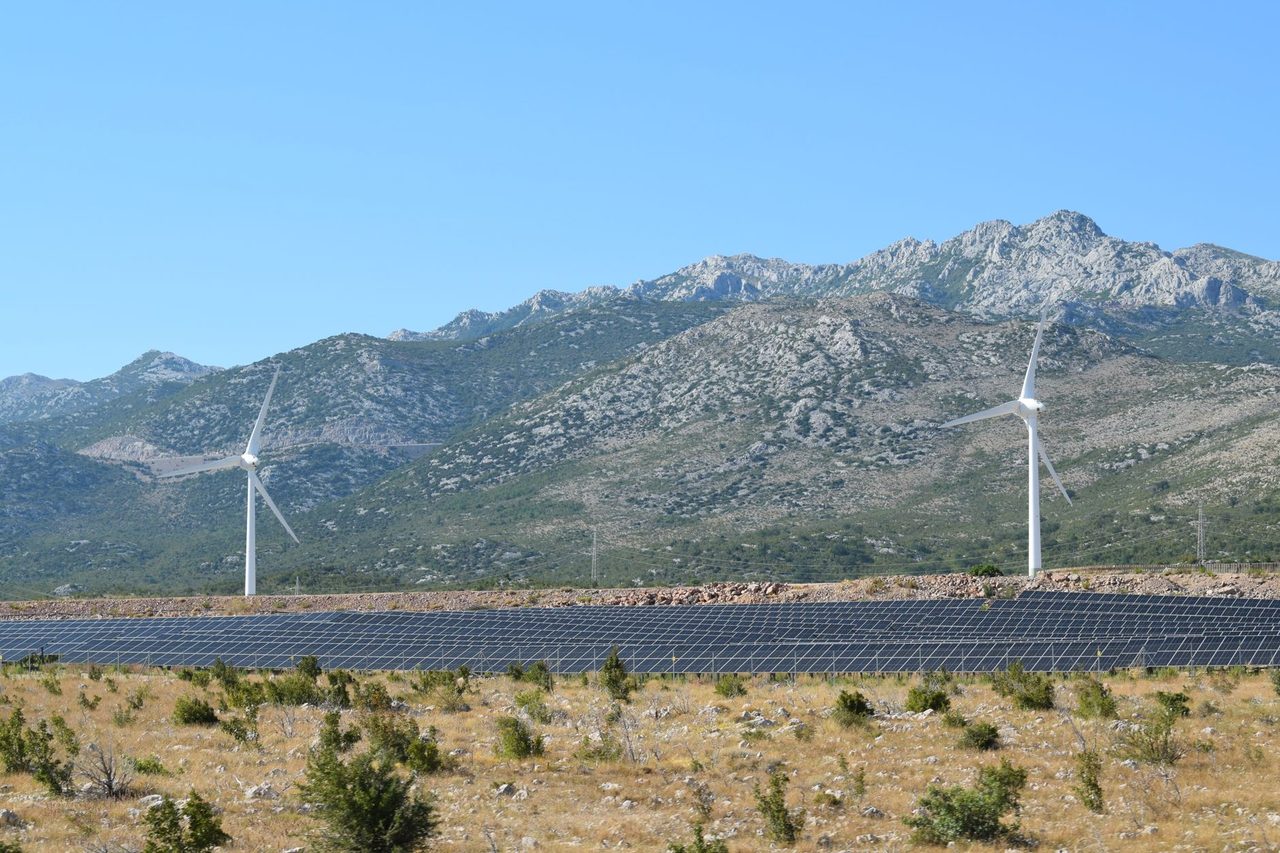
Photo: Kristina Kutleša on Pexels
Corporate open-access procurement in India has moved beyond the basic question of third-party versus group captive. In 2026, a more commercially important decision is emerging for serious C&I buyers: should the renewable supply be contracted as-generated, shaped to a demand profile, or structured as near-round-the-clock (RTC) power?
This decision changes tariff, balancing risk, open-access operations, scheduling obligations, banking dependence, and lender view on cash flows. It also changes whether the buyer actually reduces delivered energy cost after accounting for central financial assistance treatment where relevant, wheeling and transmission charges, cross-subsidy surcharge where applicable, additional surcharge where applicable, losses, deviation settlement, balancing power, and residual grid purchases.
For Indian industrial and commercial consumers with multi-shift loads, the wrong product design can erase the apparent headline tariff advantage of solar or wind. For developers and lenders, an imprecise supply design can create recurring settlement leakages and disputes on scheduling, under-supply, over-injection, curtailment allocation, and replacement power cost.
This article focuses on a distinct angle from standard third-party vs group captive comparisons: the practical economics and contract design of as-generated versus shaped and near-RTC corporate PPAs under the 2026 Indian open-access regime.
Why this product-design choice matters in 2026
Across major open-access states, policy has tightened around banking windows, banking charges, monthly settlement, peak-hour adjustment, and carry-forward restrictions. Simultaneously, many C&I buyers are electrifying process loads, adding HVAC-intensive campuses, cold-chain demand, data handling, and EV charging. Their hourly load curve is becoming more important than annual kWh consumption.
In 2026, three market realities are driving the shift:
- Banking is less generous than legacy assumptions in many states.
- Evening and peak-period residual grid power is expensive, especially for HT consumers facing elevated energy charges and demand charges.
- Renewable curtailment, DSM exposure, and balancing cost are now material enough to affect debt sizing and internal rate of return.
An as-generated solar PPA at Rs 2.90-3.40 per kWh may still look attractive on paper. But if the buyer’s load peaks after 6 pm and banking is restricted or settled monthly at discounted value, landed economics can underperform a more expensive shaped supply at Rs 4.20-5.40 per kWh. The right answer depends on the hourly coincidence between generation and consumption, not just annual energy volume.
Defining the three products: as-generated, shaped and near-RTC
The market often uses these terms loosely. Buyers should define them precisely in the term sheet.
As-generated PPA
- Buyer takes renewable output as and when the project generates.
- Typical for plain solar, wind, or single-technology hybrid plants.
- Limited seller obligation to match buyer load shape.
- Banking, if available, becomes the main tool to improve consumption match.
- Lowest headline tariff, highest dependence on load coincidence and state rules.
Shaped PPA
- Seller commits supply to an agreed time-block schedule or supply band, not merely raw generation output.
- Achieved through hybridisation, portfolio aggregation, storage, market purchases, or scheduling optimisation.
- Can include peak-hour carve-outs, monthly shaping bands, or minimum supply windows.
- Better alignment to the consumer’s ToD profile.
- Usually priced above simple as-generated PPAs because balancing and portfolio risk shifts partly to the seller.
Near-RTC or firmed renewable supply
- Seller commits a high annual availability target or a defined hourly coverage ratio, often supported by solar-wind hybrid plus storage and/or market-backed balancing.
- Not necessarily 100% RTC in the utility sense, but materially firmer than shaped daytime power.
- May target 70-90% load coverage depending on economics.
- Highest complexity in scheduling, replacement power, and settlement clauses.
For many C&I users, the realistic choice is not between 100% as-generated and full RTC. It is between:
- cheap daytime renewable supply with residual grid dependence, and
- a partially firmed portfolio that meaningfully lowers total delivered cost and volatility.
The landed-cost framework buyers should actually use
The most common error in boardroom comparisons is to compare only PPA tariff against discom energy charge. That is not decision-useful in 2026.
A proper landed-cost model should include:
- PPA tariff: for example solar Rs 2.9-3.4 per kWh, wind Rs 3.2-4.2, hybrid Rs 3.8-4.8, shaped supply Rs 4.2-5.4, firmed renewable supply potentially higher depending on storage share and replacement design.
- Open-access charges: transmission, wheeling, state load dispatch centre fees, scheduling charges, meter charges, and applicable application or operating fees.
- CSS and additional surcharge: depending on state, consumer category, and exemption route. Group captive can materially change these economics if compliance is maintained.
- Losses: state transmission and wheeling loss factors, plus ISTS losses for inter-state flows where applicable.
- Banking cost and haircut: banking charges, monthly settlement value, lapse risk, peak-hour exclusion, and banking-units-to-withdrawal rules.
- DSM and balancing cost: overdrawal, underdrawal, schedule deviations, and balancing procurement cost.
- Residual grid purchase cost: especially evening and peak-hour import tariff.
- Curtailment-related energy loss and compensation mechanics.
- Working capital impact: payment security, imbalance settlement timing, and change-in-law pass-through lag.
In practice, a consumer using only annualised blended tariffs can misread savings by Rs 0.70-1.80 per kWh. On 30-50 million units per year, that becomes a major value leakage.
This is why Demand & ToD analysis matters before issuing an RfP. Without interval-load analytics, buyers are effectively selecting a product blind.
When as-generated PPAs still win
As-generated renewable PPAs remain the best answer in many situations, especially where the consumer’s load and state rules are favourable.
They tend to work best when:
- The facility has strong daytime consumption, such as manufacturing with steady daytime operation, commercial campuses with HVAC-heavy afternoon load, or process plants with flat daytime base demand.
- Banking remains available at manageable cost, with monthly carry-forward and reasonable settlement terms.
- The residual evening power requirement is a relatively small share of total load.
- The consumer’s internal hurdle rate prefers the lowest possible contracted renewable tariff.
- The buyer is comfortable managing load forecasting and open-access scheduling discipline.
A practical example:
- Consumer annual demand: 40 MU
- Daytime coincidence with solar output: 68%
- Solar open-access tariff: Rs 3.05 per kWh
- OA charge stack plus losses equivalent: Rs 1.10 per kWh delivered
- Banking and DSM impact: Rs 0.20 per kWh of OA energy
- Residual grid power: 32% of energy at effective Rs 8.10 per kWh
In this case, blended delivered cost can still be substantially below full-grid procurement, particularly if the consumer’s alternative discom landed rate is above Rs 7.0-8.5 per kWh. But the savings are driven by coincidence and not by the PPA tariff alone.
The risk is that many buyers extrapolate this result to night-heavy loads where it does not hold.
When shaped or near-RTC supply becomes worth paying for
Shaped supply becomes attractive when the consumer’s cost of mismatch is high.
Common trigger conditions include:
- Significant evening or night shift demand.
- Limited banking or unfavourable monthly banking settlement.
- High ToD differential in discom tariff during peak hours.
- Portfolio of multiple plants requiring predictable budgeted energy cost across all time blocks.
- Lender requirement for more stable offtake realisation and lower imbalance volatility.
Consider a consumer with:
- 24x7 load of 10 MW average
- strong evening demand from 6 pm to midnight
- state banking allowed only on monthly basis with charges and limited peak adjustment
- residual grid import at Rs 8.50-9.50 per kWh in peak windows
A plain solar or solar-heavy hybrid may produce a low contracted tariff but create expensive evening imports. A shaped hybrid product with wind contribution or storage-backed evening delivery at Rs 4.70-5.20 per kWh may lower the total annual landed cost even though the contracted renewable tariff is higher.
This is because every additional unit supplied in the expensive evening block displaces a high-cost grid unit. The value of supply is time-dependent.
Near-RTC structures can be justified for:
- data centres and digital infrastructure,
- continuous process industries such as chemicals, metals, paper and textiles,
- export-oriented manufacturers needing cost certainty,
- multi-location corporate PPA portfolios seeking a standardised procurement strategy.
However, buyers should be disciplined. Full firming is not always economical. Often the sweet spot is 70-85% shaped renewable coverage, with the balance left to grid or market procurement.
Contract design issues that change project bankability
Once product type is chosen, the PPA and OA operating documents need careful drafting. Several issues are repeatedly underestimated.
Define supply obligation correctly
For as-generated PPAs, avoid language that implies unintended firmness obligations. For shaped PPAs, define:
- scheduling granularity,
- minimum and maximum supply bands,
- excused non-supply events,
- treatment of curtailment by state agencies,
- replacement power hierarchy.
Replacement power and shortfall settlement
If the seller promises shaped or near-RTC energy, who bears the cost when renewable generation underperforms? The options include:
- seller procures replacement power from exchange or bilateral source,
- seller pays contractually defined shortfall compensation,
- buyer self-procures and charges the differential above contract benchmark.
Each option affects financeability and tariff.
DSM allocation
For shaped products, DSM should not sit ambiguously with both parties. The contract must specify responsibility for:
- forecast submission,
- revisions,
- schedule confirmation,
- deviation attributable to buyer withdrawal changes,
- deviation attributable to generator under-delivery.
Curtailment treatment
Curtailment remains one of the largest hidden risks in renewable OA. For shaped and near-RTC contracts, curtailment can trigger not only lost energy but also replacement energy cost. Compensation provisions should distinguish among:
- grid security curtailment,
- transmission constraint,
- backing down by local utility,
- deemed generation treatment where available,
- force majeure versus non-force majeure allocation.
Banking assumptions
Many RfPs still carry outdated assumptions on annual banking or unrestricted peak adjustment. In 2026, these assumptions can distort bid evaluation. Buyers should require bidders to state clearly:
- assumed banking rule,
- banking charge,
- settlement period,
- lapse treatment,
- value assigned to unutilised banked energy.
This is where Sourcing strategy and PPA structuring & negotiation become commercially decisive, not merely legal hygiene.
State and portfolio strategy: one size does not fit all
A shaped or firmed product may be uneconomic in one state and attractive in another because the charge stack and banking treatment differ so much.
Examples of variables buyers should compare across states and structures:
- whether third-party sale attracts CSS and additional surcharge while group captive changes the result,
- whether banking is available for solar, wind, or hybrid separately,
- whether peak-hour banking is restricted,
- whether injected energy settles monthly or can be carried forward,
- wheeling charge differentials by voltage level,
- demand profile of each facility.
A portfolio buyer with plants in Tamil Nadu, Maharashtra, Karnataka, Gujarat, Telangana and Haryana should not assume one template PPA works everywhere. Some sites may be best served by plain solar OA, others by wind-solar hybrid, and a few by shaped supply backed by market purchases.
The practical procurement sequence should be:
- analyse 15-minute or 30-minute load data by facility,
- map state-specific OA charges and exemptions,
- estimate residual grid imports by time block,
- test as-generated vs shaped economics under realistic banking assumptions,
- run downside cases for curtailment, low wind year, cloudy months, and tariff revisions,
- choose product and contract structure by facility cluster, not by corporate slogan.
This is the difference between an energy procurement exercise and a financeable decarbonisation strategy.
What buyers, developers and lenders should do now
For buyers:
- Stop evaluating PPAs on tariff alone.
- Ask for hourly landed-cost simulation for at least three products: as-generated, shaped hybrid, and partially firmed supply.
- Test economics under no-banking and low-banking cases.
- Align contract duration with process-load visibility and capex plans.
For developers:
- Segment customers by load shape before bidding.
- Do not oversell firmness without a credible balancing stack.
- Price replacement obligations explicitly.
- Present transparent assumptions on banking, curtailment, and DSM.
For lenders:
- Underwrite actual settlement mechanics, not just contracted tariff.
- Stress-test merchant balancing cost and replacement exposure.
- Examine state-rule sensitivity where project economics rely heavily on banking.
For policymakers and utilities:
- Product innovation will grow if charges, scheduling rules and banking treatment are predictable.
- Transparent OA settlement and curtailment reporting reduce disputes and financing friction.
- Well-designed shaped renewable products can support industrial competitiveness without obscuring grid costs.
The core message for 2026 is simple: the cheapest renewable tariff is not always the cheapest power. For open-access consumers, value increasingly lies in matching renewable supply design to the actual hourly cost of demand. As-generated PPAs remain powerful where load coincidence is high. But for many 24x7 and peak-heavy consumers, shaped or near-RTC structures can produce lower delivered cost, lower volatility, and better investment-grade outcomes.
If your organisation is evaluating corporate PPAs, open-access routes, or firmed renewable supply, contact Growthifye’s advisory desk. We help clients with Demand & ToD analysis, Sourcing strategy, PPA structuring & negotiation, and landed-cost evaluation that reflects real 2026 operating conditions.
Explore Growthifye's related capabilities
This analysis connects directly to our advisory practice: Demand & ToD analysis · Sourcing strategy · Competitive developer selection · PPA structuring & negotiation.
About the author

Chief Executive Officer, Growthifye — With over 23 years in management consulting, Sudarshan has taken businesses from concept to scale — building and scaling new-age digital and energy businesses.
- 23+ years in management consulting
- EY alumnus
- Led large-scale BESS programmes, capital raises and advisory mandates
Want this analysis applied to your project?
Talk to our team