RPA for Indian Energy 2026: PPAs, Invoicing, Compliance and ROI
By Sudarshan Karweer · sudarshan@growthifye.com · +91 84510 99371 (Call / WhatsApp) · 2026-09-17

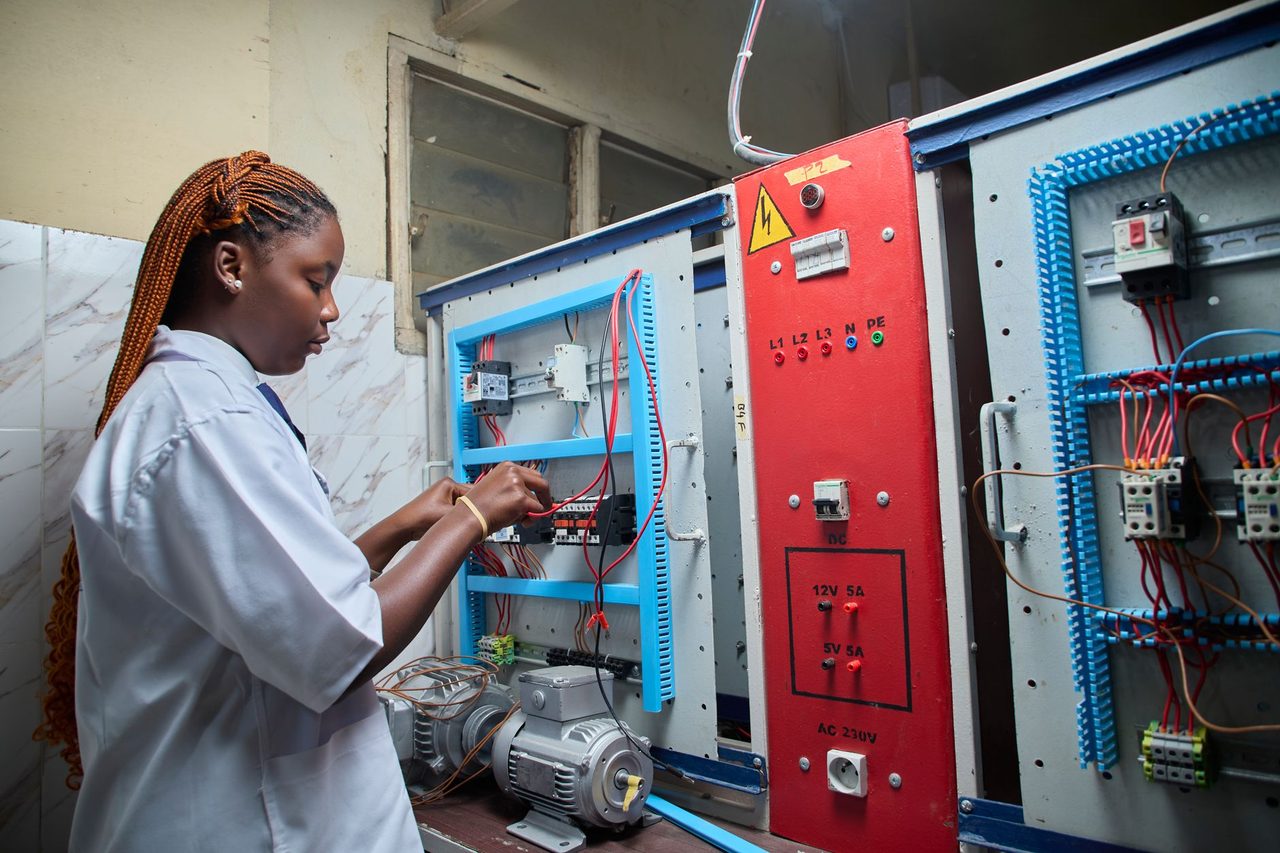
Photo: Florent Bertiaux on Pexels
India’s renewable-energy sector has spent the last few years digitising core systems: ERP, asset management, analytics, cybersecurity and trading. In 2026, the next high-impact layer for many companies is not another large platform replacement. It is robotic process automation, or RPA, applied to repetitive, rules-driven work across commercial operations, finance, compliance and reporting.
For Indian renewable developers, open-access operators, utilities and large C&I consumers, a surprising amount of business-critical work still sits in email inboxes, Excel trackers, PDF invoices, SLDC portals, DISCOM websites and lender reporting packs. Teams spend hours reconciling generation statements, validating energy bills, updating banking records, checking PPA clauses, preparing must-run curtailment claims, filing RPO evidence and responding to auditors. This is expensive, slow and error-prone.
RPA is now mature enough to automate a meaningful share of that workload without waiting for full core-system replacement. Used correctly, it can cut process cycle times by 40% to 80%, reduce manual effort by 30% to 60% in selected back-office workflows, and improve billing accuracy, auditability and turnaround. For energy companies operating on thin EBITDA margins and tight DSCR covenants, those gains matter.
This article explains where RPA fits in India’s energy and renewables context in 2026, which use cases create the fastest value, what ROI teams should expect, and how to roll it out without creating brittle bot sprawl.
Why RPA is relevant to Indian energy in 2026
The Indian power and renewable market has become operationally more complex, not less.
- Utility-scale solar and wind portfolios now span multiple states, DISCOM counterparties and scheduling frameworks.
- Captive and group-captive structures require closer tracking of shareholding, consumption allocation and compliance evidence.
- C&I buyers under open access face variable wheeling charges, banking rules, standby charges, cross-subsidy surcharge interpretations and changing state-level orders.
- Merchant, exchange-linked and hybrid portfolios require more frequent settlement and reporting.
- Lenders and investors want tighter monthly visibility on receivables, generation variance, curtailment and covenant performance.
- Regulators continue to tighten expectations around cyber hygiene, traceability, data retention and reporting discipline.
Yet many operating teams still rely on fragmented workflows.
A typical 250 MW to 1 GW developer may use one ERP, one plant monitoring stack, multiple SCADA exports, separate finance tools, shared drives, external O&M reports, DISCOM portals and consultant-managed compliance trackers. The problem is not always absence of software. The problem is handoffs between systems and the manual effort required to move data, validate exceptions and produce decisions.
That is where RPA fits. Software bots can log into portals, extract data from emails and PDFs, compare records across systems, trigger alerts, populate templates, update master trackers and route exceptions to people. In energy operations, this is often the fastest path to measurable efficiency while longer-term platform modernisation proceeds in parallel.
High-value RPA use cases for renewables, utilities and C&I buyers
The best RPA use cases are high-volume, repetitive, rule-based and currently dependent on multiple systems or portals. In Indian energy, the strongest 2026 candidates are the following.
PPA and invoice operations
Power sale administration is still heavily manual in many portfolios.
- Reading monthly generation statements from plant systems or buyer portals
- Matching scheduled versus injected versus billed units
- Checking tariff escalations, CUF-linked clauses or time-block treatment where applicable
- Preparing draft invoices from approved templates
- Validating GST fields, PO numbers and entity data
- Tracking submission, acknowledgement, dispute status and payment due dates
- Computing delayed payment surcharge as per contract terms
For a portfolio with 50 to 200 PPAs or sale arrangements, even small invoice leakage creates a material impact. If a 300 MW portfolio billing roughly Rs 140 crore to Rs 220 crore annually reduces leakage or delay by only 0.5% to 1.0%, the benefit can be Rs 70 lakh to Rs 2.2 crore per year before counting working-capital improvement.
RPA can automate invoice pack preparation and first-level validation while keeping human review for exceptions. This is especially effective where counterparties still require portal uploads or email-based submission.
Open-access bill validation for C&I consumers
Large commercial and industrial buyers often receive monthly invoices or settlement statements from multiple parties:
- DISCOM energy bill
- n- Open-access supplier invoice
- Transmission and wheeling charge statements
- SLDC scheduling and deviation charges
- Banking settlement entries
- Standby or demand-related charges
Manual validation is difficult because tariff orders, banking rules and charge categories vary by state. RPA can ingest invoice PDFs, compare line items against approved tariff logic, flag abnormal demand charges, identify duplicate levies and produce exception dashboards.
For a C&I consumer spending Rs 20 crore to Rs 100 crore annually on electricity, catching even 1% to 3% overbilling or missed credit can materially improve procurement economics. The bigger benefit is governance: finance teams get a repeatable control framework rather than ad hoc checking by one or two experienced staff.
Regulatory and compliance filing support
Compliance teams spend significant time preparing evidence and filings for:
- RPO or renewable procurement documentation
- Captive and group-captive substantiation packs
- Grid-code or scheduling-related submissions
- Environmental and labour compliance tracker updates
- State-wise operating licence and consent renewals
- REC-related data collation where applicable
- Internal board and audit committee reporting
RPA does not replace legal judgment or regulatory interpretation. It does automate document collection, version checks, due-date reminders, template population and evidence bundling. For multi-state operators, this can sharply reduce deadline misses and late-stage fire drills.
Lender and investor reporting
Project finance in Indian renewables depends on predictable, audit-ready reporting.
Typical monthly and quarterly packs include:
- Generation and CUF versus budget
- Plant availability and outage summaries
- Receivables ageing by offtaker
- Curtailment and deemed-generation positions
- DSRA status, debt-service metrics and covenant checks
- O&M performance indicators
- Major incident and claim summaries
Most of this information exists somewhere, but assembling it can take days. RPA can extract standard inputs from ERP, plant systems, shared folders and email trails, compile recurring schedules and route exceptions for controller review. That shortens month-end close and improves lender confidence in data quality.
O&M commercial administration
Many O&M contracts involve service-level conditions, penalties, bonus clauses, warranty claims and spare-parts approvals that are tracked manually.
RPA can help by:
- Monitoring SLA due dates
- Matching failure events with contract terms
- Triggering warranty-claim workflows
- Reconciling vendor timesheets or service reports with work completion evidence
- Updating payment holds where documentation is incomplete
This use case becomes even stronger when integrated with ERP & asset management systems and field data.
Utility customer-service and back-office workflows
Distribution utilities and retail supply businesses can also use RPA for:
- New connection document checks
- Net-metering application validation
- Consumer grievance triage
- Payment posting reconciliations
- Refund or adjustment workflows
- Internal audit sampling and evidence collection
In utilities, RPA often works best as a stabilisation layer where legacy systems cannot be replaced quickly.
What ROI looks like in Indian market conditions
RPA economics in 2026 are attractive when scoped narrowly and governed tightly.
A realistic first-wave programme for an Indian energy company may involve 5 to 15 bots or automated workflows across finance, commercial operations and compliance. Depending on complexity, annual software and support cost may range from roughly Rs 15 lakh to Rs 80 lakh for a mid-sized deployment, with additional one-time implementation cost.
Indicative value buckets include:
- Manual effort reduction: 2 to 10 FTE-equivalent workload saved or redeployed
- Billing leakage reduction: 0.25% to 1.5% of affected invoice value in selected processes
- Faster collections: 3 to 15 days reduction in invoice cycle for some counterparties
- Lower penalty or late-filing risk through due-date discipline
- Better audit readiness and less consultant clean-up effort
- Improved management visibility on receivables, disputes and compliance status
For a 500 MW developer with revenues in the range of Rs 250 crore to Rs 450 crore depending on mix and tariffs, annual measurable gains of Rs 50 lakh to Rs 3 crore are plausible if billing, receivables and reporting use cases are chosen well. For a large C&I energy buyer, bill validation and open-access reconciliation can justify the programme on their own.
Most successful energy RPA programmes target payback within 6 to 15 months. If the projected payback is above 18 months, the use case is often either too bespoke, too low-volume or better solved through process redesign rather than automation.
Where RPA fails: common mistakes to avoid
RPA is not magic. Many programmes disappoint because companies automate broken processes without fixing underlying controls.
The most common pitfalls are:
- Automating highly unstable processes that keep changing every month
- Using bots where a proper API integration or core-system fix is the better answer
- No master-data discipline for plant codes, invoice references, customer names or tariff tables
- Building too many one-off bots without ownership, monitoring or change control
- Ignoring cyber and access-risk issues when bots log into operational or finance systems
- No exception-handling design, forcing bots to fail on minor format changes
- Treating RPA as an IT side project without finance, commercial and compliance ownership
In Indian energy, portal volatility is a real issue. State utility and regulatory portals may change file formats, login flows or report layouts. That means bot design must include resilience, fallback procedures and active support ownership.
This is also why RPA should sit within a broader operating model, not as shadow automation built by disconnected teams. Strong Program governance matters as much as the software itself.
A practical rollout roadmap for 2026
The most effective rollout approach is phased and value-led.
Phase 1: process discovery and business case
Map 20 to 30 candidate processes and score them on:
- Volume and frequency
- Manual effort today
- Error or leakage risk
- Data availability
- Rule stability
- Degree of exception handling required
- Financial and control impact
From this, select 3 to 5 lighthouse use cases. In most energy companies, invoice operations, bill validation and lender reporting are the best starting points.
Phase 2: control design and data preparation
Before building bots, define:
- Source systems and portal dependencies
- Approval points and maker-checker controls
- Exception queues and manual fallback steps
- Logging, screenshots and audit-trail requirements
- Access management and credential handling
- Master-data owners for tariffs, PPA references and entity data
This step is where many ROI assumptions are won or lost.
Phase 3: pilot build
Pilot one or two use cases in a 6- to 10-week sprint. Track baseline and post-automation metrics such as:
- Hours spent per monthly cycle
- Error counts
- Invoice submission turnaround time
- Dispute incidence
- Collection days where relevant
- Compliance deadline adherence
Do not try to prove every benefit at once. Show hard gains in a narrow process.
Phase 4: scale with architecture and governance
Once the pilot works, industrialise.
- Standardise bot design patterns
- Set support SLAs
- Monitor bot uptime and exception rates
- Review each process quarterly for redesign or API replacement
- Align automation with broader IT strategy & roadmaps
Companies that skip this architecture layer usually end up with fragile automations that become hard to maintain after 12 to 18 months.
How RPA should connect with the wider digital stack
RPA creates the most value when it is not isolated.
It should connect to:
- ERP for billing, receivables, vendor management and accounting entries
- Plant and meter data for generation and settlement validation
- Document repositories for invoice packs, PPAs and compliance evidence
- Analytics dashboards for exception monitoring and management reporting
- Identity and security controls for bot access and logging
Over time, some automations should migrate from screen-scraping bots to cleaner API-led workflows. But that transition does not have to happen on day one. For many Indian energy firms, RPA is the bridge between today’s fragmented operating model and tomorrow’s more integrated Data & analytics platforms.
It also complements Cloud migration where teams want centralised workflow orchestration, document processing and monitoring without expanding on-premise complexity.
The bottom line for energy decision-makers
In 2026, RPA is one of the most practical digital levers available to Indian energy companies that need measurable efficiency without waiting 12 to 24 months for a large transformation. It is particularly useful where value is trapped in repetitive handoffs across PPAs, invoices, open-access settlements, compliance packs and lender reporting.
For renewable developers, the business case is strongest where receivables discipline, billing accuracy and auditability directly affect project cash flow. For C&I buyers, the strongest case is open-access bill validation and electricity-cost governance. For utilities, it is legacy-process stabilisation and back-office throughput. For lenders and policymakers, better automation at the operator level means cleaner reporting, faster exception visibility and stronger control environments.
The key is disciplined scoping. Start with processes that are repetitive, material and reasonably stable. Measure outcomes in rupees, days and error reduction. Build with security and governance from the beginning. And treat RPA as part of a broader digital operating model, not a patchwork of shortcuts.
If your organisation is evaluating automation opportunities across renewable operations, finance, compliance or utility workflows, contact Growthifye’s advisory desk. We help energy companies define the business case, prioritise use cases and design implementation roadmaps that deliver value quickly and safely.
Explore Growthifye's related capabilities
This analysis connects directly to our advisory practice: IT strategy & roadmaps · ERP & asset management systems · Data & analytics platforms · Cloud migration.
About the author

Chief Executive Officer, Growthifye — With over 23 years in management consulting, Sudarshan has taken businesses from concept to scale — building and scaling new-age digital and energy businesses.
- 23+ years in management consulting
- EY alumnus
- Led large-scale BESS programmes, capital raises and advisory mandates
Want this analysis applied to your project?
Talk to our team