India Data Centre Energy Water Nexus 2026: Cooling Choice, Tariffs and BESS
By Sudarshan Karweer · sudarshan@growthifye.com · +91 84510 99371 (Call / WhatsApp) · 2026-09-12
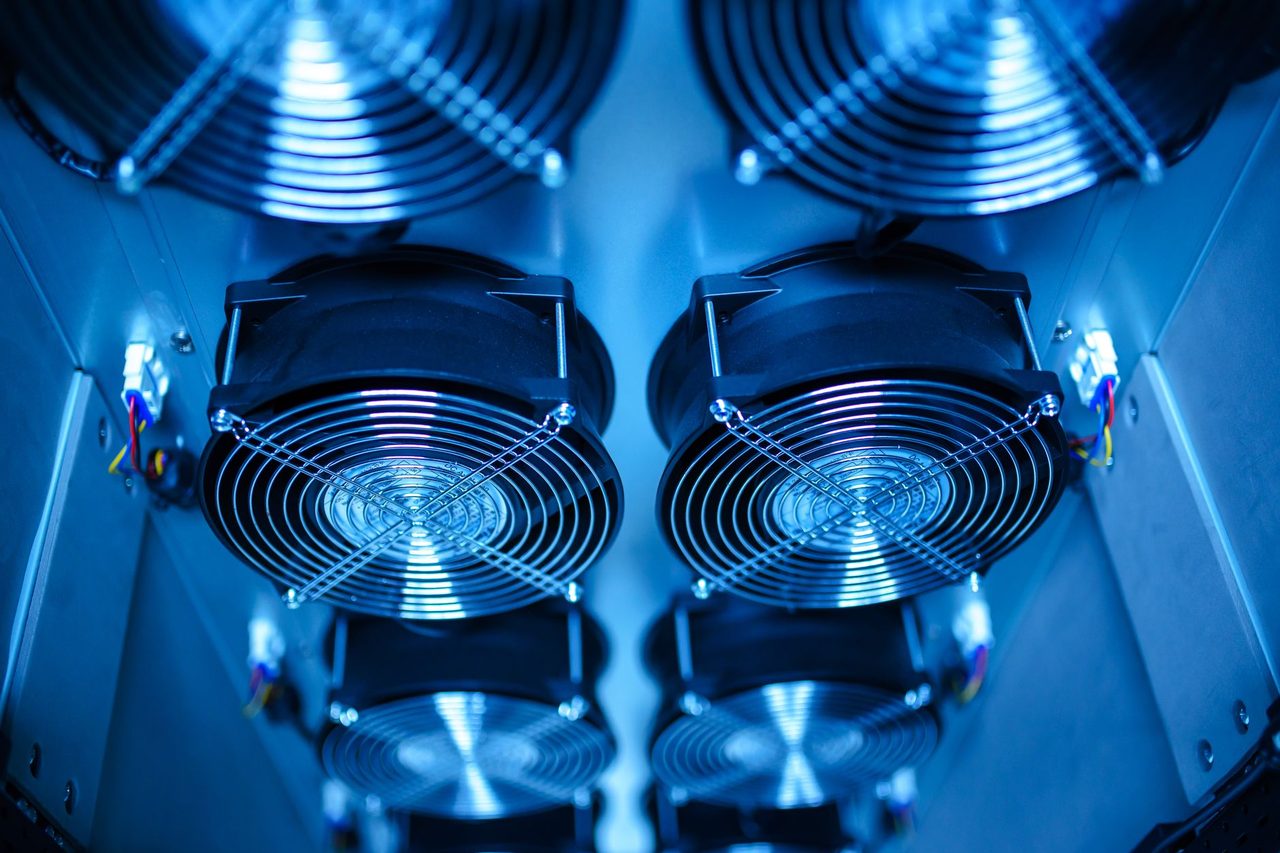
Photo: panumas nikhomkhai on Pexels
India’s data-centre sector is now large enough that cooling architecture, water availability and power sourcing can no longer be planned in separate workstreams. In 2026, operators in Mumbai, Chennai, Hyderabad, Bengaluru, NCR and Pune are seeing the same reality: cooling choice materially changes MW demand, PUE, backup sizing, tariff exposure, open-access economics and the viability of on-site storage.
For developers, lenders and enterprise customers, the practical question is no longer whether a facility will buy renewable power or add battery storage. The harder question is how the cooling system shifts the hourly load shape and therefore the cost and reliability of serving the campus on a 24/7 basis. A design decision taken at concept stage can easily move annual power cost by several crores, alter contracted demand, and change the size of BESS or diesel backup needed to support uptime commitments.
This article looks at the India data centre energy-water nexus in 2026: why cooling choice is now a board-level energy issue, how to compare air and water-intensive systems, what this means for tariffs and BESS, and where operators should focus before financial close.
Why cooling has become an energy-procurement issue
Historically, data-centre teams separated MEP design from energy procurement. That division no longer holds. Three 2026 market factors have pulled cooling into the commercial energy stack.
- State discom tariffs are increasingly sharper by voltage level, time-of-day band and demand component.
- Water availability and disposal constraints are tightening around key data-centre clusters, especially in water-stressed peri-urban corridors.
- High-density AI and accelerated-compute workloads are lifting rack densities, which changes the economics of chilled-water plants, free-cooling windows, CRAH/CRAC selection and liquid-cooling support systems.
In practical terms, a one-point PUE improvement at a 50 MW IT load campus is not a nice-to-have. If annual operating hours are 8,760, a 0.10 reduction in PUE means a total facility load reduction of roughly 5 MW on average at full utilisation. That equates to around 43.8 GWh per year of avoided energy consumption. At an effective blended delivered power cost of Rs 6.5-8.5/kWh, that is roughly Rs 28-37 crore per year of savings before considering reduced demand charges, backup fuel and lower auxiliary losses.
This is why cooling strategy must be integrated with Load & reliability engineering and energy commercial planning from the start.
India’s main cooling pathways and their energy implications
For most Indian facilities coming up in 2026, the cooling choice is not binary. Operators are comparing combinations of the following:
- Air-cooled chilled-water systems
- Water-cooled chilled-water systems with cooling towers
- Direct expansion systems for smaller or edge facilities
- Adiabatic-assisted systems
- Liquid cooling for high-density zones, including rear-door heat exchangers and direct-to-chip approaches
- Hybrid architectures that mix conventional cooling for general halls with liquid cooling for AI clusters
Each pathway carries a different energy profile.
Water-cooled systems often offer better efficiency at scale, particularly for larger campuses with stable high utilisation, but they increase dependence on make-up water, treatment chemicals, blowdown management and pumping loads. In many Indian climates, they can outperform air-cooled plants on kW/ton, especially during hotter months when compressor lift penalises air-side systems. But that efficiency advantage has to be weighed against water security risk, municipal withdrawal constraints and the possibility of tanker dependency during summer stress periods.
Air-cooled systems reduce water dependence, simplify permitting in some locations and may align better with campuses where water is a strategic constraint. However, they can increase peak electrical demand, especially in high ambient conditions, and therefore raise exposure to demand charges and evening power costs. Their performance degradation at elevated outdoor temperatures can materially worsen PUE during the same periods when grid stress is highest.
Hybrid systems are increasingly attractive because they let operators apply water only where it earns the strongest thermodynamic value, while avoiding full-site dependence on cooling towers. For AI-ready facilities, selective liquid cooling can also flatten fan energy and reduce white-space thermal bottlenecks, although the capital cost and operational capability requirements are higher.
The key point is simple: cooling architecture changes not only annual kWh but also the hour-by-hour demand pattern. For a data centre buying open-access renewable power, contracting RTC supply, or sizing on-site BESS, that hourly shape matters more than annual averages.
Water risk is now a reliability risk
Water stress is usually discussed as an ESG issue. For Indian data centres in 2026, it is a core uptime issue.
Facilities using water-intensive cooling should model at least four water-related disruptions:
- Seasonal reduction in municipal supply
- Tanker supply price spikes during peak summer
- Quality variation affecting treatment and cycles of concentration
- Regulatory restrictions on extraction, discharge or fresh-water use during stress periods
The operating impact can be severe. If water constraints force partial derating of cooling towers or shift operation toward less efficient backup modes, electrical consumption rises exactly when ambient temperatures are highest. That increases the chance of crossing contracted demand thresholds, paying higher incremental charges, or relying more heavily on diesel generation and batteries during grid events.
For lenders evaluating resilience, this means water-source diversity matters alongside N+1 and 2N electrical design. A technically redundant power system can still face commercial and reliability stress if the cooling chain depends on a single vulnerable water source.
This is where Grid connectivity & redundancy and campus utility planning need to be reviewed together. A robust incoming substation and dual feeders do not fully solve operational risk if cooling-water continuity is weak.
The tariff and load-shape consequences operators often miss
Many data-centre energy models still focus on annual average PUE and annual tariff assumptions. That is no longer enough. In 2026, Indian state tariff structures and open-access charge stacks make hourly and seasonal load-shape analysis essential.
Consider a simplified example for a 30 MW IT load facility.
- Case A: PUE 1.50 gives 45 MW total facility load at full IT utilisation.
- Case B: PUE 1.38 gives 41.4 MW total facility load.
The 3.6 MW difference is not just energy. It affects:
- Contract demand with the discom
- Transformer and backup sizing
- BESS power rating if batteries are used for peak shaving or ride-through support
- Open-access balancing and residual grid draw
- Exposure to higher-priced time blocks when cooling load rises in late afternoon and evening
Assume that 40% of the avoidable load delta falls into higher-cost periods due to ambient conditions and operational scheduling. The effective savings from PUE improvement can exceed the simple average-tariff calculation because the most expensive hours are often where cooling inefficiency is most pronounced.
For campuses in states with pronounced time-of-day differentials or demand penalties, cooling efficiency has a leveraged commercial effect. Even where exact tariff design differs by consumer category and state, the principle holds: every avoided MW of cooling-driven peak can reduce both energy charges and demand-related costs.
Operators should therefore run cooling option comparisons using at least:
- 15-minute interval load simulation
- Seasonal weather bins
- IT load ramp scenarios
- Tariff-wise marginal cost mapping
- Open-access residual draw assumptions
- Backup and BESS dispatch logic
Without that, the chosen cooling system may appear efficient in theory but expensive in the actual Indian tariff environment.
How cooling choice changes BESS sizing and dispatch
Battery storage is often discussed for outage management, demand shaving and renewable firming. But cooling design directly influences BESS economics.
A more efficient cooling system can lower the battery power rating required for peak support. For example, if cooling optimisation reduces total peak campus load by 4 MW, the operator may avoid procuring 4 MW of additional battery inverter capacity for certain use cases. At current 2026 commercial and industrial BESS economics, that can be meaningful even before considering augmentation and auxiliary integration.
Cooling architecture also changes battery dispatch windows.
- Water-cooled or hybrid systems may shift some auxiliary consumption across the day depending on pumping and tower operation.
- Air-cooled systems may create sharper afternoon peaks during high ambient conditions.
- AI workloads with liquid-cooling zones can produce a different thermal lag and control response compared with conventional halls.
These interactions matter for operators attempting to use batteries for multiple stacked value streams:
- UPS support and ride-through coordination
- Peak clipping against contract-demand thresholds
- Time-shifting lower-cost or renewable-linked supply into expensive hours
- Support during renewable intermittency or grid transfer events
- Reduction in diesel run-hours during short-duration disturbances
The wrong battery size is expensive, but the wrong cooling-plus-battery combination is worse. A campus that installs storage without first optimising thermal and control strategy may end up paying for avoidable power capacity.
This is why On-site generation & BESS studies should be carried out alongside cooling-system evaluation rather than after MEP freeze.
PUE, WUE and the financing lens in 2026
Sophisticated customers and lenders are increasingly asking for both PUE and WUE discipline, even when formal disclosure requirements vary. For Indian data centres, the challenge is that optimising one metric can worsen the other if decisions are taken in silos.
A lower-energy water-cooled design may improve PUE but worsen water intensity. A low-water air-cooled design may reduce water risk but increase electrical demand and backup infrastructure cost. The right answer depends on local conditions, not generic benchmarks.
For project-finance and credit review, the following questions now matter:
- Is the assumed PUE bankable under local weather and occupancy profiles, or is it a nameplate value?
- What is the source, security and cost trajectory of cooling water over the debt tenor?
- If water stress forces fallback operation, what happens to energy cost and SLA compliance?
- Does the energy strategy include realistic assumptions on ToD exposure, open-access residual draw and battery augmentation?
- Are there contractual pass-throughs or customer pricing mechanisms if utility costs rise due to cooling-mode changes?
A lender does not need perfect certainty, but it does need a credible downside case. In 2026, that downside case should include both energy and water disruption scenarios.
A practical decision framework for operators and developers
Before locking the cooling philosophy for a new campus or expansion block, operators should test six questions.
- What is the 8760-hour load and ambient model, and how does each cooling option perform by hour rather than annual average?
- How secure is water access in a one-in-ten summer stress scenario?
- What is the cost of one additional MW of cooling-driven peak after including tariff, demand, backup and BESS implications?
- How do AI-density assumptions change thermal design in years three to five?
- Which portions of the load can be shifted, curtailed or optimised through controls without affecting uptime?
- What is the integrated cost of energy, water, storage and resilience over 10-15 years rather than only first cost?
In practice, the winning design for many Indian sites will not be the theoretically most efficient or the lowest-water option in isolation. It will be the architecture that best balances:
- Site-specific water resilience
- Delivered power cost by hour
- Cooling performance at high ambient temperatures
- Compatibility with future rack-density growth
- Battery and backup optimisation
- Ability to support credible 24/7 clean-power procurement over time
That is also where Energy management systems become important. A modern EMS should not only track electrical demand and battery dispatch. It should integrate cooling plant telemetry, weather response, tariff periods and operational constraints so the site can continuously tune both cost and resilience.
What the 2026 market is signalling
The Indian market is signalling a clear shift. Data-centre energy strategy is moving from annual renewable percentages and simple backup design toward integrated campus-level optimisation. Cooling, water and hourly power procurement are now inseparable.
Operators that treat cooling as a facilities-only decision risk three avoidable outcomes:
- Higher PUE and delivered energy cost than their competition
- Oversized or underperforming BESS and backup systems
- Increased exposure to water-related reliability events that were not visible in initial financial models
By contrast, operators that model cooling, water and energy together can make materially better decisions on site selection, electrical infrastructure, storage sizing and customer pricing. That matters for hyperscale campuses, colocation portfolios and enterprise-owned facilities alike.
In 2026, the most resilient Indian data centres will not necessarily be those with the cheapest headline tariff or the largest battery. They will be the ones that understand the full energy-water-thermal interaction and structure their campus accordingly.
If you are evaluating a new facility, expansion block or retrofit, contact Growthifye’s advisory desk for a practical review of cooling-pathway economics, BESS integration, tariff exposure and resilient data-centre energy strategy.
Explore Growthifye's related capabilities
This analysis connects directly to our advisory practice: Load & reliability engineering · 24/7 clean power contracting · Grid connectivity & redundancy · On-site generation & BESS.
About the author

Chief Executive Officer, Growthifye — With over 23 years in management consulting, Sudarshan has taken businesses from concept to scale — building and scaling new-age digital and energy businesses.
- 23+ years in management consulting
- EY alumnus
- Led large-scale BESS programmes, capital raises and advisory mandates
Want this analysis applied to your project?
Talk to our team