India 2026 NGO Energy Access: Solarisation of Anganwadis, Hostels and Tribal Facilities
By Sudarshan Karweer · sudarshan@growthifye.com · +91 84510 99371 (Call / WhatsApp) · 2026-08-30
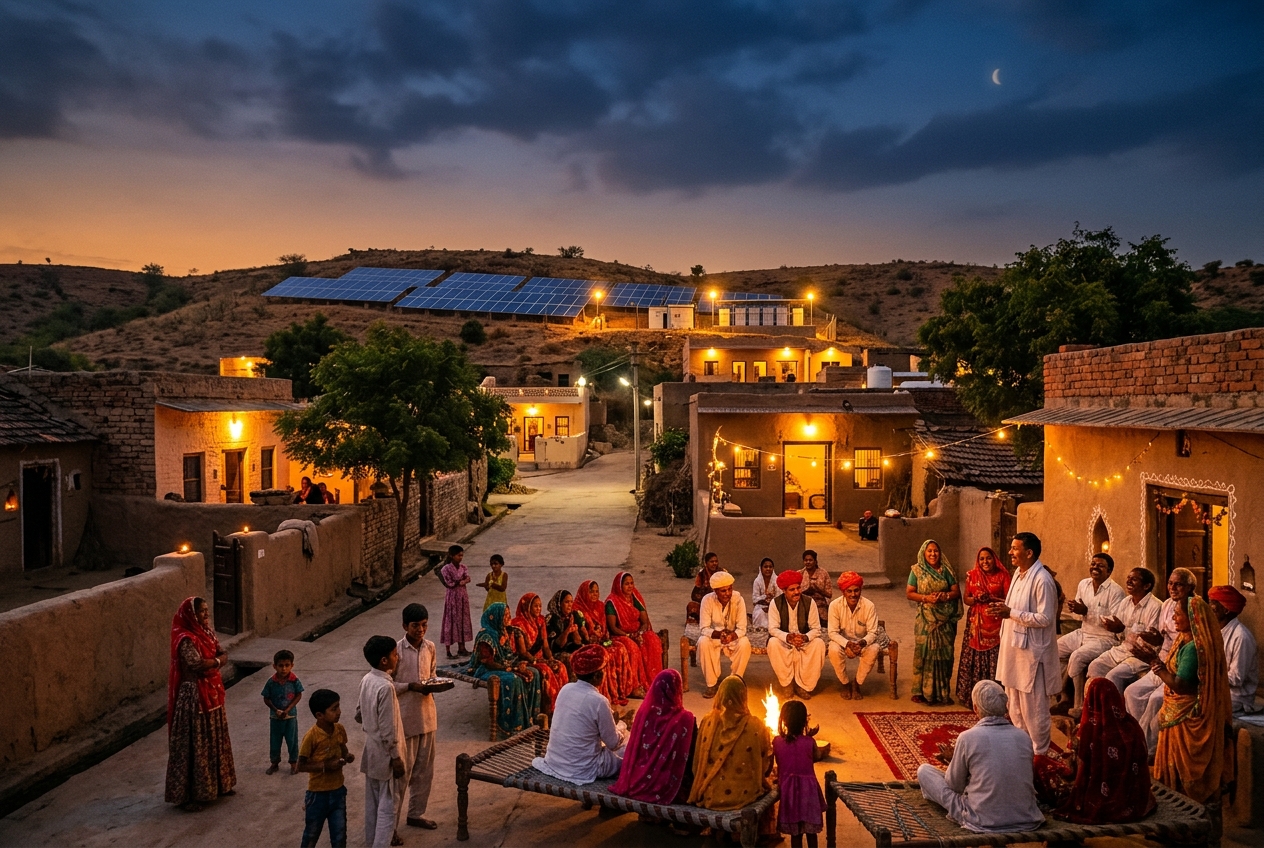
India’s NGO energy-access market in 2026 is widening from household electrification and livelihood loads to public-service facilities that sit at the centre of rural welfare systems. Anganwadis, ashramshalas, tribal hostels, residential schools, forest-fringe health sub-centres and panchayat-run community buildings increasingly need reliable daytime power, evening backup and appliance-ready electrical systems. For NGOs, corporates deploying CSR budgets under Schedule VII, and developers seeking replicable distributed renewable-energy opportunities, these facilities offer a practical and measurable use case: essential services with visible social outcomes, modest system sizes and clear monitoring pathways.
This article focuses on a distinct delivery angle for NGO energy access in India: solarisation of child-nutrition centres, tribal residential facilities and community-service buildings. The economics, governance requirements and impact logic differ from household PAYGo, mini-grids or clean-cooking programmes. Here, the challenge is not only CAPEX support but facility selection, load discipline, procurement quality, state permissions, O&M accountability and proof that reliable electricity translates into better service delivery.
Why anganwadis and tribal facilities matter in 2026
Anganwadis and tribal residential institutions are often underpowered despite being central to nutrition, early childhood care, girls’ education and social protection. In many districts, the issue is not complete grid absence but low-quality supply, frequent outages, overloaded internal wiring, missing backup and inability to run essential appliances during service hours.
Typical use cases include:
- fans and lighting for classrooms and indoor activity spaces
- charging for tablets, attendance devices and basic digital equipment
- powering water purification units or small pumping loads
- refrigeration for nutrition supplements or temperature-sensitive materials where relevant
- lighting and fans in hostels for evening study hours
- office loads for records, communication and beneficiary management
- backup supply for community meetings, tele-consultations or frontline worker coordination
For tribal hostels and ashramshalas, reliable power often directly affects occupancy, retention and safety. Evening lighting, toilet-area lighting, kitchen ventilation, and backup during monsoon outages are basic but high-value interventions. In aspirational districts and Schedule V areas, facility-level solar can also align with tribal development budgets, district mineral foundation allocations in some regions, and CSR spending by mining, metals, power and manufacturing companies operating nearby.
From a financing perspective, these are attractive NGO-led projects because individual site ticket sizes are manageable, aggregation is possible across districts, and impact can be measured with operational indicators rather than only proxy metrics. Unlike household systems, institutional loads are usually more stable and easier to audit.
What a typical project looks like: load, system size and costs
In 2026, most anganwadi solar projects fall in the 1 kW to 3 kW range, while tribal hostels and residential schools typically require 5 kW to 25 kW depending on occupancy, appliances and backup expectations. The right design starts with a real load survey rather than template-based sizing.
Illustrative ranges seen in rural and peri-rural India:
- Anganwadi centre: 0.8-1.5 kW connected daytime load; recommended solar plant 1-2 kW with 2-5 kWh battery where outages are material
- Cluster anganwadi plus nutrition kitchen: 2-5 kW solar with 5-10 kWh battery
- Tribal hostel, 50-100 students: 8-15 kW solar with 15-40 kWh battery, depending on evening-study and fan loads
- Ashramshala or residential school campus: 15-30 kW rooftop or ground-mount, optionally split across academic and hostel feeders
- Panchayat-run multi-use facility: 3-10 kW solar with appliance segregation and critical-load backup panel
Indicative 2026 benchmark costs vary by state, logistics, structure type and battery chemistry. A practitioner should budget approximately:
- Rooftop solar without battery for small institutional sites: Rs 42,000-55,000 per kW
- With lithium battery backup for critical loads: Rs 75,000-1,10,000 per kW-equivalent system depending on storage duration
- Small remote-site BOS, transport and structural premium: add 8-20%
- Remote monitoring hardware and data platform: Rs 6,000-20,000 per site
- Annual O&M for dispersed sites: 1.5-3.5% of installed cost, often higher in hard-to-reach tribal geographies
Grid tariffs for public and community facilities in many states remain lower than commercial C&I tariffs, often around Rs 5.0-7.5 per kWh equivalent where metered supply is regular. On pure energy savings, many small systems are not compelling if grant-free financed. But that is the wrong lens. The project case is driven by avoided outage cost, service continuity, educational benefit, reduced diesel or inverter replacement, lower spoilage, better occupancy and measurable welfare outcomes.
For hostels currently using diesel gensets for evening backup, the economics improve sharply. Even small diesel sets can imply delivered electricity costs above Rs 18-28 per kWh once fuel transport, maintenance and low loading are considered. Replacing routine genset usage with solar-plus-storage creates both financial and social returns.
Financing structures that actually work for NGOs and CSR sponsors
The dominant model in this segment remains grant-led CAPEX with contracted O&M. However, the market is maturing beyond one-time asset donation. The best 2026 structures tie capital deployment to uptime, service quality and reporting obligations.
Common structures include:
- Full CSR CAPEX grant to NGO or implementing agency, with 3-5 year O&M built into project cost
- CSR plus state-convergence model, where civil works, wiring rectification or facility upgrades are funded through government schemes and solar equipment through CSR
- Philanthropic first-loss support blended with concessional debt for aggregated institutional portfolios above roughly Rs 2-5 crore
- Results-linked disbursement, where a portion of payment is released after commissioning, training and six to twelve months of verified uptime
- District cluster model, where 25-200 facilities are bundled under one EPC and O&M framework to reduce transaction costs
For many corporates, these projects fit well under education, health, rural development and tribal-welfare themes under Schedule VII of the Companies Act. But the compliance lesson from recent CSR audits is clear: avoid treating solar simply as an equipment donation. The proposal should define the development objective, beneficiary pathway, uptime standards, asset ownership, handover conditions and reporting format from day one.
This is where Program design & theory of change and CSR funding pipelines become operational rather than presentational concepts. The sponsor must know exactly how a 2 kW anganwadi system links to improved service hours, summer attendance, digital recordkeeping or safer food preparation. Without that logic chain, even well-installed assets underperform in review cycles.
For larger portfolios, developers and NGOs should consider milestone-based contracts:
- 70-80% on supply and installation
- 10-15% after successful commissioning and staff training
- 10-15% linked to monitored performance over two service seasons
This reduces the chronic problem of abandoned rural systems after inverter faults or battery neglect.
Policy and implementation context in India, 2026
By 2026, the broader enabling environment for rooftop and distributed RE is stronger, but public-service-facility solarisation still depends heavily on state-level execution. Key policy touchpoints include:
- Companies Act CSR provisions and Schedule VII thematic eligibility
- State renewable-energy policies and rooftop solar regulations
- DISCOM net-metering or gross-metering rules, where applicable for institutional consumers
- Tribal Affairs, Women and Child Development, School Education and Panchayati Raj departmental permissions
- Electrical inspectorate compliance and local safety requirements
- Public procurement rules if assets are installed on government-owned premises through NGO partnerships
In practice, many small anganwadis may not need export-enabled systems. A simple behind-the-meter solar-plus-backup configuration is often better than pursuing net metering for very small sites, especially where sanction load, meter regularisation or interconnection timing creates delays. For larger hostels and schools with meaningful daytime consumption, net metering can help economics if state rules remain supportive and the consumer category is eligible.
State variation matters. In states with stronger feeder reliability, battery sizing can be minimised and systems can be designed around daytime solar self-consumption. In forested, hilly or monsoon-exposed districts of Odisha, Jharkhand, Chhattisgarh, Madhya Pradesh and the North East, resilience and maintenance access should drive design choices more than simple payback.
Developers should also anticipate practical bottlenecks:
- unclear building ownership or land title for hostels and community facilities
- aged roofs that cannot carry standard mounting loads
- weak internal wiring, no earthing or unsafe distribution boards
- delays in obtaining local administration approvals
- limited telecom connectivity for remote monitoring
- staff turnover, causing loss of operating knowledge
A robust pre-feasibility checklist often saves more money than aggressive EPC pricing.
Designing for service outcomes, not just installed kilowatts
A repeated mistake in NGO energy-access portfolios is measuring success as number of systems installed. In these facilities, the correct KPI is service continuity. A 3 kW system that keeps a centre functional through peak afternoon heat and enables evening learning has more value than a larger underused array with poor battery management.
Practitioners should segment loads into:
- critical loads: essential lighting, fans, communications, water purification, IT devices
- operational loads: office equipment, kitchen auxiliaries, educational devices
- discretionary loads: future appliances or low-priority circuits
This allows priority backup design and prevents battery oversizing. For tribal hostels, evening load curves are especially important. Many projects fail because solar generation is sized to annual kWh rather than the real need for 5 pm to 10 pm service.
Minimum technical design principles for 2026 portfolios:
- separate critical-load subpanel
- remote monitoring with generation, battery SOC and outage alerts
- lightning protection and proper earthing in high-risk districts
- tamper-resistant mounting and equipment enclosures
- standardised spares across the portfolio
- local caretaker training with visual SOPs in regional languages
- annual preventive maintenance before monsoon
Where kitchens are included, pair power planning with efficient appliances rather than assuming electric cooking migration. In most NGO-led facility projects, clean cooking solutions will remain separate from the solar design unless there is a specific induction-ready electrical upgrade and assured supply model.
MRV: what lenders, CSR heads and policymakers want to see
In 2026, serious funders no longer accept generic impact decks. They want site-level evidence that systems work and that social outcomes are plausible and attributable. For this segment, Impact measurement & MRV should combine technical, financial and developmental indicators.
A practical MRV framework includes:
Technical metrics:
- daily and monthly solar generation
- battery uptime and backup hours delivered
- system availability percentage
- number and duration of fault incidents
- diesel displacement, where applicable
Service-delivery metrics:
- number of operating hours supported during outages
- classroom or hostel evening-study hours enabled
- number of days with functional fans/lighting during peak summer
- water purification or refrigeration uptime where relevant
- digital attendance or service records maintained without interruption
Beneficiary and governance metrics:
- enrolled children or residents served per facility
- female beneficiary share where relevant
- staff satisfaction and facility-use patterns
- local committee sign-off on service quality
- O&M response time and closure rates
Financial metrics:
- cost per facility served
- cost per beneficiary
- annual O&M cost versus budget
- avoided diesel and inverter replacement expenses
The strongest portfolios combine automated system data with quarterly field verification. Remote monitoring alone can show generation, but not whether the anganwadi actually used the centre longer or whether a hostel’s evening study hall stayed lit. Short field audits, photos with timestamps, staff interviews and attendance snapshots remain necessary.
For donors considering multi-district rollouts, standardising the MRV template from the pilot stage is critical. It makes later replication bankable and easier to compare across EPCs and states.
A practical playbook for NGOs, developers and corporate sponsors
If you are planning an institutional energy-access programme in 2026, the sequencing matters more than the hardware brand list. A workable playbook looks like this:
- identify a district cluster with 20+ facilities and one administrative champion
- audit loads, wiring condition, roof condition and outage patterns before budgeting
- classify sites into direct solar-ready, wiring-upgrade-first and not-feasible buckets
- select one standard design each for small centres, medium facilities and hostels
- bundle O&M, remote monitoring and training into the original contract
- define asset ownership and post-project service responsibility clearly
- create a simple escalation matrix from caretaker to NGO to EPC to district authority
- tie part of EPC payment to uptime and data reporting
- align reporting with CSR review cycles and department needs
For developers, this segment is not a high-margin one-off EPC play. It works when approached as a programme business with repeatable designs, district-level partnerships and disciplined service operations. For NGOs, the opportunity is to move from donation-led installations to managed energy-service programmes that stand up in audit and deliver visible community value. For policymakers and utilities, these facilities are useful demand nodes for resilient social infrastructure, especially in vulnerable and remote geographies.
The next wave of NGO energy access in India will not be defined only by household connections or enterprise loads. It will also be shaped by whether community institutions that support children, girls, tribal populations and frontline workers can rely on power every day, in every season.
If your organisation is evaluating a district-scale programme for anganwadis, tribal hostels or community facilities, contact Growthifye’s advisory desk. We support facility screening, delivery structuring, Compliance & governance, and implementation strategies for credible, scalable energy-access programmes.
Explore Growthifye's related capabilities
This analysis connects directly to our advisory practice: Program design & theory of change · CSR funding pipelines · Grant & philanthropic fundraising · Compliance & governance.
About the author

Chief Executive Officer, Growthifye — With over 23 years in management consulting, Sudarshan has taken businesses from concept to scale — building and scaling new-age digital and energy businesses.
- 23+ years in management consulting
- EY alumnus
- Led large-scale BESS programmes, capital raises and advisory mandates
Want this analysis applied to your project?
Talk to our team