
India 2026 NGO Energy Access: Solar-Powered Schools, CSR Grants and MRV
By Sudarshan Karweer · sudarshan@growthifye.com · +91 84510 99371 (Call / WhatsApp) · 2026-09-13
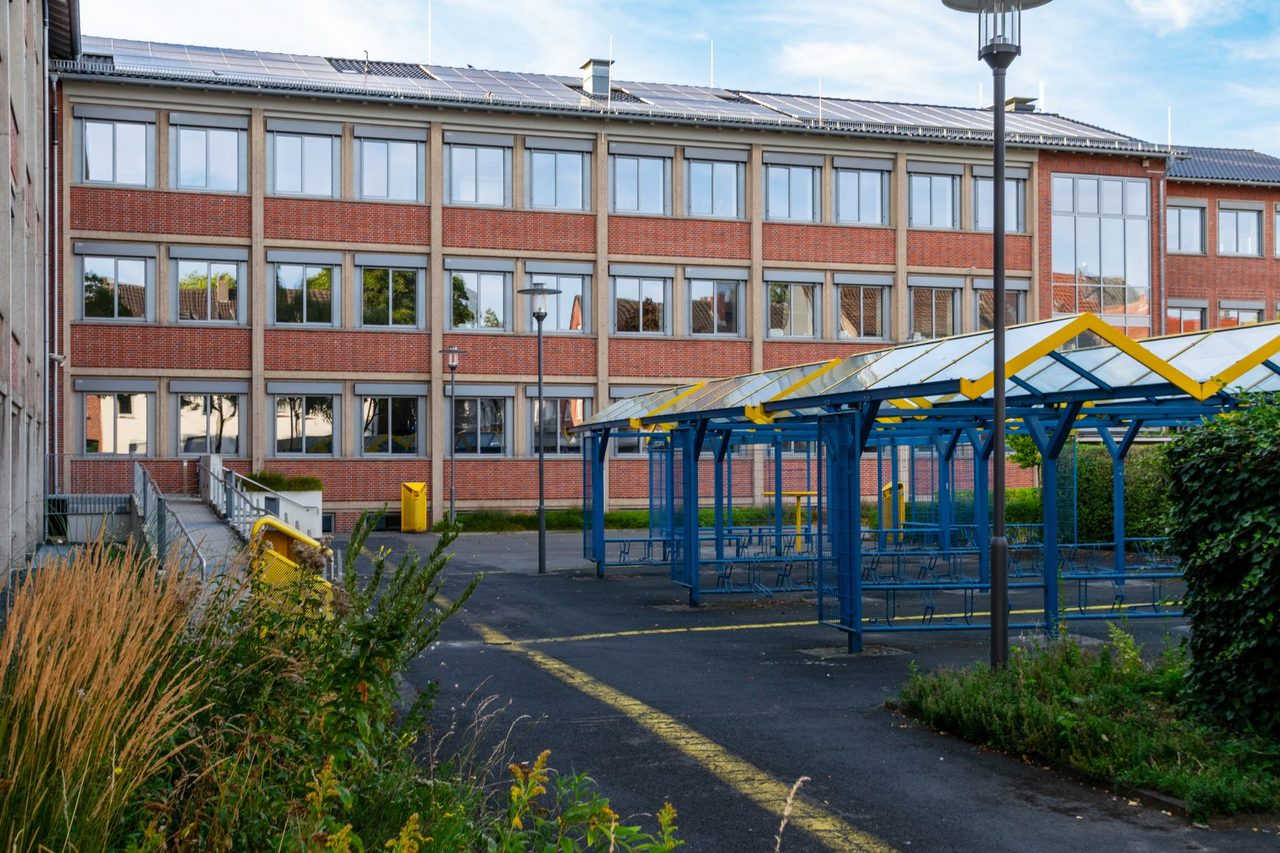
Photo: Sergej ***** on Pexels
India’s school infrastructure gap is no longer only about classrooms and teachers. In many rural and peri-urban districts, dependable electricity is now central to learning outcomes, digital education, drinking water pumping, fans, lighting, lab access and community use after school hours. For NGOs, CSR teams, developers and district-level implementation partners, solar-powered schools present a practical 2026 energy-access pathway that is clearly different from household electrification or village mini-grid programmes.
This article examines how to structure solar-powered school projects in India through NGO-led delivery, CSR funding, grant capital and robust monitoring, reporting and verification. The focus is on practical design choices, budgets, policy alignment and measurable outcomes that matter to Indian corporates, lenders, utilities and public institutions.
Why solar-powered schools are a strong NGO energy-access theme in 2026
The case for school-focused energy access is compelling because the load is predictable, the social value is visible and the asset can serve education plus community functions. Unlike some dispersed household-use cases, schools usually provide a single-node installation with an identifiable owner, a formal or semi-formal electricity account, and a natural local oversight mechanism through headmasters, school management committees and panchayat stakeholders.
In 2026, three trends make this model stronger:
- Digital learning loads have increased, including tablets, smart TVs, routers, desktop systems and device charging.
- Heat stress across several Indian states has made fans and cooling support more important during teaching hours.
- CSR programmes are under pressure to demonstrate measurable educational and climate-linked outcomes, not just one-time asset donation.
For NGOs, this means a solar school project can be framed not merely as a panel installation, but as an education resilience programme with energy, health and attendance co-benefits. In districts with erratic supply or high outage frequency, even schools with grid connections remain good candidates for rooftop solar plus battery-backed critical loads.
What a typical rural school energy system looks like
A school energy audit should start with load segmentation rather than panel size. In practice, many poorly designed projects fail because all possible loads are included in the concept note, while the actual funding envelope only supports a smaller system. It is better to define core, priority and optional loads.
A typical government or aided rural school may have the following daily requirements:
- 8 to 15 classrooms with LED lighting and fans
- 1 office room
- 1 computer room or digital classroom
- 1 water pump, often 0.5 HP to 2 HP depending on source and storage
- Device charging points
- Outdoor security lighting
- Optional community evening use for adult literacy or SHG meetings
For a primary school, a 3 kW to 5 kW rooftop system may cover daytime lighting, fans, office electronics and modest digital loads where grid supply exists and batteries are limited to backup for critical circuits.
For upper-primary or secondary schools with computer labs and water pumping, the practical system size often moves to 5 kW to 10 kW. If reliable backup is necessary for exam periods, digital classroom continuity or evening community use, battery integration becomes important.
Indicative 2026 installed costs in many Indian markets are approximately:
- Rooftop solar without battery for institutional sites: about Rs 45,000 to Rs 60,000 per kW depending on size, location, structure and vendor quality
- Lithium battery-backed systems for priority loads: project-level cost varies widely, but hybrid systems can push effective capex materially higher depending on backup hours
- Annual O&M: often 1.5% to 3% of capex for basic maintenance, with battery replacement risk needing separate lifecycle planning
These figures vary by state, logistics, site condition and procurement scale. Remote geographies, special mounting requirements and theft-proofing can raise capex significantly.
Funding architecture: CSR, grants and blended implementation models
Most NGO-led school electrification projects are not financed through a purely commercial return model because the end user is a public or low-income institution. The viable route is usually blended social infrastructure funding.
The main structures seen in 2026 are:
- Full CSR grant for capex, with school or local authority covering minor recurring electricity and maintenance costs
- CSR plus philanthropic grant co-funding, where one sponsor supports hardware and another supports training, digital content or impact tracking
- District-cluster model, where 20 to 100 schools are bundled for procurement efficiency and standardized MRV
- Anchor-operate-transfer approach, where an NGO or implementation partner manages the systems for 3 to 5 years before full handover
From a Companies Act Schedule VII perspective, school energy access is typically positioned under education, rural development, environmental sustainability and in some cases safe water or health co-benefits. For corporate donors, the key is not just thematic alignment but documentation discipline: beneficiary selection criteria, approvals from education authorities, asset registers, utilisation tracking and post-installation evidence.
This is where structured Program design & theory of change becomes useful. A school solar programme should state clearly how energy inputs convert into outputs such as hours of power availability, and then into outcomes such as better digital instruction time, fan-enabled summer attendance, safer evening activities and reduced diesel or inverter dependency where relevant.
For NGOs trying to scale beyond one district, CSR funding pipelines also matter. Many corporates prefer multi-location education-energy programmes but want consistency in engineering standards, governance and reporting. A fragmented approach with different vendors, varying warranties and weak baseline data makes expansion difficult.
Policy and tariff considerations in India 2026
Even grant-funded school projects need serious policy and utility diligence. A surprising number of NGO programmes underperform because they overlook DISCOM procedures, net-metering feasibility or sanctioned load mismatches.
The first policy question is whether the school already has a live grid connection and what tariff category applies. In many states, government schools fall under public-service, LT institutional or similar categories. Average retail tariffs for such users vary significantly by DISCOM and state, and can range broadly from around Rs 5 per kWh to above Rs 8 per kWh once fixed charges and other elements are considered.
For solar system design, the practical decision tree is:
- Grid-connected school with acceptable daytime supply: use rooftop solar focused on self-consumption
- Grid-connected school with frequent outages: use hybrid solar with battery backup for critical loads
- Unconnected or severely underserved location: use stand-alone solar with careful load prioritisation and stronger O&M planning
Net metering for schools is possible in some jurisdictions, but NGOs should not assume it will be smooth. Issues include:
- Roof ownership and institutional approvals
- Metering category restrictions
- DISCOM processing delays
- Transformer or feeder constraints
- Low export value if school demand profile is mainly daytime and vacations reduce use
In many cases, simple behind-the-meter self-consumption with limited or no export can be more practical than pursuing a net-export heavy model. The objective in CSR-funded school systems is usually service reliability and avoided electricity cost, not merchant power optimisation.
Battery sizing also requires caution. If the school only needs resilience for digital devices, office work and some fans during outages, backing up the entire campus is usually unnecessary and financially inefficient. Critical-load panels can reduce battery capex substantially.
Delivery model: site selection, engineering and O&M discipline
The strongest programmes are portfolio-based, not ad hoc. A cluster of schools in one district or state allows standard design templates, spare inventory planning, technician routing and comparable impact data.
A robust implementation workflow includes:
- Baseline survey of enrolment, energy access, outage hours, current electricity bills and key educational uses
- Structural assessment of roofs and shading
- Electrical safety audit and earthing design
- Load prioritisation with headmaster approval
- Approval path with district education office, panchayat and utility where relevant
- Installation by vetted EPC teams with warranty-backed equipment
- Teacher and caretaker training
- O&M schedule with fault response timeline
- Digital or manual logging for energy generation and service uptime
On technology selection, school systems should favour reliability over feature complexity. Tier-1-equivalent modules, proven inverters, lockable battery enclosures, anti-theft mounting and surge protection are more important than marketing claims. In lightning-prone geographies, surge and grounding design is often neglected and later causes system downtime.
Water pumping integration should be treated separately from classroom loads. If a school depends on a borewell or overhead tank, the pump may dominate the energy profile. In such cases, pump scheduling during peak solar hours can avoid oversized batteries.
O&M is the most underestimated cost line in grant-funded projects. Panel cleaning, battery health checks, inverter alerts, wiring inspection and local caretaker accountability all determine whether a 7-year asset actually delivers 7 years of educational value. If local capacity is weak, a centralised service contract with district-level technician support is usually superior to full community management from day one.
MRV that funders and policymakers will actually respect
Many school solar reports still rely on photos, inauguration notes and anecdotal testimonials. That is no longer enough for serious CSR committees, philanthropic institutions or public-sector partners. In 2026, high-quality Impact measurement & MRV should connect technical performance with service and social outcomes.
A practical MRV framework should include five layers:
- Input metrics: capex deployed, system size in kW, battery capacity, number of schools covered
- Output metrics: kWh generated, uptime, hours of backup delivered, number of classrooms served, water pumping availability
- Outcome metrics: increase in digital learning hours, reduction in class disruption during outages, fan availability in summer months, evening-use sessions enabled
- Financial metrics: avoided grid consumption where measurable, avoided diesel or inverter charging costs, O&M cost per school
- Climate and social metrics: estimated emissions avoided, number of students and teachers benefiting, girls’ attendance or retention indicators where supported by baseline data
Data collection can be tiered depending on budget:
- Smart meters and remote monitoring for larger portfolios
- Manual monthly logbooks validated by periodic field audits for smaller projects
- QR-coded asset IDs and geotagged photo evidence for verification
- Annual third-party sample audits for donor confidence
Funders increasingly prefer district dashboards rather than PDF-only reports. A 50-school programme that can show monthly generation, downtime exceptions, digital-class usage and beneficiary counts will attract more follow-on capital than a one-off deployment with weak evidence.
Importantly, MRV should not overclaim causality. School performance depends on teachers, curriculum, attendance and infrastructure beyond power supply. The credible approach is to claim energy-enabled outcomes, not exaggerated learning transformation without evidence.
Risk areas and how to mitigate them
School energy projects look simple, but the failure modes are familiar.
Common risks include:
- Roof damage or structural unsuitability
- Leadership changes at school or district level
- Unclear asset ownership after installation
- Battery degradation without replacement budget
- Theft or vandalism
- Underutilisation of digital loads because devices are missing or non-functional
- Delayed service response in remote areas
Mitigation measures should be built into the project design:
- Use formal MoUs with school authority and district administration
- Create asset handover and custody records
- Ring-fence a 3 to 5 year O&M budget at approval stage
- Match energy investment with education-device readiness
- Maintain a spare parts and field-service plan by district cluster
- Define escalation timelines for faults and downtime
For corporate sponsors, governance quality can be as important as hardware quality. Strong Compliance & governance processes reduce disputes, improve audit readiness and support replication across states.
Why this matters for developers, utilities and lenders too
Although school projects are usually grant-funded, they matter strategically beyond philanthropy. Developers can use clustered institutional loads to build public-sector references in underserved districts. Utilities can benefit from better-managed daytime demand and reduced local backup inefficiencies. Lenders and impact investors tracking social infrastructure can gain a clearer view of what scalable, measurable distributed energy service models look like in low-revenue settings.
Over time, school energy portfolios can also act as an entry point into wider community energy planning: health sub-centres, anganwadis, water systems and digital livelihood infrastructure. The institution-first route often creates stronger local acceptance than household-first pilots with diffuse accountability.
For NGOs operating in India’s energy-access space, solar-powered schools are therefore not a symbolic intervention. When designed correctly, they are a replicable infrastructure class with clear social value, manageable technical complexity and strong CSR fit.
The winning formula in 2026 is straightforward: cluster-based site selection, right-sized engineering, lifecycle O&M, rigorous documentation and MRV that goes beyond installation counts.
If your organisation is evaluating school energy access programmes, district-scale CSR deployment or impact-linked clean energy implementation, contact Growthifye’s advisory desk to structure the programme, funding and MRV roadmap.
Explore Growthifye's related capabilities
This analysis connects directly to our advisory practice: Program design & theory of change · CSR funding pipelines · Grant & philanthropic fundraising · Compliance & governance.
About the author

Chief Executive Officer, Growthifye — With over 23 years in management consulting, Sudarshan has taken businesses from concept to scale — building and scaling new-age digital and energy businesses.
- 23+ years in management consulting
- EY alumnus
- Led large-scale BESS programmes, capital raises and advisory mandates
Want this analysis applied to your project?
Talk to our team

